Climate change

What Donald Trump gets wrong about climate change

Donald Trump now says of climate change: ‘I don’t think it’s a hoax, I think there’s probably a difference. But I don’t know that it’s man-made.’ The climate activist Eric Holthaus said: ‘The world’s top scientists just gave rigorous backing to systematically dismantle capitalism.’ Both are wrong. The truth is that climate change is happening, but more slowly than expected. It’s now 30 years since James Hansen of Nasa raised the alarm and, as climate scientist Pat Michaels and hurricane expert Ryan Maue have pointed out, ‘it’s time to acknowledge that the rapid warming he predicted isn’t happening’. Our own government’s climate-change committee, and the hysterical BBC, should take note.

Diary – 18 October 2018

When I land on the east coast of America, people tell me they’ve never met a Trump voter. When I land in the middle, as I did last week in Kentucky, I meet lots. I chatted with my driver, who did not like Trump at first, but would vote twice for his re-election if he could, because of the jobs boom and the Brett Kavanaugh hearings. He’s a retired salesman who tutors kids from poor backgrounds in reading and maths. ‘I guess that makes me a conservative,’ he says. I had to lecture in semi-darkness in Louisville, after a power cut plunged most of the university into darkness.

Barometer | 11 October 2018

Global warnings How much time do we have to save the world from catastrophic climate change? 5 years         (according to the WWF, 2007) 5 years         (International Energy Agency, 2011) 3 years      (Christiana Figueres of the United Nations, 2017) 12 years   (IPCC, 2018) Doctor the figures The NHS estimated it had been defrauded of £1.29 billion in 2016-17. By whom? Patients £341m NHS staff £94m Opticians £79m Dentists £126m Chemists £111m GPs £88m   Home stretch What percentage of 25-34-year-olds can afford the cheapest local properties with the aid of a mortgage worth 4.

Good news: we now have until 2030 to save the earth

Phew! The dangers of global warming are receding. Admittedly that is not how most news sources are reporting the publication of the latest IPCC report this morning. But it is the logical conclusion of reading coverage of the issue over the past decade. According to today’s IPCC report we now have 12 years to avert climate catastrophe. That might not sound long, but it means we are a good deal further away from doom that we were in 2007, when the WWF said we had five years to save the world. The doomsday clock hadn’t moved in 2011 when the International Energy Agency warned us that we had five years to start slashing carbon emissions or lose the chance forever.

Why weather apps can’t be trusted

The Times reports this morning that Bournemouth business leaders are hugely annoyed with the BBC, whose weather app predicted thick cloud and thunderstorms for the recent bank holiday. In the event, it was sunny and warm, but the damage had already been done, and takings on the seafront were said to be down by nearly 40 percent as people decided to stay at home rather than risk a soaking. While weather forecasting is undoubtedly getting better, it seems fairly clear that ultra-local forecasts of the kind you find on weather apps can be very misleading: reducing the whole forecast to a single icon, as most apps do, removes all the nuance. The lesson seems to be that if you are going to make a decision based on a forecast, you should watch the TV weather and get it explained to you.

Why it’s time to stop fetishising experts

Something extraordinary and largely unreported has just happened in a court in San Francisco. A federal judge has said that there is no Big Oil conspiracy to conceal the truth about climate change. In fact, Judge William Alsup — a Clinton appointment, so he can hardly be accused of right-wing bias — was really quite snarky with the plaintiffs who claimed there was such a conspiracy. The case was brought by the cities of San Francisco and Oakland, which have taken it upon themselves to sue the five big western oil majors — Chevron, ExxonMobil, Conoco-Phillips, BP and Royal Dutch Shell — for allegedly engaging in a Big Tobacco-style cover-up to conceal the harm of their products.

New York’s fight against the oil giants is political posturing at its worst

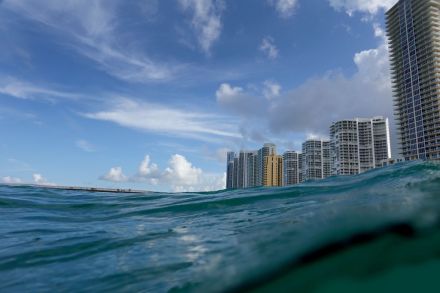
Was there ever a more pathetic piece of political posturing than the attempt by New York mayor Bill de Blasio to sue five oil companies, including BP and Shell, for the cost of building £14.8bn ($20bn) worth of sea defences to protect vulnerable parts of the city? To add to his virtue-signalling, de Blasio has also announced that the city’s pension funds will seek to divest from the shares of oil companies. One should never under-estimate the ability of the courts, whether in the US or elsewhere, to come up with perverse judgements but it ought to be pretty improbable that New York could win the case.

Wind turbines are neither clean nor green and they provide zero global energy

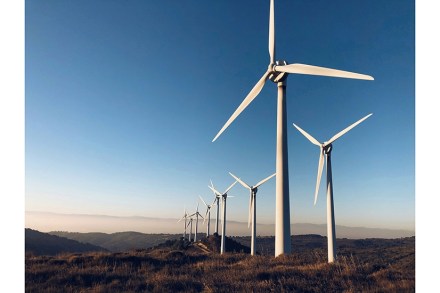
We’re closing 2017 by republishing our twelve most-read articles of the year. Here’s No. 2: Matt Ridley on why wind turbines are not the answer to our energy needs: The Global Wind Energy Council recently released its latest report, excitedly boasting that ‘the proliferation of wind energy into the global power market continues at a furious pace, after it was revealed that more than 54 gigawatts of clean renewable wind power was installed across the global market last year’. You may have got the impression from announcements like that, and from the obligatory pictures of wind turbines in any BBC story or airport advert about energy, that wind power is making a big contribution to world energy today. You would be wrong.

… while Rome freezes

Why did the Roman Empire collapse? It’s a question that’s been puzzling writers ever since Edward Gibbon wrote The History of the Decline and Fall of the Roman Empire in the late 18th century. One classicist — a German, inevitably — bothered to count up all the various hypotheses for the fall, and came up with 210. The conventional explanation is that, in 410 AD, King Alaric and his Visigoths sacked Rome. Across the Empire, from Hadrian’s Wall to Africa, legionaries folded their tents and deserted their posts. Several centuries of self-indulgent, over-reaching and in-fighting emperors had done for the whole shooting match, leaving the Eastern Roman Empire to stumble on until the fall of Constantinople in 1453. And so Roman history came to a full stop.

How will Brexit Britain cut emissions – and keep the lights on?

Many remarkable things happened immediately after the Brexit referendum. One is often overlooked: The House of Commons adopted the Fifth Carbon Budget, reaffirming the targets of the Climate Change Act 2008. More than half of the greenhouse gas emission reduction in the UK is due to policies and measures that originate in Brussels rather than in London. In 2014, one quarter of UK emission reductions were achieved by paying companies in Eastern Europe to reduce theirs instead. Brexit will have a profound effect on three central planks of UK climate policy – nuclear power, interconnection, and permit trade – but the government pretends that nothing will change. When he was energy secretary, Ed Miliband pushed nuclear power as a zero-carbon option to provide baseload electricity.

Climate change campaigners are crying wolf

When will the climate change lobby finally realise that it is undermining its own arguments through hyperbole? Yesterday, the Lancet published its latest climate change ‘indicators’, accompanied by a comment piece in the Guardian by Christiana Figueres, former Executive Secretary of the UN Framework Convention on Climate Change and now chair of the Lancet Countdown advisory board.  The piece, headed 'Climate change isn’t just hurting the planet – it’s a public health emergency' makes the assertion that climate change is affecting 'the health of you, your family, your neighbours – each and every one of us.

The bank that keeps poor nations poor

What is the point of the World Bank? You probably think of it, if at all, as a benign institution, a kind of giant, multilateral aid agency, whose job it is to bring liquidity to developing nations and help them grow out of poverty. Until not so long ago, that was indeed its function. Created alongside the International Monetary Fund at the 1944 Bretton Woods Conference, the bank did sterling work in its early years helping countries like France recover from the war; and later, giving mostly third world countries the vital seed money needed to help attract investors to risky capital projects. Its multiplier effect on investment can be extraordinary. In 2013, the World Bank gave Kosovo $40 million towards building a lignite power station.

Notebook | 28 September 2017

I’m currently dwelling on past times. I have a film coming out based on the crazy events that took place in 1953 when Stalin died. (He lay having a stroke on his rug and in his urine for hours since everyone was too scared to knock and see if he was all right.) We shot the film last summer. Then Trump happened. Now, journalists grill me as if the movie was an intentional response to that bloated troll’s election victory. Films take years to finance and write, and another year to shoot and edit; in that time, there’s no way anyone could have predicted the election of America’s first balloon-animal-inflated-by-potato-gas as President. Social media makes us take immediacy for granted.

Are old white men really to blame for climate change denial?

Funnily enough, you don’t come across too many pieces in the Guardian blaming black people for crime or women for bad driving. The newspaper would perhaps consider itself a pioneer in trying to drive out racial and gender stereotypes from daily life. It seems a different matter, though, when it comes to the inadequacies of white men, or, more specifically, elderly white men, to throw in a bit of ageism as well. An extraordinary piece in today’s Guardian tries to link what it calls 'climate denial' to race, gender and age.

Shame on the eco-ghouls exploiting Hurricane Harvey

Here they come, the eco-ghouls, feasting on another natural disaster. This time it’s the floods in Houston. No sooner had Hurricane Harvey caused terrifying waters to consume entire streets and trailer parks than the eco-set was rushing in to try to make moral mileage out of it all. This is climate change in action, they decreed. This is man’s fault, they insist. Our hubris caused this watery horror, they claim, sounding positively Biblical, like Old Testament patriarchs warning the sinful populace that God will punish it with floods. There’s nothing like a natural disaster to remind us how backward environmentalist thinking is. They do it all the time.

Hostile climate

The subtitle of Al Gore’s new film is ‘Truth to Power’, which is supposed to give the impression of brave old Al fighting for right against the mighty fossil fuel establishment. But it is somewhat ironic, given his response when the power being challenged is Gore himself. The former vice president was in London last week to promote his new film and I, along with the world’s press, was invited to a private screening before being allotted an entire eight minutes talking with the great man. An Inconvenient Sequel is an odd film. Billed as a film about global warming, it is really about Gore himself.

Books Podcast: Naomi Klein

In this week’s Spectator Books podcast I’m joined by Naomi Klein, the activist journalist who gave articulate voice to the anti-globalisation movement in books such as No Logo and The Shock Doctrine. In her latest work, No Is Not Enough: Defeating The New Shock Politics, she gives an urgent account of how — as she sees it — Trumpism came to be and what moderates and progressives need to do about it. We talk about why talking about Trump only makes it worse, how WWE (World Wrestling Entertainment) is the key to understanding the modern White House, why nobody knows what’s going on in British politics any more; and I ask her — cheerily — whether it really is too late to ensure the survival of life on planet earth.

Oceans apart

Readers of The Spectator will be familiar with the argument that climate change, like Britpop, ended in 1998. Raised on a diet of Matt Ridley and James Delingpole, you may have convinced yourself that climate scientists, for their own selfish reasons, continue to peddle a theory that is unsupported by real-world evidence. You may also have picked up the idea that the ‘green blob’, as it has been called in these pages, is somehow suppressing the news that global warming is a dead parrot. That was the case made by Dr David Whitehouse, science editor of Lord Lawson’s Global Warming Policy Forum in a Spectator blog in February last year.

There’s no need to tell children about terrorists

Saturday evening in Durham. My in-laws and I had just begun our usual postprandial shout about Donald Trump when my niece appeared at the door, pale and serious. ‘There’s been another terrorist attack in London,’ she said. ‘I’m scared.’ The veins of the men in my husband’s family run with a sort of event-activated coolant. No one asked what had happened or how many were dead. My father-in-law said: ‘Don’t be daft. What’s there to be scared of?’ His brother added: ‘You’re more likely to be killed by cows.’ This, though not strictly true, is less ludicrous than you might imagine. Some 90 Brits were killed by terrorist attacks in the 15 years from 2000, whereas 74 were killed by cows. The cows did the trick.

Donald Trump is right to ditch the Paris Agreement

Yesterday’s announcement by Donald Trump that the United States is withdrawing from the Paris Agreement is truly historic. The Paris accord was the closest the Europeans had come to getting the US to accepting timetabled emissions cuts in the now quarter century saga of UN climate change talks. The first was in the 1992 UN climate change convention itself, rebuffed by George H.W. Bush; the second was in the 1997 Kyoto Protocol, signed by the Clinton Administration, effectively vetoed by the Senate and repudiated by George W. Bush. Now, Donald Trump has dashed their hopes for a third and possibly final time. It’s understandable that the European reaction is one of fury and outrage.