Climate change

Why the media is pushing climate lockdown fantasies 

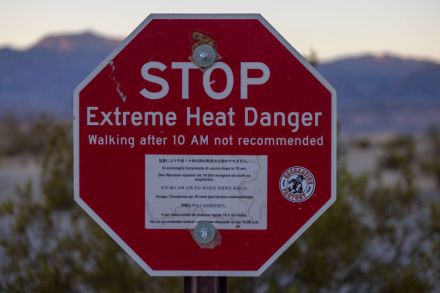
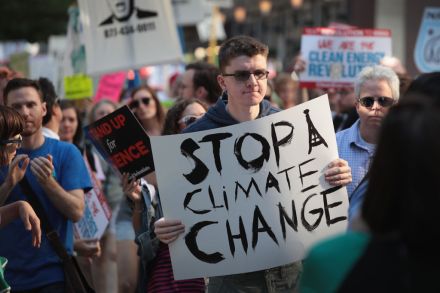
Back in February 2021, I wrote a piece here at The Spectator headlined “Are you ready for the climate lockdowns?” It concerned the predictability of where the climate alarmist movement was heading, and their eagerness to explore using the model for Covid lockdowns in Europe and the United States to address environmental issues. The movement has been inching its way toward the idea ever since. Now as heatwaves roll across the globe in the prime months of the summer season, news outlets aren’t being so subtle about the idea anymore — and neither is the Biden administration.

ESG is a surprise boon for fossil fuel giants

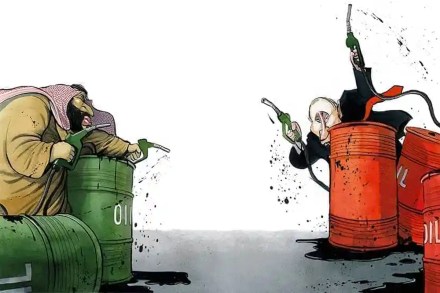
ESG, or environmental, social and corporate governance, has taken the financial world by storm. It first hit the scene in a 2004 United Nations report that argued the financial sector could rack up more profits if it focused on carbon dioxide reduction and UN-approved progressive causes and has ballooned into a big, green financial juggernaut. In 2021, ESG assets under management hit an estimated $35 trillion. Bloomberg projects that by 2025 $53 trillion will be invested in ESG vehicles — that’s over one third of global assets under management and over five times 2007’s total of $10 trillion of ESG assets.  The main thrust is to hasten the renewable energy transition to solve climate change by diverting capital from fossil projects to various green projects.

opec aramco esg
simple pleasures

The war on life’s simple pleasures

There are few things better in life than taking a hot shower at the end of a long day, crawling into a freshly made bed and passing out into the deepest sleep ever. There are also few things that ruin this uniquely cozy experience more quickly than stepping into a shower with dinky water pressure. Luckily, I’ve rarely dealt had to deal with that issue because I grew up with a plumber for a dad. We eschewed so-called “water-saving” shower heads in our home in favor of ones with such high water pressure that showers felt like a deep-tissue massage. When I moved out after college, my dad would drop by my various apartments to drill a hole in the non-removable flow restrictors put in shower heads by management.

avocado

The rise of avocado anxiety

When the gastronomes of the future come to choose the food that best represents our age, they will choose the avocado. The ubiquitous fruit is everywhere: in smoothies, on toast, served at breakfast, lunch and dinner, on t-shirts and all over social media. It represents our ingenuity in supplying exotic fruit to every corner of the globe all year round, our obsession with “clean” eating, our aspiration to eat brunch and our love of anything that — even passingly — tastes a little bit like butter. But it also represents our greed, our hypocrisy, our vanity and our overwhelming anxiety.

An eye-opening trip to the local ICE processing center

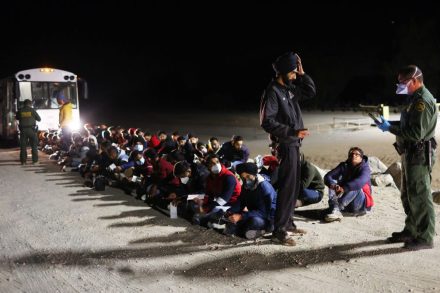
I recently had an astonishing trip to the former correctional center in my town that entered into a contract with Immigration and Customs Enforcement to become a processing center right after President Biden took office and issued an executive order cracking down on private prisons. The processing center is a big job creator in this rural place — and the people employed there, by all accounts I’ve heard and witnessed, are dedicated, hard workers. Yet what their jobs entail is astonishing. At a community outreach luncheon, I learned that as blue states refuse to allow ICE facilities to operate, central Pennsylvania has become a “hub” of the northeast for detainees. We receive immigrants from Maryland, New York, New Jersey and occasionally Ohio.

immigration

Don’t deprive Americans of July 4 fireworks

The Fourth of July is an opportunity to reflect upon the miracle that is the founding of the United States, a process that has been instrumental in the spread of freedom, democracy and human rights across the globe. That, unquestionably, is something worth celebrating. Fireworks have been a part of this celebration from the start, with displays gracing the skies of Philadelphia and Boston in 1777. For some parts of the country, however, the days of fireworks may be numbered, as the displays’ environmental and health impacts collide with politics. Reuters published a piece on June 30 detailing all of the dangers associated with the patriotic explosions.

fireworks

Maine’s lobstermen are a dying breed

It’s 5 a.m. in early May in Harpswell, Maine — “a working waterfront” community. I’m sipping coffee on the deck of Mark and Judy Sgantas’s charming home. The Sgantases are distressed about the government overreach and so-called “green energy” initiatives their neighbors have told them are apt to destroy the New England maritime economy and communities. We keep our voices soft so as not to disturb sleepy Casco Bay and the peach-and-plum masterpiece gradually unveiling itself in the sky and reflecting on the still water.

lobster maine lobstermen
unreason

The Age of Unreason

The present time, which has justly been called the Age of Unreason, is also an exceptionally confused and neurotic one. Indeed, it is unreasonable because it is confused and neurotic, a fact that its blind faith in liberalism and science make it unable to recognize. Confronted by what it views as the existential crisis of climate change caused by human activity, progressive liberalism promotes the widening illusion that Homo sapiens is actually and morally responsible for endangering “the planet”; that humans can accomplish anything, including reversing and even halting the process, supposing they have the moral will to do so.

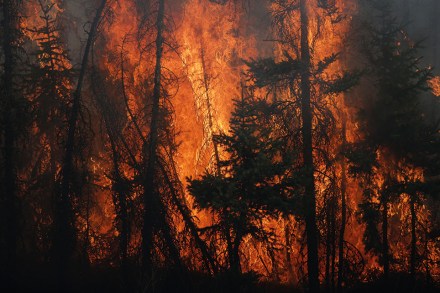
Wildfire apocalypse, not

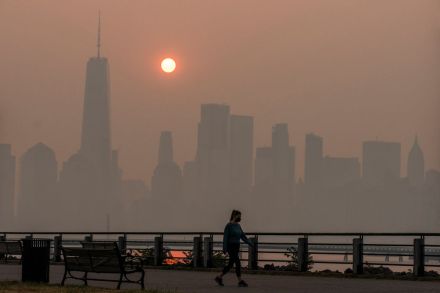
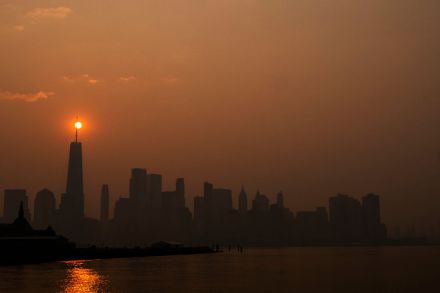
There was nothing new about springtime wildfires in Canada until the wind shifted unexpectedly last week. That shift blew smoky air all over the northern and eastern US, producing memorably apocalyptic-like orange air in New York City. Not wanting to waste a crisis, the lamestream media jumped right in with both feet. They blamed the wildfires on the much-dreaded “climate change,” scared the daylights out of everyone about the air quality and then warned that more like it was on the way unless we changed our fossil fuel-burning ways. Not unexpectedly, the media’s knee-jerk take was all wrong. Wildfires and smoky air have always occurred wherever there are forests. At least eighteen of these dark or “yellow days” occurred in the US and Canada from 1706 to 1910.

wildfire

Climate change didn’t cause Canada’s wildfires

Is the hazy stuff out there smoke billowing down from Québec, or hot air emitted from smoggy-brained politicians and journalists? Chuck Schumer told the Senate on Wednesday that the smoke drifting over the Eastern Seaboard was caused by climate change. Alexandra Ocasio-Cortez said it showed the urgency of going greener faster. Proof of carbon pollution, lectured the Canadian minister of the environment. A stark reminder of climate change, intoned Biden. Every news organization and weather app out there suddenly became experts on a new hazard — not smoke or fire, well-known phenomenons that have been extensively documented throughout history — but a new threat, both more nebulous and more ominous: “air quality.

climate canada wildfires

Rock ’n’ roll Dolly Parton’s political wake-up call

You know something dire is happening in the world if Dolly Parton’s feathers are ruffled. Dolly, an American sweetheart known for her blonde, bouffant hair, downhome, sweet and simple honesty (and a couple other big things), has released some songs from her upcoming rock album, Rockstar. And golly Dolly, are they ever feisty. The fact that Dolly is releasing a rock ’n’ roll album at all points to a serious cultural reckoning. Dolly, now seventy-seven years old, is more known for such innocent hits as “Love Is like a Butterfly” and “Coat of Many Colors” than for having a black-leather edge associated with sex and drugs. Yet such are the times we live in.    At the ACM Awards a couple weeks ago, Dolly debuted “World on Fire” from Rockstar.

dolly parton

Our future life on Earth depends on the state of the ocean

From our UK edition

When we observe the ocean we rarely peek beneath its surface. As Helen Czerski shows in her lively and engrossing account of the physics of ocean spaces, we would not see much anyway. Sounds travel well in water, and blue whales talk to one another across thousands of miles; but light soon disappears, apart from the glow emitted by luminous fish. Historians of the oceans (myself included) have looked at how, when and why people have crossed the surface of these spaces, uninhabitable except in the security of a boat or on islands, such as those in Polynesia with which Czerski begins her book. But we need to dive deeper.

The US is greening itself toward more dependence on China

A pair of Wall Street Journal headlines announced last week that "renewables surpassed coal power generation in 2022 for first time,” and “coal prices tumble while use of wind power, solar energy leaps ahead.” Taken at face value, you might believe fossil fuels are about to go the way of the floppy disk. Not so. News of renewable triumphs is often greatly exaggerated. Pretending that we can dismiss coal and other fossil fuels as energy sources anytime soon is to bite the hand that feeds us.

green china

Climate warriors are trying to make parking more difficult

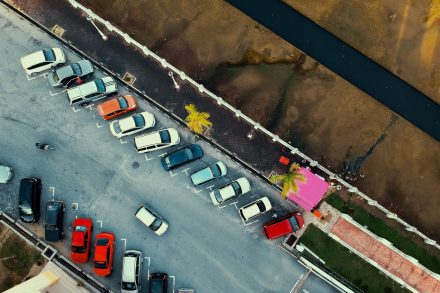
Progressives have long sought ways to get us out of our cars. In recent months, a little-reported trend has emerged in furtherance of this goal: the elimination of parking minimums for new housing developments. A host of cities has done this, either citywide or in select districts, among them Anchorage, San Jose, Raleigh, Minneapolis, Nashville, and Sacramento. California’s Gavin Newsom recently became the first governor to sign legislation prohibiting parking minimums statewide for projects within a half mile of a major transit stop. Liberal policymakers contend that parking minimums are bad for the climate and make housing needlessly expensive by forcing everyone, including those who don’t own cars, to pay for parking.

The Doomsday Clock has been corrupted by ideology

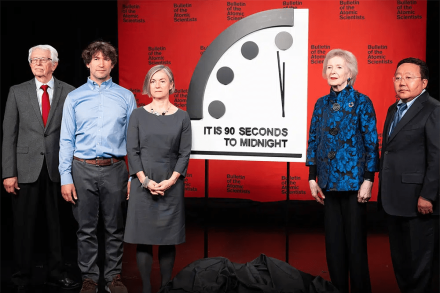
Ever since I can remember, I have always been aware of something called the “Doomsday Clock,” a symbolized calculation produced by a panel of prominent scientists of just how close humanity is to destroying itself. Published on the cover of every issue of the Bulletin of the Atomic Scientists, a journal founded in 1945 by Manhattan Project physicists, the clock’s hands would move toward or away from the dreaded midnight hour depending on how near Armageddon was believed to be. As a kid, the Doomsday Clock seemed an appropriate warning of how the conflict between the US and the Soviet Union might accidentally spin out of control.

Why California’s rainstorm ‘disaster’ is a blessing

No doubt California’s extreme weather makes for dramatic television, and for climate eschatologists it stirs up another round of end-times unease. California cliffs tumbling onto highways and sinkholes appearing out of nowhere have been all over the news. Lowland and flood plains are underwater up and down the state. Dry creeks have been raging torrents. One Guardian headline goes, “California’s rainstorm hell ‘among the most deadly disasters in our history.’” California governor Gavin Newsom tweets, “California is proof that the climate crisis is real and we have to take it seriously.” Both the media and Governor Newsom should get a grip. There is no evidence that climate change is to blame for these heavy rains. California has long suffered from extreme weather.

How the population scare predicted today’s climate hysteria

Stanford professor Paul Ehrlich's recent appearance on CBS’s 60 Minutes reminds us what can happen when those with impressive academic credentials begin making end-of-the-world predictions. It was 1968 when Ehrlich published The Population Bomb, a book that declared with absolute certainty that “the battle to feed all of humanity is over.” Because so many people were living so close together and consuming so much of the world’s limited resources, the inevitable future was one of “mass starvation” on “a dying planet.” A year after the book’s publication, Ehrlich went on to say that this “utter breakdown” in Earth’s capacity to support its bulging population was just fifteen years away.

Climate change’s biggest casualty is my winter wardrobe

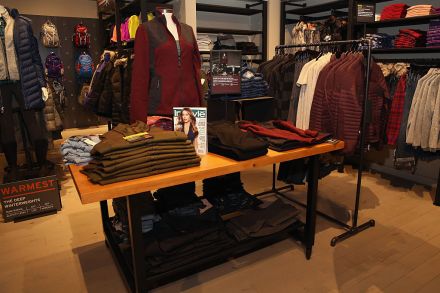
For Christmas this year, Santa Claus brought me the most splendid Maine Mountain Parka from L.L. Bean, rife with thoughtful details and flawless construction from hood to hem. Standing in the living room, I admired the weather-proof cuffs and pulled the oversized zipper with rubber grip pull cord (a must when wearing gloves). I fastened the button-front storm placket — such a satisfyingly haughty act, akin, I’d imagine, to how one of Napoleon’s cavalrymen might have felt strapping on his saber. I flipped the adjustable snorkel hood with its removable faux-fur ruff onto my head and burrowed my hands into the deep snap pockets. I then plopped down on the couch and gazed smugly out the window at the bomb cyclone raging outside.

The left’s politics of catastrophe

Having a close, lifelong acquaintance with the animal kingdom, from small reptiles and farm animals to dogs and cats of the large and domestic varieties, I disagree with G.K. Chesterton’s casual statement that the more one gets to know animals, the greater the distance between them and human beings appears. My own experience suggests the opposite. Chesterton had obviously not considered herd animals such as cattle, with their keen instinct for panic that Homo sapiens, taken as a species, so often exhibits. Humanity’s current panic — of global extent, though demonstrated in exaggerated form in the West — touched off by the phenomenon of “climate change” is only the latest historical manifestation of an endemic human trait.

iowa

Stop ignoring the real environmentalists

What does throwing soup on a piece of art have to do with the environment? When we hear the word environmentalist, what comes to mind is something like an Extinction Rebellion or JustStopOil activist: young, urban, progressive, with an expressly political agenda. But what if there are other categories of environmentalists that are expressly ignored, that may have the insights we need to solve the very real environmental problems we face? In my PhD research, I spoke with people who produced a significant amount of food for their own consumption in and around Chicago. Many of them were were disaffected by the focus on climate change and the obsession with consumption as activism.

environmentalists