Climate change

The UN’s ‘climate crisis’ tax

In between votes to legitimize the world’s worst regimes and condemn the world’s only Jewish state, the United Nations has found the time to introduce itself as a global governmental structure with the power to levy taxes on every inhabitant of Earth.   No, really.  The UN’s International Maritime Organization (IMO) is of the opinion that it can impose duties on the carbon emissions of ships to the tune of between $100 and $380 per metric ton. All of the revenue generated would be paid out to the UN’s “Net Zero Fund,” which would be used to “reward low-emission ships,” or pick winners and losers.
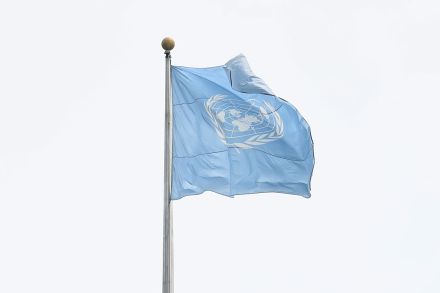

UN

Why I pity the poor eco-zealots

From our UK edition

An email popped into my House of Lords inbox last week from Lt Gen. Richard Nugee with the subject line ‘National Emergency Briefing’. Ooh, I thought. That sounds interesting. Will it be about the pitiful state of our armed forces? The threat of war with Russia? The penetration of Britain’s deep state by the Chinese Communist party? Nothing so sexy, unfortunately. The ‘emergency’ in question is our old friend the climate emergency, with the usual suspects being wheeled out in Westminster Central Hall next month to tell us how little time we have left to avert the looming disaster. This seems a little tin-eared. The past 12 months have witnessed the collapse of the global consensus about climate change.

On the trail of a missing masterpiece: What We Can Know, by Ian McEwan, reviewed

From our UK edition

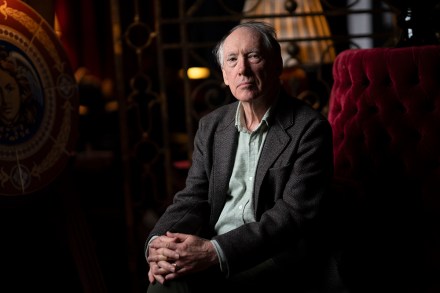
Ian McEwan delivers pleasure on the page with the ticktock reliability of an expensive Swiss watch. Even the lesser novels are immaculately written and cleverly plotted, full of provocative ideas, captivating characters and compelling incidents. In the better novels, he achieves a kind of elevated self-awareness, a supercharged intelligence that gives the fiction what feels like literary autonomy. My favourites, Black Dogs (1992) and Atonement (2001), seem to take on a life of their own. I imagine McEwan serenely blessing their emancipation. What We Can Know is not lesser, and the pleasures – bookish pleasures, especially –are in abundant supply. As the title implies, McEwan is testing the limits of human knowledge.

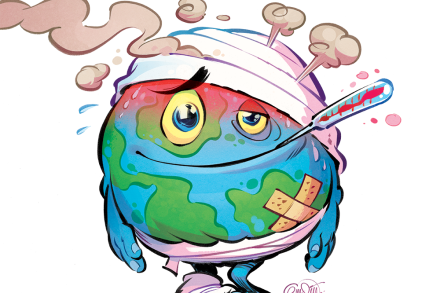
How justified is climate-change alarmism?

For decades, the picture of Earth’s future – as laid out by journalists and climate scientists alike – has been bleak. By 2070 we will see famine, economic collapse, a sun that cooks us, melted icecaps, flooding, extreme hurricanes and ever-present tropical storms. "Vast swathes" of the planet will be inhospitable for human life. And Greta Thunberg, in her late sixties, will wear a gas mask as she sits on the steps of Swedish Parliament with a cardboard sign declaring, "I told you so." Advocates have poured gasoline on the climate-alarmism fire earnestly, backed by reports declaring, "There really is no serious scientific debate remaining about climate change.

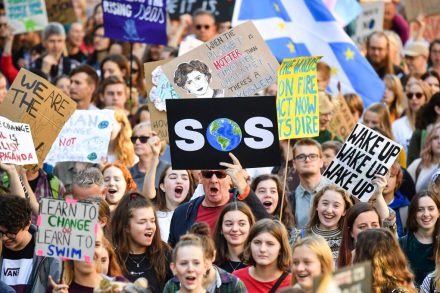
Global Climate Strike on September 20, 2019 in Edinburgh, Scotland (Getty)

The fight to make science great again

If one were looking for dismal assessments of the Trump administration’s contributions to the vitality of American intellectual inquiry, the editorial eructations of Holden Thorp would likely be at the top of the list.   Thorp is the editor-in-chief of Science, the weekly journal of American Association for the Advancement of Science (AAAS). This makes him one of the most influential figures in the academy and in American science as a whole. Few weeks go by without an editorial from Thorp denouncing the havoc wrought by Trump. The May 8 issue is mildly titled, “The New Reality for American Academe,” but the mildness ends there.

science

The best radio at the moment is on the BBC World Service

From our UK edition

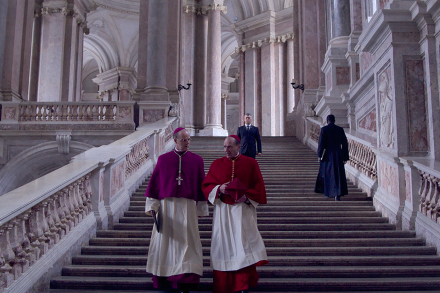
Online viewings of Conclave increased threefold following the death of Pope Francis last month. At least some of the traffic was rumoured to have come from the Vatican itself. This raises many questions, but the most pertinent for me this week is, what did the cardinals think of the carpets? Do they really have coffee machines in their rooms like Tremblay? Minibars like Bellini? Their peace spoiled by the sounds of a lift shaft as in the case of long-suffering Lawrence? If any of these details passed you by, it’s worth watching the film again. In fact, after listening to an interview with the production designer, to be broadcast on BBC World Service next week, you will feel positively compelled to do so.

Robert Macfarlane: Is a river alive?

From our UK edition

40 min listen

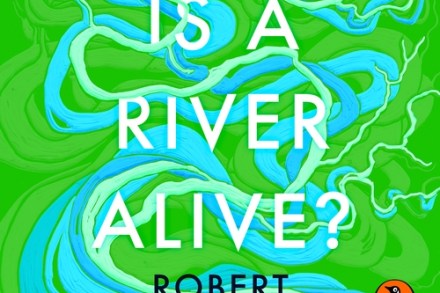
Sam Leith's guest on this week’s Book Club podcast is Robert Macfarlane. In his new book Is A River Alive? he travels from the cloud forests of Ecuador to the pollution-choked rivers of Chennai and the threatened waterways of eastern Canada. He tells Sam what he learned along the journey – and why we need to reconceptualise our relationship with the natural world.

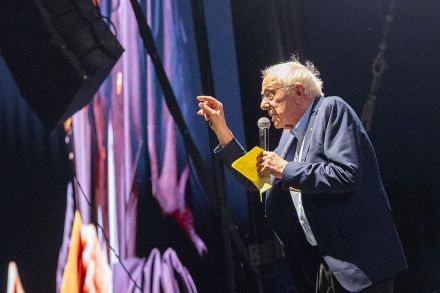
Bernie Sanders at Coachella shows time is not on the Democrats’ side

As the Church of England faces an exodus of parishioners, some of its more inventive clerics have rushed to embrace EDM as a new medium to draw young people back to their faith. “Our 90s-themed silent disco will be appropriate to and respectful of the cathedral,” curiously insisted the Very Reverend David Monteith, Dean of Canterbury Cathedral, to much derision over that sacred space’s conversion into a party zone for 3,000 revelers in 2024.

The left gives up on saving the planet

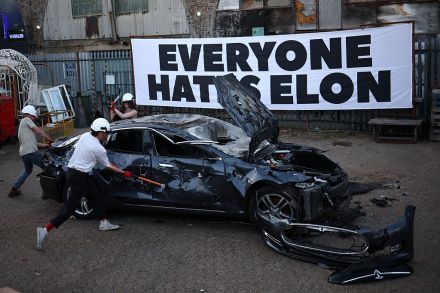
In his 2015 State of the Union speech, President Barack Obama praised American innovation and name-checked Tesla. “There are also millions of Americans who work in jobs that didn't even exist 10 or 20 years ago. Jobs at companies like Google, and eBay and Tesla,” he said.  “So no one knows for certain which industries will generate the jobs of the future. But we do know we want them here in America.”Well the future is here, ten years later, and those innovative electric vehicles are being vandalized, their drivers accosted, and there are even domestic terror attacks on dealerships, with several reports of mass arson, threats and damage at several dealerships across the country.

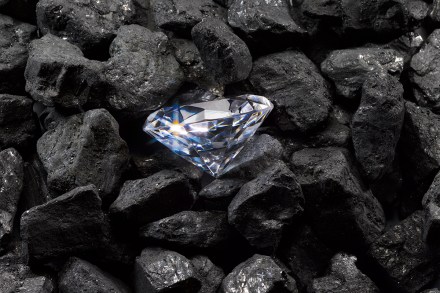
A meditation on the beauty of carbon

From our UK edition

There’s a scene in Evelyn Waugh’s The Loved One in which a magazine’s advice columnist ‘the Guru Brahmin’ (in fact ‘two gloomy men and a bright young secretary’) receives yet another letter from a compulsive nail-biter: ‘What did we advise her last time?’ Mr Slump, the chain-smoking drunk, asks. ‘Meditation on the Beautiful.’ ‘Well, tell her to go on meditating.’ The opening of Paul Hawken’s Carbon gives the impression that it was dictated by the gloomy Mr Slump in response to a climate activist asking what he should think about the destruction of the planet. Tell him that ‘to better understand the riddles and luminosity of life’ he must ‘go far upstream, and look at the flow of life through the lens of carbon’.

The downfall of climate change poster boy Michael Mann

From our UK edition

Even if you’ve never heard of Michael Mann, you will have felt his baleful influence on your energy bills. He is the inventor of the hockey stick chart, which shows a sharp increase in late 20th century global temperatures, like the blade of an ice hockey stick. It put rocket boosters on the climate change scare and was used as an excuse by policymakers to send green taxes, tariffs and regulations soaring. Mann was an obscure academic who had just been given his PhD at the University of Massachusetts when his graph was published in the journal Nature in 1998. Within months – fêted everywhere from the New York Times to the Intergovernmental Panel on Climate Change (IPCC) – he’d become the poster boy for the alleged global warming apocalypse.

Kemi’s stance on net zero is courageous – and correct

From our UK edition

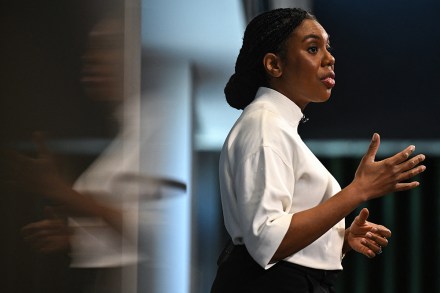
Kemi Badenoch secured the Conservative leadership on the basis that she would confront her party and the country with uncomfortable truths. This week, in a speech to launch the Tories’ policy renewal programme, she effectively told Theresa May and Boris Johnson that they were naifs for committing to unachievable climate targets. The decarbonisation of our economy, she said, was a ruinously expensive folly. By stating baldly and unapologetically that it will be impossible for Britain to get to net zero carbon emissions by 2050 without huge economic pain she has broken a consensus and breached a taboo. It is difficult for opposition parties to attract attention for policy announcements so far out from a general election, but Badenoch’s clarity is welcome and necessary.

James Bradley: The World in the Ocean

From our UK edition

49 min listen

My guest in this week’s Book Club podcast is the novelist and critic James Bradley whose new book is Deep Water: The World in the Ocean. He tells me how we need to rethink our relationship with the sea and the life it contains, why fish are much more intelligent than we are used to imagining, and why – amid planetary doom – there’s still room for hope.

Red states sue New York for punitive climate change bill

In what could find itself deemed a new “war of Northern Aggression,” West Virginia and twenty-one other states are looking to defend themselves against New York for what they allege are climate-related crimes. A new lawsuit targets New York’s recently passed “Climate Change Superfund Act.” ABC27 reports the law requires polluters “to pay for environmental damage based on how many tons of fossil fuels they emitted during a specific period of time.” States could be on the hook for as much as $75 billion in fines for emissions going back years. At the time of the act’s passage, State Senator Liz Krueger, co-sponsor of the bill, said, “The Climate Change Superfund Act is now law, and New York has fired a shot that will be heard round the world.

climate change

The California fires and the reckoning on liberal governance

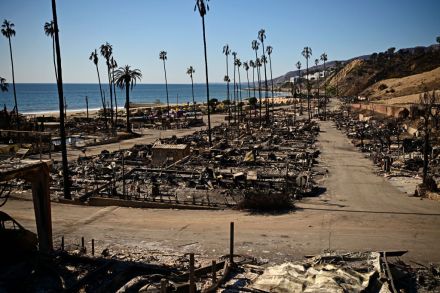
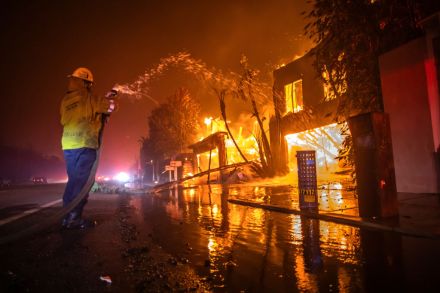
Fires in Los Angeles are raging and still barely contained as we go to press, with estimates of the rebuilding costs rising beyond $150 billion. By the time you read this, they’ll be under control and there will of course be plenty of time for finger-pointing — but The Spectator likes to be ahead of the curve, so we’re starting now. What we’re seeing in California is the complete failure of an experiment in one-party Democratic rule, a state level encapsulation of a party taken over by the fringe elements of its base. Given the pile-up of scandals, Californians might finally have had enough. But of the lot, which is the most ludicrous?

fires

Pious bilge: Kyoto, at @sohoplace, reviewed

From our UK edition

The West End’s new political show, Kyoto, can’t be classed as a drama. A drama involves a main character engaged in a transformative personal journey. This is a secretarial round-up of various environmental summits, or ‘Cop’ meetings, held during the late 1980s and 1990s. If you remove the private jets, a Cop summit is a sort of parish council seminar about the probable weather during the summer fête. The material is extremely dull and yet it’s possible to turn dross into a gripping story if you hire a dramatist. So Big Oil has been torching the planet for 66 years and yet the West End hasn’t been burned to ashes The authors, Joe Robertson and Joe Murphy, aren’t up to the job and their script is a blank list of speeches and events read out by soulless busybodies.

Letters: The dangers of the ADHD ‘industry’

From our UK edition

Nothing left Sir: Rod Liddle is right to ascribe the establishment’s desire to suppress the truth in relation to grooming gangs to its fundamentally anti-working class mindset (‘We demand a right to truth’, 11 January). But he’s characteristically wrong to attribute this to ‘liberalism’. The contemporary left’s identity-politics agenda is born from the opposite: the postmodernist-derived idea that reality can be radically reconstructed through control of what is, and is not, communicated. Its various fantasies – and the public-sector interests that depend upon them – necessarily involve suppressing our powers of rational cognition.

What does Gaza have to do with the Los Angeles fires?

The insanity displayed by the pro-Hamas crowd never ceases to amaze. But the latest salvo feels extreme even by the extremist standards that have come to define the global political climate post-October 7. According to some of the most vocal online anti-Zionists, the raging inferno now overwhelming much of Los Angeles is not the result of government neglect or poor urban planning or even climate change. No, the thousands of homes and tens of thousands of acres now destroyed across Southern California are the handiwork of Jews and Zionists and Israel.  There are many streams leading to this nonsensical conclusion — all rooted in time-worn tropes of nefarious Jewish alliances and global domination.

The case against a ‘climate emergency’

From our UK edition

January is the ideal month for gaining a sense of perspective. I’m increasingly convinced that the ‘climate emergency’ is another social mania we’ll look back on with: ‘J-eez, what was that about?’ Why? The paradigm displays the classic anthropocentrism of our era. As organised religion declines, we replace God with humanity. Arrogating to our species the power to dial global temperature up or down is typically arrogant (see: pride, goeth, fall). Claiming that something is all your fault is as vain as claiming it’s to your credit. Regarding ‘the planet’ as a frightened fluff ball that requires our protection is the ultimate hubris. ‘The planet’ can squash us like bugs. Or with bugs, which sounds especially gross.

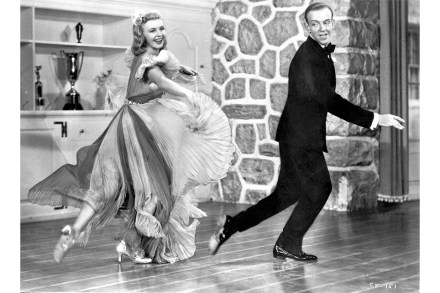
The Ginger Rogers theory of information

From our UK edition

I had a friend whose approach to entrepreneurialism was to take two separate things that seemed stupidly popular and somehow find a way to combine them. He thought karaoke was ridiculous; his friend thought 24-hour rolling news channels were daft. The two of them created a 24-hour karaoke channel in Asia – and sold it at a sizeable profit. The idea of gynogenic climate change holds that the planet is warming up, but that it is women who are to blame Following this model, I wondered if it might be a useful thought-experiment to contrive political theories which are annoying to people on both the left and the right.