Climate change

Climate change campaigners are crying wolf

From our UK edition

When will the climate change lobby finally realise that it is undermining its own arguments through hyperbole? Yesterday, the Lancet published its latest climate change ‘indicators’, accompanied by a comment piece in the Guardian by Christiana Figueres, former Executive Secretary of the UN Framework Convention on Climate Change and now chair of the Lancet Countdown advisory board.  The piece, headed 'Climate change isn’t just hurting the planet – it’s a public health emergency' makes the assertion that climate change is affecting 'the health of you, your family, your neighbours – each and every one of us.

The bank that keeps poor nations poor

From our UK edition

What is the point of the World Bank? You probably think of it, if at all, as a benign institution, a kind of giant, multilateral aid agency, whose job it is to bring liquidity to developing nations and help them grow out of poverty. Until not so long ago, that was indeed its function. Created alongside the International Monetary Fund at the 1944 Bretton Woods Conference, the bank did sterling work in its early years helping countries like France recover from the war; and later, giving mostly third world countries the vital seed money needed to help attract investors to risky capital projects. Its multiplier effect on investment can be extraordinary. In 2013, the World Bank gave Kosovo $40 million towards building a lignite power station.

Notebook | 28 September 2017

From our UK edition

I’m currently dwelling on past times. I have a film coming out based on the crazy events that took place in 1953 when Stalin died. (He lay having a stroke on his rug and in his urine for hours since everyone was too scared to knock and see if he was all right.) We shot the film last summer. Then Trump happened. Now, journalists grill me as if the movie was an intentional response to that bloated troll’s election victory. Films take years to finance and write, and another year to shoot and edit; in that time, there’s no way anyone could have predicted the election of America’s first balloon-animal-inflated-by-potato-gas as President. Social media makes us take immediacy for granted.

Are old white men really to blame for climate change denial?

From our UK edition

Funnily enough, you don’t come across too many pieces in the Guardian blaming black people for crime or women for bad driving. The newspaper would perhaps consider itself a pioneer in trying to drive out racial and gender stereotypes from daily life. It seems a different matter, though, when it comes to the inadequacies of white men, or, more specifically, elderly white men, to throw in a bit of ageism as well. An extraordinary piece in today’s Guardian tries to link what it calls 'climate denial' to race, gender and age.

Shame on the eco-ghouls exploiting Hurricane Harvey

From our UK edition

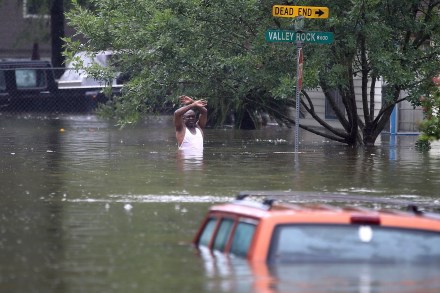
Here they come, the eco-ghouls, feasting on another natural disaster. This time it’s the floods in Houston. No sooner had Hurricane Harvey caused terrifying waters to consume entire streets and trailer parks than the eco-set was rushing in to try to make moral mileage out of it all. This is climate change in action, they decreed. This is man’s fault, they insist. Our hubris caused this watery horror, they claim, sounding positively Biblical, like Old Testament patriarchs warning the sinful populace that God will punish it with floods. There’s nothing like a natural disaster to remind us how backward environmentalist thinking is. They do it all the time.

Hostile climate

From our UK edition

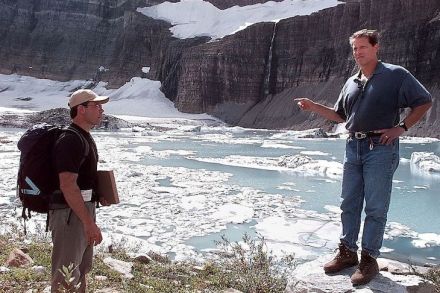
The subtitle of Al Gore’s new film is ‘Truth to Power’, which is supposed to give the impression of brave old Al fighting for right against the mighty fossil fuel establishment. But it is somewhat ironic, given his response when the power being challenged is Gore himself. The former vice president was in London last week to promote his new film and I, along with the world’s press, was invited to a private screening before being allotted an entire eight minutes talking with the great man. An Inconvenient Sequel is an odd film. Billed as a film about global warming, it is really about Gore himself.

Books Podcast: Naomi Klein

From our UK edition

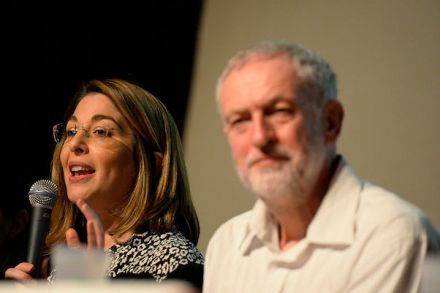
In this week’s Spectator Books podcast I’m joined by Naomi Klein, the activist journalist who gave articulate voice to the anti-globalisation movement in books such as No Logo and The Shock Doctrine. In her latest work, No Is Not Enough: Defeating The New Shock Politics, she gives an urgent account of how — as she sees it — Trumpism came to be and what moderates and progressives need to do about it. We talk about why talking about Trump only makes it worse, how WWE (World Wrestling Entertainment) is the key to understanding the modern White House, why nobody knows what’s going on in British politics any more; and I ask her — cheerily — whether it really is too late to ensure the survival of life on planet earth.

Oceans apart

From our UK edition

Readers of The Spectator will be familiar with the argument that climate change, like Britpop, ended in 1998. Raised on a diet of Matt Ridley and James Delingpole, you may have convinced yourself that climate scientists, for their own selfish reasons, continue to peddle a theory that is unsupported by real-world evidence. You may also have picked up the idea that the ‘green blob’, as it has been called in these pages, is somehow suppressing the news that global warming is a dead parrot. That was the case made by Dr David Whitehouse, science editor of Lord Lawson’s Global Warming Policy Forum in a Spectator blog in February last year.

There’s no need to tell children about terrorists

From our UK edition

Saturday evening in Durham. My in-laws and I had just begun our usual postprandial shout about Donald Trump when my niece appeared at the door, pale and serious. ‘There’s been another terrorist attack in London,’ she said. ‘I’m scared.’ The veins of the men in my husband’s family run with a sort of event-activated coolant. No one asked what had happened or how many were dead. My father-in-law said: ‘Don’t be daft. What’s there to be scared of?’ His brother added: ‘You’re more likely to be killed by cows.’ This, though not strictly true, is less ludicrous than you might imagine. Some 90 Brits were killed by terrorist attacks in the 15 years from 2000, whereas 74 were killed by cows. The cows did the trick.

Donald Trump is right to ditch the Paris Agreement

From our UK edition

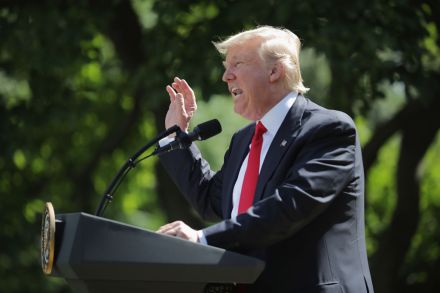
Yesterday’s announcement by Donald Trump that the United States is withdrawing from the Paris Agreement is truly historic. The Paris accord was the closest the Europeans had come to getting the US to accepting timetabled emissions cuts in the now quarter century saga of UN climate change talks. The first was in the 1992 UN climate change convention itself, rebuffed by George H.W. Bush; the second was in the 1997 Kyoto Protocol, signed by the Clinton Administration, effectively vetoed by the Senate and repudiated by George W. Bush. Now, Donald Trump has dashed their hopes for a third and possibly final time. It’s understandable that the European reaction is one of fury and outrage.

Do penises cause climate change? Discuss

From our UK edition

‘Why not think about Gender Studies?’ asked an advertorial aimed at prospective students in the newspaper I was reading. Actually, I can think of lots of reasons, starting with: what kind of employer in his right mind (or her right mind, come to that) would be insane enough to take on a graduate with an intellectually worthless degree indicative of shrill resentment, bolshiness, blue hair, lax personal hygiene and weaponised entitlement? But two US academics, Peter Boghossian and James Lindsay, recently came up with an even better one. They managed to get published in a social sciences journal a paper arguing that the penis is not in fact a male reproductive organ but merely a social construct and that, furthermore, penises are responsible for causing climate change.

The Spectator Podcast: Made in Windsor

From our UK edition

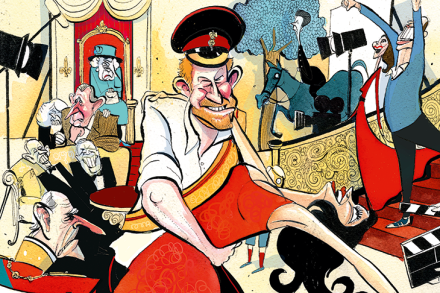
On this week's edition of The Spectator Podcast, we tackle a number of the most contentious issues around: whether the young royals are becoming too open with the press, if wind power will ever be an effective source of energy, and the question of whether Arsène Wenger should stay or go. First, in recent weeks, Princes William and Harry have both opened up to the world about their struggle to cope in the wake of their mother's tragic death. But Freddy Gray, in his cover piece, finds this candour off-putting, urging them not to turn the monarchy into a reality TV show. He joins the podcast along with Telegraph columnist Bryony Gordon, who conducted the first interview with Prince Harry where he spoke up about his issues with mental illness.

More gas, less wind

From our UK edition

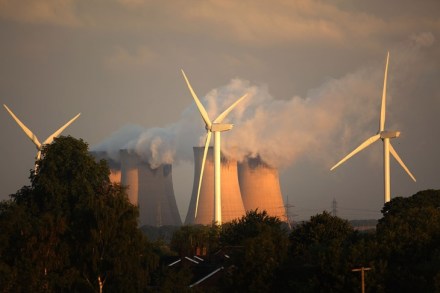
The Global Wind Energy Council recently released its latest report, excitedly boasting that ‘the proliferation of wind energy into the global power market continues at a furious pace, after it was revealed that more than 54 gigawatts of clean renewable wind power was installed across the global market last year’. You may have got the impression from announcements like that, and from the obligatory pictures of wind turbines in any BBC story or airport advert about energy, that wind power is making a big contribution to world energy today. You would be wrong. Its contribution is still, after decades — nay centuries — of development, trivial to the point of irrelevance. Here’s a quiz; no conferring.

Will Prince Charles’s ‘climate collapse’ prediction come true?

From our UK edition

Each year, this column has the melancholy duty of reminding the public of the Prince of Wales’s prediction, made in Brazil in March 2009, that there were only 100 months left to prevent ‘irretrievable climate collapse’. Those 100 months will have elapsed at the end of next month, so it looks as if we are all doomed. The general election on 8 June will therefore be pretty pointless. It is noticeable, however, that the Prince has not, in recent years, repeated his exact dating of the catastrophe, muttering, in 2015, that it might be 35 years. Even more striking was his co-authorship, at the beginning of this year, of the Ladybird Book of Climate Change.

The Spectator’s Notes | 27 April 2017

From our UK edition

With Emmanuel Macron and Marine Le Pen through to the final in France, people of a conservative disposition might feel themselves spoilt for choice. You can have either the believer in free markets and open societies or the upholder of sovereignty and national identity. In both cases, the left doesn’t get a look-in. But what if it isn’t like that at all? What if Macron, far from opposing the big state, is just a more technocratic version of the usual dirigiste from ENA? What if Le Pen, far from wanting a nation’s genius expressed in its vigorous parliamentary democracy, is just a spokesman for joyless resentment, looking for handouts for angry white people?

Portrait of the week | 30 March 2017

From our UK edition

Home Theresa May, the Prime Minister, wrote a letter to Donald Tusk, the President of the European Council, with formal notification of Britain’s withdrawal from the European Union under Article 50 of the Lisbon Treaty. If no agreement is made sooner, Britain would cease to be a member in two years. The other 27 member states had celebrated the 60th anniversary of the Treaty of Rome. Asked by the BBC if Mrs May would be the ‘elephant in the room’ at the shindig, Jean-Claude Juncker, the president of the European Commission, said: ‘She’s not an elephant.

Killing spree of the fluffy green idiots

From our UK edition

Who do you think was responsible for Europe’s biggest environmental disaster of the past three decades; one that caused more widespread damage and killed more people than even the nuclear accident at Chernobyl? Was it a) greedy and selfish capitalists, probably linked to Big Oil, riding roughshod over the stringent health and safety regulations our wise, caring politicians have designed to protect us and our natural environment? Or b) an alliance of fluffy green activists, campaigning journalists and virtue-signalling politicians, united on a noble mission to save the planet from the greatest environmental threat it has ever known? If you guessed b) then you may appreciate why we climate sceptics are experiencing such schadenfreude right now.

Lord of the Arctic

From our UK edition

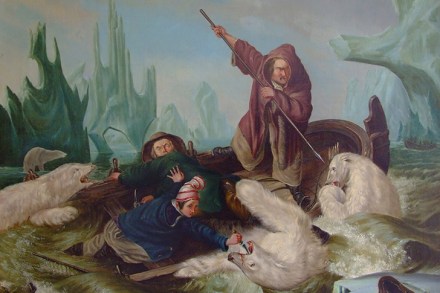
According to the author of this beautifully illustrated, hugely engaging book, if we were ever to choose a fellow mammal to serve as symbol for our time, then the polar bear would probably make any shortlist. Standing ten feet tall on their hind legs and weighing as much as a ton, the males are the world’s largest terrestrial predators and the only ones to seek human flesh actively. This extraordinary whale- and walrus-wrestling monster is proof positive that wildness persists on our planet, despite the onslaughts of the Anthropocene. For all its nightmare-haunting power, however, the aspect of the polar bear that really makes it an icon of the age is its vulnerability.

Late-season skiing

From our UK edition

There’s trouble brewing in the Alps. Skiers arriving in the mountains over Christmas were greeted, not by snow-clad chalets and oodles of fresh powder, but by thin ribbons of artificial snow snaking down green mountainsides. For the fourth time in as many years, the ‘white gold’ had failed to materialise. Whether climate change is to blame is anyone’s guess (I’m no scientist), but it’s certainly a worrying pattern. Parts of the Alps experienced their driest December in 150 years, and in many French resorts the only snow for Christmas was artificial. Initially it looked as though holidaymakers had learnt their lesson.

Barometer | 12 January 2017

From our UK edition

Black background A Morris dancing troupe with blacked-up faces had to abandon its performance in a Birmingham shopping centre after being heckled and accused of racism. — There are several explanations for the tradition of Border Morris groups blackening their faces, but it was certainly established by 1509, when a Shrovetide banquet for ambassadors featured torch-bearers with blackened faces. — Some believe it to have derived from Spain and Portugal, where dancers blacked up as Moors. Others believe that it derives from the practice of poachers blackening up to conceal themselves in darkness. — Blacking up is punished more mildly now than in the 18th century: a 1723 anti-poaching law made it a capital offence to be caught in a forest with a blackened face.