Climate change

‘God has abandoned us’

From our UK edition

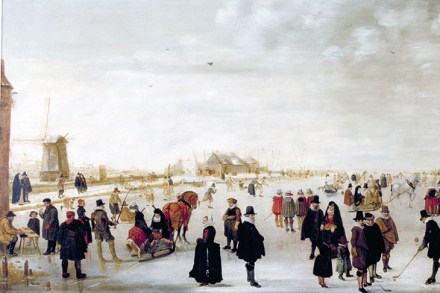
At a dinner recently I was told the story of a Canadian billionaire (now defined in banking circles as someone withmore than $500 million in liquid assets) who is building an escape destination from the oncoming climate apocalypse: an ersatz Versailles, with two runways, deep in the thawing Canadian tundra. Four hundred years earlier, the world faced a different meteorological crisis. Temperatures plummeted by around 2° C, and summers zig-zagged between floods and droughts, possibly due to variations in solar and geothermal activity. Harvests were cut short, rivers and seas froze over as the climate changed with a biblical ferocity. Birds, frozen on the wing, were said to have plummeted from the sky.

Planet propaganda

From our UK edition

If you liked Triumph of the Will, you’ll love this latest masterpiece of the genre: Our Planet. The Netflix nature series exploits the prestige, popularity and swansinging poignancy of Sir David Attenborough to promote an environmental message so relentlessly dishonest and alarmist it might have been scripted by the WWF. ‘Walruses committing suicide because of global warming.’ That was the nonsense from episode two repeated uncritically by all the newspapers, none of which seems to have been much interested in questioning the veracity of the claim. You’ll never guess what it was that really drove those walruses over the edge of the cliff...

Letters | 21 February 2019

From our UK edition

The breakaway seven Sir: ‘In both parties there are fools at one end and crackpots at the other, but the great body in the middle is sound and wise.’ One of the magnificent seven speaking this week? Well, the sentiment is surely present day, but rather they are the words of Churchill in 1913 trying to engineer a centrist national movement from ‘a fusion of the two parties’. In those days, it was the Conservative and the Liberal parties, but the history of the middle ground since then augurs poorly not just for the breakaway seven, but for those of us who feel disenfranchised by politics. We can argue who currently represents the devil and who the deep blue sea, but right now neither seems an attractive or palatable home.

Climate change school ‘strikers’ deserve to be punished

From our UK edition

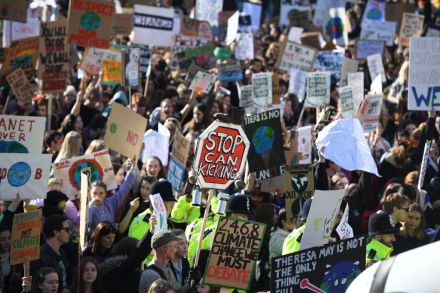
The thousands of children across the UK on ‘strike’ from school today to protest climate change are admirable. They’re part of a movement, Fridays for Future, which wants more aggressive measures to reduce emissions. It seems clear to me that climate change is real, man-made and requires action. If these kids can do their bit to make this point, good luck to them. Okay, some might just fancy bunking off from double maths or be dabbling in fashionable politics for its shareability on social media. Either way, what these children can’t expect is special treatment. There are calls from adults — almost exclusively those who agree with the aims of the walkout — for schools to show leniency to the strikers.

Chicago Notebook | 7 February 2019

From our UK edition

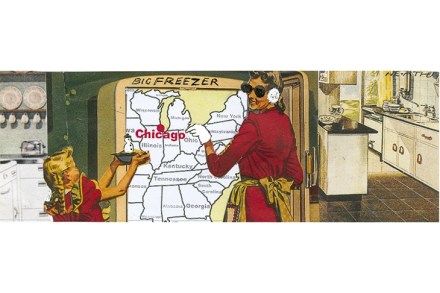
One of the few pleasures of advancing age is that, no matter how awful some looming catastrophe may be, you can always remember a time that was worse. On hearing the polar vortex was headed for Chicago last week, my wife and I smugly reminisced about having survived the coldest night in the city’s history — 20 January 1985 — when the mercury fell to -27ºF, or -33ºC. (Temperature scales are a nuisance in accounts of this sort — more on that below.) Spurning the temptation to huddle beneath blankets, we went out for deep-dish pizza, thinking we’d have the joint to ourselves. On the contrary, it was packed. We had to stand in line, mercifully in the unheated vestibule rather than the sidewalk. We had a blast.

Gove vs the wood-burning stove

From our UK edition

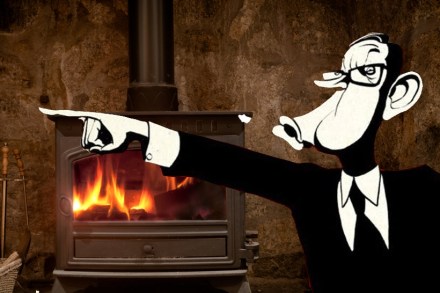
When I first heard rumours that Michael Gove was planning to go round the country with his environmental Gestapo, ripping out our wood-burning stoves in order to heal the planet, greenwash conservatism and reduce an imaginary 36,000 deaths a year, I must admit that a small part of me felt ever so slightly relieved. Of all the desirable accessories that I’ve coveted in my life, I don’t think any has quite disappointed me as much as the wood-burning stove now staring at me accusingly as I sit at my desk. It looks very handsome and room-furnishing, as cast-iron stoves do. And when it gets going, it really does pump out lots of heat. But there’s a reason, you eventually realise, why western civilisation graduated from such 18th-century technology to central heating.

Where are the snows of yesteryear?

From our UK edition

I like a book where you don’t think you’re going to be interested in the subject, but then find it’s so vigorously and engagingly written that you’re enchanted. This is one of those. I’m not a skier —I’m quickly bored when coffee-drinking mothers start recounting their children’s latest achievements on the piste — so I expected to have had enough by page five, as I set off across the blinding whiteness of this ‘biography’ of snow, written by a man who’s wearing ski-goggles in the jacket photo. But in Giles Whittell’s genial company, reading it was a great pleasure.

Should we listen to David Attenborough’s climate change warning?

From our UK edition

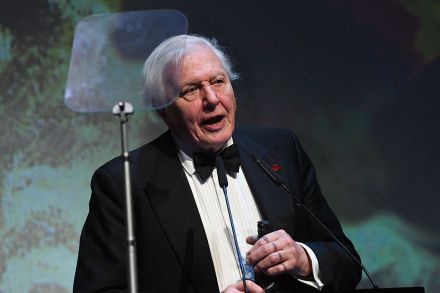
‘Civilisation faces collapse, Attenborough warns UN.’ That was the Times headline on Tuesday about the great broadcaster’s speech at the latest climate change conference in Poland. In theory, Sir David is always worth hearing. Nevertheless, his solemn warning was made less effective by the decision to print it at the bottom of page 17. I cannot help feeling that this adverse news judgment was entirely correct.

The threat to the environment that the green lobby tries to ignore

From our UK edition

It’s not like the green blob to keep quiet when there’s a threat to the environment in the offing. Even the smallest hint of a problem is usually enough to work a tree-hugger into a frenzy. So it’s worth taking a look at their decision to keep shtum over the recent appearance of what may be one of the greatest threats to the natural world we have seen. Over the last few weeks, scientists and campaigners alike have been turning their attention to the question of how land can be used to tackle global warming. Their interest was prompted by the appearance of the Intergovernmental Panel on Climate Change’s (IPCC) special report on how the increase in global temperatures might be kept below 1.5°C.

What Donald Trump gets wrong about climate change

From our UK edition

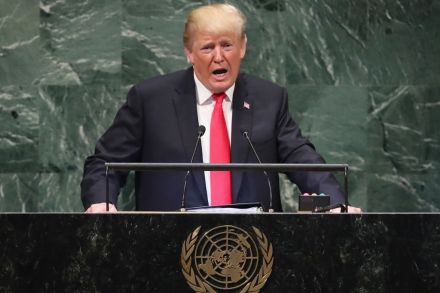
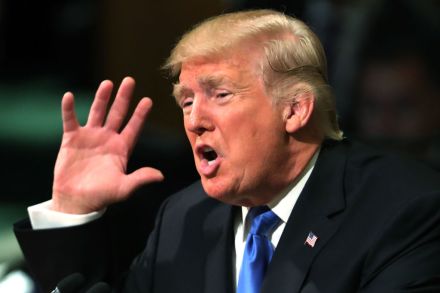
Donald Trump now says of climate change: ‘I don’t think it’s a hoax, I think there’s probably a difference. But I don’t know that it’s man-made.’ The climate activist Eric Holthaus said: ‘The world’s top scientists just gave rigorous backing to systematically dismantle capitalism.’ Both are wrong. The truth is that climate change is happening, but more slowly than expected. It’s now 30 years since James Hansen of Nasa raised the alarm and, as climate scientist Pat Michaels and hurricane expert Ryan Maue have pointed out, ‘it’s time to acknowledge that the rapid warming he predicted isn’t happening’. Our own government’s climate-change committee, and the hysterical BBC, should take note.

Diary – 18 October 2018

From our UK edition

When I land on the east coast of America, people tell me they’ve never met a Trump voter. When I land in the middle, as I did last week in Kentucky, I meet lots. I chatted with my driver, who did not like Trump at first, but would vote twice for his re-election if he could, because of the jobs boom and the Brett Kavanaugh hearings. He’s a retired salesman who tutors kids from poor backgrounds in reading and maths. ‘I guess that makes me a conservative,’ he says. I had to lecture in semi-darkness in Louisville, after a power cut plunged most of the university into darkness.

Barometer | 11 October 2018

From our UK edition

Global warnings How much time do we have to save the world from catastrophic climate change? 5 years         (according to the WWF, 2007) 5 years         (International Energy Agency, 2011) 3 years      (Christiana Figueres of the United Nations, 2017) 12 years   (IPCC, 2018) Doctor the figures The NHS estimated it had been defrauded of £1.29 billion in 2016-17. By whom? Patients £341m NHS staff £94m Opticians £79m Dentists £126m Chemists £111m GPs £88m   Home stretch What percentage of 25-34-year-olds can afford the cheapest local properties with the aid of a mortgage worth 4.

Good news: we now have until 2030 to save the earth

From our UK edition

Phew! The dangers of global warming are receding. Admittedly that is not how most news sources are reporting the publication of the latest IPCC report this morning. But it is the logical conclusion of reading coverage of the issue over the past decade. According to today’s IPCC report we now have 12 years to avert climate catastrophe. That might not sound long, but it means we are a good deal further away from doom that we were in 2007, when the WWF said we had five years to save the world. The doomsday clock hadn’t moved in 2011 when the International Energy Agency warned us that we had five years to start slashing carbon emissions or lose the chance forever.

No, Donald Trump’s climate policies aren’t going to ‘boil the planet’

‘The Trump administration knows the planet is going to boil. It doesn’t care,’ claims Canadian eco-activist Bill McKibben in a Guardian editorial. With enemies as unhinged as this, who needs friends? McKibben is basing his claim on a few paragraphs buried within a 500-page ‘Draft Environmental Impact Statement’ issued by the National Highway Traffic Administration (NHTSA) and subsequently bigged up by the Washington Post as conclusive proof that Trump is the ultimate Gaia-raping super villain. According to the report, on current projections the global mean temperature is going to rise by around 4 degrees Celsius (7 degrees Fahrenheit) by the end of the century.

donald trump’s climate change

Why weather apps can’t be trusted

From our UK edition

The Times reports this morning that Bournemouth business leaders are hugely annoyed with the BBC, whose weather app predicted thick cloud and thunderstorms for the recent bank holiday. In the event, it was sunny and warm, but the damage had already been done, and takings on the seafront were said to be down by nearly 40 percent as people decided to stay at home rather than risk a soaking. While weather forecasting is undoubtedly getting better, it seems fairly clear that ultra-local forecasts of the kind you find on weather apps can be very misleading: reducing the whole forecast to a single icon, as most apps do, removes all the nuance. The lesson seems to be that if you are going to make a decision based on a forecast, you should watch the TV weather and get it explained to you.

Why it’s time to stop fetishising experts

From our UK edition

Something extraordinary and largely unreported has just happened in a court in San Francisco. A federal judge has said that there is no Big Oil conspiracy to conceal the truth about climate change. In fact, Judge William Alsup — a Clinton appointment, so he can hardly be accused of right-wing bias — was really quite snarky with the plaintiffs who claimed there was such a conspiracy. The case was brought by the cities of San Francisco and Oakland, which have taken it upon themselves to sue the five big western oil majors — Chevron, ExxonMobil, Conoco-Phillips, BP and Royal Dutch Shell — for allegedly engaging in a Big Tobacco-style cover-up to conceal the harm of their products.

New York’s fight against the oil giants is political posturing at its worst

From our UK edition

Was there ever a more pathetic piece of political posturing than the attempt by New York mayor Bill de Blasio to sue five oil companies, including BP and Shell, for the cost of building £14.8bn ($20bn) worth of sea defences to protect vulnerable parts of the city? To add to his virtue-signalling, de Blasio has also announced that the city’s pension funds will seek to divest from the shares of oil companies. One should never under-estimate the ability of the courts, whether in the US or elsewhere, to come up with perverse judgements but it ought to be pretty improbable that New York could win the case.

Wind turbines are neither clean nor green and they provide zero global energy

From our UK edition

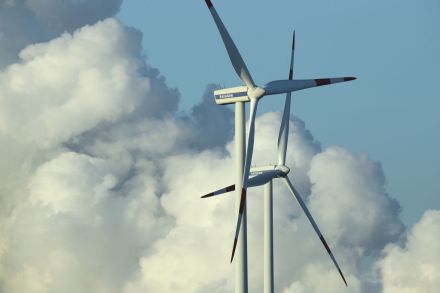
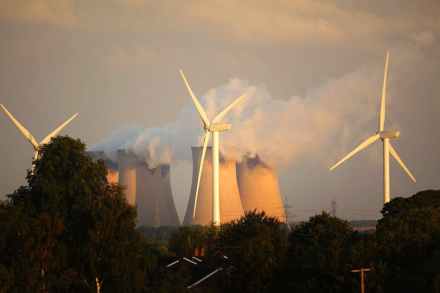
We’re closing 2017 by republishing our twelve most-read articles of the year. Here’s No. 2: Matt Ridley on why wind turbines are not the answer to our energy needs: The Global Wind Energy Council recently released its latest report, excitedly boasting that ‘the proliferation of wind energy into the global power market continues at a furious pace, after it was revealed that more than 54 gigawatts of clean renewable wind power was installed across the global market last year’. You may have got the impression from announcements like that, and from the obligatory pictures of wind turbines in any BBC story or airport advert about energy, that wind power is making a big contribution to world energy today. You would be wrong.

… while Rome freezes

From our UK edition

Why did the Roman Empire collapse? It’s a question that’s been puzzling writers ever since Edward Gibbon wrote The History of the Decline and Fall of the Roman Empire in the late 18th century. One classicist — a German, inevitably — bothered to count up all the various hypotheses for the fall, and came up with 210. The conventional explanation is that, in 410 AD, King Alaric and his Visigoths sacked Rome. Across the Empire, from Hadrian’s Wall to Africa, legionaries folded their tents and deserted their posts. Several centuries of self-indulgent, over-reaching and in-fighting emperors had done for the whole shooting match, leaving the Eastern Roman Empire to stumble on until the fall of Constantinople in 1453. And so Roman history came to a full stop.

How will Brexit Britain cut emissions – and keep the lights on?

From our UK edition

Many remarkable things happened immediately after the Brexit referendum. One is often overlooked: The House of Commons adopted the Fifth Carbon Budget, reaffirming the targets of the Climate Change Act 2008. More than half of the greenhouse gas emission reduction in the UK is due to policies and measures that originate in Brussels rather than in London. In 2014, one quarter of UK emission reductions were achieved by paying companies in Eastern Europe to reduce theirs instead. Brexit will have a profound effect on three central planks of UK climate policy – nuclear power, interconnection, and permit trade – but the government pretends that nothing will change. When he was energy secretary, Ed Miliband pushed nuclear power as a zero-carbon option to provide baseload electricity.