Climate change

The Great Barrier Reef is dying. Why does nobody seem to care?

From our UK edition

We seem to be wilfully blind when it comes to nature. Right now, Australia is in the grip of an unprecedented environmental disaster. The largest living structure on Earth, the Great Barrier Reef, is mortally sick. Across hundreds of miles of ocean, from Papua New Guinea and all the way southwards along the east coast of Australia, the reef is dying. Famously, the GBR is the only living structure visible from space – almost two thousand miles long and about the size of Germany. It’s suffering what the scientists call ‘bleaching’, a process where corals eject the algae that give them their bright colours, and turn white. They do it when they suffer stress, most commonly when the water in which they live warms up by more than 1°C above what they are accustomed to.

The Amber express

From our UK edition

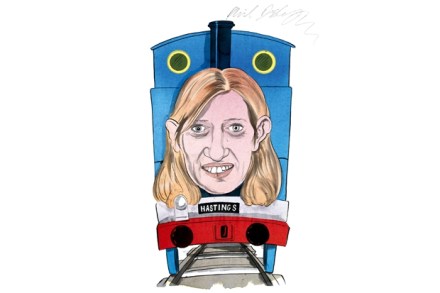
Amber Rudd isn’t a flashy politician; her office at the Department for Energy and Climate Change has almost no personal touches. She has a poster on the wall for the new Edinburgh tram (she was a student there). Her one concession to vanity is a framed ‘Minister of the Year’ award from this magazine: awarded for uprooting the legacy of the Liberal Democrat energy policy and being (in the words of the commendation) the ‘slayer of windmills’. It was, perhaps, an exaggeration: she hasn’t brought down any of Britain’s 5,215 onshore wind turbines. But she has been busy pruning back the green subsidies that her department had become used to doling out.

A new paper in a prestigious journal proves a 15-year hiatus in global warming. Why is it being ignored?

From our UK edition

This article, in Nature magazine, ought to have been front page news - and might have been, had it suggested that global warming was worse than we had thought.  Instead, it underlines the sound science behind an inconvenient truth: that there has been a 15-year hiatus in global warming. To those of us who have been following the debate, this is no surprise. In 2007 I pointed out that it was curious that in recent years the global annual average temperature had not increased at a time when greenhouse gasses were increasing rapidly and when the media was full of claims that the earth's temperature was getting higher and higher. I proposed no explanation but said that it was a curious observation that would probably change in the near future.

Time to put my money where my mouth is

From our UK edition

'As oil crashes, is it time to short solar stocks?’ Gosh, I wish I’d read that headline a year ago. The solar stock it tipped for doom in January 2015 has since plummeted from $19 to $2.65. Yes, hindsight can be a wonderful thing. But what if there were an area of the markets which you knew to be grotesquely overvalued as a result of ignorance, dishonesty, and false sentiment? You’d be mad not to bet against it, wouldn’t you? It would hardly be gambling: more like plain common sense. This is how I’ve felt for quite some time about the climate change industry. Very often when I read the expert commentators writing on the subject in the City pages, I’m shocked by how much more I know than they do.

Yes, the Paris climate deal was toothless. But it’s the EU we need to worry about

From our UK edition

Reading the Sunday newspapers, you could be forgiven for thinking an earth-shattering agreement was reached in Paris - one which outdid even the Kyoto Protocol in the way of binding agreement across the world on climate action. The deal was heavy on political will and ambition (or at least expressions thereof) but as many experts are now queuing up to say, offered little in the form of hard targets and binding commitments around reducing greenhouse gas emissions. This is of course a pragmatic approach to doing policy at the global level, particularly given the extreme variation in capacity and priorities between countries operating at vastly different levels of development. If the EU had had its way however, all of targets laid down in Paris would have been legally binding.

Spectator books of the year: Mark Cocker on a stake through the heart of pseudoscience

From our UK edition

The Invention of Nature: The Adventures of Alexander von Humboldt, the Lost Hero of Science by Andrea Wulf (John Murray, £25). Darwin pronounced him the greatest scientific traveller who ever lived, but the brilliant German Alexander von Humboldt (1769–1859) left no groundbreaking theory or world-changing book. Wulf sets out to restore his diminished reputation, and has given us the most complete portrait of one of the world’s most complete naturalists. Derek Ratcliffe occupied a smaller stage but was no less committed to a panoramic understanding of British nature.

Letters | 10 December 2015

From our UK edition

Just call them Daesh Sir: I was interested to read Sam Leith’s article in which he appears to argue that the language we use to describe those engaged in terrorism or the conflict in Syria doesn’t matter (‘Daesh? Sheesh!’, 28 November). I wholeheartedly believe that the words we use are important, and they are particularly vital in the current bid to combat terrorism. If we are to succeed in tackling the extremist threat, we must do all we can to cut it off at source. To do this, we must undermine the legitimacy Daesh needs to maintain a steady flow of recruits.
 Referring to this group as Islamic State, Isil or Isis gives a veneer of authority to a brutal terrorist cult.

Cumbria’s floods can’t just be blamed on the ‘climate change bogeyman’

From our UK edition

The flooding in Cumbria came at a bad time for those who make their living hyping global warming. Pretty much everyone who might have wanted to listen to their message was focused on the global climate talks in Paris and far too busy to worry about what was happening in Carlisle and Keswick. But that hasn't stopped a few people from trying to take advantage. The Met Office's chief scientist Julia Slingo was unable to resist the temptation to issue a statement linking the floods to climate change. This was handy for Liz Truss, the minister in the firing line for the failure of the flood defences, who repeated the claims yesterday. Slingo might have been expected to exercise a bit of caution here.

The wings of winter

From our UK edition

Crisis relocation. A term from the Cold War. It means being somewhere else when it happens. When the threat of the Soviet Empire was as much a part of daily life as tea and toast, there were fixed plans to shift our leaders out of harm’s way at the whiff of the first missile. Birds operate the same strategy. When the Cold War of winter strikes, many birds cope with the emergency by being somewhere else. So you’d think that this would leave the country a little depleted at this time of year: after all, the swifts and swallows are long gone and with them most of the warblers. But that’s not the case at all. The same strategy of crisis relocation brings thousands of birds flocking into Britain to savour the balmy weather of our winters.

So governments can control the weather, but not our borders?

From our UK edition

Niall Ferguson wrote a piece recently comparing Europe’s situation to that of the Roman Empire during its late, decadent, sexual pervert days: Here is how Edward Gibbon described the Goths’ sack of Rome in August 410AD: “ … In the hour of savage licence, when every ­passion was inflamed, and every restraint was removed … a cruel slaughter was made of the ­Romans; and … the streets of the city were filled with dead bodies … Whenever the Barbarians were provoked by opposition, they ­extended the promiscuous massacre to the feeble, the innocent, and the helpless…”. Now, does that not describe the scenes we witnessed in Paris on Friday night?

Cooler heads

From our UK edition

When world leaders met in Paris to launch the latest UN climate conference, much of the talk behind closed doors did not focus on global warming. Instead, the Paris conference has been overshadowed by more pressing and less contentious security concerns: the war in Syria, Europe’s refugee crisis and the growing threat of Islamist terrorism in the wake of the Paris massacre. The Copenhagen summit six years ago was a massive event; this year’s climate conference barely merits a mention of the front pages. The Paris meeting is not even attempting to achieve what the 2009 Copenhagen summit failed to do: reach a legally binding treaty on cutting CO2 emissions.

The real victims of climate change

From our UK edition

[audioplayer src="http://rss.acast.com/viewfrom22/thegreendelusion/media.mp3" title="Matt Ridley and Michael Jacobs debate the point of the Paris climate change conference" startat=31] Listen [/audioplayer]The next generation is watching, Barack Obama told the Paris climate conference: ‘Our grandchildren, when they look back and see what we did in Paris, they can take pride in what we did.’ And that, surely, is the trouble with the entire climate change agenda: putting the interests of rich people’s grandchildren ahead of those of poor people today. Unfair? Not really, when you look at the policies enacted in the name of mitigating climate change.

A different species of argument

From our UK edition

Because I used to go to venues like Bataclan an awful lot myself, I’ve been dwelling a great deal on what the fans must have gone through that night. And the conclusion I’ve reached is how utterly random the whole business must have been: whether you survived or died was almost entirely dependent on being at the right or wrong bit at the right or wrong time. Even the band Eagles Of Death Metal, it turns out, only escaped by the skin of their teeth. The bassist barricaded himself into a room; the singer and guitarist escaped into the street and went briefly back to look for a missing girlfriend only to meet a gunman lowering his assault rifle at them; the drummer crawled out using his drum kit for cover.

The many fights over the Lord’s Prayer

From our UK edition

Amen corner Digital Cinema Media, a company which distributes adverts to cinemas, refused to allow an advert which involves the recitation of the Lord’s Prayer by, among others, the Archbishop of Canterbury. Some other battles over the prayer: — Campaigners want Alberta to follow other Canadian states, where recitation of the Lord’s Prayer in state schools is already banned. In the latest battle the Pembina Hills School Division voted by 30 to three to let the prayer still be recited. — Last year cheerleaders at a high school football game in Oneida, Tennessee, were accused of violating the US First Amendment, which forbids the state from promoting one form of religious worship.

‘I was tossed out of the tribe’: climate scientist Judith Curry interviewed

From our UK edition

It is safe to predict that when 20,000 world leaders, officials, green activists and hangers-on convene in Paris next week for the 21st United Nations climate conference, one person you will not see much quotedis Professor Judith Curry. This is a pity. Her record of peer-reviewed publication in the best climate-science journals is second to none, and in America she has become a public intellectual. But on this side of the Atlantic, apparently, she is too ‘challenging’. What is troubling about her pariah status is that her trenchant critique of the supposed consensus on global warming is not derived from warped ideology, let alone funding by fossil-fuel firms, but from solid data and analysis. Some consider her a heretic.

Get ready: these climate change talks might actually do something

From our UK edition

The Prince of Wales is right, and I appreciate that this isn’t something people say very often. Now and again, certainly, Prince Charles does turn out to be right about things, such as the need for interfaith dialogue or the horrors of some modern architecture, but the manner in which he tends to be right about them does rather have the feel of happy coincidence. In the future, as Warhol didn’t quite say, we will all be right for 15 minutes. Unless it’s about homeopathy. This week, you see, the Prince told Sky News that the war in Syria may be linked to climate change. Not, please note, that it was caused by climate change, let alone man-made climate change. His view is very much not that, if more of us drove electric cars, Raqqa would be at peace.

Hot air summit

From our UK edition

The delegates who will gather for the star-studded Paris climate summit include celebrities, presidents and perhaps even the Pope. Among other things, they will be asked to consider the formation of an ‘International Tribunal of Climate Justice’, which developed countries would be hauled before for breaching agreed limits on greenhouse gas emissions. That the proposed body will seek to be ‘non-punitive, non-adversarial and non-judicial’ does not reassure. A tribunal, if it is worthy of the name, ought to be all those things. Does the threat of climate change really justify such a system? It is disturbing to think how many world leaders and policymakers might casually answer ‘yes’.

A Supreme Court justice and the scary plan to outlaw climate change

From our UK edition

How do you make an imaginary problem so painfully real that everyone suffers? It’s an odd question to ask, you might think, but it’s one that has been exercising some of the brightest minds in the legal firmament, led by no less a figure than Lord Justice Carnwath of the Supreme Court. Last month, at an event whose sinister significance might have passed unnoticed had it not been for the digging of Canadian investigative blogger Donna Laframboise, Carnwath contrived to nudge the world a step closer towards enacting potentially the most intrusive, economically damaging and vexatious legislation in history: an effective global ban on so-called ‘climate change’.

Charlotte Church feels the heat on Question Time

From our UK edition

Last night's episode of Question Time saw David Dimbleby relocate to Cardiff to join Charlotte Church, Charles Moore, Stephen Crabb, Labour's Stephen Kinnock and Plaid Cymru's Leanne Wood for a Welsh debate. While questions were raised about the future of Plaid Cymru after a lacklustre election result, the first topic on the agenda touched on whether Jeremy Corbyn could still be Prime Minister now he has said that he would never, ever use a nuclear weapon. With Kinnock struggling to defend Corbyn's comments while also sticking to his own views supporting nuclear weapons as a deterrent, it fell to Corbynista Church to praise the Labour leader's comments as 'commendable': 'I think that it's commendable.

Where there’s smoke…

From our UK edition

What fun it is watching again all those smug Volkswagen ads on YouTube, featuring men in mid-life crisis revving up their Golfs and Passats. German carmakers vie with French farmers for their sacred status in the European Union. That it has taken US authorities to sniff out the company’s cheating on emissions tests doesn’t say much for European environmental law, which is good at telling us we can only have low-powered kettles, but apparently unable to sniff out high emissions from overpowered diesel cars. But the VW scandal isn’t just a story of corporate turpitude. It is part-product of an environmental policy in Britain as much as across the EU which has become fixated on carbon emissions to the exclusion of virtually everything else.