Cinema

Why The Little Mermaid is bad news for cinema

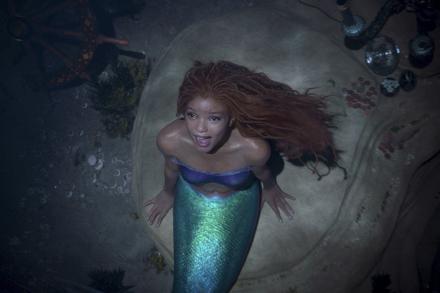
It is disappointing to learn that, after critics and cynical audiences everywhere had sharpened their fish knives in the expectation of the new live-action Little Mermaid film being a catastrophic disaster, early reviews have suggested that it is… fine. It attracted a great deal of attention, and some criticism, for the casting of the black singer-actress Halle Bailey in the lead role of Ariel, on the grounds that sea-dwelling mermaids must, after all, be white-skinned redheads, as she was in the seminal 1989 animated film. Yet Bailey’s performance has been universally acclaimed, with her delivery of 'Part of Your World' being singled out for particular praise. The reason why so many are disappointed that we do not have a Cats­­-level disaster on our hands is twofold.

‘Luxury’ cinemas are a horror show

‘I know,’ I said to my friend recently. ‘Let’s see a film!’ We booked the Everyman Kings Cross, the only cinema that happened to be showing what we wanted to watch at a convenient time and location. You might already be familiar with the Everyman concept. According to the chain, it’s ‘redefining cinema’ with an ‘innovative lifestyle approach to our venues, where you swap your soft drink for a nice glass of red wine and a slice of freshly made pizza served to your seat’. And apparently it's popular – an Everyman opened in September in Egham, Surrey, bringing the total to 38, and another one is announced for Durham early next year. But after my latest visit, I found myself marvelling at the success of what might be the most annoying cinema concept on earth.

I’m too tired for Lena Dunham: Catherine Called Birdy reviewed

Catherine Called Birdy is written and directed by Lena Dunham and it’s a medieval comedy about a 14-year-old girl resisting her father’s attempts to marry her off while yearning to do all the things women aren’t allowed to do. (She would especially like to attend a hanging, for example. And also ‘laugh very loud’.) It most put me in mind of Monty Python and the Holy Grail, as it has that spirit, but it does not share that timeless brilliance. It’s fun, and endearing, and the patriarchy gets a good kicking which, as you know, is my favourite thing. But it feels like one joke or sketch that’s been dragged out for nearly two hours. It’s fine, yet forgettably so. https://www.youtube.com/watch?

A compelling, if pitiless, journey: The Forgiven reviewed

The Forgiven is based on the novel by Lawrence Osborne and stars Ralph Fiennes (terrific) and Jessica Chastain (ditto) as a wealthy British-American couple driving to a weekend-long party in a luxurious Moroccan desert villa when they hit and kill a young local boy on the road. Oops. What the film adds up to, I cannot say, as it isn’t clear. Who is forgiven? Is anybody? It’s ethically ambiguous and you have to do your own moralising, which is always a drag. (Note to filmmakers: I’m old, I’m tired, please spoon-feed me.) But it’s a compelling, tense journey even if it’s a pitiless one. Human nature doesn’t come out of this at all well. https://www.youtube.com/watch?

Schlocky and silly but fun: Beast reviewed

Beast is, the blurb tells us, a ‘pulse-pounding thriller about a father and his daughters who find themselves hunted by a massive rogue lion intent on proving that the savannah has but one apex predator’. Whether this was ever intended to be a serious film, I cannot say, but it’s fun in its schlocky, gory, silly way, doesn’t outstay its welcome (it’s barely 90 minutes) and will satisfy anyone who has ever yearned to see Idris Elba wrestle a lion and then punch it full in the face. Not my dream especially, but each to their own. https://www.youtube.com/watch?

The joy of volcano-chasing

Katia and Maurice Krafft were both born in the 1940s in the Rhine valley, close to the Miocene Kaiser volcano, though they didn’t know each other as children. They met on a park bench when they were students at the University of Strasbourg, and from that moment on, according to their joint obituary in the Bulletin of Volcanology, ‘volcanic eruptions became the common passion to which everything else in their life seemed subordinate’. They married in 1970, formed a crack team of volcano-chasers, équipe volcanique, and set off to get as close as they possibly could to the very edge of every fiery crater, to collect samples and data and just to be there, ecstatic with the enormity of it all, like a pair of mad moths drawn into a candle flame.

Ten films to rival Top Gun Maverick

After over a year of delays, Tom Cruise’s keenly anticipated sequel to the iconic Top Gun (1986) is released on 25 May. TG: Maverick’s seat-of-your-pants aviation sequences have whetted the appetite of both fans and non-fans for the picture, which has picked up almost universally positive reviews. https://www.youtube.com/watch?v=7SvPJ0oEWR0 Not unexpectedly for Cruise, he handled some of the flying himself in the picture, returning as Pete ‘Maverick’ Mitchell, a US air force test pilot and flight instructor, purposely stuck at the rank of captain to indulge his addictive 'need for speed.'Cruise dials down the cockiness of the first picture to deliver a more mature, nuanced take on Maverick – although he retains his authority-bucking attitude.

Schlock: Everything Everywhere All At Once reviewed

We’re doing multiverses now. Last weekend, a friend dragged me to see Marvel’s latest product, Doctor Strange in the Multiverse of Madness. For two hours I watched characters earnestly talk about their trauma, and then fly around firing jets of coloured magic at each other, and then more pompous trauma talk, like five-year-olds playing at adult emotional life, and then more joyless beams of coloured magic. I left the cinema muttering like a deranged war veteran. ‘Someone needs to be punished for this. We need show trials. We need to make them suffer for what they’ve done.’ My friend spoke, but I could barely hear him. I stared at an empty space roughly 50 metres behind his head. ‘You. You brought me here. You did this.

Ten thrillers with twists to rival Sleuth

Joe Mankiewicz’s classic Olivier/Caine two-handed mystery thriller Sleuth will mark its 50th anniversary later this year, fortuitously in time for the release of Knives Out 2, which promises to be a similarly intriguing whodunnit – at least on the basis of 2019’s initial movie. Based on Anthony Shaffer’s Tony award-winning play, Sleuth depicts a battle of wits between snobbish mystery writer Andrew Wyke (Laurence Olivier) and hairdressing salon owner Milo Tindle/Tindolini (Michael Caine).

Film’s most unforgettable scene

The actor never knew they would use a real horse’s head. This was May 1971 and John Marley was preparing to perform in the most infamous scene in The Godfather, playing the corrupt movie producer who wakes up to find a horse’s head in his bed. Reportedly, Marley assumed this would just be a plastic prop. But the director, Francis Ford Coppola, had other ideas. In a note to himself, Coppola observed: ‘If the audience does not jump out of their seats on this one, you have failed.’ So he quietly sent an assistant to a dog-food factory to pick up a genuine head, newly hewn from the shoulders of a racehorse. She brought the stinking object back in a freezer box and it was slipped into the bed with Marley for maximum authenticity.

My clash with Maureen Lipman

After my Unapologetic Diaries were published recently, I was apparently accused of offending several people. At a lavish Christmas lunch attended by celebrities, stars and a smattering of royals, I was mortified to find that my place card was next to one of my alleged victims. What should I do? Apologise? Grovel? What I had said in my diary was just repeating what a mutual friend had whispered to me about this individual. At drinks, I made Piers Morgan aware of the situation. He hooted victoriously, ‘Finally, I’m not the most reviled person in the room!’ then said he would save me further embarrassment by doing the unthinkable and swapping my placement round. With Piers next to me instead, the lunch was a little less tricky but uncomfortable nevertheless.

The Spectator’s best films of 2021

The Power of the Dog: Cumberbatch is spectacular https://www.youtube.com/watch?v=LRDPo0CHrko Jane Campion’s The Power of the Dog could also be called The Power of Benedict Cumberbatch, as he’s so spectacular. He plays a ruggedly masculine cowboy with an inner life that isn’t written, but that we somehow still see. It is also clearly Campion’s best film since The Piano. Read the full review here. The Lost Daughter: entirely gripping https://www.youtube.com/watch?v=xNq9YOfL0Zs The Lost Daughter is an adaptation of the Elena Ferrante novel about motherhood that says, quite ferociously: it’s complicated. And: mothers aren’t necessarily motherly, and can feel ambivalence.

‘I am not able to answer your question’: an irascible Paolo Sorrentino interviewed

Loving the films of the Italian auteur Paolo Sorrentino, I thought he’d be easy to chat to. But a maestro is a maestro, as I was reminded when I interviewed him in London last week. Masked and communicating through a translator, I semaphored my admiration for his new film The Hand of God, starting with its spectacular opening shot. Like a bird, the camera flies over the sea, then focuses on a vintage car tooling along the promenade, before panning over the city again. But he rejected my praise: ‘It’s not complicated. It’s a normal shot by helicopter.’ He’s right, of course, that his new classic coming-of-age story represents a departure towards simplicity.

Snow-filled films for cosy winter nights

This week, the southern counties of England were treated to the rare sight of November snow. The beauty of tla (Inuit for snow) is that it can render the most prosaic locale picturesque. Snow is an impossible element to control of course – especially in the movies, but the fake stuff is usually on hand for when Mother Nature fails to deliver. Before the era of CGI, cotton was famously used on Hollywood film sets in the 20s, until it was deemed too much of a fire risk. A mix of salt and flour was favoured in Charlie Chaplin's Gold Rush. In It's A Wonderful Life, foamite, sugar and water were put through a wind machine to create the wintry scenes of Bedford Falls, while Dr Zhivago favoured marble dust.

What James Bond and Aristophanes have in common

So James Bond is back, doing exactly what he always does, inviting the audience into a fantasy world for the pleasure of wondering ‘What if?’ In this respect, Bond films resemble the work of the world’s first recorded comic poet, the Athenian Aristophanes (c. 440-380 bc). His premise was that Athens’s problems could be solved only by little people of no importance, not the greedy, vain and incompetent leaders in the public eye. So the scene was set for the hero(ine) to put them firmly in their place. One favourite subject for his comic fantasies was the long war between Athens and Sparta (431-404 bc). Take three examples. In 421 bc Aristophanes sent a farmer Trygaeus up to heaven on a dung-beetle to find Peace and restore her to earth.

Has Covid killed criticism?

The pandemic was bad for criticism with its universal dogma of ‘kindness’. Restaurant, theatre, film and book critics felt compelled to be kind, as if criticism itself was coughing at a death bed. But who does this kindness benefit? Last year I reviewed Michael Rosen’s book about his Covid-19-related coma: Many Different Kinds of Love. I liked it, but I suggested that publishing the notes people had written to him as he lay in the coma was a waste of both their time and ours. Rosen didn’t like this and moaned on Twitter: ‘I think they are the power and the beauty of the ordinary. And how extraordinary that this is ordinary.’ But surely the function of criticism is to try to separate the ordinary from the extraordinary?

In defence of Marvel

The teaser for Spider-Man: No Way Home, out this Christmas, which had a record number of 355 million views in the first 24 hours of online availability, delivers three minutes of thrills. Tom Holland is back, in the titular role, with his girlfriend from the previous Spidey movie, his best friend Ned, references to Mysterion, jokes from Benedict Cumberbatch as master wizard Dr Strange, plus engagement with that most playful of Marvel concepts, the multiverse. Bring in the multiverse, and anything, everything, is possible. Are you old enough to recall that moment in Dallas when the shooting of JR was revealed to be a dream? Well, the multiverse does all that, and some. Time is not a constant.

The time is up for long films

‘Programme starts at 3.45, so the film will start at 4.15, and it’s two hours and 43 minutes long, so we’d be out just before 7 p.m.’ This is the No Time to Die calculation, and I think many of us are doing it and wondering: ‘Can I face it?’ A dark afternoon spent in a state of total surrender to the longueurs imposed on us by a self-indulgent director? Thirsty from too much popcorn, leg muscles seizing up, not allowed to look at your phone, pressure on the bladder, Daniel Craig never smiling and the end nowhere near in sight?

Awards season loses its shine when no one can go to the cinema

Here it is again, a couple of months later than usual but back nevertheless. It’s the time of the annual jamboree that is film awards season, a three-month extravaganza that predominantly revolves around three key events: the Golden Globes, the Baftas and the Oscars. All three of these celebrations of artistic excellence and mutual backslapping have been delayed due to Covid. The Globes took place — virtually — three weeks ago, Bafta revealed its shortlist last week and the Oscar nominees were announced on Monday. The starting gun has been fired — while all our cinemas remain closed. Have you seen Nomadland, The Father or Promising Young Woman? Of course you haven’t. No one, apart from the critics, has been afforded the opportunity.

How Korean cinema mastered the art of horror

There is a moment in the Jung brothers’ 2007 ghost film, Epitaph, when a young doctor in wartime Korea realises that the wife he adores does not have a shadow. He is entertaining her with a shadow puppet show in their home when he notices the aberration. ‘Walk to me,’ he says as he waves a naked light bulb in front of her. She had been a visiting medical student in Japan a year earlier and, unbeknownst to him, had died in an accident. It’s a moment that perfectly illustrates the psychological subtlety and brilliant scene-making of Korean film. Epitaph is about a group of young doctors working in a hospital under the Japanese occupation.