Cinema

Not for the squeamish: The Substance reviewed

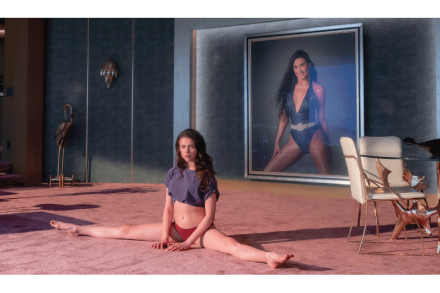
Both horribly familiar and wonderfully shocking, this body-horror film written and directed by Coralie Fargeat does a very traditional thing – turning the scramble for youth and beauty into a monster of immeasurable disgust and immorality – in a huge way. There is nothing minimal or restrained or overly clever here; nothing of the nuance in language or wit that makes its forerunner, The Picture of Dorian Gray, so haunting. This is a presentation of the horror of ageing for the bombastic mash-up age, melding vampire, sci-fi, feminist tragicomedy and dystopian genres. It’s like a reverse Barbie but with lashings of Poor Things, Blonde, the uncomfortably up-close Marilyn Monroe biopic, and plenty more.

When is anyone going to properly appreciate what critics have to go through?

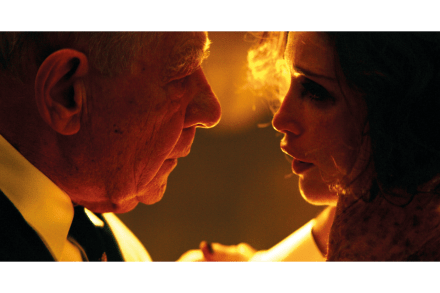
The Critic is a period drama starring Ian McKellen as a newspaper theatre critic famed for his savagery and it did sound as if it had all the makings of an entertaining and nicely savage little film. But through a surfeit of plot, it rather loses the plot, and the result is a surprisingly bland melodrama with the small-screen feel of one of those Agatha Christies the BBC forces upon us every Christmas. When is anyone going to properly appreciate what we critics go through? It’s a pity, as critics don’t often make it on to the cinema screen, unlike war reporters. War reporters, war reporters, why is it always war reporters when I have to sit through a film each week that may be boring? When is anyone going to properly appreciate what we go through?

The Terminator is still the best

The Terminator is James Cameron’s first film, made a star of Arnold Schwarzenegger, is celebrating its 40th anniversary – there’s a 4K restoration out in cinemas – and I’ve never seen it. I’m not wholly ignorant of 1980s action films, it may surprise you to hear. I’ve seen Diehard. I know a single fella in a vest can see off an entire army. But Terminator passed me by and now I’m glad to have rectified that. It’s engrossing, suspenseful, has a personality all of its own and absolutely stands the test of time. That last scene with the crawling, whirring, clanking arm? Best scene ever. Cameron, who would go on to make Aliens, Titanic and Avatar, was reportedly living out of his car when he sold the script to producer Gale Anne Hurd for $1.

Please stop making Alien movies

In the Alien films, a xenomorph is a monstrous, all-consuming life form that exists only to make more and more copies of itself. Once the first xenomorph appears, it’s only a matter of time until all those gleaming chrome walls will be covered in creepy black goo and the humans suspended lifeless from the ceiling in webs of slime with their chests ripped open. The xenomorphs are not curious about the world. They don’t care that they’re in a spaceship in the middle of outer space. As far as they’re concerned, we’re all just warm bodies in which to incubate their young. The only thing they want to do is make more and more and more and more of themselves.

Funny, authentic and takes you right back to being 13: Didi reviewed

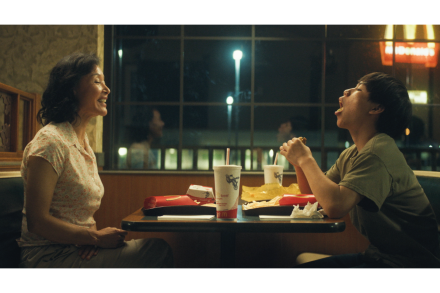
Didi is a coming-of-age drama by the Taiwanese-American writer-director Sean Wang. It’s set in the summer of 2008 and based on his own adolescence – and here’s the bottom line: it’s an absolute joy. It’s funny, moving, authentic and takes you right back to being 13. (Agh!) The main character here is Chris (Izaac Wang), who is called ‘Didi’ by his family as that’s the Chinese for ‘little brother’. He is 13, lives in Fremont, California, and is about to start high school. There’s no father in the picture as he’s working back in Taiwan. His flustered, put-upon mother, Chungsing (the magnificent Joan Chen), can’t comprehend her children’s American ways and dispenses the kind of advice that no self-respecting teenager would ever take on board.

Cowboys and clichés: Horizon – An American Saga reviewed

Horizon: An American Saga is a Western directed by Kevin Costner. It also stars Kevin Costner and is co-written by Kevin Costner and has been bankrolled by Kevin Costner – so if it’s Kevin Costner you’re after, happy days. This is Chapter One, and there are three more chapters to come, so even though it’s a whopping three hours long it’s only a quarter of a film. Sienna Miller doesn’t get to do much except look golden. She deserves better, I think Now I have to say something positive about it because, you know, Costner re-mortgaged his house to fund it and everything. Sienna Miller is a positive. I liked the way that, even when her character was under extreme duress (in 1856), she still looked like she’d just come from an appointment at Toni & Guy.

Limp and lifeless: Freud’s Last Session reviewed

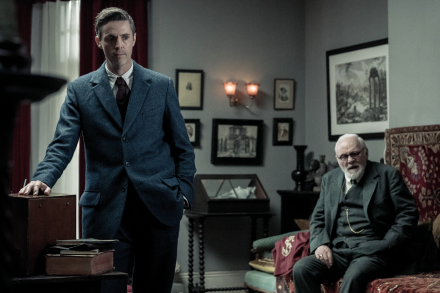
Freud’s Last Session stars Anthony Hopkins and Matthew Goode and is a work of speculative fiction asking what would have happened if Sigmund Freud and C.S. Lewis had met to debate the existence of God. What if two of the greatest minds of the 20th century had the chance to thrash it out? Thrash it out they do but, alas, they cannot thrash any life into this film. If you are planning to see it at the cinema, a few espressos beforehand may not go amiss. It is directed by Matthew Brown, who co-wrote the script with Mark St Germain, on whose play it is based. It takes place on 3 September 1939, the day Chamberlain declared war after Hitler invaded Poland. Freud, an atheist, has invited Lewis, a man of deep Christian faith, to his Hampstead home.

Predictable but has a certain French verve: Two Tickets to Greece reviewed

Within the first five minutes of Two Tickets to Greece you know what it is and where it’s going. It’s based on what I call ‘the hate-love formula’ with its in-built guarantee: any two people who can’t stand each other at the outset of a film will have bonded by the end. In this instance it’s a womance featuring two middle-aged women who were inseparable at school but haven’t seen each other for 30 years. One is Blandine who, as an adult, is reserved and buttoned-up, while the other, Magalie, is – gulp – a ‘free spirit’. (Run, Blandine; run like the wind!) But while the film is predictable, it has a certain French verve, excellent performances and doesn’t take it out of you.

‘I couldn’t afford loo roll’: Bruce Robinson on being skint, Zeffirelli’s advances and Withnail’s return

Bruce Robinson is ramming a huge log into the grate of his ancient fireplace in mud-clogged Herefordshire. He’s 77 and the film for which he is famous, Withnail and I, is about to open as a play. Isn’t it curious it hasn’t happened before, given that the comedy is about two thirsty, unemployed actors and is a sort of love-hate letter to the theatre? ‘I was living on 30 bob a week – I could either afford fish and chips or ten gold leaf’ ‘I wasn’t fond of the idea of staging it,’ says Robinson, who wrote and directed the 1987 film based on his own boozy life as an actor in the 1960s. ‘I’d done it, you know; it’s decades ago and it’s over. There was a time when Withnail was stuck to me like a colostomy bag. I just wanted to move on.

Should beautiful actors be allowed to play those with plain faces?

Sometimes I Think About Dying is one of those titles you want to shout back at – what? Only sometimes? It is co-produced by, and stars, Daisy Ridley from the Star Wars franchise who, in going from a blockbuster to an interesting independent film, is taking the opposite of the usual career trajectory. Perhaps you can only fight the Dark Lords of the Sith for so long? But it has paid off, as this is an understated little gem. It is directed by Rachel Lambert and written by Stefanie Abel Horowitz, Katy Wright-Mead and Kevin Armento. It’s hard to say what it is exactly. A dour, deadpan romantic comedy probably gets nearest. Ridley stars as the thirtysomething Fran. Fran works in a small office in a small coastal town in Oregon and she is drab.

Better than expected (but my expectations were low): Back to Black reviewed

When the trailer for Sam Taylor-Johnson’s biopic of Amy Winehouse, Back to Black, first landed, her fans were gracious. ‘This,’ they said, ‘is going to be terrific.’ I’m winding you up. They were horrified. It’s too soon, they said. It’s exploitative and trashes her legacy, they concluded, from having watched two minutes of footage. I can only say that, one, fanatical fans are like that whatever you do, and two, this is better than I expected (although my expectations were low). It does seem softened at the edges, and one can never forgive a falling-in-love montage set at London Zoo – ever – butI (mostly) didn’t cringe and it is respectful, if painful.

A marvel – how did Bradley Cooper pull it off? Maestro reviewed

As the overture to Candide blazed away during the ovation for Maestro at the Venice Film Festival, three members of the audience flung their arms around in an imitation of Leonard Bernstein’s conducting style. They were his children, Jamie, Alexander and Nina, and their reaction said it all. Bradley Cooper, the film’s star and director, had pulled off a piece of cinematic chutzpah worthy of Lenny himself. His secret? The last quality you associate with the most embarrassingly flamboyant genius in American musical history: understatement. It’s easy to imagine the ghastly three-hour biopic Cooper didn’t make. West Side Story goes from near-catastrophe to wild triumph.

The Spectator film critic who transformed cinema

‘Going to the pictures is nothing to be ashamed of,’ insisted the film writer Iris Barry in 1926. But it certainly wasn’t something to be proud of, either. To the cultural cognoscenti of the 1920s, Barry admitted, the cinema was barely an art at all – about as aesthetically significant as ‘passport photography’. And for much of polite society, seeing a film was done in secret, if at all. So it was a considerable boost for the fledgling medium when, 100 years ago, the word ‘cinema’ began to appear for the first time in this country above its own regular column, with its own dedicated critic, in the arts pages of The Spectator. Attending to this young art form was the even younger Barry.

Why intellectuals love Disney

This month marks the 100th anniversary of Walt Disney’s company. The first cartoons it was founded to produce – the animation/live-action shorts Alice Comedies – are largely forgotten, eclipsed not least by the resounding success of Mickey Mouse. Mickey Mouse grabbed much of the attention from the get-go, including that of several philosophers, sociologists and critical theorists, who perceived in him an emblem of the best and worst of the modern age. Also celebrating its 100th anniversary this year is the founding text of western Marxism, Georg Lukacs’s History and Class Consciousness.

Has VR finally come of age?

A heavily made-up Iranian woman in bra and knickers is dancing seductively before me. We’re in some vast warehouse, and she’s swaying barefoot. But then I look around. All the other men here are in military uniforms and leaning against walls or sitting at desks, smoking and looking at her impassively. I slowly realise we are in a torture chamber and this lithe, writhing woman is dancing, quite possibly, for her life. Me? I have become one of her tormentors. You can immerse yourself in war-ruined Ukraine, go on the run from the Holocaust, become a mushroom Welcome to The Fury, a bravura attempt by Iranian artist Shirin Neshat to use virtual technology in her art. ‘Have you ever experienced VR before?

The dazzling classic The Red Shoes has several unfashionable lessons for us today

The Red Shoes, Michael Powell and Emeric Pressburger’s 1948 film about a ballet and its company, is 75 this month, and its birthday is being marked with great fanfare. From October to December, the BFI is putting on a major retrospective of the films of Powell and Pressburger, with an accompanying exhibition and nationwide screenings of The Red Shoes itself. A companion book to The Red Shoes by Pamela Hutchinson – stuffed with insight and background – is being published, as well as a lavish volume, The Cinema of Powell and Pressburger, complete with pictures and essays (almost love letters) about the late filmmakers from artists such as Tilda Swinton and director Joanna Hogg.

You’ll be pleasantly surprised at how unpleasant this is: Strays reviewed

Based on the poster showing two cute dogs – a border terrier and a Boston terrier – I had assumed Strays was a (probably lame) kiddie film with a remit to amuse the aforementioned kiddies during the long, long, very long summer holidays, so here’s what I was saying to myself during the opening moments: ‘Christ on a bike, what the hell is this?’ I can now tell you that Strays is vulgar, rude, offensive and disgusting. But the biggest, weirdest shock? At a certain point I realised it was funny, and rather touching, and that I was having fun. In other words, I was pleasantly surprised. Or, given its frequent scatological content, pleasantly surprised, unpleasantly. Here’s what I was saying to myself during the opening moments: ‘Christ on a bike, what the hell is this?

Why Barbie deserves the backlash

Being the CEO of a massive corporation isn’t easy. You’re expected to grow the company, increase profits and boost the share price – the traditional responsibilities of a top hat-wearing capitalist. But at the same time, you need to align your company with the ‘values’ of a hyper-liberal global elite, e.g. anti-racism, trans rights and net zero. Contrary to the rhetoric of business school professors and management consultants, these agendas don’t always complement each other, and too much emphasis on one risks alienating those who care about the other. Get it wrong and you can come a cropper, as Dame Alison Rose, the recently departed CEO of NatWest, has discovered.

Can Oppenheimer take on Barbie?

This week, two films are released simultaneously that could not be more different. In the pink corner is Greta Gerwig’s Barbie, a 114-minute long exercise in postmodern irony and camp revolving around the exploits of the much-beloved Mattel doll, given life and dragged into the real world. From the first trailer onwards, its mission has been clear: this is contemporary Hollywood at its most glitzy, mixing well-known intellectual property with a starry cast (led by Margot Robbie, who is overdue a hit) and a healthy dose of humour. https://www.youtube.com/watch?

The death of the sex comedy

After a few years in which she has been largely absent from cinemas – her appearance in Netflix’s climate-change black comedy Don’t Look Up aside – Jennifer Lawrence is returning with, of all things, a raunchy sex comedy, with the punning title No Hard Feelings. It has earned an R-rating in the US and 15 in the UK, and judging by its marketing materials, it is a 21st-century spin on Tom Cruise’s star-making role in Risky Business, focusing on an older woman (yes, Lawrence, at 32, is now classed as such by Hollywood) who is hired by a family via Craigslist to 'date' their socially awkward 19-year-old son Percy, 'date him hard', and thus introduce him to the adult world.