China

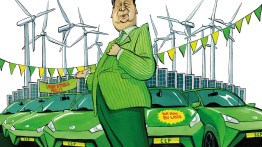
The climate has changed on climate change

Like the Marxist dialectic, or the predictions of the Gospels, the green movement has long seen its triumph as preordained. Yet sometimes the inevitable turns out to be not so. Over the past few years green policies — notably the drive for “net zero” — have been failing. Both markets and politicians have seen the light. WhatJoe Biden’s treasury secretary Janet Yellen once called “the greatest business opportunity of the twenty-first century” has revealed itself to be something of a disaster. The new American President is likely to be blamed for the implosion of the green agenda, but its collapse long pre-dates his re-ascension.

train

Taking the fast train back to imperialism

I’m on a high-speed train. Forty years ago, such a statement would have been notable and specific: essentially, it meant you were in Japan or France. Nowadays, being on a high-speed train is barely a geographical indicator at all. Most of Europe has them, from Spain to Italy to Poland. Morocco has high-speed trains. Uzbekistan has high-speed trains. Even Egypt, Vietnam, Turkey, Thailand and the USA either have high-speed railways, or will have them in the next year or two. Just about the only country not powering ahead with high-speed rail is the birthplace of the railway — the United Kingdom — a fact that can either make you sob, or despair, or perform a kind of double sob etched with despair. What makes my experience unusual is that my high-speed journey is happening in Laos.

Rana Mitter on the legacy of Sun Yat-sen

From our UK edition

43 min listen

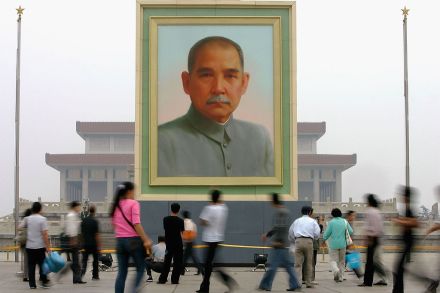
Walking around Taipei a couple of years ago, I spotted a familiar sight – a bronze statue of a moustachioed man, cane in his right hand, left leg striding forward. The man is Sun Yat-sen, considered modern China’s founding father. I recognised the statue because a larger version of it stands in the city centre of Nanjing, the mainland Chinese city that I was born and raised in. That one figure can be celebrated across the strait, both in Communist PRC and Taiwanese ROC, is the curious legacy left behind by Sun. March 12th this year is the centenary of Sun’s death, so what better opportunity to look at his legacy, and who better to discuss Sun than the historian Rana Mitter, who needs no introduction with Chinese Whispers listeners.

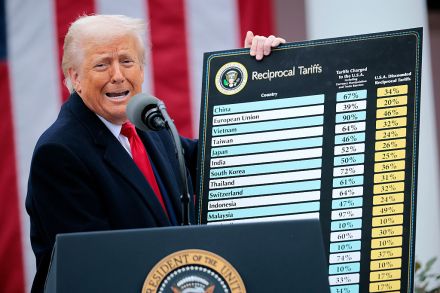
China’s response to Trump’s tariffs marks a dramatic escalation

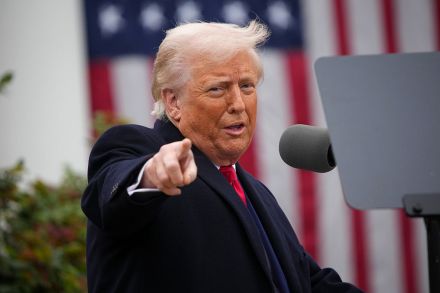
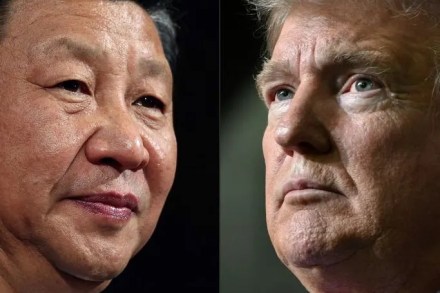
Might peace in Ukraine be prelude to an even more serious conflict between the United States of America and China? Is that a hysterical question? The deal-or-no-deal drama starring Donald Trump, Volodymyr Zelensky and European leaders has dominated the news in recent days, so much so that the latest clash between Washington and Beijing has gone all but unnoticed. Yet China’s official response to the Trump administration’s move to raise its tariffs on Chinese imports to 20 percent does appear to mark a dramatic escalation. "Exerting extreme pressure on China is the wrong target and the wrong calculation,’’ said China’s foreign ministry spokesperson Lin Jian. "If the US has other intentions and insists on a tariff war, trade war or any other war, China will fight to the end.

Is China serious about ‘war’ with America?

From our UK edition

48 min listen

Freddy Gray is joined with Michael Auslin who is an academic and historian at the Hoover Institute and author of the Substack 'THE PATOWMACK PACKET'. They discuss China's response to Trump's tariffs, whether China is serious about threats of war and how concerned Trump is about China's relationship with Russia.

Trump on Mexican cartels: ‘You know what the only solution is’

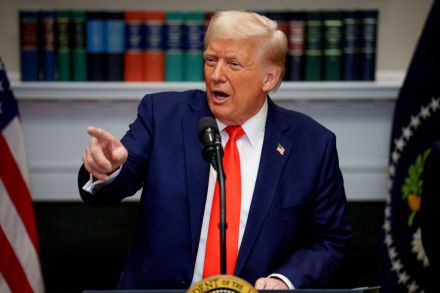
Donald Trump’s second term has been revolutionary in many ways, particularly in his administration’s approach to foreign affairs. From the get-go, the nomination of Marco Rubio as his top diplomat and Chris Landau as Rubio’s deputy signaled a break from orthodoxy. In picking Rubio, previously the most vocal senator on hemispheric affairs, and Landau, Trump’s ambassador to Mexico in his first term, the message was clear: our neighborhood is a top priority.  In his first exclusive magazine interview of his second term, Trump met with The Spectator’s Ben Domenech in the Oval Office, where a large portion of the conversation delved into Latin-American affairs.

What China’s planned mega-dam means for Asia

From our UK edition

29 min listen

Just before the end of 2024, Chinese state media Xinhua slipped out an announcement – the long discussed mega-dam in Medog County, Tibet, has been greenlit. When built, it will generate three times more energy than China’s Three Gorges dam, currently the largest in the world. The Xinhua write-up gave few other details, but the news has caused reverberations across Asia as the river on which the dam would be built, the Yarlung Tsangpo, flows into both India and Bangladesh. The existence of the dam could, as we will hear in this episode, have extensive impact on these downriver countries.

The case for moving SOUTHCOM back to Panama

The recent American interest in the Panama Canal is grounded and rational — contrary to media characterizations of the renewed focus as a byproduct of the president’s impulsive fixations. The Canal, as President Trump has correctly noted, was an American development in a nation that existed mostly as a consequence of American intervention. Panama provided the setting for the Canal — and America provided the Canal itself, having taken on, in 1903, the project France failed to complete in 1890. In the 1960s, when the United States began preparing its handover — not its return — to the Panamanian state, the concession was understood as the price of peace with an ascendant Third World.

How China exploits the West’s climate anxiety

From our UK edition

In the fight against climate change, China loves to present itself as the world’s White Knight. Armed with wind turbines and solar panels, EVs and batteries, it will rescue us from oblivion if only we would let it.  There’s no shortage of western politicians, academics and organisations who are happy to go along with the idea that China is an ally in the global green revolution. The argument, broadly put, is that whatever our differences on other things (trifles such as security, economics and human rights), surely we can agree on saving the planet. Rachel Reeves seemed to reach that conclusion when she returned from her visit to Beijing last month.

Veteran journalist Edward Wong on his memoir of food and feud

From 2008 to 2016, Edward Wong reported on China for the New York Times, heading up its Beijing bureau. Last year, the veteran journalist, now the Times’s diplomatic correspondent, published his first book: a blend of family memoir, narrative history, political observation and personal reckoning. At the Edge of Empire tracks Wong’s father, Yook Kearn Wong, as he moves from fervent support of the Chinese Communist Party and its ideological goals to disillusionment and disappointment. It is also a book about what makes an empire. Born in Hong Kong before moving to Guangdong Province as a child, after joining the military as a young man Yook Kearn was posted to remote Xinjiang province, in China’s northwest corner.

Wong

Channel 4 shouldn’t get to decide the next Archbishop

From our UK edition

Obviously, it is difficult to defend the leadership of the Church of England, and I am inexperienced in that art; but I do feel strongly that its episcopal appointments should not be controlled by Channel 4 News and Cathy Newman. This, in essence, is what is happening. First went Justin Welby, Archbishop of Canterbury, because Channel 4 News was determined to show that he had not reacted vigorously over the John Smyth scandal. (In my view, the Makin report failed to prove Welby’s culpability.) Next was the turn of the Bishop of Liverpool, John Perumbalath, forced out after Channel 4 News reported his alleged sexual assault against an unnamed woman and alleged sexual harassment of Bev Mason, the (female) Bishop of Warrington.

Is the future of democracy in the balance?

From our UK edition

At the turn of the century, the ineluctable march of democracy seemed assured. The Cold War extinguished and eastern Europe freed, a Whiggish history of the world continued to be written. A quarter of a century on, the great wave has broken and rolled back. Democracy is not what it was in Chile, Peru, Venezuela, Brazil, Hungary, Egypt, Turkey, Russia and Afghanistan. It has not emerged in China. The future looks less democratic than the past. Such concerns bother the big brain of the former Supreme Court judge and medieval historian Jonathan Sumption in his latest brilliant collection of essays.

Have America’s chips controls backfired?

From our UK edition

57 min listen

Beginning in the first Trump presidency and expanded under Joe Biden, the US has taken a strategy of technologically containing China through restricting its access to cutting edge semiconductors. As Chinese Whispers has looked at before, these chips form the backbone of rapid advances in AI, telecoms, smartphones, weaponry and more. Washington’s aim was clear: to widen the technological gap between the two powers But has this strategy worked? Lately this has become a hot topic of debate as Chinese tech companies such as Huawei and DeepSeek have nevertheless made technical strides. Some even argue that the export controls have spurred on Chinese innovation and self-reliance. In this episode of Chinese Whispers, two very informed and smart guests debate this issue.

What economists don’t get about Trump’s tariffs

From our UK edition

We already knew that most economists are quite bad at economic policy. Unfortunately, foreign policy appears not to be much of a strength either. Indeed, it appears most financial experts may not even know the difference, based on their criticism of Donald Trump’s recent tariff threats against Mexico, Canada and China. Of course, a nation can introduce tariffs to generate revenue, promote domestic production, shift international supply chains and ‘decouple’ itself from an undesirable trading partner. But a nation can also use tariffs as powerful leverage to make other states change their behaviour. That is a negotiating tariff, not an economic one, and it is designed not to minimise potential domestic pain but to maximise potential cost for the counterparty.

DeepSeek’s cheap information comes at a high price for the West

From our UK edition

This week, Chinese technology has shown the West the challenge it faces – ruthless, implacable and impossible to ignore. The unveiling of the Chinese artificial intelligence model DeepSeek has not only disrupted the business models of America’s tech behemoths; it has also shown that, in the race to develop the tools for economic hegemony, Beijing is set on supremacy. The launch of DeepSeek came just days before the CIA’s conclusion that, on the balance of probabilities, the Covid virus was incubated in a Wuhan lab – a man-made killer, not a product of nature’s evolutionary mischief. China stands revealed as a power bent on using science to secure not human flourishing but geopolitical dominance for its Leninist leadership.

Get ready for Trump’s ‘FAFO’ foreign policy

President Donald Trump posted an AI-picture of a gangster version of himself on Instagram at around 3 p.m. Sunday. Behind the fedora-clad figure, the text “FAFO” — short for “fuck around and find out” — appears alongside a smiling face.  What happened earlier that Sunday, and the machine-made picture that followed, tells us a lot about how Trump 2.0. will deal with the world.  After two planes carrying Colombian illegal aliens departed the United States this weekend, self-proclaimed humanist and former guerrilla fighter Gustavo Petro, Colombia’s president, refused to allow the plane to land. “I deny the entry of American planes carrying Colombian migrants into our territory,” Petro said on X.

What is China’s ‘United Front’ agenda?

From our UK edition

34 min listen

When Chinese spy scandals break, like the latest involving Prince Andrew and his Chinese business associate, one organisation often comes up – the United Front. Mao Zedong had dubbed it one of the Chinese Communist Party’s three ‘magic weapons’. So what is this mysterious ‘United Front’ and how important is it to advancing the CCP’s agenda? Joining the podcast is Charlie Parton, a former British diplomat in Beijing and a special advisor on China to the Foreign Affairs Select Committee. He is now chief advisor to the Council on Geostrategy’s China Observatory. ** Chinese Whispers is nominated in the Political Podcast Awards 2025.

Panama celebrates a quarter-century’s ownership of its greatest asset

New Year’s marked the twenty-fifth anniversary of the collective freakout known as Y2K, when overwrought tech aficionados joined forces with Luddites to warn the world of the pending apocalypse of computer infrastructure that could run the global economy but was evidently incapable of resetting to “00” in date codes. Those chiliastic projections obviously did not come to pass, which is why we can spend 2025 reflecting on the twenty-fifth anniversary of the day’s other Chicken Little situation — consternation over the transition that would, some skeptical parties feared, have catastrophic consequences for infrastructure central to the daily functioning of global markets, the final turnover of the Panama Canal.

Panama

Rachel Reeves owes Brompton bikes an apology

From our UK edition

I long to write less about Rachel Reeves and more about world-beating British businesses – such as Brompton, the folding bicycle maker whose fortunes I have followed since I bought the product and interviewed the founder-designer, Andrew Ritchie, 20 years ago. The latest Brompton news was that profits collapsed from £11 million in 2023 to breakeven for the year to March 2024 in the teeth of a post-pandemic demand slump; and that additional hiring has been put on hold after Labour’s NI increase added ‘hundreds of thousands of pounds’ of extra costs. A move from cramped west London premises to a new base at Ashford in Kent, with room for big increases in output and skilled jobs, had already been deferred to 2029.

Time is running out to tackle the dangers posed by AI

From our UK edition

Is this what it felt like in the months before August 1914? Or during the years leading up to September 1939? The discussion around artificial intelligence produces a deep foreboding that we are in the grip of forces largely beyond our control. Are we sleepwalking towards disaster? That is the feeling I have after reading Genesis, a collaboration by Eric Schmidt, the former CEO of Google, Craig Mundie, the former chief research and strategy officer at Microsoft, and Henry Kissinger, who died, aged 100, soon after completing this book. They have crafted a holistic analysis of the social, political, psychological and even spiritual impacts that a superior machine intelligence would have for humanity.  We are broadly familiar with AI’s current and future benefits.