China

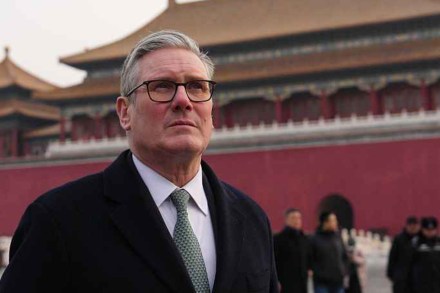
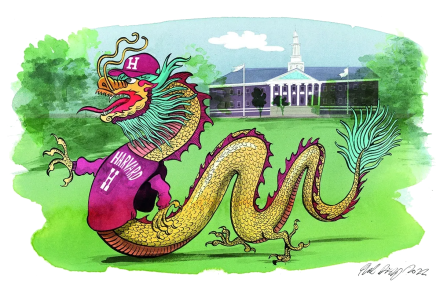
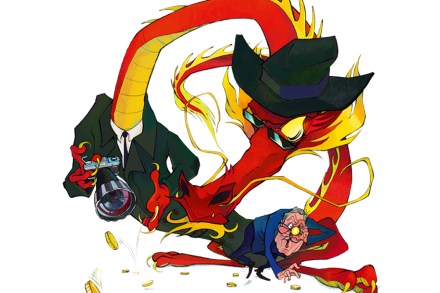
Harvard’s intricate China ties

Scratch almost any major US political story and sooner or later you’ll hit a big red nerve that belongs to the Chinese Communist party (CCP). Tariffs, energy, TikTok, the border, Fentanyl, Greenland, Panama, the Gulf of America – on all these subjects the Trump administration is, one way or another, trying to limit Beijing’s power in the West. And Donald Trump’s "war on Harvard," it turns out, is no exception. It’s clear that the President is pushing against anti-Semitism and the Diversity, Equity and Inclusion madness on America’s most famous campus, as well as in countless other colleges and universities.

Harvard

How America can develop its own rare earth elements industry… safely

Give a country rare earth elements and it’ll have fighter jets, missiles and warships for a day. Force a country to extract and process its own rare earth elements and it’ll be safe from relying on countries run by unstable dictators forever.  Such is President Trump’s sensible line of thinking as he keeps up America's trade war with China. As China imposed export licensing restrictions on seven rare earth elements, or REEs, last week, Trump signed an Executive Order “launching an investigation into the national security risks posed by US reliance on imported processed critical minerals and their derivative products.” The administration is now pursuing a deal to procure REEs from Ukraine.

rare earth elements

China bans Boeing in targeted trade war shot

“If it ain’t Boeing, I ain’t going,” goes the old adage, championing the supposed superiority of the company’s planes on safety issues. If you are traveling in China in future that probably means that you won’t be going very far at all. The US aviation giant is emerging as one of the biggest losers of Donald Trump’s trade war. China has not merely applied punitive tariffs on the company’s planes; it has banned imports altogether. Even existing orders of planes appear to be affected by the ban. What’s more, the ban applies to Boeing itself rather than to general imports of US aircraft – it is personal. Boeing, already reeling from the crash of two 737 MAXs in Indonesia in 2018 and Egypt in 2019, lost $11.

What the left calls ‘chaos,’ the rest of us call ‘winning’

They never learn, the libs. Back in 2016, they provided hours of entertainment assuring themselves that Donald Trump would “never be president” (“take it to the bank,” said Nancy Pelosi, who in another galaxy, long, long ago was speaker of the House). Patriotic citizens, eager to instruct the public about the dialectic of hubris and nemesis, stitched together many joyful compilations of Hollywood celebrities, ditto-head news readers and Democratic politicians intoning that party line.  Then, after the impossible mutated into the inevitable and Trump was elected, the narrative shifted to “the walls are closing in on Donald Trump.” If it wasn’t Russia, Russia, Russia it was Stormy Daniels, putatively shady business deals or putative efforts at insurrection.

The art of the pivot

“THIS IS A GREAT TIME TO BUY!!!” President Donald Trump wrote on his Truth Social account yesterday morning. With trillions of dollars wiped off stock market value since his tariff announcements last week, this appeared to be an attempt to manufacture a silver lining. It also happened to be a literal statement. Within a few hours, the stock market was surging as Trump announced a 90-day pause on the higher “reciprocal” tariffs for most countries, while hiking the tariff on Chinese goods to 125 percent. Was this careless? Intentional? Insider trading? According to the White House, it had been the strategy all along. The President told reporters it had been “the biggest day in financial history.” Speaking to his aides beforehand, Trump noted the market was rallying.

pivot

Tariff haters don’t live in the Rust Belt

There is a vacant lot at the edge of downtown Philipsburg, Pennsylvania, my hometown. Three years ago, a handsome, sturdy brick factory building stood in that lot, albeit most of the windows were broken, as it had been abandoned for years. After it closed, the building became a favorite hangout for ne’er-do-wells, whose act of arson forced its recent demolition. For decades, though, the clothing factory employed thousands of people and made downtown hum, as workers crowded the restaurants and took care of errands on their lunchbreaks. They – along with the hundreds of people employed by a cigar plant on the outskirts of town – also bought houses and rented properties here and supported locally owned pharmacies, barbers, hardware stores, grocery stores, and the hospital.

Give Trump’s tariffs a shot

So the big question is: will it work? Will Trump’s protectionist policies, announced with some fanfare at a Rose Garden event at the White House yesterday, increase American prosperity? Or will they harm the economy?  Opinion on that matter is sharply divided. In one corner we have the free traders. They are wringing their hands and warning about higher prices, disruption of international trade and a trade war no one can win.  In the other corner are – what to call them? Most are not “anti-free traders” or “economic protectionists” (though some are).  Let’s call them “fair traders.” They like the idea of free trade – in theory. What they don’t like is the ethic of “free trade for thee but not for me.

Why is Jeremy Boreing exiting the Daily Wire?

Wired for sound Rumors abound about god king’s exit The right-wing media rumor mill threatened to spin off its axis earlier this week with the shock announcement that “god king” Jeremy Boreing was stepping down as co-CEO of the Daily Wire. Boreing, a keen film enthusiast who starred, wrote and directed in the Wire’s comedy movie Lady Ballers, is withdrawing to “focus on creative projects for the company,” per Axios’s Sara Fischer. The DW’s many detractors had a field day with the news – speculating that there was more to the story. Boreing and Ben Shapiro had fallen out, one hater claimed, and were retaining different PR agents to brief against each other!

Trump’s foreign policy isn’t unprincipled

"He [Donald Trump] sees American leadership as merely a series of real estate transactions." That was the verdict of the Democratic senator Elissa Slotkin following the President’s address to Congress. Trump 2.0 does, admittedly, have the appearance of a political version of The Art of the Deal, in which the Donald is prepared to leverage a bilateral compact with every country in the world — so long as the price is right. There are no friends in The Art of the Deal, no permanent friends anyway, only prospective business associates. Ukraine wants the flow of armaments to resume? Sign over the rights to half your natural resources.

Trump

Is the Trump administration ready to stop Chinese espionage?

For Republican voters sick of “deep-state” shenanigans, Kash Patel, the new head of the FBI, seems an ideal appointment. He and his new deputy, the former police officer turned podcaster Dan Bongino, look and sound like exactly the right men to disrupt a bureau that has at times in the past eight years acted as an investigative arm of the Democratic party in its attempts to thwart Donald Trump through the legal system. Patel is considered so pleasingly anti-establishment that his ties to a Chinese e-commerce business have been largely overlooked. He has holdings worth up to $5 million in a fast-fashion company called Shein, founded in China but headquartered in Singapore, and he intends to keep his stock. There’s nothing wrong with that, per se.

espionage

America needs talent

Before Donald Trump’s inauguration, Elon Musk caused a huge controversy within the MAGA movement by advocating increased high-skill immigration. As head of the Department of Government Efficiency he wanted, for example, to expand the H-1B visa program, which many Trump supporters are against. The angry debate over the visa issue still rages on social media and both sides tend to talk past each other. The MAGA movement is against any increase in immigration, whether high- or low-skill. Musk has acknowledged that the existing H-1B program was subject to abuse by employers and especially by IT firms that rely on outsourcing: the workers they import are often no better than the Americans they replace.

statue of liberty new york

The climate has changed on climate change

Like the Marxist dialectic, or the predictions of the Gospels, the green movement has long seen its triumph as preordained. Yet sometimes the inevitable turns out to be not so. Over the past few years green policies — notably the drive for “net zero” — have been failing. Both markets and politicians have seen the light. WhatJoe Biden’s treasury secretary Janet Yellen once called “the greatest business opportunity of the twenty-first century” has revealed itself to be something of a disaster. The new American President is likely to be blamed for the implosion of the green agenda, but its collapse long pre-dates his re-ascension.

Taking the fast train back to imperialism

I’m on a high-speed train. Forty years ago, such a statement would have been notable and specific: essentially, it meant you were in Japan or France. Nowadays, being on a high-speed train is barely a geographical indicator at all. Most of Europe has them, from Spain to Italy to Poland. Morocco has high-speed trains. Uzbekistan has high-speed trains. Even Egypt, Vietnam, Turkey, Thailand and the USA either have high-speed railways, or will have them in the next year or two. Just about the only country not powering ahead with high-speed rail is the birthplace of the railway — the United Kingdom — a fact that can either make you sob, or despair, or perform a kind of double sob etched with despair. What makes my experience unusual is that my high-speed journey is happening in Laos.

train

China’s response to Trump’s tariffs marks a dramatic escalation

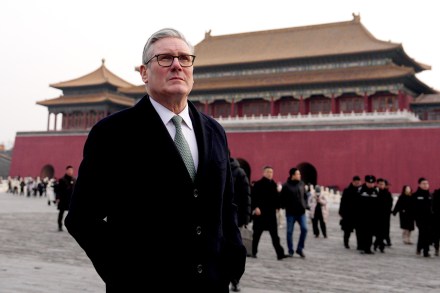
Might peace in Ukraine be prelude to an even more serious conflict between the United States of America and China? Is that a hysterical question? The deal-or-no-deal drama starring Donald Trump, Volodymyr Zelensky and European leaders has dominated the news in recent days, so much so that the latest clash between Washington and Beijing has gone all but unnoticed. Yet China’s official response to the Trump administration’s move to raise its tariffs on Chinese imports to 20 percent does appear to mark a dramatic escalation. "Exerting extreme pressure on China is the wrong target and the wrong calculation,’’ said China’s foreign ministry spokesperson Lin Jian. "If the US has other intentions and insists on a tariff war, trade war or any other war, China will fight to the end.

Trump on Mexican cartels: ‘You know what the only solution is’

Donald Trump’s second term has been revolutionary in many ways, particularly in his administration’s approach to foreign affairs. From the get-go, the nomination of Marco Rubio as his top diplomat and Chris Landau as Rubio’s deputy signaled a break from orthodoxy. In picking Rubio, previously the most vocal senator on hemispheric affairs, and Landau, Trump’s ambassador to Mexico in his first term, the message was clear: our neighborhood is a top priority.  In his first exclusive magazine interview of his second term, Trump met with The Spectator’s Ben Domenech in the Oval Office, where a large portion of the conversation delved into Latin-American affairs.

The case for moving SOUTHCOM back to Panama

The recent American interest in the Panama Canal is grounded and rational — contrary to media characterizations of the renewed focus as a byproduct of the president’s impulsive fixations. The Canal, as President Trump has correctly noted, was an American development in a nation that existed mostly as a consequence of American intervention. Panama provided the setting for the Canal — and America provided the Canal itself, having taken on, in 1903, the project France failed to complete in 1890. In the 1960s, when the United States began preparing its handover — not its return — to the Panamanian state, the concession was understood as the price of peace with an ascendant Third World.

Veteran journalist Edward Wong on his memoir of food and feud

From 2008 to 2016, Edward Wong reported on China for the New York Times, heading up its Beijing bureau. Last year, the veteran journalist, now the Times’s diplomatic correspondent, published his first book: a blend of family memoir, narrative history, political observation and personal reckoning. At the Edge of Empire tracks Wong’s father, Yook Kearn Wong, as he moves from fervent support of the Chinese Communist Party and its ideological goals to disillusionment and disappointment. It is also a book about what makes an empire. Born in Hong Kong before moving to Guangdong Province as a child, after joining the military as a young man Yook Kearn was posted to remote Xinjiang province, in China’s northwest corner.

Wong

Get ready for Trump’s ‘FAFO’ foreign policy

President Donald Trump posted an AI-picture of a gangster version of himself on Instagram at around 3 p.m. Sunday. Behind the fedora-clad figure, the text “FAFO” — short for “fuck around and find out” — appears alongside a smiling face.  What happened earlier that Sunday, and the machine-made picture that followed, tells us a lot about how Trump 2.0. will deal with the world.  After two planes carrying Colombian illegal aliens departed the United States this weekend, self-proclaimed humanist and former guerrilla fighter Gustavo Petro, Colombia’s president, refused to allow the plane to land. “I deny the entry of American planes carrying Colombian migrants into our territory,” Petro said on X.

Panama celebrates a quarter-century’s ownership of its greatest asset

New Year’s marked the twenty-fifth anniversary of the collective freakout known as Y2K, when overwrought tech aficionados joined forces with Luddites to warn the world of the pending apocalypse of computer infrastructure that could run the global economy but was evidently incapable of resetting to “00” in date codes. Those chiliastic projections obviously did not come to pass, which is why we can spend 2025 reflecting on the twenty-fifth anniversary of the day’s other Chicken Little situation — consternation over the transition that would, some skeptical parties feared, have catastrophic consequences for infrastructure central to the daily functioning of global markets, the final turnover of the Panama Canal.

Panama

Why we must not forget Hong Kong

Forty years ago this Christmas I visited Hong Kong for the first time — a few days after the signing in Beijing of the Sino-British Joint Declaration that sealed the former colony’s transfer to mainland rule in 1997. It was a moment of apprehension, but at least the timetable had been set. And how lucky I was to have experienced that extraordinary outpost as it was then, in such contrast to what China’s masters have made it now. The Christmas Day service in St. John’s Cathedral, overhead fans stirring the turbid air, was a poignant glimpse of Hong Kong’s past. Norman Foster’s Hongkong Bank building, the most expensive in the world at the time, was approaching completion as a symbol of commercial confidence in the future.

Hong Kong