Children's books

Yet more ponies for Jean

After three hot-water-bottle-warmed evenings of highly satisfying bedtime reading, I can confirm that, even in a world where Francis Spufford’s superb The Child that Books Built exists, we need this new memoir by Lucy Mangan, about her childhood of being a bookworm. It’s enchanting.

Dark side of the Moomins

Tove Jansson, according to her niece’s husband, was a squirt in size and could rarely be persuaded to eat, preferring instead to smoke fags and drink whisky. And when she did eat, it was usually salted cucumbers — to go with the drink. You know, this late in life, I may have encountered my role model. We were at the launch of an excellent edition of four books in her Moomin series at the Finnish embassy. London is in the grip of a kind of Moomin madness right now, what with the books, a Moomin event at the South Bank and a new exhibition of Tove Jansson’s artwork at the Dulwich Picture Gallery. Which is good news for Finland, on account of the Moomins being one of its two big cultural exports — the other being Santa Claus, who obviously lives in Lapland.

The tyranny of the bedtime story

All surveys carried out by retail businesses with a view to generating press coverage should be treated with extreme caution, but I cannot resist writing about one that has just been published by Furniture123.co.uk. The press release is headed ‘The Decline of the Bedtime Story’ and the key finding is that 64 per cent of parents do not regularly read a bedtime story to their children. Just 10 per cent say they do, while 6 per cent say they have never done it. Oh how I envy that 6 per cent! I am a member of the wretched 10 per cent who read to their children at night. Why wretched? Let me count the ways. First of all, children have absolutely no taste. None.

Unhappy days

Scriptwriters love to feast on the lives of children’s authors. The themes tend not to vary: they may have brought happiness to millions of children but their stories — sob — were fertilised by unhappiness. Saving Mr Banks: Mary Poppins author was a bossy shrew because her alcoholic father died young. Miss Potter: Peter Rabbit creator never found love. Finding Neverland: Peter Pan playwright cheered up grieving family. Enid (made for BBC Four): Miss Blyton was a monster traumatised by her upbringing. And so it will presumably go on.

Munchkins and mischiefs

Arthur Rackham shouldn’t have lived in anything as conventional as a house. It should have been a gingerbread cottage, like the one he drew for Grimms’ Fairy Tales, with cakes for a roof and boiled sugar for windows. Or a Rapunzel turret, for letting down ropes of long, blonde hair, except he was so very goblin-bald. Or a Sleeping Beauty palace with a spinning-wheel in the topmost tower. As it was, he lived in Chalcot Gardens, north of Primrose Hill and south of Hampstead Heath, with his wife Edyth Starkie, a portrait painter, and their daughter Barbara, at the end of an 1880s row set back from the road.

Serious concerns

It’s funny, isn’t it, how a dust jacket on a book can draw you to it from the other end of a room — always supposing the illustration is by Edward Ardizzone. In fact, is there anything more suggestive of delight than a book illustrated by him? It’s the Midas touch even for unprepossessing authors. The exhibition of his work at the House of Illustration finishes off with a wall lined with them: The Little Grey Men, Jim at the Corner, Italian Peepshow, Johnny’s Bad Day, Eleanor Farjeon’s Book... you’ll recognise lots.

Recent children’s books | 19 May 2016

Martin Stewart’s Riverkeep (Penguin, £7.99) has a list of books and writers on the cover: Moby-Dick, The Wizard of Oz, Ursula Le Guin, Charles Dickens and, less ambitiously, Neil Gaiman, Philip Pullman and Skellig. And, right in the middle, Riverkeep. Pff, you think: they wish! But you know what? Having read the book, there are elements of all these authors in it: Moby-Dick for the quest for a great sea monster; The Wizard of Oz for a homunculus who retains his self, even when he loses his stuffing; Ursula Le Guin for the creation of a coherent other world where magic is part and parcel of things; and perhaps Dickens for a dank, watery atmosphere.

A breath of fresh air

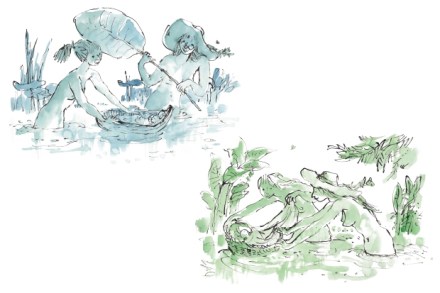
His professional achievements aside, Quentin Blake’s life has been rather short on biographical event, so this book is not a biography. (That gets dispatched briefly in a six-page timeline.) Rather, it’s a grateful appreciation — partisan, certainly, but well argued — of all that this remarkable artist has given us. Through his books, his pictures on hospital walls and his support for a variety of campaigns, Blake has brought joy, laughter and solace. The pictures in this book will make you smile.

The winged rabbit who made me a Tory

His father’s dental cast, writes Graham Greene near the beginning of The Power and the Glory ‘had been [Trench’s] favourite toy: they tried to tempt him with Meccano, but fate had struck’. Trench is a dentist, trapped by his chosen profession in a godforsaken Central American hellhole. Greene ponders the way, when we are very young, that chance events, objects or people may become father to the man. ‘We should be thankful we cannot see the horrors and degradations lying around our childhood, in cupboards and bookshelves, everywhere.’ Too true. Pookie made me a Tory. My new copy of Pookie Puts the World Right has arrived. I’d lost the old one, but tracked down another on the internet.

The art of Beatrix Potter

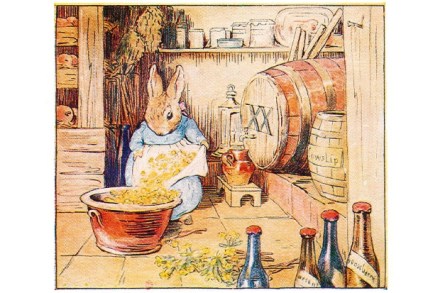
‘I will do something sooner or later,’ wrote Beatrix Potter in the secret diary she kept in a private code. It was March 1883 and 16-year-old Potter, still mostly confined to the nursery of her parents’ house in South Kensington, had made a second visit to the Winter Exhibition of old masters at the Royal Academy. She did not identify the ‘something’ she had in mind, but it almost certainly referred to art. Although a painting by Angelica Kauffman stiffened her resolve and bolstered her confidence, the statement was one of intent above conviction. ‘It shows what a woman has done,’ she reassured herself.

I always defended Michael Gove. Then I met him

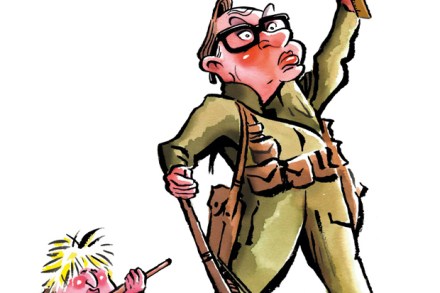
[audioplayer src="http://traffic.libsyn.com/spectator/TheViewFrom22_13_March_2014_v4.mp3" title="Toby Young and Fraser Nelson discuss Michael Gove's personality and the attacks from all sides"] Listen [/audioplayer]A few weeks ago, I was a guest at a huge tea party for children’s authors, publishers and commentators at the South Bank, but the atmosphere, over the cupcakes and finger sandwiches, was decidedly frosty. There were three keynote speakers and their speeches all targeted a man so vile and destructive that the audience visibly recoiled every time his name was mentioned. He was, of course, Michael Gove — and I wasn’t sure I should tell anyone that I had always rather admired him and, moreover, was about to interview him for this magazine.

Alexander McCall Smith’s diary: Meeting Babar’s creator

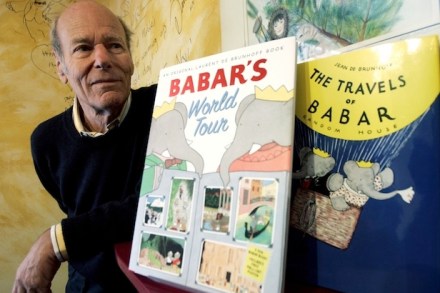
As any author will tell you, literary festivals differ widely. If you are invited to Willy Dalrymple’s Jaipur Festival, with its renowned final party, you say yes within minutes of receiving the invitation. Other invitations you might take a little longer to accept. The Key West Literary Seminar, which took place a couple of weeks ago, is one of the glamorous ones. I was ready for Florida, as Scotland had been visited by gale after gale and accompanying driving rain. As luck would have it, we arrived in Key West at exactly the same time as the polar vortex that had frozen the entire United States, including a normally balmy Florida. No matter: Key West was, for the duration, one huge literary celebration. I was invited to lunch at a house in the old part of the town.

The best children’s books for Christmas

Animal stories for children are always tricky; as J.R.R. Tolkien observed in his essay on fairy stories, you can end up, as in The Wind in the Willows, with an animal mask on human form. Watership Down has been described as a nice story about a group of English public schoolboys with occasional rabbit features. But if you get too true to nature, the animals don’t have much to say to us, and no reason why they should. Admittedly, The Wind in the Willows does try to capture some of the mole-ness of Moley (he perks up underground) and the water-rattiness of Ratty (restive away from the River). And, as we all now know, Ratty is no water rat but a water vole. Which makes all the braver a new story about these very creatures.

Children’s Books: Myth and magic

It was the second week of term and my grandson’s birthday. He had just started at primary school and the only alternative to social suicide seemed to be to invite the whole class to his party. With a few old friends that made a total of 30. They ran yelling in various enjoyably noisy games up and down the church hall, then they departed, and my daughter was left confronting a table groaning with 30 presents, some of them embarrassingly expensive. How do you give 30 presents to one five-year-old? The same problem comes up every Christmas, and the answer, it seems to me, is books.

Bad lads and Bogwoppits

Juliet Townsend selects the best of this year’s reading for toddlers through to teenagers In these straitened times one can only be grateful for the excellent value offered by picture books for young children, which have remained at the same price for several years. Since the migration of their production to the Far East, some have become ever more elaborate, with pop-up versions accompanied by sound effects, resulting in something which is more a toy than a book. There are, however, many excellent writers and illustrators represented this Christmas. For the youngest children, Christmas Time by Alison Jay (Templar, £10.99) with minimal text and colourful and original pictures, takes us on a seasonal journey, full of reindeer, carol singers, polar bears and snowmen.