Children's books

Best of 2024 with Dominic Sandbrook, Mary Beard and Harriet Harman

75 min listen

This week is a special episode of the podcast where we are looking back on some of our favourite pieces from the magazine over the past year and revisiting some of the conversations we had around them. First up: the Starmer supremacyLet’s start with undoubtedly the biggest news of the year: Starmer’s supermajority and the first Labour government in 14 years. In April, we spoke to Katy Balls and Harriet Harman about just what a supermajority could mean for Keir Starmer. Listening back, it’s an incredibly interesting discussion to revisit. The aim of Katy’s piece was to communicate the internal problems that could arise from such a sweeping victory and, crucially, how Starmer might manage a historic cohort of backbenchers.

Why Britain riots

33 min listen

This week: The Spectator’s Gus Carter was in Rotherham and Birmingham in the days after the riots. Locals tell Gus that ‘violent disorder isn’t acceptable but people from down south don’t know what it’s like up here’. A retired policeman in Birmingham adds that ‘it’s just yobs looking for an excuse – and yobbos come in all sorts of colours’. You can hear Gus’ report on the podcast. (02:25)  Next: Gus and Lara take us through some of their favourite pieces in the magazine, including Flora Watkins’ notes on ragwort and Isabel Hardman’s review of Swimming Pretty: The Untold Story of Women in Water.

The rabbit who came to stay

Is there a more perfect children’s writer for this generation than Judith Kerr? She started with a tiger — The Tiger Who Came to Tea, published in 1968 — and ended with a bunny, The Curse of the School Rabbit, before she died three months ago. Both books are pitch-perfect little masterpieces of their kind. The tiger was fantastical but also down-to-earth. The bunny is an entirely plausible creature: a school rabbit, Snowflake, kept by Miss Bennet. She uses him to teach children English (they write about Snowflake); maths (they measure Snowflake in inches and centimetres); and art (they draw Snowflake).

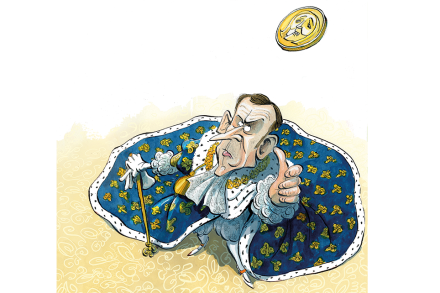
Macron’s game: can he still outplay Le Pen?

45 min listen

This week: Macron’s game. Our cover piece looks at the big news following the European elections at the weekend, President Macron’s decision to call early parliamentary elections in France. Madness or genius, either way the decision comes with huge risk. And can he still outplay Le Pen, asks writer Jonathan Miller. Jonathan joins the podcast to analyse Macron’s decision alongside Professor Alberto Alemanno, who explains how the decision is realigning French politics, and argues it must be seen in its wider European context. (01:58) Then: Will and Gus take us through some of their favourite pieces from the magazine, including Catriona Olding’s Life column and Sam McPhail’s notes on Madri.  Also on the podcast: who decides how we see the past?

Radio 4’s Moominland Midwinter restores Moomintroll’s innocence

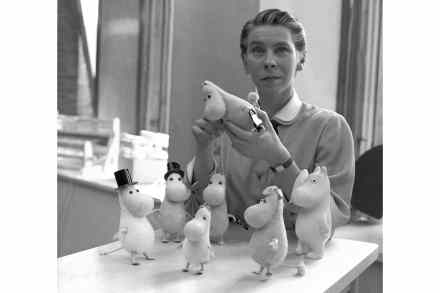
Moomins do not like winter. In one of Tove Jansson’s stories, Moomin’s Winter Follies, young Moomintroll bumps his head when the sea ‘goes hard’, prompting Moominmamma and Moominpappa to hurry the family into hibernation. They attempt to follow the tradition of their ancestors by scoffing pine needles and covering the furniture in dust sheets before bedding down on hay, but Moominpappa, for one, is troubled by the prickliness of all this: ‘Who said I must do like my ancestors?’ They briefly abandon the idea and postpone their sleep to try some winter sports, but Moomins are not really built for skiing.

If you didn’t love Jansson already, you will now: Tove reviewed

Tove is a biopic of the Finnish artist Tove Jansson who, most famously, created the Moomins, that gentle family of hippo-like trolls with the soft, velvety bellies which I remember reading about as a child when I was laid up with chicken pox. (The collector’s editions published by Sort of Books have restored the original artwork, are dazzling, and will take you right back, minus all that Calamine.) Biopics of artists are often more miss than hit. I’m still recovering from that Jackson Pollock one where he completes his first action painting and is told: ‘You’ve done it, Jackson! You’ve cracked it wide open!

Perfectly serviceable – at points even charming: Four Kids and It reviewed

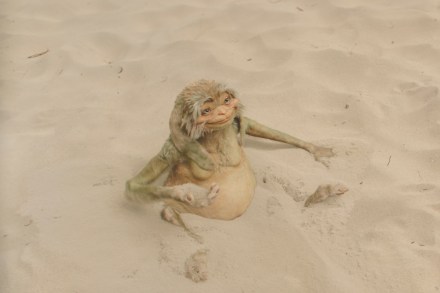
This film contains flying children, time travel and a sand monster that lives under a beach — yet the most incredible thing of all is that a family get to go on holiday. They actually leave their house, drive down an actual motorway, rent an actual seaside cottage and go for actual walks, passing well within two metres of actual other people! And not once do Derbyshire police film them with a drone, then post intimidating footage of it on the internet. The movie’s producers couldn’t have known they’d be releasing their creation into a locked-down world, but now that they have, who’s to say more people won’t watch it at home than would have watched it at the cinema? We are literally a captive audience.

Angels and daemons: Children’s books for Christmas

Sometimes I have to admit the reason I read children’s books with pleasure is that I’m essentially puerile —and look, that’s not a bad thing if it means getting to read The Steves by Morag Hood (Pan Macmillan, £6.99), aimed at three year olds. It’s about two puffins called Steve who keenly resent the claims of the other to be Number One Steve. It is the kind of infantile playground name-calling which makes me laugh, and I reckon young children will like it too, especially Steves. Judith Kerr, the peerless, razor-sharp author of The Tiger Who Came to Tea as well as the tear-jerker My Henry has, alas, gone to her reward in heaven, but we still, thank God, have Shirley Hughes, whose picture books for small children are as engaging as ever.

Letters: How to squash a Speaker

No special protection Sir: Rod Liddle’s joke that the election might be held on a date when Muslims cannot vote, thereby reducing support for Labour, has apparently led to outrage. There has been no similar outrage over your front cover (‘A vote is born’), which satirises the Christian nativity by portraying Johnson, Corbyn and Swinson visiting the stable in Bethlehem. It should be a principle of free speech in any free society that all religions are equally subject to satire, criticism and even gentle mockery; there should be no special protection for one set of beliefs over another. In allowing satire about two mainstream religions in the same issue, you have shown admirable balance.

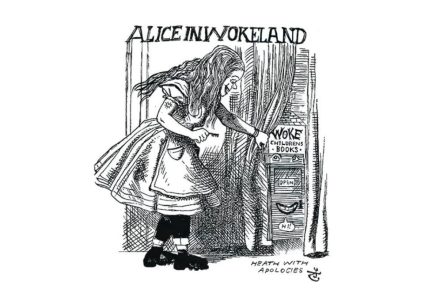
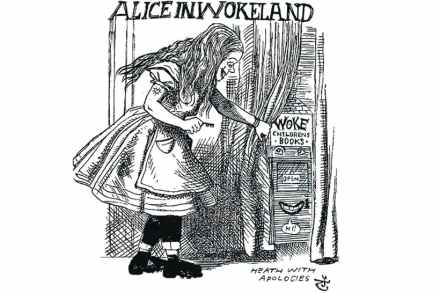
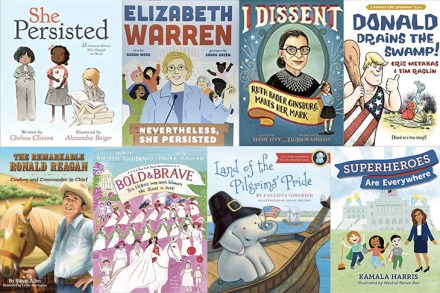
Children’s literature has become horribly right-on

There was a spat the other week about a children’s book, Equal to Everything: Judge Brenda and the Supreme Court, which is about an encounter between a little girl called Ama and the nation’s pin-up, Brenda Hale. The book’s author is the Guardian columnist Afua Hirsch. It’s written in vague rhyming couplets with the worst illustrations I’ve ever seen in a book for children. In a newspaper report about the book, Iain Duncan Smith, the former Tory leader, was quoted saying ‘This looks like deliberate propaganda to bend the minds of children’, while MP Andrew Rosindell said that ‘she is being painted into some kind of hero in this book aimed at children’. Ye-es, Mr R. That’s the idea.

Edith Nesbit — a children’s writer of genius who disinherited her own adopted offspring

‘When one writes for children,’ the novelist Jill Paton Walsh has said, ‘there are more people in the room. Writing for children involves the adult writer, and the child that writer once was; the present child reader, and the adult that child will become.’ Edith Nesbit, one of the greatest writers for children, was brilliantly attentive to this quartet. What she remembered clearly was childhood’s capacity for belief. At the moment when, in Five Children and It, the Psammead emerges from the sand, she comments: ‘It is wonderful how quickly you get used to things, even the most astonishing.’ In The Phoenix and the Carpet those same children find a mythical bird in their fireplace. They are ‘hardly astonished at all’.

Family favourites | 6 December 2018

There’s no shortage of magical rings in the children’s canon, the sort of things that usefully make you invisible or beautiful. But rings that can turn objects into a pile of excrement are something else. So one warms to Bianca Pitzorno’s Lavinia and the Magic Ring, translated from the Italian by Laura Watkinson (Catnip, £5.99) whose heroine, an orphaned match girl, is given one. Her subsequent adventures have more than a touch of Roald Dahl, being illustrated by Dahl’s co-creator, the ever fabulous Quentin Blake. The sublime Judith Kerr is 95 and razor-sharp with it. Her latest, Mummy Time (HarperCollins, £12.99), is about the wonderful adventures, real and imagined, of a little boy in a park while his mother is on her mobile phone to a friend.

Yet more ponies for Jean

After three hot-water-bottle-warmed evenings of highly satisfying bedtime reading, I can confirm that, even in a world where Francis Spufford’s superb The Child that Books Built exists, we need this new memoir by Lucy Mangan, about her childhood of being a bookworm. It’s enchanting.

Dark side of the Moomins

Tove Jansson, according to her niece’s husband, was a squirt in size and could rarely be persuaded to eat, preferring instead to smoke fags and drink whisky. And when she did eat, it was usually salted cucumbers — to go with the drink. You know, this late in life, I may have encountered my role model. We were at the launch of an excellent edition of four books in her Moomin series at the Finnish embassy. London is in the grip of a kind of Moomin madness right now, what with the books, a Moomin event at the South Bank and a new exhibition of Tove Jansson’s artwork at the Dulwich Picture Gallery. Which is good news for Finland, on account of the Moomins being one of its two big cultural exports — the other being Santa Claus, who obviously lives in Lapland.

The tyranny of the bedtime story

All surveys carried out by retail businesses with a view to generating press coverage should be treated with extreme caution, but I cannot resist writing about one that has just been published by Furniture123.co.uk. The press release is headed ‘The Decline of the Bedtime Story’ and the key finding is that 64 per cent of parents do not regularly read a bedtime story to their children. Just 10 per cent say they do, while 6 per cent say they have never done it. Oh how I envy that 6 per cent! I am a member of the wretched 10 per cent who read to their children at night. Why wretched? Let me count the ways. First of all, children have absolutely no taste. None.

Unhappy days

Scriptwriters love to feast on the lives of children’s authors. The themes tend not to vary: they may have brought happiness to millions of children but their stories — sob — were fertilised by unhappiness. Saving Mr Banks: Mary Poppins author was a bossy shrew because her alcoholic father died young. Miss Potter: Peter Rabbit creator never found love. Finding Neverland: Peter Pan playwright cheered up grieving family. Enid (made for BBC Four): Miss Blyton was a monster traumatised by her upbringing. And so it will presumably go on.

Munchkins and mischiefs

Arthur Rackham shouldn’t have lived in anything as conventional as a house. It should have been a gingerbread cottage, like the one he drew for Grimms’ Fairy Tales, with cakes for a roof and boiled sugar for windows. Or a Rapunzel turret, for letting down ropes of long, blonde hair, except he was so very goblin-bald. Or a Sleeping Beauty palace with a spinning-wheel in the topmost tower. As it was, he lived in Chalcot Gardens, north of Primrose Hill and south of Hampstead Heath, with his wife Edyth Starkie, a portrait painter, and their daughter Barbara, at the end of an 1880s row set back from the road.

Serious concerns

It’s funny, isn’t it, how a dust jacket on a book can draw you to it from the other end of a room — always supposing the illustration is by Edward Ardizzone. In fact, is there anything more suggestive of delight than a book illustrated by him? It’s the Midas touch even for unprepossessing authors. The exhibition of his work at the House of Illustration finishes off with a wall lined with them: The Little Grey Men, Jim at the Corner, Italian Peepshow, Johnny’s Bad Day, Eleanor Farjeon’s Book... you’ll recognise lots.

Recent children’s books | 19 May 2016

Martin Stewart’s Riverkeep (Penguin, £7.99) has a list of books and writers on the cover: Moby-Dick, The Wizard of Oz, Ursula Le Guin, Charles Dickens and, less ambitiously, Neil Gaiman, Philip Pullman and Skellig. And, right in the middle, Riverkeep. Pff, you think: they wish! But you know what? Having read the book, there are elements of all these authors in it: Moby-Dick for the quest for a great sea monster; The Wizard of Oz for a homunculus who retains his self, even when he loses his stuffing; Ursula Le Guin for the creation of a coherent other world where magic is part and parcel of things; and perhaps Dickens for a dank, watery atmosphere.

A breath of fresh air

His professional achievements aside, Quentin Blake’s life has been rather short on biographical event, so this book is not a biography. (That gets dispatched briefly in a six-page timeline.) Rather, it’s a grateful appreciation — partisan, certainly, but well argued — of all that this remarkable artist has given us. Through his books, his pictures on hospital walls and his support for a variety of campaigns, Blake has brought joy, laughter and solace. The pictures in this book will make you smile.