Childhood

TV doesn’t ruin childhood, but phones might

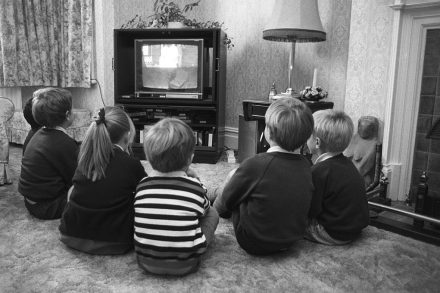
When I was a nipper, a staple of children’s television was a show called Why Don’t You? The full title, as the theme song made clear, was: “Why don’t you just switch off your television set and go and do something less boring instead?" Very “meta”, as we didn’t then say. And, of course, generations of children sat on the sofa gormlessly drinking Um Bongo while we watched the show’s cast demonstrate all the wholesome arts-and-crafts activities we could have been doing instead of watching TV. This was a few years before our parents discovered the joys of eating microwave TV dinners while watching Master Chef. A previous generation feared that the rise of television would put an end to children reading. It didn’t I start with this to give a bit of context.

A revival of Alan Bennett’s early work is long overdue

From our UK edition

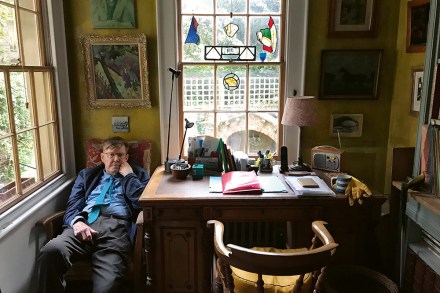
It is a curious literary form, the published diary. A surprising number of the classic diarists did write for eventual, usually posthumous, publication – Chips Channon under a 60-year embargo, A.C. Benson, Samuel Butler, in his wonderful notebooks, and surely the possibility was in the minds of Samuel Pepys and the Duc de Saint-Simon. More recently, great diaries have been published within the author’s lifetime. James Lees-Milne’s first instalment came out 30 years after the period it described. Alan Clark’s initial offering, covering 1983-92, appeared in 1993. Tony Benn’s hilariously tedious volumes emerged on a rolling programme which slowly caught up with the events they described.

What England’s old folk songs can teach us

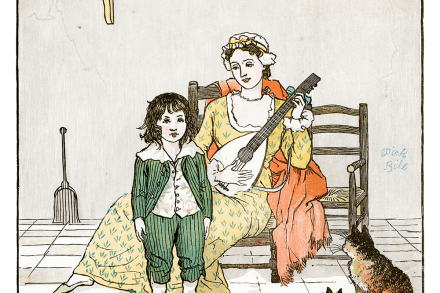
I grew up in the 1980s but in many ways it was more like the 1880s. We lived with my grandmother on the Northumbrian coast and the routine of our days echoed the routines of her youth, perhaps her mother’s and grandmother’s, too. We were like an elephant family in an African game park, following our matriarch around ancient migratory routes, oblivious to the rise and fall of regimes outside. Lunch (no elbows on the table), a walk to the sea, sherry time (Amontillado dry); then my grandmother and my clever younger brother would play Piquet while the children of lesser focus played with the open fire. And we sang around the piano, my grandmother playing, folk songs and ballads from the northeast: "Barbara Allen"; "The Raggle-Taggle Gypsy," "The North Country Maid," "The Golden Vanity.

‘Sitting the 11-plus was the most momentous event of my life’ – Geoff Dyer

From our UK edition

Geoff Dyer, eh? Geoff Bloody Dyer – without doubt one of contemporary Eng. Lit.’s most successful, intellectually playful and stylistically distinctive voices. His extraordinary oeuvre spans fiction, non-fiction, memoir, criticism and genre-defying hybrids, often likened – I don’t know by who, but by me at least now – to greats such as W.G. Sebald or Roland Barthes. Dyer expertly navigates the tricky territory between high culture and everyday experience, balancing erudition with comic digression in books ranging from Out of Sheer Rage (a hilarious study of not writing a book about D.H.

AI killed the Easter Bunny

From our UK edition

On the grounds of advancing age, I had decided to ignore all the chatter about artificial intelligence and devote my remaining time to things I could properly understand. Then I discovered that one of my own copyrighted properties, the fruit of a year’s work, had been scraped into the AI maw without so much as a by-your-leave, and it became personal. I wrote to my MP who responded with template blandishments. This government… committed to blah blah… exciting prospects… safeguarding… potential opt-out system… a close watch, yadda yadda… Feeling impotent and no further forward, I returned to my knitting. It took the murder of the Easter Bunny to rouse me from the torpor of denial.

The nerdy obsessive who became the world’s richest man

From our UK edition

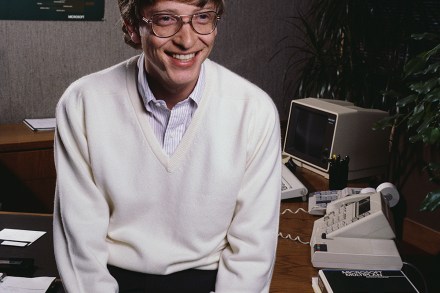
Shortly before Bill Gates’s seventh birthday in 1962, his parents stuffed their son into a button-down shirt and blazer for a visit to Century 21, a bold showcase of scientific prowess in their home town of Seattle. This futuristic fair was intended as the nation’s rebuff to Soviet Russia following the Sputnik satellite launch, which sparked the space race. The family enjoyed the new 600ft Space Needle. They also saw the Mercury capsule that carried the first American into space; Ford’s concept of a six-wheeled nuclear-powered car; and IBM’s idea of a cheap computer, costing $100,000. Best of all in the boy’s view was rattling around on the Wild Mouse Ride, which felt risky and thrilling, stoking a lifelong love of rollercoasters.

Echoes of Tom Brown’s School Days: Rabbits, by Hugo Rifkind, reviewed

From our UK edition

The year is 1993 and 16-year-old Tommo has been moved from a day state school of 2,000 pupils in brown blazers that ‘when it rained… smelled of shit’ to Eskmount, an elite Scottish boarding school, where boys wear kilts and put their ‘cocks on your shoulder’ when you’re working in the library (easier in a kilt) and routinely hang ‘smaller kids in duvets... out the window’. The horseshoe effect in schooling terms: the more expensive, the more savage. Hugo Rifkind’s Rabbits opens with a bang: ‘When the shotgun went off under Johnnie Burchill’s brother’s chin, word had it, the top of his head came off like the top of a turnip lantern.’ It is reminiscent of Donna Tartt’s The Secret History.

A tragedy waiting to happen: Tiananmen Square, by Lai Wen, reviewed

From our UK edition

Lai Wen’s captivating book about growing up in China and witnessing the horrific massacre in Tiananmen Square reads like a memoir. The protagonist’s name is Lai, and her description of her parents is utterly convincing – the pretty, bitter housewife mother, jealous of the opportunities her daughter has; the father permanently cowed after being briefly interned by the government decades earlier. In a letter at the end, the author explains that her story is faction – embellished fiction. So how much is true? We will never know. I find this slightly irksome. I so admire writers like Henry Marsh, Karl Ove Knausgaard and Rachel Cusk who are prepared to irritate with their honesty.

The day Keir Starmer cried on me about his childhood

From our UK edition

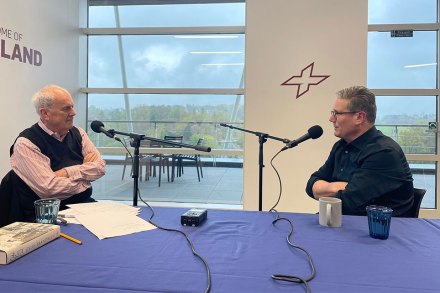
I have had a good idea. It may even be an important idea. See what you think. The other day I interviewed Keir Starmer for my weekly podcast, Rosebud. It’s so called because of the Orson Welles film Citizen Kane. Rosebud, you will recall, was the trade name of the sledge on which Kane, as a boy, was playing the day he was taken away from his home and his mother. My podcast is about the early memories of people in the public eye. I wanted to talk to Sir Keir because he aspires to be prime minister and I didn’t know much about him. We met at St George’s Park, the FA’s national football centre, near Burton upon Trent. He had had a full morning, chairing a shadow cabinet meeting, giving soundbites about football and avoiding giving soundbites about Angela Rayner.

Letters: the Tory party has gone mad

From our UK edition

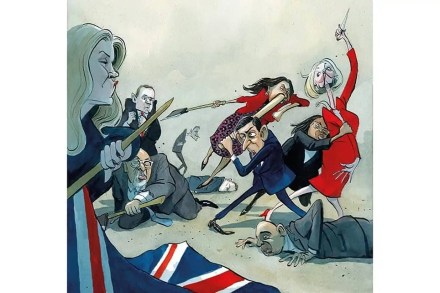
Right is wrong Sir: Katy Balls’s article ‘Survival Plan’ (4 May) starts from a false premise. The problem is not Rishi Sunak, but the current Conservative party’s underlying ethos. With Brexit, the lunatics took over the asylum. The ‘Get Brexit Done’ single-issue election resulted in a Conservative party, cabinet and parliamentary majority sharing populist right-wing views and convinced that the country supported them in all their beliefs. Although Brexit has clearly failed and Boris Johnson has been disposed of, many of the underlying convictions associated with the Brexit philosophy remain. The obvious demonstration of this was the disastrous election of Liz Truss as leader despite the common sense warnings of Sunak at the time.

Robyn Davidson explores yet another foreign country – the past

From our UK edition

Robyn Davidson never set out to become a writer. ‘It did not form my identity,’ she tells us early on in her memoir Unfinished Woman. ‘In my own mind I had simply pulled another rabbit out of a hat. As I had done all my life with everything.’ The rabbit, in this case, is the ability to capture an exciting and complex life with insight and humour. When she decided to leave the underworld, she was sexually assaulted at knifepoint Born in 1950 on a cattle station in Queensland, Australia, Davidson was the second daughter of a handsome war hero from a privileged background. Home was a place full of ‘dust and wide verandas, comfortable old chairs and good horses, though never adequate cash’.

Unequivocally Japanese: The Premonition, by Banana Yoshimoto, reviewed

From our UK edition

Who are you without memory? This is the question that sits at the heart of The Premonition by Banana Yoshimoto, best known for her 1988 novella Kitchen, which was a smash hit in Japan and adapted for film. The Premonition is a similarly slender work and one that casts a delicate spell. Nineteen-year-old Yayoi has the perfect family – doting parents and a brother she adores – but she feels unsettled, as if she’s forgotten something vital in her past: ‘There, in the midst of such a beautiful evening, my heart must have been full of that premonition.’ Looking for answers, she goes to live with her eccentric aunt Yukino, who she feels is a ‘siren to those of us who had lost part of our childhood’, and the answers she discovers change her life forever.

Rising star: The Wolves of Eternity, by Karl Ove Knausgaard, reviewed

From our UK edition

The Wolves of Eternity is the second volume in Karl Ove Knausgaard’s trilogy which began with The Morning Star, but is that book’s prequel. The Morning Star examined events in the lives of various narrators at the time of the appearance of a bright new celestial body, bringing uncharacteristic heat and luminosity to Norway. It read like a shiver-inducing drama penned by a combination of Phil Redmond, Irvine Welsh and Stephen King. Part of its genius lay in fleshing out the characters by expressing the ugly thoughts we all keep repressed: irritation with over-familiar strangers; frustration with lovers; the thunderbolt of lust; and boundaries and the ways they are breached. The Wolves of Eternity is written in the same immersive style, though the characters are different.

Yawn: your childhood just died again

We’re spending all this money to fight Vladimir Putin but what about Mindy Kaling? From Democrats to Republicans, from Atlantic to Pacific, the nation has rarely been as united as it is in hatred of Kaling’s new animated HBO show Velma. The gory and profane rehash of the Scooby-Doo franchise has a whopping 7 percent audience score on Rotten Tomatoes. YouTube commentators leapfrog over each other to denounce the show: Velma is cringe; Velma is garbage; Velma is racist! Far be it for me to agree with the mob: I’d love nothing more than to say I like this show and watch a million Twitter coronaries blossom. But alas, having seen it, I can attest that Velma’s very existence has singlehandedly wiped out centuries of human progress.

childhood

Surgeries are no ‘quick fix’ for childhood obesity

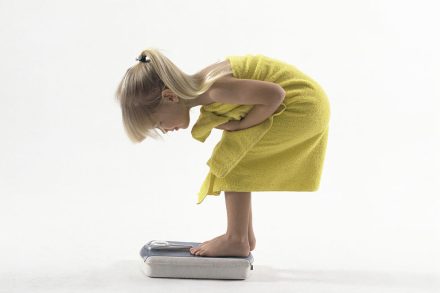
The American Academy of Pediatrics has released new guidelines on childhood obesity, advocating that children receive medication and even surgery as early as twelve years old to avoid long-term health consequences. The authors of the new guidelines argue against the historical belief that obesity can be overcome exclusively by lifestyle changes. They say that doesn’t adequately address “socioecological, environmental and genetic influences” that affect children. Childhood obesity rates, however, are higher than they’ve been in fifty years — and genetics didn’t cause the concerning rise. The most obvious changes in the Western lifestyle since then have included a massive increase in processed foods and the integration of the internet into everyday life.

childhood obesity

Time for a national snow day

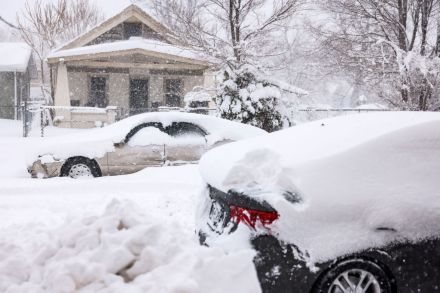
The world in wintertime (at least where it snows) is a different place. Here in rural Pennsylvania, a distinct, sulfuric musk — a most nostalgic and comforting scent — wafts through my little hometown, lending an antiquated charm that reminds us of bygone days when coal was king (and proves it’s still very much in the royal family in these parts). While the natural world dies, hibernates, and goes dormant, our human spirits are rejuvenated. When the temperature drops, there’s a communal mood change, the effects of which tend to be a contagious energy and a marked softening of mankind. People let down their guards, exchanging prank gifts at office Christmas parties while wearing elf ears and silly, ugly sweaters bedecked with jingle bells.

This is what cinema is for: Netflix’s Cuties reviewed

From our UK edition

Cuties is the subject of a moral panic and a hashtag #CancelNetflix. It tells the story of Amy (Fathia Youssouf), an 11-year-old Franco-Senegalese girl living in Paris, who learns that her father is taking a second wife. (Polygamy is widespread in west Africa, but you wouldn’t know it from mainstream cinema. You wouldn’t know much from mainstream cinema.) The film deals with the lead-up to the wedding. Amy watches the suffering of her mother (the superb Maïmouna Gueye), who must prepare the house for the interloper, scattering cushions over the marital bed, and the bombast of her small brother, who eats cereal and is learning to be a misogynist. (I suspect the baby will get there too, in the end. But he will have to learn to talk first.

Why are Americans afraid to grow up?

My parents didn’t care if I had extracurricular enrichment and free play. They sent me outside after Saturday chores and didn’t want me home until dinner. In old jeans and a t-shirt, I’d look for arrowheads in the woods with the neighborhood kids. Once, one of the dads from the housing development saw us out there, yelled ‘Get off my property,' and pulled a shotgun on us. We scrambled away as the shot crackled in the air. I didn’t see any reason to tell my parents about it. I was on my own until dinner. Today’s young adults cling to the remnants of childhood like dying men to a life raft. Adulthood no longer has the feel of freedom, but the sting of bondage and the musty smell of the parental basement.

grow up

Out of the mouths of babes

From our UK edition

For any bosses from the Singapore education department reading this, I have a message. It comes from (I’d guess) most of your schoolchildren. They detest their education system. They burn with resentment at the way their schooling tries (they think) to shackle their imaginations, their individuality, their free spirit. They hate being forced to compete, and are made miserable about what they see as learning by rote. That’s the bad news. But the good news is this. However they may chafe at the way they are taught, these children are anything but broken reeds. Imaginative, rebellious, thoughtful, original, poetic, these winning boys and girls (often of Chinese origin!) write English like little angels. How do I know?

Kites

From our UK edition

I’ve flown only three kites in my life. My stepfather bought me the first. I remember seeing him from a window approaching our little mews house off Bond Street, clutching it furled in its packet as though his life depended upon it. The previous day he had overcharged an electric plane sent for my birthday by my other father, the one left in America following a youthful marriage that didn’t pan out. The walk to the launch took us past the barley-twist facades of Mount Street and Allens the butchers (alas, no more) whose soft light, sawdust and warm meaty air I always recall pooling the pavement on autumn trudges home from St George’s primary school.