Christopher Fletcher

The hidden value of notes

From our UK edition

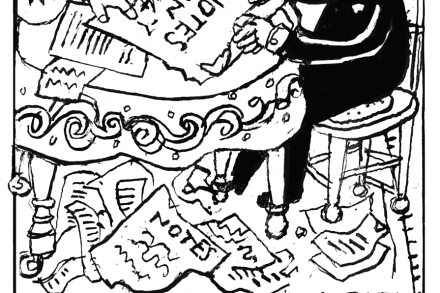
‘You asshole,’ was my friend’s cheery greeting when we met in Ludlow. I’d mucked up the time. Reconciled, we walked to his place and on the door was a note he’d left me, scrawled on a card with an image of him mimicking Philip Larkin proudly sitting on a border stone: ‘Just a note that you are an asshole. Call.’ Stuart, a collector of manuscripts, showed me a recent acquisition, a note by Sir Edward Elgar, graced with a self-portrait featuring, my friend is sure, an immodestly large penis. I think it’s his coat tail. We debated the iconography while listening to ‘Nimrod’. Notes are often discarded – who hasn’t inherited, in the bottom of a trolley, a forlorn shopping list? But they have a long history.
Even the owl in my garden is self-isolating

From our UK edition

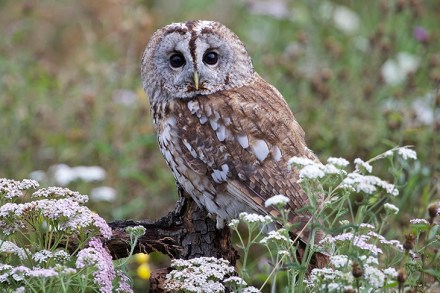
My tawny owl has been self-isolating. I say mine but in truth she chose the nest box in my neighbour’s garden rather than the one I almost killed myself to install, balancing it on my head as I scaled a rickety old ladder. A couple of months ago I spotted the owl, happily sitting in the box’s entrance in the weakening sun. A pattern was established. Every evening as day drained away, I went into the garden, balancing my old Zeiss binoculars alongside a glass of white. The owl would fly in silently from the south, sit around for a while and then disappear into the box. These regular sightings stopped six weeks ago, and I have been worried since. But early this morning I saw her again.

Mann and motorbike

From our UK edition

In Thomas Mann’s astonishing novel The Magic Mountain the indolent young Hans Castorp visits his brave, terminally ill soldier cousin at a sanatorium at Davos, high in the Swiss Alps. Intending to stay three weeks, he remains seven years. A dubious diagnosis of light tuberculosis is all the excuse he needs to dismiss ‘the flatlands’ and discover, with increasing wonder, that in the midst of death he is in life. We could have done with more than one night at Le Grand Hôtel Plombières-les-Bains in Eastern France in order to penetrate the Thermes Napoleon to which it is attached.

Kites

From our UK edition

I’ve flown only three kites in my life. My stepfather bought me the first. I remember seeing him from a window approaching our little mews house off Bond Street, clutching it furled in its packet as though his life depended upon it. The previous day he had overcharged an electric plane sent for my birthday by my other father, the one left in America following a youthful marriage that didn’t pan out. The walk to the launch took us past the barley-twist facades of Mount Street and Allens the butchers (alas, no more) whose soft light, sawdust and warm meaty air I always recall pooling the pavement on autumn trudges home from St George’s primary school.

Otmoor

From our UK edition

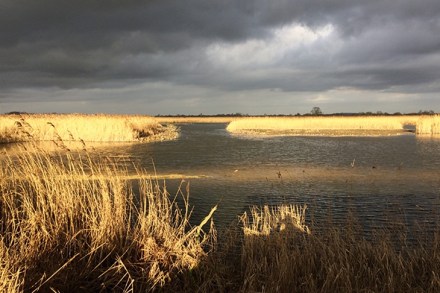
‘Don’t sit down too long my duck, you might be doing nothing,’ reads the inscription memorialising Barbara Joan Austin (4 July 1929–21 September 2004). I have no idea who Barbara was, but I often sit on her lonely bench in the middle of Otmoor. Otmoor is an ancient watery landscape just a few miles north-east of Oxford. I am always surprised how few people know of it, although many will have travelled there in the pages of fiction. Lewis Carroll’s chess-board landscape in Through the Looking--Glass is said to have been inspired by it and it features in the work of John Buchan, R.D. Blackmore and Susan Hill. A strong and uncanny genius loci presides, like many places layered with contentious history.

Literary motorcycling

From our UK edition

No seat belts. No airbags. Just air, and coming at you as fast as you like. Motorcycling shouldn’t be allowed, really, but thank God it is. Hanging on to an engine braced between two wheels as you travel through the countryside is worth any dose of mindfulness. The NHS should prescribe it. Even with the cost of broken bones and, alas, the occasional overheads of the mortuary, it would save money on mental health treatments. Your senses are stimulated in a way that is impossible in a car, with the force of movement intensifying an ordinary experience. Smells and temperature become suddenly distinct as you dip or rise, fly through conifer or broad leaf, past farmyards and bonfires. Other traffic on a good sweeping road becomes an irrelevance.

Fancy dress parade

From our UK edition

For his 75th birthday, Sir Roy Strong gave himself a personal trainer. For his 80th, he has commissioned a book of portraits of himself by the photographer John Swannell. The fruits of all that training — much of it undertaken on a racing tricycle around the lanes of Herefordshire — can be seen in the six-pack he sports in one of the luscious, technically excellent images. Oh, hold on a mo, it’s the costume of a Roman Emperor, Photoshopped to turn Roy into classical sculpture for his latest garden temple! This magnificently potty book takes us through 30 versions of Roy done after celebrated portraits, or in the manner of various schools. He is swoon-worthy as a Victorian Sir Galahad, masterful as Isambard Kingdom Brunel and bloody terrifying as Rasputin.

Here, Mr Gove, is the thrill of raw, unvarnished history

From our UK edition

Our unrelenting appetite for historical drama is fed by a ceaseless stream of novels and dramatisations - usually, these days, something to do with those naughty Tudors. Perhaps it is how my generation, dosed on pick n’ mix modules and special options (Industrial Revolution or Origins of WW1 anyone?), recovers lost ground. But it is unmediated history taken straight from the page that gives the real jolt. I recently acquired for the Bodleian a journal kept from 1813-1818 by the engraver and antiquary James Basire (1769-1822). His father was the more famous artist, closely associated with William Blake.  Nevertheless, the journal seemed worth having for all the right academic reasons.

A Little Something: remembering Seamus Heaney

From our UK edition

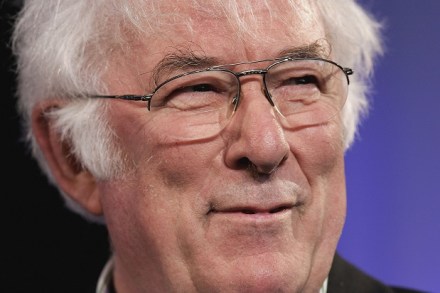
‘So.’ So begins Seamus Heaney’s translation of ‘Beowulf’. I know it didn’t come easy to him. The morning after he had been awarded the Whitbread Prize for the work I found myself having breakfast at the Savoy with him and his wife Marie. I’d asked some time before whether I could borrow some of the manuscript pages for a literary exhibition at the British Library. I was a curator there at that time and for a special limited edition of his book had helped get a facsimile image from the original thousand year old manuscript, next to which I now wanted to show his drafts. He tossed an envelope across the table and it landed near me, somewhere between the butter and the jam. ‘What’ s that, Seamus?’ asked Marie.

Anon’s Baby Song; a lullaby for your baby tonight

From our UK edition

Writing, as I have done, about the Bodleian’s holdings of Jane Austen or Byron is all very well, but our most prolific author is Anon. He (or she) leaves his (or her) elusive  traces everywhere – in ancient papyrus fragments, clerkly rolls of the middle ages, early-verse anthologies, copperplate accounts of long lost estates. Or, in one case, a manuscript volume of rhymes and songs just acquired from our friendly neighbour, Blackwell’s. The book dates from around 1800 and is barely bigger than a playing card. Its physical format suits the person for whose little hands it was intended, an infant girl in the nursery.

Jane Austen’s pinny

From our UK edition

This is the third entry in an occasional series by Christopher Fletcher, Keeper of Special Collections at the Bodleian Library. You can read the other instalments here. It’s almost two years since the Bodleian celebrated its hard-fought acquisition (nail biting auction) of Jane Austen’s manuscript draft of her abandoned novel, The Watsons. Thank you again National Heritage Memorial Fund, Friends of the Bodleian, Friends of the National Libraries, Jane Austen Memorial Trust and all supporting Janeites everywhere. Once a manuscript has been fetched into the bosom of the Bodleian, repaired, shelf-marked, and safely housed, it needs to be studied.

Taking revenge on wicked Lord Byron

From our UK edition

This is the second article in an occasional series by Christopher Fletcher, Keeper of Special Collections at the Bodleian Library. You can read the first instalment here. By 1814, two years after he awoke to find himself famous, everyone wanted a piece of Byron. Some got jewellery, several got hair and a fair few got a reputation. Among the most prized of trophies, however, was a sample of verse – not printed, mind, but written out with the warm intimacy of the poet’s hand. In a letter of 23 December 1814, the novelist and society gossip Miss Emily Eden described to Lady Buckinghamshire the febrile hunts she had witnessed at Middleton House, seat of the Jerseys and occasional retreat for Byron.

The Secret Lives of Books – occasional tales from the Bodleian

From our UK edition

Does monotropa hypopithys, or yellow bird’s nest, still grow in Mickleham, Surrey, in the woods once owned by Sir Lucas Pepys the celebrity physician who, in ministering to King George III, ‘found the stool more eloquent than the pulse?’ The question is prompted by the Bodleian’s recent acquisition of a ‘Catalogus Plantarum’ kept in the 1790s by an anonymous Botanist who roamed the south of England looking for specimens and noting them down with meticulous care in an exact italic.