Charleston

Why is May National Barbecue Month?

From our US edition

We’re almost to the end of May, which means National Barbecue Month will soon be drawing to a close. I hope you’ve been celebrating appropriately. You did know that May is National Barbecue Month, right? And that May 16 was National Barbecue Day? I, for one, can never forget, for each year my email is flooded with pitches from PR reps convinced I have completely run out of things to write about. “With it being National Barbecue Month,” one begins, “I wanted to check in and see if you have any roundups planned of must-try barbecue spots in Little Rock.”  Another generously offers, “In honor of National Barbecue Month, we’re sharing this coveted BBQ Shrimp & Grits recipe from Nashville’s [restaurant name redacted].

national barbecue month

The vast landscape of American barbecue

From our US edition

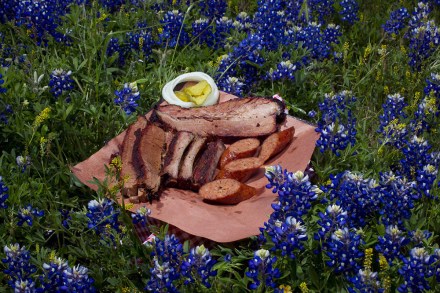
Some 25 years ago, I walked into the University of South Carolina library to check out a book on the history of barbecue. I had just finished a PhD in American literature, but had become more interested in culinary history. I had also taken to driving the state’s backroads, seeking out old-school barbecue restaurants. Researching the history of barbecue seemed the perfect next move. To my surprise, no one had published a book on the subject. The most that had been written about pre-20th century barbecue were a few sparse paragraphs in larger works on food history. I ended up having to write one myself. It took a while. The first edition of Barbecue: The History of an American Institution was published in 2010.

Charleston notebook: following an English country band through the Holy City

From our US edition

My impression of Charleston, a city I’ve been visiting since my late teens, is that it is oddly more European than American. Real Charlestonians, they say, have more in common with their cousins across the pond than with their compatriots in America’s big cities. I've found that to be true. I’m here for the birthday of one such real Charlestonian, my friend Toto. A former White House staffer, Toto now works in the private sector, but he is destined for a return to politics – his great grand uncle was an accomplished South Carolina statesman and Toto, as he puts it, "feels a deep sense of purpose and mission to ensure South Carolina continues to be the greatest state in union".

The Two Roberts drank, danced, fought – but how good was their art?

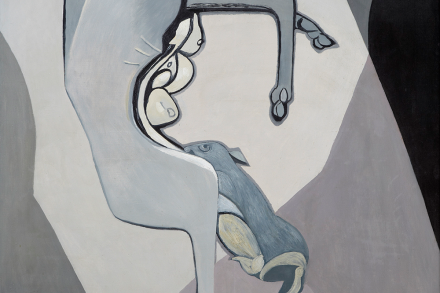
The Two Roberts, Robert MacBryde (1913-66) and Robert Colquhoun (1914-62), are figures of a lost British bohemia. Both born in Ayrshire, they met on their first day at the Glasgow School of Art, becoming lifelong partners and painters. Well-connected in louche literary London, their conversational barbs were recorded by Julian Maclaren-Ross, their jig-dancing antics noted by Joan Wyndham, their drunken fights observed by Anthony Cronin – so that one sometimes forgets what sort of art they made. This show, staged in a former municipal building in Lewes, is a reminder. The work is haunted, unbeautiful British neo-romanticism, second cousin to Piper and Sutherland. They established this angsty, angular modernist style in the 1940s.

A gruesome bohemian upbringing: Days of Light, by Megan Hunter, reviewed

Ivy, the protagonist of Megan Hunter’s magnificent Days of Light, lives with her family at Cressingdon, a Sussex farmhouse, which is ‘covered with her mother’s fabrics and artworks, every room thick with the breath of her, of Angus’ (her mother Marina’s lover). At weekends, her father Gilbert, a travel writer and notorious womaniser, comes down from London to stay. The clear parallels with Angelica Bell and Charleston extend even further. Ivy develops a tendresse for, and eventually marries, Bear, a man 25 years her senior and Angus’s former lover. Like his prototype Bunny Garnett, Bear worked on the farm to avoid conscription during the first world war. Like Bunny with Angelica, Bear is present at Ivy’s birth and immediately contemplates marrying her.

The Bloomsbury Group’s precarious paradise

The artist Vanessa Bell, née Stephen, the wife of Clive Bell, is enjoying the limelight this year as an exhibition of her work travels the country. Hot on its coat-tails comes Wendy Hitchmough’s beautifully illustrated new study of Bell’s life and art. As the former curator of the painter’s home at Charleston, Hitchmough writes with insider knowledge, supported by an armoury of scholarship: the bibliography alone stretches to 14 pages and the notes to 45. Somewhere within this carapace is a uniquely original and talented artist struggling to get out – a true radical whose story was one long, rolling sequence of experiments in leading as creative a life as possible within or without the constraints of her time.

Towards Zero: the gruesome countdown to the American Civil War

Some 100,000 books have been written about the American Civil War since it ended in 1865. That’s hardly surprising, given the four-year conflict’s impact on society, and not just because of the immense death toll, which new estimates put as high as 750,000 – more than the losses from all other wars combined. The effusion of blood created a new nation and a new mythology, anchored on the principles of freedom, equality and democracy. There is not much room in this crowded field for Civil War neophytes. Erik Larson knows what he is about, however, in The Demon of Unrest – but do his critics? The mixed reception this book has received suggests not.

The magic of Charleston’s Gin Joint

From our US edition

There are few greater joys in life than to wander the streets of Charleston in the evening, the light and shadow of the holy city and the sea salt in the air guiding you near the haunted past, toward cobblestones and the maze of the French Quarter. The quiet of the port pierced by the occasional gull and the stopped-up cannons at every turn bring you back to the age of Henry Timrod, when ships brought the Carolinas “Saxon steel and iron to her hands, And summer to her courts.” As a believer that liquor has seasons, in the summer I shift to good gin, and for the most inventive cocktails on the East Coast there is no comparison to Gin Joint.

gin

Can we know an artist by their house?

Show me your downstairs loo and I will tell you who you are. Better yet, show me your kitchen, bedroom, billiard room and man cave. Can we know a man – or woman – by their house? The ‘footsteps’ approach to biography argues that to really understand a subject, a biographer must visit his childhood home, his prep-school boarding house, his student digs, his down-and-out bedsit and so on through barracks, shacks, flats, garrets, terraces, townhouses and final Georgian-rectory resting-place. Walk a mile in their shoes – then put on their carpet slippers. So, to know Horace Walpole, we board the 33 bus to Strawberry Hill. For Henry Moore, it’s Hoglands and its cactus house. For Barbara Hepworth, St Ives and sculptor’s dust.

Nina Hamnett’s art was every bit as riveting as her life

Nina Hamnett is in vogue again. She is the subject of a new pocket biography, no. 7 in Eiderdown Books’s Modern Women Artists series, and her first ever retrospective is now open at Charleston Farmhouse’s gallery space. I confess I didn’t know much about her before this resurrection, but she is now one of my favourite 20th-century artists. In this bucolic gallery space, where cows can be heard bellowing, her portraits are at last hanging together, like a cocktail party finally regrouped. The colours are subtle, beautiful without being decorative; as the co-curator Alicia Foster explains, Hamnett’s use of colour is ‘meaningful, incisive’.

Why the #NeverBernie efforts fell flat in South Carolina

From our US edition

Last night, as expected, Bernie Sanders’s status as the front-runner invited a pile-on of attacks from the other candidates for the Democratic nomination. The South Carolina debate showed Bernie’s opponents are desperate to stop the anti-establishment juggernaut, which is splitting the party into a #NeverBernie moderate base and a progressivist camp that is increasingly comfortable with embracing the socialist label as a badge of honor. They don’t know how to stop him. The moderators kicked matters off by asking Bernie how a democratic socialist could do better than the incumbent given the strong current economy and record low unemployment.