Charles dickens

Ghosts of the past

From our UK edition

You find it in the vistas of skeletal metal gangways, the abandoned 18th-century forts, the squat oil holders and rusted pipelines, the pale reeds of the marshes, the barbed wire, the peeling housing estates, the lonely river paths. You hear it in the thick silence by the water, broken only by the wide river slurping and slopping against the embankment. There is something in the landscape of the Thames estuary that is curiously and powerfully uncanny. But how can that be in the otherwise earthy county of Essex? This is one of the subterranean themes of Rachel Lichtenstein’s electrifying exploration of the estuary. What ought to be a grey stretch of post-industrial England is in fact rich in eerie poetry.

On the money | 8 September 2016

From our UK edition

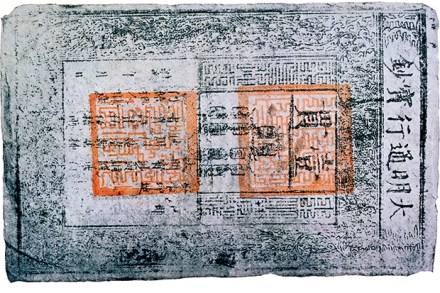
Kublai Khan, said Marco Polo, had ‘a more extensive command of treasure than any other sovereign in the universe’. There were no jangling pockets of coins in Kanbalu. Bark had been stripped from the mulberry trees and beaten into paper notes. The notes carried delicate little pictures of earlier currency — long, frayed ropes weighed down with coins. It was as though they were mocking the old ways. Paper money had been produced in China from as early as the 7th century, but that did not stop Marco Polo from gushing that the Great Khan had discovered ‘the secret of the alchemists’. Back home, there was much curiosity but apparently little urgency. Only in 1661 did the first banknotes circulate in Europe.

Dustcart

From our UK edition

Are we seeing the end of dustcarts? I don’t mean that those noisy, noisome vehicles will cease roaring at the dawn and blocking traffic in the afternoon rush-hour. But the name of the thing is now often given as bin lorry, or, in full American mode garbage truck. ‘Climb in the cab of the garbage truck and get to work!’ urge the Danish makers of the Lego City Garbage Truck (£12). ‘Drive around Lego City looking for trash.’ Calling the dustman a binman used to be a northern trait, as Paul Johnson, long of this parish, observed while making different complaint in Enemies of Society (1977): ‘Dustmen (or binmen in the North of England) become refuse-collectors.

Visions of suburbia

From our UK edition

Art is aspiring; hungry; acutely aware of what it could become, and of what it could lack; longs for safety and reaches out in speculative attempts to do something new; exists on the outer edges of lives, looking inwards with hopes, some day, to be more essential. Art, literature and music are, in short, suburbs to the grands projets of our lives at their most significant. Over the next year the Architecture Foundation will present new films, walks, talks and another instalment of the Doughnut Festival, to contemplate the transformation of London’s outer ring. It’s an interesting moment. The capital is not physically expanding, but the relationship between inner and outer is significantly altering and will go on altering.

A clash of two cultures

From our UK edition

‘They fuck you up, your mum and dad.’ Philip Larkin’s most famous line has appeared in the Spectator repeatedly, and there has even been a competition devoted to its refutation. Steve Jones, though, thinks it too coarse to be quoted in what he himself describes as a popular science book. This is just one of many indications of the way in which this book is haunted by C.P. Snow’s two cultures. I was a bit shocked to see Jones describe his book as popular science because I had been under the impression that he thought it was, in part at least, a history book. As a popular science book, it’s quite good. As history, not. Jones begins by looking out over Paris from the Eiffel Tower and identifying places where important science was done.

The American dream goes bust

From our UK edition

One happy aspect of Lionel Shriver’s peek into the near future (the novel opens in 2029) is the number of unusually rounded elderly characters she presents. Her pitiless eye notes every mark of age and vanity in the older generation of the Mandible family, but they remain in robust health, sharp without being merely spry, and full of personality. They have too much life as far as the younger family members are concerned, waiting impatiently for the wealth to trickle downwards. Jayne and Carter, already in their sixties, will be disappointed, for Shriver’s doomsday scenario concerns a catastrophic devaluation of the dollar which wipes out the family fortune overnight. The Mandibles descend the social order rapidly, along with everyone else in the United States.

Sweet and sour | 25 February 2016

From our UK edition

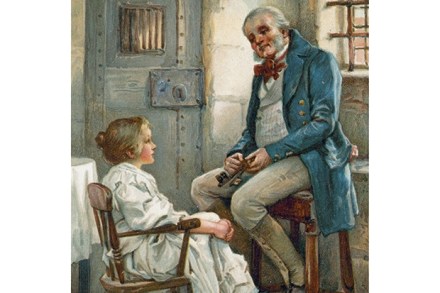
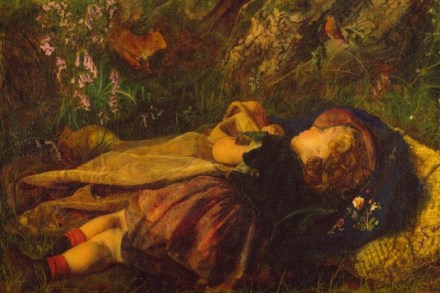
Dear, good, kind, sacrificing Little Nell. Here she is kneeling by a wayside pond, bonnet pushed back, shoes and stockings off, while she rests her blistered feet. She scoops a palm of water with cupped hands and tenderly washes those of her grandfather: her feckless, gambling, on-the-lam grandfather. It is an old Oscar Wilde chestnut, but one would have to have a heart of stone to look at William Holman Hunt’s portrait of Charles Dickens’s saintly ‘Little Nell and her Grandfather’ (1845) without laughing. Likewise Arthur Hughes’s ‘The Woodman’s Child’ (1860), a portrait of a tousle-haired country mite sleeping in the woods, attended by a squirrel and robin, their red coat and breast so sweetly matching her own little ruby socks.

Alive and kicking | 28 January 2016

From our UK edition

Four years after his death, it is still faintly surprising to recall that Christopher Hitchens is no longer resident on this Earth — or on any other sphere, if his friend Richard Dawkins is correct. A quote from Dawkins graces the cover of And Yet..., a final gathering together of Hitchens’s essays and the sequel to the bestselling anthology Arguably; he was, notes his ‘fellow horseman’, the ‘finest orator of our time’. And here is that voice again, alive, fiercely engaged with many of the same issues he left us to deal with: politics, patriotism, God or His absence, death and, inevitably, books. There was much about Hitchens that was contradictory and he knew it and embraced it in his work.

Assorted Christmas crackers

From our UK edition

There’s a moment in a child’s life where Christmas begins to lose its magic. Once lost it cannot be regained, but as adults we can catch glimpses of that wonder through our own children, through booze, and most of all through songs, films and stories. Christmas is the one time of the year when it’s not only acceptable to cry over such sentimental things, it’s almost compulsory. The wonder ceases at around eight or nine years old. Andrew Szlachetko (who publishes this book, £5.99) addresses this in The Age of Not Believing. The hero, Thomas, on his way to Santa’s grotto, is mocked by some other boys for his belief in Father Christmas. Later, full of rage and shame, he hits one of them because ‘the magic has simply disappeared’.

In the grip of yellow fever

From our UK edition

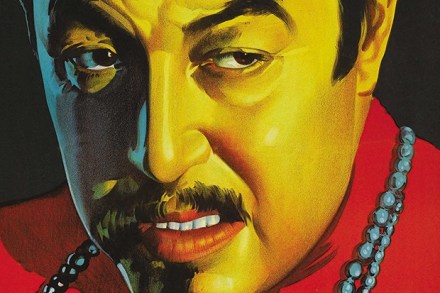
In late Victorian south London a ‘lower-middle-class’ boy, Arthur Ward, is lingering over his copy of The Arabian Nights. The book falls open at a colour illustration of Scheherazade, mysteriously pictured with a white peacock. Twenty years later, she materialises as Kâramanèh, the dazzling female sidekick of Fu Manchu. Young Arthur, who by now had reinvented himself as Sax Rohmer, was the author of the Fu Manchu novels, and Arthur had faded so far into the background that it seems even Sax Rohmer forgot him. He conjured his pen name from the Saxon, ‘Sax’ for ‘blade’ and ‘rohmer’ which means ‘roamer’. He was in essence the original bladerunner.

Nature beats nurture nearly every time

From our UK edition

I’ve been doing some thinking recently about the findings of behavioural geneticists and their implications for education policy. For instance, a study of more than 10,000 twins found that GCSE results are nearly 60 per cent heritable. (This research, by Robert Plomin, was first revealed in The Spectator.) So genetic differences between children account for almost 60 per cent of the variation in their GCSE results, with the environment, such as the schools they go to, accounting for less than 40 per cent. One very obvious implication of this research is that we may need to lower our expectations when it comes to the impact schools can make on the underlying rate of social mobility. But behavioural geneticists are upending our assumptions in other areas, too. Parenting, for example.

From the Big Smoke to the Big Choke

From our UK edition

‘A foggy day in London town,’ croons Fred Astaire in the 1937 musical comedy A Damsel in Distress, puffing nonchalantly on a cigar as he wanders through a wood that has already been half obliterated by belching Hollywood smoke machines. Today Gershwin’s lyrics conjure up a nostalgic vision of life in the city, involving pale fingers of fog wrapping themselves around lamp posts and the muffled clop of hooves on cobbles. Actually, for many years the reality of a London fog was far less appealing. It clogged your lungs and made your eyes smart; it turned the air into a murky kaleidoscope of colours (yellow, grey, blue) that appeared to be on the verge of turning into a solid.

A rollicking satire on the way we live now

From our UK edition

Jonathan Franzen’s latest novel, Purity, comes with great expectations. Its author’s awareness of this fact is signalled by a series of lampoons of writers expected to produce ‘big books’, writers named Jonathan and an assortment of other self-referential gags, but also the fact that its eponymous heroine, Purity Tyler, is nicknamed Pip. This Pip’s expectations are played off against those of Franzen’s readers: she won’t get what she expects, of course, any more than Dickens’s original Pip did. But to a great extent, our expectations will be met: this is a ‘big book’, a rollicking, sharply observed contemporary satire of family life and cultural politics.

Rio’s rococo genius

From our UK edition

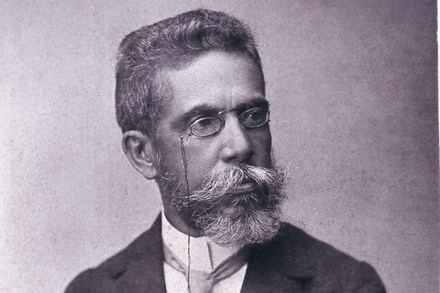
The surname is pronounced ‘M’shahdo j’Asseece’. There are also two Christian names — Joaquim Maria — which are usually dispensed with. K. David Jackson, professor of Portuguese at Yale, confines himself to ‘Machado’ and has invented an adjective ‘Machadean’. Stefan Zweig, who committed suicide in the very Machadean town of Petropolis, called him ‘the Dickens of Brazil’ which is not true — he has not Dickens’s range or sustained ebullience.

The London ear

From our UK edition

The opening bars of Ralph Vaughan Williams’s A London Symphony (1914) are scooped out from the gloopy bedrock of the city. Vaughan Williams was dredging through the same mud, silt, slime and ooze as those scene-setting paragraphs of Our Mutual Friend (1865), where Charles Dickens shows that the real glue binding his book together will be the River Thames. Dickens’s famed ‘boat of dirty and disreputable appearance’ berths Our Mutual Friend in the earth and experience of London. Similarly, Vaughan Williams’s cellos and double basses, which launch his symphony, plod out from the sludge of the river. But, by the time his bucolic Scherzo waddles into view, you could be forgiven for assuming that RVW has taken a genteel amble around the countryside.

Blown to blazes

From our UK edition

The story is an interesting one. Gunpowder had to be manufactured. In 1916 one of the places dedicated to the dangerous and difficult task was remote Kent. A fire broke out and led to a series of huge explosions. Deaths and injuries were not widely specified at the time for reasons of morale, but 109 men and boys were killed. The explosives industry was a necessary, profitable but immensely dangerous one. It took the 1654 Delft explosion — in which Carel Fabritius was killed — for society to realise that explosives should probably not be manufactured in cities. The Kent disaster took place a couple of miles from Faversham, and the works had been built at a safe distance from the town precisely to limit the number of casualties in case of disaster.

A mingling of blood and ink

From our UK edition

Historical fiction is sometimes accused of being remote from modern concerns, a flight towards nostalgia and fantasy. It’s not an accusation you can reasonably level at M.J.Carter’s historical crime novels. The first, The Strangler Vine, was set in an unsettling version of colonial India. Its sequel, The Infidel Stain, takes place three years later in 1841, in a London that Dickens would have recognised. The story follows the subsequent careers of her two main characters — the louche and mysterious Jeremiah Blake and his far more respectable young friend Captain William Avery, now retired from the East India Company’s army. Blake is making his living as an inquiry agent.

Dickens’s dark side: walking at night helped ease his conscience at killing off characters

From our UK edition

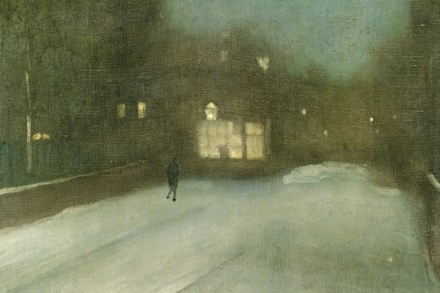
In England, walking about at night was a crime for a very long time. William the Conqueror ordained that a bell should be rung at 8 p.m., at which point Londoners were supposed to put their fires and candles out and their heads down. Again and again, until modern times, Matthew Beaumont tells us, specifically nocturnal laws were promulgated against draw-latchets, roberdsmen, barraters, roysterers, roarers, harlots and other nefarious nightwalkers — including those ‘eavesdroppers’ who stood listening in the close darkness where the rain dripped from a house’s eaves. Beaumont reads such laws as being designed to exert political and social control.

Don’t sneer at I’m a Celebrity. The show is teaching us to become model citizens

From our UK edition

One of the great benefits of having teenage children is that they force you out of your fuddy-duddy comfort zone. There was no way, for example, that the Fawn and I were ever going voluntarily to watch I’m a Celebrity... Get Me Out of Here! because we’re snobby old farts who only like history documentaries and University Challenge. But Girl decreed otherwise. That’s why, unlike many of you, but like most of the nation, I am now able to comment knowledgably on how well Michael Buerk is doing, who Tinchy Stryder is, why it was a sensible idea to choose world superbike champion Carl Fogarty to undertake the first bushtucker trial, and why Melanie Sykes is currently Britain’s favourite Milf. You think you don’t need to know this trivia?

The deep Britishness of fish and chips

From our UK edition

During the D-day landings, members of the parachute regiment, finding themselves behind enemy lines at night, needed a way of telling whether someone nearby was friend or foe. Their solution was a pair of codewords: one man would call out ‘fish’, the other replied ‘chips’. Brits seem to reach for the words as easily as we reach for the food itself. My Latin teacher used them to illustrate how the alternative to ‘et’ works (‘fish chipsque’), while people impersonating the Kiwi accent need only say ‘fush and chups’. The meal is deeply embedded in our national psyche. John Simpson, we learn in this book, pined for it during the siege of Sarajevo. When George W.