Charles dickens

All the world’s a stage: this election has echoes of Shakespeare and Dickens

From our UK edition

The Christmas election has unfolded like a series of mini-dramas from panto, Dickens and other popular classics. Boris has come across as a Dick Whittington figure, already twice mayor of London, and hoping to establish his seat in the capital on a more permanent footing. Jeremy Corbyn resembles Mother Goose flinging sugary treats at gullible children. And Jo Swinson has clearly been reading Cinderella (and believing every word of it). Swinson positioned herself as the long-suffering drudge who must tidy away the mess left by the Ugly Sisters, namely the Tory and Labour parties. In the story, Cinderella ends up as a princess (‘I’m standing to be your next prime minister’). The snag is that elections rarely turn out like fairy tales.

The Dems take a swig from The Pickwick Papers

I am not thinking of that scene at the beginning of Dickens’s novel where Mr Blotton says he regards Mr Pickwick as a 'humbug'. That was nice, especially when Mr Pickwick angrily demands to know whether the Rt. Honorable gentleman called him a humbug in its ordinary or 'common sense'. No, no responded Mr Blotton, he had 'merely considered him a humbug in a Pickwickian point of view'. Well, that’s all right then, rejoined Mr Pickwick, and peace and amity reigned once more among the members of the Pickwick Club. There is a lesson in there somewhere for the Democrats, but when it comes to their virulent case of Trump Derangement Syndrome, more pertinent is the episode describing the case of Bardell v. Pickwick.

dems pickwick

The joys of Radio 4’s Word of Mouth

From our UK edition

I first heard Lemn Sissay talking about his childhood experiences on Radio 4 in 2009. At that time he was still fighting Wigan social services for sight of the official dossier on his years as a child in care, fostered at first and then dumped back in the system and institutionalised in care homes and then a remand home. Eighteen years of his life stored in an Iron Mountain data facility. He’d been asking for his files, the story of his life, since he came of age. It was not easy to forget that programme; the banal cruelties of the system and Sissay’s resolute dignity in talking about them. At 18 he was told that the name he had been given by his foster parents was not his birth name.

The treasures to be found mudlarking by the Thames

From our UK edition

The 1950 B-film The Mudlark tells of an urchin who ekes out an unpleasant existence scavenging the slimy Thames foreshore. He finds a coin bearing the head of Queen Victoria, and creeps into Windsor Castle to see the sequestered sovereign for himself. Through sheer goodhearted pluck, he succeeds where sophisticated politicians have failed, appealing to the Queen’s feelings and reawakening her sense of public duty. Modern mudlarking is a hobby rather than a necessity, but chance finds of apparently insignificant items can convey powerful emotions. Over 23 squelchy years, Lara Maiklem has amassed a battered and stained collection of everyday things turned talismanic by time and immersion.

The Spectator’s original verdict

From our UK edition

Wuthering Heights by Emily Brontë,  reviewed 18 December 1847 An attempt to give novelty and interest to fiction, by resorting to those singular ‘characters’ that used to exist everywhere… the incidents and persons are too coarse and disagreeable to be attractive, the very best being improbable, with a moral taint about them, and the villainy not leading to results sufficient to justify the elaborate pains taken in depicting it. Bleak House by Charles Dickens, reviewed 24 September 1853 Bleak House is chargeable with not simply faults, but absolute want of construction.

Bah, humbug!, Tiny Tim

From our UK edition

Here we go again. Partridges in pear trees. Lovely big Christmas turkey. The Queen’s speech. And then, at some point during the Yuletide season, some version or other of Dickens’s ghost story A Christmas Carol. This year’s glut of Scrooge stories includes the Old Vic’s major production starring Rhys Ifans (reviewed by Lloyd Evans in last week’s Spectator) and Michael Rosen’s retelling of the tale, Bah! Humbug! There is a new film, The Man Who Invented Christmas, featuring Christopher Plummer as Scrooge and Dan Stevens, he of Downton Abbey fame, as Mr Dickens himself. It plots the months running up to the publication of A Christmas Carol in Yuletide 1843.

A Bridge too far

From our UK edition

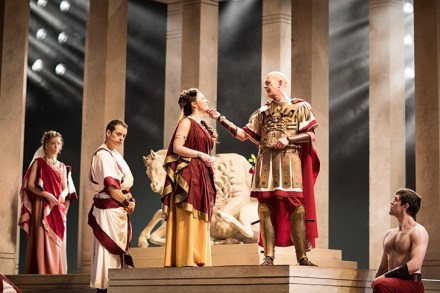
In the year since it opened, the Bridge has given us the following: a harmless Karl Marx comedy by Richard Bean; a modern-dress Julius Caesar with Ben Whishaw playing Brutus as a frowning existentialist; a dreary rustic soap opera written by newcomer Barney Norris; and an enjoyable NHS romp by Alan Bennett. Not quite the string of triumphs everyone had expected from Nicholas Hytner who used to produce two dozen shows a year at the National but now manages one every three months at his bankside garret. Time on his hands. But not enough to script-edit the efforts of fashionable wags like Martin McDonagh whose silly, mean-spirited skit about Hans Christian Andersen is a humiliating low point in the Bridge’s short history. The setting is Copenhagen.

An age of paradox

From our UK edition

‘It was the best of times, it was the worst of times... it was the epoch of belief, it was the epoch of incredulity, it was the spring of hope, it was the winter of despair, we had everything before us, we had nothing before us ... in short,’ as Charles Dickens famously told the first readers of A Tale of Two Cities, it was a period very much like their own. Dickens was right. John Stuart Mill once claimed that the two great ‘seminal minds’ of the period were Coleridge and Bentham, and in that brilliant yoking of opposites — the warm, creative current of Coleridgean thought and the chillier stream of Benthamite utilitarianism — is summed up all the contradictions and paradoxes that the Victorian age was heir to. This is the fascination of the period.

What drama

From our UK edition

One sphere that podcasts have so far not much penetrated is drama. Audible.co.uk is itching to develop its own brand but so far has limited itself to producing audiobooks read by a galaxy of stars. Recording plays is expensive, requires an understanding of studio techniques and a cast of actors who have learnt how to play to the microphone, not an auditorium. Only the BBC has as yet the necessary experience and resources, with its own repertory company and team of spot-effects experts and sound designers.

Long-distance walking

From our UK edition

Long-distance walking is all the rage these days. There are all-nighters staged by charities, for instance the annual MoonWalk in London, which raises funds to fight breast cancer: participants of both sexes walk marathon and half-marathon routes wearing bras. The outfits might have changed, but when it comes to foot-slogging, long-distance has a long history. Charles Dickens liked a nocturnal ramble. He did it to combat sleeplessness, and on one particular night in October 1857 walked the 30 miles from his house in Tavistock Square to his country home in Kent.

Water, water, everywhere | 28 March 2018

From our UK edition

‘Ding, Clash, Dong, BANG, Boom, Rattle, Clash, BANG, Clink, BANG, Dong, BANG, Clatter, BANG BANG BANG!’ is how Charles Dickens transcribes the sound of 1,200 men building the first iron-clad frigate Achilles at the Royal Dockyard, Chatham, in the 1860s. A Chatham boy, Dickens lived to see — and hear — the age of sail turn into the age of steam, when the creak of ropes, the flap of canvas and the ding of bells gave way to the hiss of steam, the chug of motors and the shriek of whistles. As soundscapes go, both strike the modern imagination as more musical than the roar of road traffic.

The only word that hurts

From our UK edition

It is hard to be honest about anorexia. The illness breeds deceit and distortion: ‘It thrives on looking-glass logic. It up-ends your thoughts, turns bone into flesh, makes life unlivable, death seem glorious.’ In her first book, the literary critic and art historian Laura Freeman is determined to tell the truth about her recovery from the illness that ravaged her adolescence and early adult life. The result is the reverse of a misery memoir. Freeman’s celebratory book is about getting better and learning to savour life again by doing what she most loves: reading. Freeman was diagnosed with anorexia when she was 15 and had already been ill for two years.

Festive feast

From our UK edition

Maximum Victoriana at the Old Vic for Matthew Warchus’s A Christmas Carol. Even before we reach our seats we’re accosted by bonneted wenches handing out mince pies. Merchants in top hats roam the aisles proffering satsumas, which they call, with accurate Victorian incorrectness, ‘oranges’. The guts of the theatre have been ripped out for this show. A slender catwalk stretches 40 yards from the rear of the stage to the farthest wall of the auditorium, with the seats gathered around this runway in odd little clumps. The narrow performing area leaves no room for scenery, so Dickens’s London is suggested by dozens of oblong lanterns dangling overhead, like mini-Tardises, all glowing amber, as if recently nuked. Then a soapy blizzard starts.

Rumbles in the jungle

From our UK edition

A CIA agent, a naive young filmmaker, a dilettante heir and a lost Mayan temple form the basis of Ned Beauman’s latest, and arguably most impressive, novel. Two rival expeditions set off from the United States to the jungles of Honduras to find the temple — one with the intention of using it as a location in which to film an absurd comedy, the other determined to disassemble it and take it back to New York. The two sides clash, each refusing to give way. The weeks roll into years; and life around the temple, populated with a disparate and distinct array of characters, steadily deteriorates into greater savagery. Meanwhile, Zonulet, rogue CIA agent (and primary narrator), under internal investigation, needs to unlock the secrets of the temple to prove his innocence.

Grain of truth

From our UK edition

We routinely feel emotional about materials — often subliminally. Which is why new substances and techniques for manufacturing have provoked vivid writing, particularly during the design-reform debates of the 19th century. Think of John Ruskin on the evils of cut as opposed to blown glass or his views on wrought iron as opposed to cast iron — the latter emblematic in his view of a ‘sophisticated, unkind, uncomfortable, unprincipled society’. For the designer Gottfried Semper man’s very inventiveness was a loss. We were losing our understanding of discrete materials. Then there was, and is, our perfectly justified anxieties about the plastics family, beautifully chronicled in Jeffrey Meikle’s American Plastic: A Cultural History.

Reference

From our UK edition

When Dickens wanted to buy a house in 1837, he wrote to Richard Bentley, who had started the magazine in which Oliver Twist was to be serialised, saying he had mentioned his name ‘among those of other references, to testify to my being “sober and honest”.’ Some people seem to think it was this kind of reference that was meant by the remarkable president of Magdalen College, Martin Routh, who stayed in office until his death aged 99 in 1854, shortly before which, on being asked what advice he would give to a young don, said: ‘You will find it a very good practice always to verify your references, sir!’ But he didn’t mean the kind given by a maid — or Dickens — but the references given in footnotes of learned books.

Genoa

From our UK edition

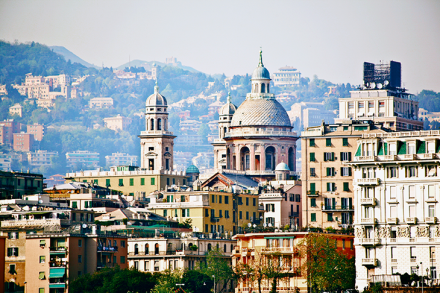
Some say Genoa takes its name from Janus, the two-faced god of time and doorways. Perhaps. What’s certain is the city has two aspects: the vast industrial port, its docks the bared teeth of the Italian Riviera; and, in the ruched strip of land between the Ligurian Sea and the hills, a bewildering network of alleys, stairways, and irregular little squares. ‘Genoa is the tightest topographic tangle in the world,’ wrote Henry James, ‘which even a second visit helps you little to straighten out. In the wonderful crooked, twisting, climbing, soaring, burrowing Genoese alleys the traveller is really up to his neck in the old Italian sketchability.’ The port has sent out illustrious exports in its time.

Spectator Books of the Year: The version of ‘The Taming of the Shrew’ that’s funnier than the original

From our UK edition

Anne Tyler’s Vinegar Girl (Hogarth, £16.99), her modern version of The Taming of the Shrew, came as a surprise: the funniest book she has written, much funnier than Shakespeare. Private Eye considers that I should not praise Ferdinand Mount because I was at Eton with him but we never spoke to each other there, so perhaps it is acceptable to mention his English Voices: Lives, Landscapes and Laments 1985–2015 (Chatto, £15.99): a large volume of his reviews, I think literally without a dull page. Otherwise, I have been catching up on good books I have never got round to.

The invention of Santa

From our UK edition

Santa Claus ate Father Christmas. It happened quite suddenly. Well, it took about a decade, but that’s suddenly in cultural terms. Over the course of the 1870s the venerable British figure of Father Christmas was consumed by an American interloper. Father Christmas (first recorded in the 14th century) was the English personification of Christmas. Just as Jack Frost is a personification of the cold and the Easter Bunny is a rabbitification of Easter, so Father Christmas stood for Christmas. He was an old man (because Christmas was ancient) and he was plump (because Christmas was a feast). But Father Christmas did not give presents, did not come down the chimney, had nothing to do with stockings or reindeer and did not live at the North Pole.

A tale of two prisons

From our UK edition

The Marshalsea was the best and worst place for a debtor to be imprisoned. From 1438 until its closure in 1842, there was dishonour in its name, contagion in its air and cruelty in its very premise: once detained, debtors could take no action to improve their lot. Instead, imprisonment was meant to serve to ‘rally friends and family’. Where none were forthcoming, many inmates died of starvation. The ancient barbarity of the system was redressed in 1729 when an inquiry revealed that medieval instruments of restraint were still in use — as well as a 3ft-long whip that terrified the debtors, fashioned out of ‘a bull’s pizzle, dried as hard as teak’. Even after the prison’s reform it was a death sentence to be on the ‘common side’.