Charles dickens

The agonies of an abandoned wife: Mrs Dickens, by Emily Howes, reviewed

From our UK edition

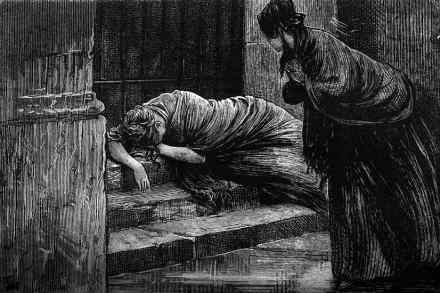
For every smog-spitting chimney in Victorian London there was a woman tasked with keeping the hearth clean, both physically and morally. This ‘angel in the house’, as Coventry Patmore dubbed her, lived entirely for her family, but above all for her husband. With her organs tightly compressed beneath a whalebone corset, she ministered to his every need and forgave him all his worldly sins. She was, in short, not a real woman but an ideal. In Mrs Dickens, Emily Howes exercises the novelist’s prerogative to flesh out an ideal, to show how the real woman beneath her halo of thorns suffered.

The tale of John Tom, the Cornish rebel with the Messiah complex

From our UK edition

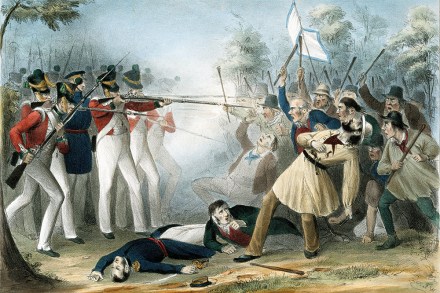
When was the last battle fought on English soil? The traditional answer, still sanctioned by Wikipedia, is Sedgemoor, in 1685, when the Duke of Monmouth’s rebellion was defeated and more than 1,000 combatants were killed. But there are other candidates, such as the Jacobite encounters at Preston and Clifton Moor in 1715 and 1745, reminders that English history didn’t end in everlasting peaceful compromise with the Glorious Revolution of 1688. The subject of Ian Breckon’s book was killed at yet another last battle, at Bossenden Wood in Kent, in 1838. It wasn’t a pitched battle like Sedgemoor, and only 11 people died, nine on the day and two later of their wounds.

What’s so fresh about ‘fresh hell?’

“What fresh hell can this be?” Dorothy Parker would ask if the doorbell rang. Now fresh hell has been freshly added to the Oxford English Dictionary. But was Parker the onlie begetter of the phrase? The hunt has been on to find earlier examples. The OED quotes a ghostly story within The Pickwick Papers (1837) for a parallel: “He started on the entrance of the stranger, and rose feebly to his feet. ‘What now, what now?’ said the old man – “What fresh misery is this? What do you want here?’” I’ve been doing what counts, for me, as research. In The Pickwick Papers, Charles Dickens uses fresh twice as frequently as he does in Great Expectations 24 years later.

content potash survivor fresh hell

What’s so fresh about ‘fresh hell?’

“What fresh hell can this be?” Dorothy Parker would ask if the doorbell rang. Now fresh hell has been freshly added to the Oxford English Dictionary. But was Parker the onlie begetter of the phrase? The hunt has been on to find earlier examples. The OED quotes a ghostly story within The Pickwick Papers (1837) for a parallel: “He started on the entrance of the stranger, and rose feebly to his feet. ‘What now, what now?’ said the old man – “What fresh misery is this? What do you want here?’” I’ve been doing what counts, for me, as research. In The Pickwick Papers, Charles Dickens uses fresh twice as frequently as he does in Great Expectations 24 years later.

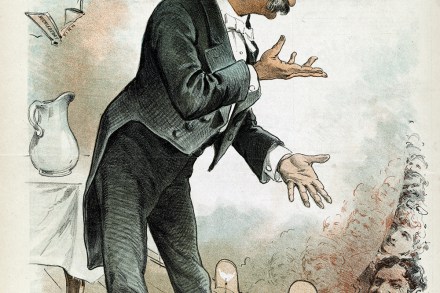
What Mark Twain owed to Charles Dickens

From our UK edition

You know Mark Twain’s story. You’ve got no excuse not to; there have been so many biographies. Starting in the American South as Samuel Clemens, he took his pen name from the call of the Mississippi boatmen on reaching two fathoms. His lectures, followed by his travel pieces and novels, enchanted America and then the world. As a southerner, his principled stance against slavery gave him moral authority. The famous ‘Notice’ to The Adventures of Huckleberry Finn – ‘Persons attempting to find a motive in this narrative will be prosecuted; persons attempting to find a moral in it will be banished’ – was swept aside, so that persons like H.L. Mencken could straightfacedly describe it as ‘the greatest novel ever written in English’.

A Charles Dickens patchwork

What connects pistachios, hay, and Mr. Krook in Charles Dickens’s Bleak House? Asked this question on a recent episode of the British TV quiz show Only Connect, the contestants noted all three are prone to spontaneous combustion, although, as one player exclaimed, “I can’t imagine that happening in a novel, but things were different back then.” Novels contain novel imaginings, but people back then were equally skeptical. Dickens eventually had to defend the death of Krook, the sozzled owner of a rag-and-bottle shop, by listing the historical precedents. He knew a thing or two about a rapid reaction between fuel and oxygen that emits a fiery blaze of energy. By night he walked and walked, to still his beating mind.

dickens

The strange rise of ‘watch on’

From our UK edition

‘Here’s a piece of filth for you,’ said my husband encouragingly. He was ‘helping’ me, as a cat might help wind wool. He’d come across a letter to the Guardian from 2015, in which Pedr James, who had directed a television dramatisation of Martin Chuzzlewit, drew attention to the name in the book for the proprietor of a ‘boarding house for young gentlemen’, Mrs Todgers. ‘Given her occupation, Todgers suggests to me that Dickens was well aware of the slang meaning which remains with us even today.’ This, the director suggested, exemplified double-entendres in the novel.     That reading seems to me misconceived. Dickens did not need concealed sexual references to add humour to his narratives.

A tale of cruelty and imposture: The Fraud, by Zadie Smith, reviewed

From our UK edition

‘Is this all that these modern ladies’ novels are to be about? People?’ So asks the bewildered author of Old St Paul’s, The Lancashire Witches, The Tower of London and three dozen other forgotten blockbusters stacked with costumed folderol. In Zadie Smith’s sixth novel, William Harrison Ainsworth disapproves, in 1871, of hiscousin-housekeeper, Eliza Touchet, reading a nameless story of dull village folk with ‘no adventure, no drama, no murder’. It can only be George Eliot’s Middlemarch. The Fraud alights briefly on this quarrel, as it does on many Victorian topics. Yet Smith’s triple-pronged tale of imposture and masquerade, public lies and secret truths, often reverts to fiction’s role either as gaudy stage for the ‘human comedy’ or mirror for the hidden spirit.

Dickens’s London is more elusive than the artful dodger himself

From our UK edition

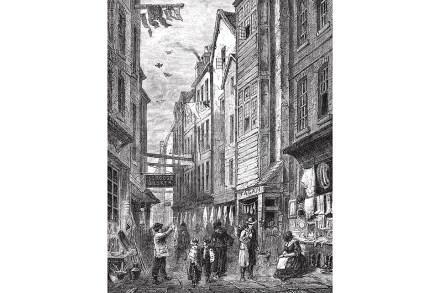
Is Dickens’s London a place, or a state of mind, or a bit of both? I used to ask myself the question all the time when I was literary editor of this periodical and our office in Doughty Street was a few doors down from the Dickens Museum, at no. 48, the house where he lived in the early days of his fame and where his beloved sister-in-law Mary Hogarth died. The deputy lit ed, Clare Asquith, and I used to walk in those days before computers to the press, which was in Saffron Hill, Clerkenwell, the scene of Fagin’s lair. We’d pass Bleeding Heart Yard, where so much of Little Dorrit takes place. Many of the streets near our office – Brownlow Street, for example – took their names from characters in Dickens’s novels. But which came first: Dickens or the place names?

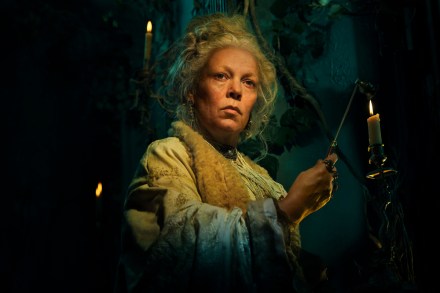
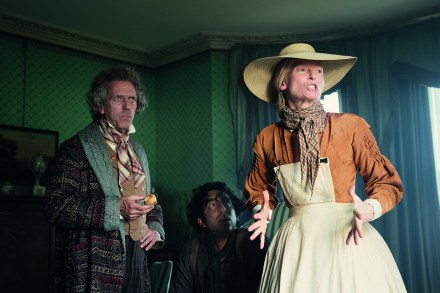
The new foul-mouthed Great Expectations is as bad as you’d expect

When Peaky Blinders creator Steven Knight’s adaptation of Dickens’s A Christmas Carol aired on FX in 2019, it was very quickly decided that, whatever it was, it wasn’t Dickens. From Guy Pearce’s foul-mouthed Scrooge to a scene in which Mrs. Cratchit strips and offers Ebenezer sex in exchange for money to buy the medicine she needs for her son Tiny Tim, it was a strange combination of would-be gritty social realism and hysterical prurience. It was not well-received in the United States: Salon’s comment that it was “short on joy and very, very, very long on purgatorial slogging” was typical.

olivia colman great expectations

The best new year celebrations in literature

From our UK edition

Literature presents many different ways of observing the new year. Much like real life, the options range from big parties to quiet stay-at-home gatherings… and existential crises. In Louisa May Alcott’s Little Women, Meg and Jo March attend a New Year’s Eve party at the home of their family friend Mrs Gardiner. ‘Down they went, feeling a trifle timid, for they seldom went to parties, and informal as this little gathering was, it was an event to them.’ This is the moment that Jo converses with Laurie for the first time and sparks fly as they watch the New Year’s Eve party from their shared point of refuge in a small curtained recess.

Reworking Dickens: Demon Copperhead, by Barbara Kingsolver, reviewed

From our UK edition

Putting new wine into old wineskins is an increasingly popular fictional mode. Retellings of 19th-century novels abound. Jane Austen inevitably leads the way, with Val McDermid’s Northanger Abbey, Alexander McCall Smith’s Emma, Joanna Trollope’s Sense and Sensibility, and no fewer than four recent adaptations of Pride and Prejudice. Dickens, too, has been updated, with Michael Rosen’s Bah Humbug and Lorie Langdon’s Olivia Twist. Now Barbara Kingsolver pitches in with a contemporary version of David Copperfield. Her Demon Copperhead is a russet-haired, mixed-race boy from the backwoods of South Virginia.

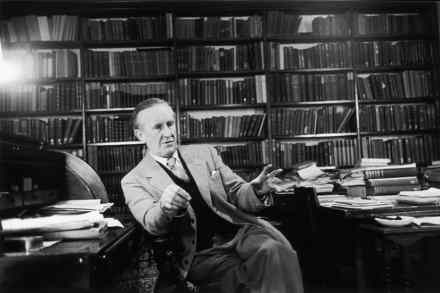
From Mrs Dalloway’s West End to Tolkien’s Middle-earth

From our UK edition

Professor David Damrosch, the director of Harvard’s Institute for World Literature, fell in love with ‘a fictional realm that I’d never imagined’ in 1968. His English teacher, Miss Staats, gave him Laurence Sterne’s Tristram Shandy. This horizon-stretching Manhattan educator turns up again in another light towards the end of this book. A long-term girlfriend of Saul Bellow, Maggie Staats prudently said no when the novelist proposed to her. At this point, Damrosch has just told us that the hero of Bellow’s Henderson the Rain King remembers having ‘dreamed at the clouds from both sides’, so planting an idea in the young Joni Mitchell’s mind. You get the drift.

The link between spick and span, spanking and spoon

I ‘hoovered’ on Saturday (as we say in Britain for vacuuming) while my husband was out ‘exercising’. I don’t know whether he attracts dust, like a piece of amber, or produces it, as if by spontaneous combustion in slow motion. Anyway, when he settled in his chair again, he ran his finger rather annoyingly over the table next to him and said encouragingly: ‘Spick and span.’ It’s a curious expression, since neither part seems to have any meaning on its own. The table wasn’t spick. Nor was it span. The earliest known use of the phrase is by Thomas North in 1571, in his translation of Plutarch’s life of Aemilius Paullus, called Macedonicus not because he came from there but because he beat the Macedonians in battle.

spick

The year of living decisively: The Turning Point, by Robert Douglas-Fairhurst, reviewed

From our UK edition

We tend to think of turning points as single moments of change — Saul on the road to Damascus or Bob Dylan performing with an electric guitar. The change is identified as a discrete moment for which there is a distinct before and after. But this is not always the case and, as Robert Douglas-Fairhurst argues, a turning point can trace a wider arc and evolve over longer periods. These turning points are clear only in hindsight once the details have softened and the ripples outward have stilled. His latest book examines one such period in the career of Charles Dickens, surveying the artefacts of his life to track his development over the year 1851. This is not the first time Douglas-Fairhurst has applied his macro lens to Dickens.

Lockdown might bring the Dickensian Christmas back into fashion

From our UK edition

I feel like a prisoner, making daily marks on the cell wall to chart the approach of freedom. But will it be freedom, or will we be on parole, obliged to wear a tag and subject to re-incarceration at authority’s whim? Such thoughts do not encourage equanimity. On that subject, I remember a delightfully splenetic political column by the late — alas — Alan Watkins, published a generation ago. As Christmas approaches, even the most acerbic hack feels obliged to relent and sound a little more like Fezziwig, a little less like Scrooge. Perhaps because he was never given to excessive astringency, Alan did not relent. He was complaining about secretaries, who were then numerous in newspaper offices.

The similarity between Charles Dickens and Armando Iannucci

A true adaptation of David Copperfield is neither possible nor even desirable. It would last as long as it takes to read the novel, say, two weeks. The principal cast would number in the dozens, and the extras — the clerks, lawyers, policemen, landlords, cooks, chimney sweeps, pickpockets, sailors, ministers, soldiers, beggars, porters, carters, fishermen, coachmen, pimps, gypsies and whores — in the hundreds of thousands. Replicating the cellars, garrets, galleries, museums, bridges, pubs, factories, shipyards, docks, scaffolds and debtors’ prisons of Victorian London would require construction on a Himalayan scale.

david copperfield

Victorian novels to enjoy in lockdown

From our UK edition

It’s the perfect opportunity to crack open those classics of 19th-century fiction you’ve always been meaning to read, and I am here to offer some recommendations. But there’s an immediate problem. Do I gesture towards the blindingly obvious? Or do I recommend a variety of obscure and arcane titles? The former strategy is liable only to insult your intelligence — of course you already know Jane Austen and Charles Dickens are worth reading — whereas the latter runs the risk of merely putting you off and making me seem pretentious. There is, though, a third way. What did the Victorians themselves reckon were the great authors of their age? The answer, above all others, is Sir Walter Scott. I know nobody now reads him, but in the 19th century everybody did.

The wisdom of Salman

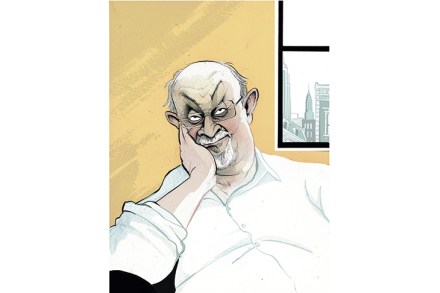
‘Things that would have seemed utterly improbable now happen on a daily basis,’ Sir Salman Rushdie tells me. ‘The implausible has now become everyday.’ Isn’t this a problem for a writer whose books derive from the fantastical traditions of magic realism and science fiction, where crazy stuff happening is what sets them apart? ‘It is.’ The active threat to Rushdie’s life from radical Islam is two decades behind him. His novels have a way of dealing in sour, sometimes apocalyptic ironies. His latest, the Booker-shortlisted Quichotte, is set in what it describes as ‘the Age of Anything-Can-Happen’.

salman rushdie

The way we read now

For almost 300 years, the novel was a major art form, perhaps the major art form, of the modern world — the device by which we tried to explain ourselves to ourselves. Something new came into art during the transition out of the Middle Ages, through the Renaissance and the Reformation, and into the modern age. We might call it the turn to the interior — an increasing agreement that domestic life and drama are real, not merely minor activities necessary to keep body and soul together while we play out our real lives on the world’s stage. Think how rare domestic drama was before the novel.

novel bottum