Censorship

Why socialism will fail

From our US edition

The philosopher David Hume warned us not to mistake “constant conjunction” for causation. It’s good advice, though it is not the sort of universal disturbance in the force that some philosophers, eager to jettison old certitudes, believe it to be. Hume himself eventually rejected that “pretended skepticism” as a juvenile affectation. Like the rest of us, he recognized that reasoning from induction, from observed realities, introduces us to that great guide in the cognitive adventure of life – probability. Don’t let the appearance of a black swan down under disturb you: good mental hygiene and faith in the soundness of inductive reasoning go together. I indulge in this preliminary expectoration (apologies to Søren Kierkegaard) because I arrived in London on June 22.

The coming storm against MAGA

From our US edition

Economist and former New York Times opinion writer Paul Krugman has called for a post-Trump “deMAGAfication” of America, and left no mystery about the comparison he was making. “And I’m not going over the top by using a word that’s very similar to the ‘denazification’ that we pursued successfully after World War Two in Germany.” Krugman remained vague about the nature of this “thorough purging,” but said it should include “not just the MAGA ideology, but the whole structure of hugely unequal power, hugely unequal wealth that made this horrific moment possible.” Today’s left – secular, post-Christian, postmodern and postcolonial, untethered from faith, tradition or national feeling – has few moral intuitions other than “Do not be Hitler.

All the gossip about Lady Chatterley’s Lover

Lady Chatterley’s Lover was written in a villa outside Florence during the winter of 1927-28, two years after D.H. Lawrence was diagnosed with TB. Described by him as ‘a phallic novel, but good and sun-wards, truly sun-wards’, the tale is set in his native Nottinghamshire, which he left in 1912 when he eloped with his aristocratic wife Frieda von Richthofen, who was then married to his tutor. Frieda, who valued her freedom, was enjoying an affair with the Italian officer Angelo Ravagli, who became her third husband after Lawrence’s death in 1930. It is believed that Lawrence was impotent for the last years of his life. In the evenings he would read aloud his finished pages, in which the Lawrentian philosophy is expressed by Oliver Mellors, gamekeeper to Sir Clifford Chatterley.

The typo that spelled death in the Soviet Union

‘As anyone who has gleefully spotted a typo in a prestigious publication, felt a flicker of schadenfreude at a pompous critic’s downfall, or secretly enjoyed a literary scandal knows, it is possible to love books while delighting in their disasters.’ The sentiment expressed in Rogues, Widows and Orphans is familiar to this reviewer. Rebecca Lee, who has been an editor for two decades, knows very well how words ‘get good’ (to quote the title of her earlier book) and what happens when they go wrong. Her new work ‘offers a lick of every flavour of ick lit’, leaving the reader craving more. Errors and omissions in print have consequences for everyone involved.

Jung Chang: what the West gets wrong about China

No writer has done more than Jung Chang to bring the horrors of Maoist China to the attention of western readers. In her monumental memoir Wild Swans (1991), she recounted the Chinese Communist Revolution, the Great Famine and the Cultural Revolution through the stories of her grandmother, her mother and herself. Its influence was enormous: Wild Swans sold more than 15 million copies, making it one of the best-selling nonfiction books of all time. In Mao: The Unknown Story (2005), co-written with her husband, the historian Jon Halliday, she blew apart decades of Chinese Communist party propaganda to reevaluate Mao as one of history’s greatest monsters, as bad, if not worse, than Hitler or Stalin.

The lost art of the insult

Imagine I were to begin this column by remarking that a woman preaching is like a dog walking on its hind legs: it is not done well, but you’re surprised to find it done at all. Dear me, that would never do, even in as cheeky a magazine as The Spectator. Then try instead: “Dr. Johnson was no admirer of the female sex. ‘A woman’s preaching,’ he said, ‘is like a dog’s walking on his hinder legs. It is not done well, but you are surprised to find it done at all.’” I could get away with that. An antiquated opinion, safely attributed to an 18th-century writer, enclosed behind quotation marks and decorated with a few cobwebs, can still be sneaked past our 21st-century censors. But how about a more recent offensive remark?

insult

After Charlie Kirk, Trump should crack down on campus ‘safetyism’

From our US edition

An assassin who wants to silence a debate in America’s colleges can’t do it just by killing Charlie Kirk. Although Kirk was an exceptionally effective campus speaker – maybe the most effective since William F. Buckley Jr. in his heyday – he was far from alone in voicing conservative ideas in academic settings where they are generally unwelcome and at times violently opposed. There are others who will pick up Kirk’s microphone. But Kirk’s murderer has allies who can do systematically what the gunman could only do once. His allies in silencing voices like Charlie Kirk’s are university administrators who respond to violence by imposing stifling security costs on the targets of violence and intimidation.

Charlie Kirk

The death throes of free speech in Britain – and its opponents

From our US edition

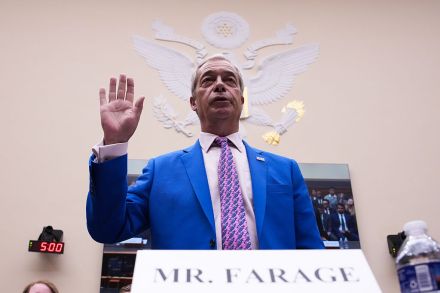
Free speech, the very bedrock of constitutional democracy, is writhing on its deathbed in England. It will take a mass movement to restore its vitality. Fortunately, one can see that movement emerging among a once-free people, tired of government suppression. The dire state of British liberties was outlined Wednesday in Congressional testimony by British MP, Nigel Farage, who testified before the US House Judiciary Committee. He was backed by the committee’s Republican members and attacked, alas, by Democrats.

Britain free speech

The UK censorship files: Jim Jordan’s crusade against Britain

From our US edition

The British Empire may be gone, but there is one area where the UK has not lost its global ambitions: online censorship. The latest vehicle is the Online Safety Act (OSA), a behemoth internet regulation law whose vast provisions are steadily coming into force – and increasingly drawing the ire of the Trump administration as it starts to impact US tech firms.  Under the OSA, “Britain has the power to shut down any platform” that breaks its content regulation rules, boasts secretary of state for technology Peter Kyle. The latest stage of its implementation began last week with new mandatory age-verification measures for social media platforms.  The Act is already curtailing what can be read online in the UK.

Free speech

Pity the censor: Moderation, by Elaine Castillo, reviewed

After her America is Not the Heart was published in 2018, Elaine Castillo was named by the Financial Times one of ‘the planet’s 30 most exciting young people’, alongside Billie Eilish and Alexandria Ocasio-Cortez. That debut novel told the story of three generations of women torn between the Philippines and the United States. In Moderation, thirtysomething Filipina-American Girlie Delmundo (not her real name) works as a content moderator, removing the most hideous material to be found on the internet. The author doesn’t pull her punches. In an early scene, Girlie has to moderate a video of child sexual abuse as part of her final assessment to get the job.

Putin’s stranglehold on the Russian press

Since Vladimir Putin came to power in 2000, the Russian press has been slowly, methodically strangled, which has forced existential choices on newspaper and TV journalists. Twenty-one have been killed – beaten, poisoned or gunned down. Others, such as Andrei Soldatov and Irina Borogan, highly regarded investigative reporters, have been forced into exile. Yet others, like the ‘dear friends’ of this book’s title, have chosen a different path – to cleave ever closer to the regime. The authors tell the fascinating story of those choices and allow us a glimpse of why they were taken.

Why does Britain think it can censor Gab?

From our US edition

A dramatic escalation has happened in the information war between the US and Europe. Ofcom, the British media regulator that fancies itself as a global censor, has made a move. Ofcom sent a formal demand to Gab – an American social media platform with no legal presence in Britain – threatening it with ruinous fines unless it complied with the UK’s Online Safety Act. Gab’s reply to Ofcom was not polite. It was cold, clinical and lethal. Through its lawyers, Gab told Ofcom – with legal precision and unmistakable clarity – to get lost. This isn’t some polite regulatory disagreement.

gab

Are thought crimes now a deportable offense?

From our US edition

In his inaugural address, Donald Trump promised to safeguard the First Amendment. “After years and years of illegal and unconstitutional federal efforts to restrict free expression, I also will sign an Executive Order to immediately stop all government censorship and bring back free speech to America,” he said. This was music to my ears — but with the recent arrest of Mahmoud Khalil, a Palestinian green-card holder who organized student protests at Columbia University, the administration is demonstrating that First Amendment protections don’t apply when it comes to criticizing Israel’s conduct in the Gaza conflict. I support the deportation of foreign nationals who are in the country illegally or have committed crimes.

How I fell foul of YouTube’s fact-checkers

The day after Mark Zuckerberg said fact-checkers ‘have destroyed more trust than they have created’ I experienced why he has a point. I had done an interview with an evolutionary psychology podcaster, Paula Wright, about the origin of Covid. In it I said something that caused the entire interview to be banned from YouTube. Wright’s appeals were rejected. Some ill-informed, possibly underpaid, definitely over-confident youth at YouTube banned my remark What had I said that was so offensive? Was it a lie, a conspiracy theory, a mistake, defamation? No, it was a statement of historical fact that has been confirmed and agreed by mainstream scientific bodies, including the World Health Organisation.

How Mark Zuckerberg became based… by Brazilian jiu-jitsu

From our US edition

In the storied Fast & Furious movie franchise, now eleven films strong, there’s a tradition of the villain from one movie becoming a member of Vin Diesel’s street-racing international shenanigans gang in the next. Luke Hobbs (The Rock) is sent to hunt down Dominic Toretto before asking for his help to track Deckard Shaw (Jason Statham), who is also adopted, while Jakob Toretto (John Cena), long-lost brother to Dom, redeems himself from assassinating their father in a sabotaged stock car by helping defuse a rogue weapons system that would cause all of civilization’s computers to collapse. You know, normal family stuff: wreaking havoc on the crew before being welcomed back with a Corona at a backyard barbecue.

jiu-jitsu zuckerberg

Spectator story debunking Elon Musk ‘alt account’ theory banned on X

From our US edition

A reporter has been restricted from posting on Elon Musk’s X for thirty days due to an article she wrote which The Spectator published over the weekend. The story itself has also been censored on X — you cannot post it on the site — with the reason given that it is “potentially harmful.” Here’s what happened. For months, there has been a social-media rumor that Elon Musk was operating an “alt account” under the pseudonym “Adrian Dittmann.” A number of users on the site were circulating it to make fun of Musk. Some media outlets — Newsweek, the New Republic, the Daily Mail — wrote up stories covering the rumor. None sought to examine its veracity.  Jacqueline Sweet, a contributor to The Spectator, began investigating the claims in late December.

AI

Brazil is showing a Harris administration how to de-platform Twitter/X

From our US edition

What happened in Brazil this past week — a magistrate suspended Twitter and threatened telecommunication companies, as well as Apple and Google — did not happen in a vacuum. To briefly sum up the order handed down: Brazilian Supreme Court justice Alexandre de Moraes ordered that Elon Musk’s X (formerly Twitter) be completely de-platformed, citing government speech rules against hate and “disinformation.” Any Brazilian citizen caught using a VPN to skirt the legal order could face fines that equal about $9,000. Moraes has also attempted to freeze Starlink accounts in the country, Musk’s satellite and internet service. What is happening in Brazil is a blueprint for a Kamala Harris Department of Justice to target X and Musk here in the United States. How do we know this?

Mark Zuckerberg is really sorry for censoring you

From our US edition

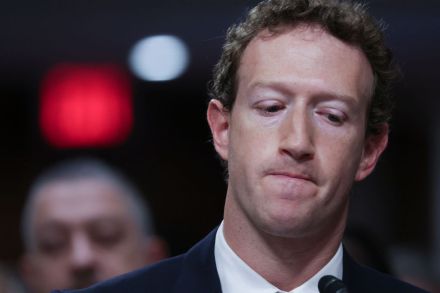
Meta CEO Mark Zuckerberg admitted in a letter to the House Judiciary Committee yesterday that the government pressured his company to censor content during the Covid-19 pandemic and said he regrets following their wishes. The committee described his comments as a “big win for free speech.” Meta produced thousands of documents for the committee’s investigation into alleged government censorship and Zuckerberg wrote the supplemental letter to outline what he had learned during the process. “In 2021, senior officials from the Biden administration, including the White House, repeatedly pressured our teams for months to censor certain Covid-19 content, including humor and satire, and expressed a lot of frustration with our teams when we didn’t agree,” he said.

Zuckerberg

Why did a Washington Post reporter urge the White House to censor Trump?

From our US edition

Former president Donald Trump and Tesla founder and X CEO Elon Musk had a wide-ranging conversation in a record-breaking X Space on Monday night. The pair spoke for about two hours with millions of listeners tuning in; the Space received hundreds of thousands of comments. The opportunity to hear from an unscripted presidential candidate for one of the two major political parties on pretty much every major issue facing our country is a gift to journalists. The amount of access Trump gives to the press in general — even adversarial reporters — is also a gift. Ideas directly from the horse’s mouth; no anonymous sources or investigate legwork required.  But the establishment and corporate media don’t view Trump’s words this way.

Nellie Bowles critiques progressivism and the media that covers it

From our US edition

One of many fascinating things to be learned from Morning After the Revolution: Dispatches from the Wrong Side of History, by former New York Times correspondent Nellie Bowles, is the process by which someone gets canceled. I was of course familiar with the concept of cancel culture and figured it meant blackballing the wicked, but I’d never gotten a clear idea of how the thing was actually done. On the evidence of Bowles’s book, it means going on Twitter (OK, X) and posting derogatory tweets (X-pressions, whatever) about the offending party contemporaneously with others doing the same thing.

Bowles