Censorship

The rise of reverse gaslighting

From our US edition

We live now in an age of reverse gaslighting. Ordinary gaslighting — the term was popularized by the 1944 movie Gaslight — describes a process of psychological manipulation whose goal is to make ordinary people question their sanity. Reverse gaslighting, by contrast, aims to convince us that insane realities are perfectly normal. Imagine: practically the entire population quarantines itself because a couple of government bureaucrats tell them to. Everyone starts wearing little paper masks as patents of their capitulation and, secondarily, as badges of their virtue.

gaslighting

X and the return of the social-media sandbox

From our US edition

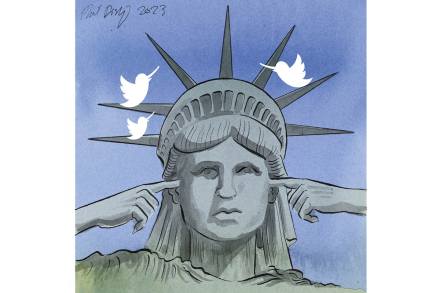
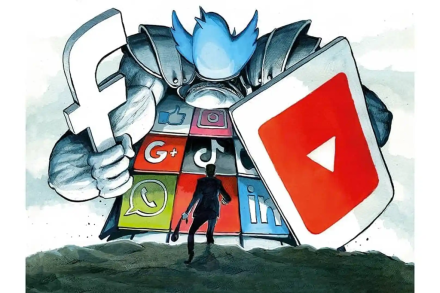
Elon Musk’s X, the social media site once known as Twitter, is a wasteland. It consists of uncontrolled pornography, crypto spambots, broken “mentions,” unpaid invoices for subscriptions, a useless search algorithm and unverified accounts spreading baseless conspiracy theories and being financially rewarded for juicing controversial or untrue content. It has become practically unusable as a functioning social media platform. But old Twitter, after what it had become, had to be absolutely and unequivocally destroyed for the sake of the future of open online discourse. The Jack Dorsey-Parag Agrawal iteration of Twitter had become part of an intelligence and corporate media censorship apparatus, which would spring into action against any user it viewed as an ideological opponent.

X

A cautionary tale about Wikipedia censorship and the Twitter Files

From our US edition

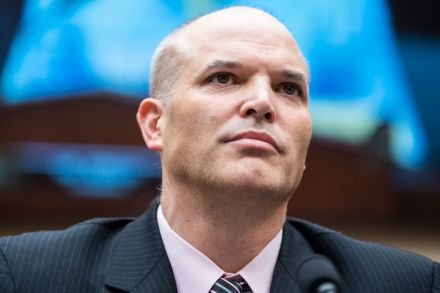
For the illiberal left, it’s not enough that you submit to their cultural revolution. You must also underwrite it. This happens not only at the state level, with issues such as abortion and public-school curricula, but at the private level as well. A good recent example includes efforts by certain Wikipedia editors to censor mentions of a journalism award handed out recently to the journalist behind the so-called Twitter Files. Wikipedia: glad-handing for donations on the front end, while certain “master editors” censor factual events on the back end! On November 1, journalist Matt Taibbi received a journalism award for his efforts to uncover the incestuous relationship between Big Tech and censorious federal apparatchiks.

matt taibbi

We’re fighting the Covid censors

From our US edition

On July 4, our Independence Day, Judge Terry Doughty issued a preliminary injunction ordering the federal government to immediately cease contact with social media companies, which it had been urging to censor protected free speech. Evidence unearthed in the Missouri v. Biden case, in which we are co-plaintiffs, has revealed a vast federal enterprise dictating to social media companies who and what to censor. The Centers for Disease Control and Prevention (CDC), the Surgeon General’s office, the National Institutes of Health, the FBI, the State Department, the Department of Homeland Security and the White House itself were all closely involved.

censorship

Elon is offering us a raw deal with X

From our US edition

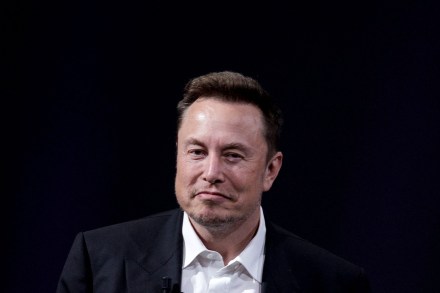
Elon Musk, the owner of X — once known as Twitter, may she rest in peace — is making Americans an offer that they must refuse. When he purchased the social media platform last year for a whopping $44 billion, he led us to believe he was doing it in order to save free speech, an ideal in regard to which he said was an absolutist. Today, what he is actually offering instead is a censorship regime slightly more friendly to the right than his predecessor. It’s a recipe for disaster. Back during the bad old Twitter days of Jack Dorsey, most of us had a fairly consistent idea of how the site should moderate its content.

elon musk

Disinfo-nation: the new censorship is here to stay

From our US edition

Lying is the great American pastime. We’ve been at it ever since some of the Pilgrim fathers shined on some of the folks back home with tales of the Eden they had found on the barren coast of Massachusetts: For fish and fowl, we have great abundance; fresh cod in the summer is but coarse meat with us; our bay is full of lobsters all the summer and affordeth variety of other fish; in September we can take a hogshead of eels in a night, with small labor, and can dig them out of their beds all the winter; we have mussels; and ... As the American Socrates, P.T. Barnum, may once have said, “There’s a sucker born every minute.” Or he may have not said. The Fort Wayne Weekly Sentinel in 1894 said he said it, but P.T. denied it.

disinformation

The making of a poet: Wilfred Owen’s ‘autobiography’ in letters

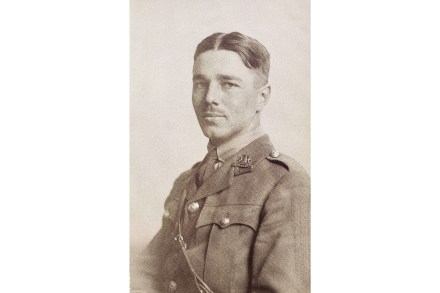
Here is the opening of a sonnet written by Wilfred Owen in the spring of 1911: ‘Three colours have I known the Deep to wear;/ ’Tis well today that Purple grandeurs gloom.’ Owen was 18 and had just been on a pilgrimage to Teignmouth in Devon, where his hero John Keats had once stayed. The kindest thing to say about this poem is that it is heavy with the influence of Keats. Six years later, in a seaside hotel requisitioned by the army and waiting to be sent back to the Western Front, he begins a poem like this: ‘Sit on the bed. I’m blind, and three parts shell.’ This looks so simple. The monosyllables carry the meter without fuss; ‘shell’ here means both munitions and protection.

YouTube’s inconsistent conspiracy policy

From our US edition

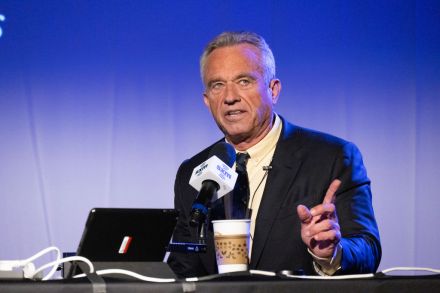
YouTube is back up to its pandemic-era tricks with a sketchy and unexplained censorship policy — this time as it pertains to the 2024 election. By all appearances, it once again looks as though Big Tech is going to attempt to play information arbiter as it relates to our national elections. Robert F. Kennedy Jr., a long-time radical environmentalist and conspiracy theorist, just also happens to be challenging President Joe Biden in the Democratic primary — and RFK is making enough noise that people are at least paying some attention to him. Kennedy’s profile has risen in the media lately as he’s espoused skepticism in the Covid-19 vaccine. It’s nothing new for him, as he was welcomed on media platforms such as The Daily Show, MSNBC and CNN in the mid-2000s.

youtube robert f. kennedy jr.

Poet laureate can’t define a ‘ban’

From our US edition

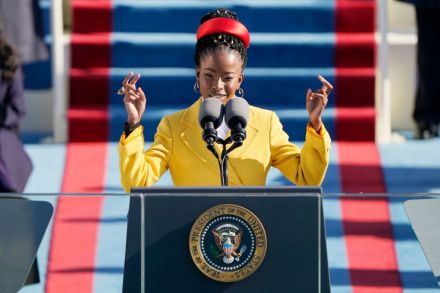
Amanda Gorman, the young female poet who read at Joe Biden's inauguration lamented on Tuesday night that her poem had been banned by a Florida school library. “Just found out my inaugural poem 'The Hill We Climb' has been banned from an elementary school in Miami-Dade County because it causes "confusion and indoctrination,” America's first National Youth Poet Laureate tweeted.  The poem, however, was never banned. Instead, according to the Miami-Dade school district, “The Hill We Climb” was moved from the elementary section of the library to the middle-school section.  “It was determined at the school that ‘The Hill We Climb’ is better suited for middle-school students and, it was shelved in the middle-school section of the media center.

amanda gorman

They wanted to break the internet. It broke them

From our US edition

Their declared intention was to break the internet. In November 2014, the winter issue of Paper magazine, a stalwart of the New York arts and music scene for thirty years, featured an image immediately declared iconic by social media: Kim Kardashian, her neck wrapped in pearls, popping a Champagne cork and catching the bubbly white stream that jets over her head in the coupe glass propped on her prominent derrière. And that was just the cover — the internet quickly shared photographer Jean-Paul Goude’s more pornographic images of an oiled-up Kardashian stripping out of her black evening gown to show off her famous buttocks, before going full frontal with a slightly unnerving smile. The gambit worked to the tune of 16 million views for Paper in a single week.

media

How the Kindle lost its spark

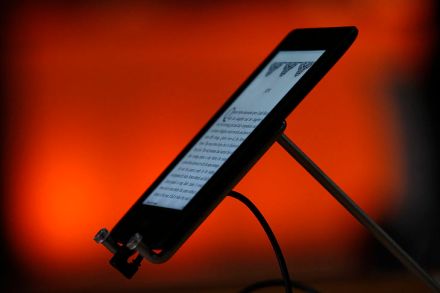
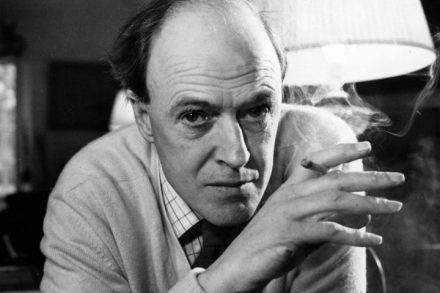
With the recent news that Kindle and other e-readers are automatically updating Roald Dahl’s books to sanitised versions, an entire era has come to an end for readers like me. Who in future will feel safe buying an electronic copy of anything? Publishers’ plans here may be modest, but the point about the puritan is that their work is never done. Martin Amis, Evelyn Waugh, Nancy Mitford, George Orwell, Charles Dickens – any one of them feels vulnerable now. If in copyright, the author and their estate can be strong-armed by the publishers; if out of copyright, laying your hands on the right edition will be a minefield. Nor does it seem clear that publishers’ revisions are being done by skilled writers.

Do James Bond’s would-be censors have a point?

From our US edition

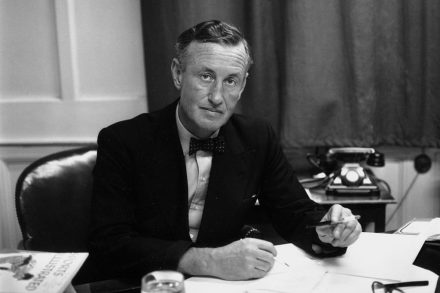
James Bond may have battled the nefarious forces of SMERSH, SPECTRE and other international terror organizations, but surely he has never faced quite so implacable a foe as the sensitivity reader. Following in the footsteps of Roald Dahl, the wholesale revision of whose books led to international outrage, Ian Fleming’s Bond novels, which have been re-released to mark the seventieth anniversary of the first publication of Casino Royale, have undergone their own exercise in alteration. But is it an egregious travesty à la Dahl, or — whisper it — might someone have had an idea arising from nobler motives?

bond

The rewriting of Roald Dahl is an act of cultural vandalism

The vandals have come for Roald Dahl. His books for children are to be cleansed of their ‘offensive’ content. Sensitivity readers – what we used to call censors – have been employed to pore over his works and expurgate any word or passage that might hurt a kid’s feelings. If you weren’t worried about cancel culture before, surely this egregious assault on some of the best-known children’s books of the modern era, this posthumous purging of an author’s output, will change your mind. Dahl is being well and truly Ministry of Truthed. Puffin essentially tasked the sensitivity readers with morally improving his stories so that no child will ever feel affronted by their fruity, judgemental language. Some of the changes are crazy.

How taxpayer money was used to silence speech

From our US edition

Here's a simple question: how much American taxpayer money is being spent to silence, censor, and blacklist opinions? Legacy media reporting on the House Oversight Committee's initial look into the actions of Twitter during the 2020 elections focused mostly on questions surrounding Hunter Biden's laptop. The committee's investigative reports, however, ought to hone in on the most disturbing aspect of this story: social media giants were routinely directed and coerced into censoring and silencing American citizens by entities funded by those same taxpayers.

tax dollars free speech censorship disinformation

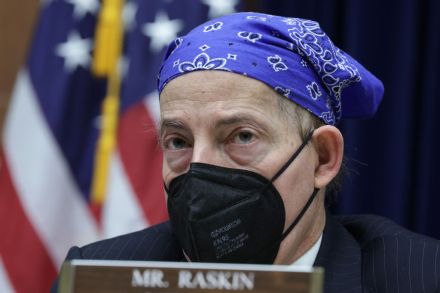
Congress’s Twitter hearings show Democrats are done with free speech

From our US edition

A long time ago in a galaxy far, far away, free speech was primarily defended by civil libertarians and the Democratic Party. This was in the 2000s, when a handful of civil libertarians on the right and many more on the left worried about how the Patriot Act would enhance the government's ability to monitor its own citizens. They also opposed the growing power of the intelligence community, which they thought could pressure companies into providing private information that the government could not legally grasp for itself. The past is a different country. Yesterday's hearing before the House Oversight Committee with three former Twitter executives illustrated as much. Democrats repeatedly made the case that the hearing was a distraction, unimportant, even conspiratorial.

Art history is now ‘Islamophobic’

From our US edition

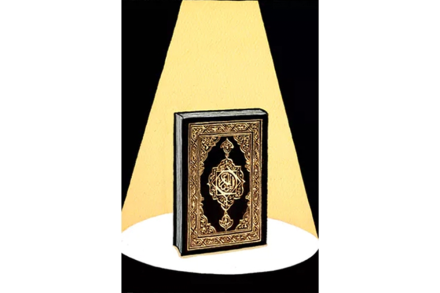
At a private liberal arts college in Minnesota, art history is now Islamophobic. In October, an art history professor at Hamline University was teaching Islamic art, a segment that included two depictions of the Prophet Mohammed in fourteenth- and sixteenth-century paintings with significant historical value. The professor alerted her students beforehand, careful to ensure that observant Muslims who object to the depiction of their prophet would not have to see him on screen. It seems that the professor had done everything right: providing images of famous paintings for her students’ edification but allowing students to opt out of viewing them if doing so ran contrary to their religious beliefs. But who are we kidding? This is a liberal arts college in the twenty-first century.

Quaran

Putin mentions the war

From our US edition

So much for "don’t mention the war!" Russian president Vladimir Putin has called the conflict in Ukraine a war for the first time on Thursday. Cockburn is quite flummoxed — this is the same Putin who has made an industry out of locking people up who refused to call the war a “special military operation”. On December 22, while addressing the situation in Ukraine, Putin said, “Our goal is not to spin the flywheel of military conflict, but, on the contrary, to end this war.” The irony alone of this statement is too much to handle. The man who invaded his neighbor and disregarded the laws of war is now saying he does not want to “spin the flywheel of military conflict”?

nuclear tactical putin war

Is Elon Musk about to ax millions in severance for Twitter execs?

From our US edition

As if getting fired from your job isn’t distressing enough, it’s got to hurt a whole lot more when you miss out on $122 million in payouts. Reuters reported that Elon Musk recently fired Twitter chief executive Parag Agrawal, CFO Ned Segal, and legal affairs and policy chief Vijaya Gadde. According to research firm Equilar, these folks were set to receive “golden parachute” payout packages worth up to $122 million in severance and unvested stock options. But according to the New York Times, “Mr. Musk… appears unlikely to pay the golden parachutes that the fired top executives of Twitter were set to receive. Under the merger agreement, those executives… had been set to receive compensation of $20 million to $60 million if they were fired. But Mr.

Elon Musk should make Twitter weird again

From our US edition

Before the internet, the town square was a weirder place. True believers — from those concerned about fluoride to those dedicated to stopping gay frogs — had to put in the work. There were cardboard boxes and Sharpies to procure in order to make signage. A milk crate wasn't necessary, but it did elevate the speaker above his audience. It was not a desk gig. People had to get up and hit the corner from morning until some point in the evening, blasting out their gospel to whoever passed by and, perhaps, stopped to listen. Those early content creators had angles. Some sang or played guitar. Others simply testified. Regardless, they were the righteous, willing to sacrifice time and effort for their art. Then Twitter happened.

It’s the parallel economy, stupid!

From our US edition

There’s a lot of rumbling about American polarization these days. Sometimes it takes the form of people advocating for a national divorce or dire warnings of a forthcoming civil war. A national divorce seems impractical and America is too fat for a civil war. Better evidence that the country is already fracturing is the talk of the “parallel economy.” We’ve come a long way from the 2016 moment of self-awareness about needing to get out of our echo chambers. By 2020 it seemed everyone wanted their own. Now we’re redecorating the walls of the echo chambers. Adding some throw pillows.

parallel