Canada

Donald Trump’s one-front trade war

From our US edition

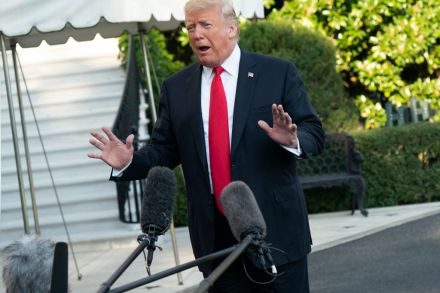
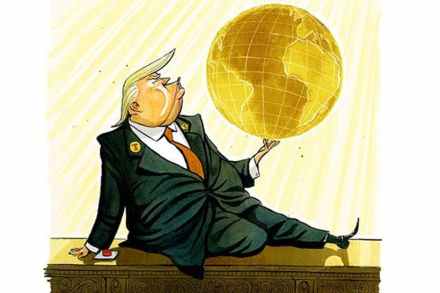
At 12:01 a.m. on Monday, President Donald Trump went a long way toward defusing a potential war – not with Iran, but Canada and Mexico, where Trump revoked tariffs he had imposed in the name of national security. Why the sudden bout of tariff reduction? The president is focusing on a one-front trade war with China. The restrictions began as two fronts of the same war. Trump imposed 25 percent tariffs on steel and 10 percent tariffs on aluminum imported from China last March. Then he extended those tariffs to the EU, Canada, and Mexico on June 1. But the president seems to have concluded that the US can no more fight a two-front war in trade than on the battlefield.

Donald Trump one-front trade war

Meghan Murphy, Twitter and the new trans misogyny

From our US edition

I woke up this morning to a private message on Twitter from a young student. She had been warned that her account would be suspended if she ‘violated the rules’ again. Her crime? Tweeting details of Sheila Jeffreys’s book, Gender Hurts: A Feminist Analysis of the Politics of Transgenderism. Refusing to accept the mantra ‘Trans women are women’ is, in the eyes of many now, a crime, for which there must be punishment. Everyone from massive corporate social media machines to well-meaning liberals seem to be toeing the line. But some of us resist. Meghan Murphy for example, a Vancouver-based feminist journalist, has been permanently banned from Twitter for referring to a man who identifies as a woman as a man.

meghan murphy twitter trans

Donald Trump’s US-Canada-Mexico trade deal is YUGE

From our US edition

As Kamala Harris presents evidence that Brett Kavanaugh habitually exposed himself to several nurses upon being born and then to other females for months, nay, years afterwards, Donald Trump just secured a new trilateral trade deal between the United States, Canada, and Mexico. This, friends, is yuge, yuge! The deal replaces, or amends, the 24-year-old North American Free Trade Agreement between the three countries. From the moment he announced his candidacy, way back in 2015, until the day before yesterday, President Trump has assailed the original Nafta as ‘the worst deal ever.’ The fact that US trade with Mexico has gone from a modest surplus in the early years of Nafta to a $68 billion deficit now highlights his concern.

donald trump trade

Frozen in time

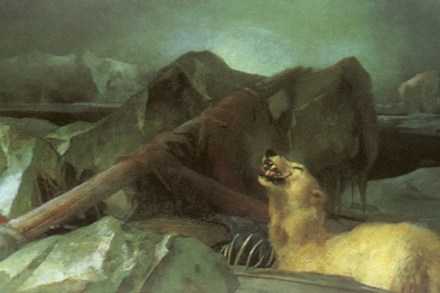
In May 1845, HMS Erebus and her sister ship HMS Terror set sail for the Arctic, never to be seen again. Erebus, named after a Greek god of darkness, was herself cast into oblivion for the next 170 years, until she was found in 2014, by sonar, submerged off the Arctic coast of Canada. Immediately after her disappearance, ten years and £28 million (in today’s money) were spent looking for her. It was during a golden period for British exploring, between the end of the Napoleonic Wars of 1815 and the Crimean War of 1854, with a Royal Navy that had shrunk from 145,000 men to 19,000. Instead of fighting battles, it was now battling the elements, in the cause of scientific discovery and imperial expansion.

Fish in troubled waters

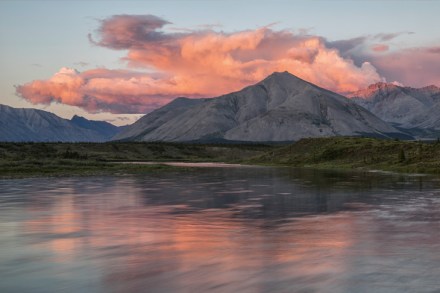
‘Help!’ I thought, when I read the Author’s Note. ‘It’s about salmon, and I hate fishing.’ But by the first page I was hooked. Adam Weymouth writes well. He is poetic, but also precise. His subject is the return of the ‘king’ salmon to their birthplace and final destination, the north ridge of McNeil Lake in Canada. These fish are many pounds of muscle, toned from years of swimming headlong into Pacific storms, and their flesh is as red as blood. They force against the Yukon’s current, shouldering their way upriver, setting their fins like sails. Eventually they will push thousands of miles into North America’s interior. They will reach mountain lakes; they will reach the clouds.

Justin Trudeau’s Captain Snowflake tour of India

If your week was less than fun, spare a thought for Justin Trudeau. The Canadian Prime Minister’s seven-day visit to India went down like an undercooked biriyani on the subcontinent. When he landed in New Delhi last Saturday, Trudeau was greeted on the tarmac, not by the Prime Minister or Foreign Minister but by the junior minister for agriculture and farmers’ welfare. Other world leaders, including Barack Obama and Benjamin Netanyahu, have been given a personal welcome by Narendra Modi. Prime Minister Modi, a savvy social media user, failed even to note Trudeau’s arrival on Twitter, though on the same day he found time to tweet about plans to unveil a new shipping container terminal.

Justin Trudeau takes his Captain Snowflake act to India

If your week was less than fun, spare a thought for Justin Trudeau. The Canadian Prime Minister's seven-day visit to India went down like an undercooked biriyani on the subcontinent. When he landed in New Delhi last Saturday, Trudeau was greeted on the tarmac, not by the Prime Minister or Foreign Minister but by the junior minister for agriculture and farmers' welfare. Other world leaders, including Barack Obama and Benjamin Netanyahu, have been given a personal welcome by Narendra Modi. Prime Minister Modi, a savvy social media user, failed even to note Trudeau's arrival on Twitter, though on the same day he found time to tweet about plans to unveil a new shipping container terminal.

Rockies horror show

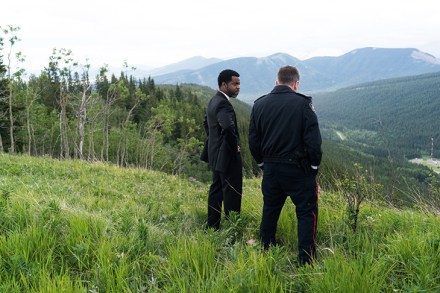
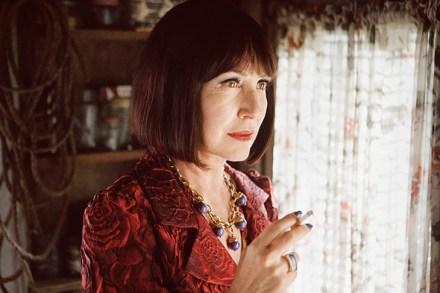
Tin Star, the latest Sky Atlantic drama, has a comfortingly familiar premise: Jim Worth (Tim Roth), an ex-detective from London with an alcohol problem, heads out to rural Canada with his family to start a new life only to find himself embroiled in crime, violence and personal tragedy far worse than anything back home. It begins well. There’s a lovely establishing scene where Roth walks down the street with his new Canadian sheriff’s badge and everyone greets him, as people presumably do in sleepy Canadian Rockies towns like Little Big Bear, where everyone’s got time for one another. In the police station, his two junior officers have so little crime to solve they’re playing video games.

In praise of Netflix

All this week I have been trying, with considerable success, to avoid being bludgeoned by TV programmes telling me in various sensitive and imaginative ways just how brilliant, heroic and historically maligned homosexual men are. I achieved this by sticking to Netflix. One of the great things about Netflix (whose annual subscription costs just half the BBC licence fee, by the way) is that though it’s probably run by lefties it doesn’t try to ram its politics down your throat. Maybe this is one reason why its 100 million-plus subscribers are so much less resentful than BBC viewers: they’re being offered choice, variety, entertainment — not worthiness, race, gender quotas and compulsory indoctrination.

How to make drugs boring

Bill Blair, the former police chief of Toronto, slides into his restaurant chair and twinkles at the waitress. He’s 6ft 6in, white-haired now but perky. Bill has 120 years of policing behind him. He, his father and his grandfather all served 40 years in the force. Now he’s an MP and he’s legalising cannabis in Canada. The restaurant has been here since early in Bill’s father’s time on the beat. It claims to have invented the bacon cheeseburger. We sit round a plastic-topped table and Bill tells me how he ended up pushing drug reform. ‘When I left the force all three political parties wanted me to run for office. I’ve spent my life avoiding politics and the other parties reminded me why. They just wanted me for political kudos.

Pump up the volume | 23 February 2017

Xavier Dolan’s It’s Only the End of the World is one of those angst-ridden dramas focusing on what is commonly referred to as a ‘dysfunctional family’ as if there might be any other kind and it isn’t just a question of degree. This family certainly doesn’t hold back. This family has everyone shouting at everyone else for 95 minutes, blurting out brutal truths that might equally be brutal untruths (hard to tell). It has not been rapturously received. It was jeered at Cannes (even though it won the Grand Prix) and has been described by various critics as ‘insufferable’ and ‘intolerable’, which can only make you think that they haven’t seen an Avengers film for a while.

Drake’s progress

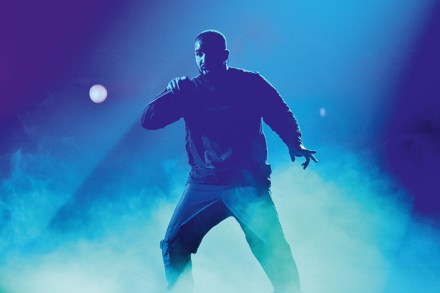
Those poor Canadian rappers. Hailing from a country with a functioning benefits system, sensible firearms restrictions and relatively harmonious race relations, it must be a job convincing people of their authenticity. Aubrey Drake Graham, however, has risen above this cruel accident of birth — in Toronto, to a white Jewish mother — to become not only one of the world’s most respected rappers, but its biggest pop star too. For a man with the world at his feet, Drake manages to find an impressive number of things to complain about in his lyrics, from fickle friends to the administrative headache of paying two mortgages. But if the approval of others is all he really needs, he certainly got it at a sold-out O2.

A shameful whitewash

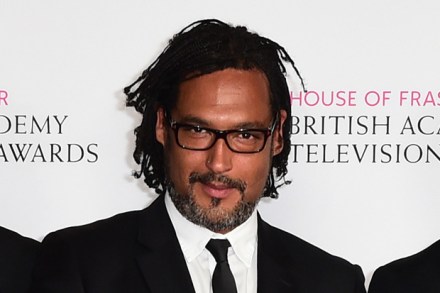
I have been researching and writing about black British history for over 30 years but never before have I been fortunate enough to review a 600-page book on the subject, published to accompany a recent major BBC documentary. The book and the four-part series give some indication of the extent of a history which David Olusoga presents as ‘forgotten’: the subject, he argues, has been largely excluded from the mainstream narrative of British history. Why it should be forgotten, and who might have forgotten it should give us all pause for reflection, since the denial of black British history by those who should know better could be considered tantamount to racism.

High life | 29 December 2016

What a great year this has been, what a good mood I’m in, why, it’s almost like being in love. The year 2016 will be seen as the worst ever by many patients of Dr Klinghoffer, the famous German psychiatrist who treats those suffering from the extreme distress of post-electoral disappointment syndrome, and a man about to make a fortune treating the poor dears. There are many Brits under the Herr Doktor’s care, and his clinic, situated near Ossining, New York, resembled a British retreat for broken-down thespians following 23 June of this annus mirabilis. Now more American voices have been added, and when I last spoke to Dr Klinghoffer his heavy German accent sounded almost Hollywoodian: ‘Zese people are worse than ze English, zey cry at ze sight of an appleshdrudel.

Would Donald Trump build a wall along the Canadian border?

We’ve heard a lot about what a Trump victory tomorrow night means for Mexico, little of which seems good. He’s accused Mexicans of bringing ‘drugs, crime and rapists’ to the US, and the less said about his famous wall, the better. Yet for all the fighting talk aimed at Mexico, it’s not so clear what President Trump would do about America’s neighbours to the north. With Trump and Clinton now almost neck-and-neck in the polls, many Canadians are waking up to the thought of a Trump win. And people in Canada are starting to think – and panic - about how the Donald’s presidency would shape relations. It’s fair to say one thing seems assured: it won’t be business as usual.

The Project Fear backtracking isn’t over yet

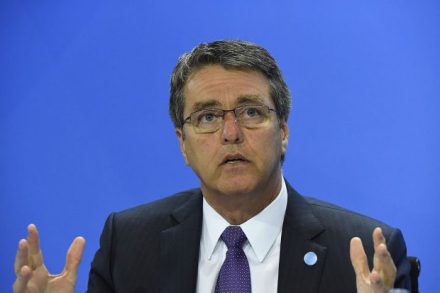
Another day, another backtracking in the doom-laden predictions of what would happen as a result of a vote for Brexit. Back in May, World Trade Organisation (WTO) chief Roberto Azevedo told the Financial Times that Britain would not simply be allowed to ‘cut and paste’ its terms of membership with the WTO. We would, he suggested, effectively have to negotiate from scratch – a process which could take years, as it did when Liberia joined. Today he has recanted, somewhat. 'The UK is a member of the WTO today, it will continue to be a member tomorrow,' he told Sky News. 'There will be no discontinuity in membership. They have to renegotiate but that doesn't mean they are not members.

Low life | 22 September 2016

One side of the hostel overlooked Waterloo station’s 22 platforms. Trains departed and arrived at the rate of two or three a minute. Another side abutted a Victorian cast-iron girder bridge over which suburban trains arrived and departed with rolling thunder, to which was added that fingernails-dragged-down-a-blackboard, pigs-screaming-at-feeding-time, metal-on-metal noise as the trains negotiated a bend whose curve was at the very limit of what was geometrically feasible for fixed, in-line bogies. On the remaining side of this discordant triangle was an arterial road hazy with diesel particulate through which heavy traffic accelerated and braked between traffic lights. I arrived here mid-morning after a Spectator party wanting only to lie down and die.

Does Justin Trudeau realise how desperate his China love-in looks?

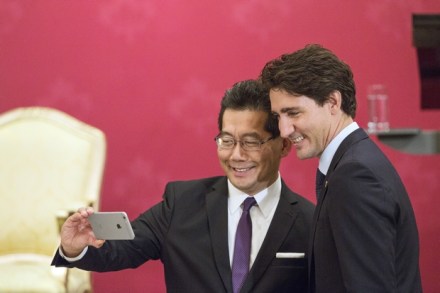
Whatever the reason behind Obama not getting the red carpet treatment in Hangzhou, there’s one leader who was guaranteed it: 'Little Potato'. Or, as you might know him, Justin Trudeau. The pronunciation of Trudeau sounds similar to the Mandarin word for potato, and Chinese media’s primary frame of reference for him is through his father Pierre (Big Potato was friendly with China’s communist leadership years before the rest of the West felt ready to engage). Their other reference point is that he is the handsome 'APEC hottie', so perhaps Hot Little Potato is more accurate. His predecessor Stephen Harper, who stepped down as an MP last week, would never have earned such an affectionate nickname.

‘I have become their voice’

When the model and actress Anastasia Lin was crowned Miss World Canada last year, a fairly easy and lucrative career lay in front of her: magazine shoots, sponsorship opportunities and being paid to turn up to parties. She instead decided to use her position to confront the Chinese Communist party and call out its human rights abuses. Her new film The Bleeding Edge is a feature-length dramatisation about the organ trade in China. It might not be in a cinema near you soon, but it does screen in the House of Commons next week, in front of MPs and peers. And this is the audience that 26-year-old Lin is seeking. Her website has the slogan ‘beauty with a purpose’, and Lin has both in abundance. Speaking from Toronto before her visit here, she tells me her unlikely story.

Red hot

Everything about Julieta feels totally Almodóvarian. It’s a family saga that smoothly blends tragedy and levity, with exquisite performances from a company of passionate actresses. It looks carefully ravishing. Many of the director’s abiding themes are here: terminal illness, sudden death, a mother’s love for her child, men hanging about the fringes. And yet it is based on a most un-Hispanic source. The Julieta of the title was originally Juliet, who features in three interlinked short stories from Runaway, the 2004 collection by Alice Munro. Munro won the Nobel Prize for Literature three years ago after a lifetime writing quiet stories that conceal hammer blows.