Budget

What ‘Budget’ and ‘bilge’ have in common

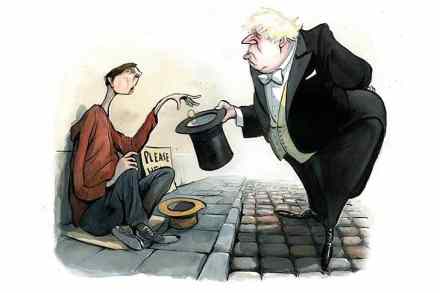
The Budget (which the revolutionary fiscal act last week was technically not) is directly connected with bilge and with one of the circles of Dante’s Hell, the eighth, which houses the financial fraudsters, speculators, extortionists, counterfeiters and false forecasters. The circle is divided into the ten ditches of Malebolge. The Malebolge, singular bolgia, take their name from Latin malus (‘evil’) and bulga (‘bag’). The early commentator on Dante, Benvenuto da Imola, says that bolgia in Florentine speech means a concave and capacious ditch. In Dante’s Hell inside the Earth, the Malebolge are concentric. Budget also comes from the Latin bulga.

Higher taxes won’t fix inflation

From our US edition

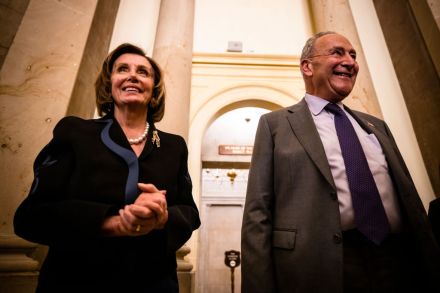
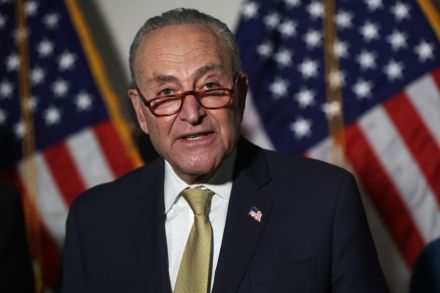
Senate Majority Leader Chuck Schumer knows how to fix inflation: higher taxes. “If you want to get rid of inflation, the only way to do it is to undo a lot of the Trump tax cuts and raise rates,” surmised the New York Democrat to reporters on Tuesday, after meeting with West Virginia Senator Joe Manchin about the budget. “No Republican is ever going to do that. So the only way to get rid of inflation is through reconciliation.” Manchin saw it slightly differently, portraying tax increases as budget reduction tools. He believes debt reduction is “the only way” to fight an inflation problem that threatens to wash away Democratic majorities in Congress.

democrats

How Congress broke the budgeting process

From our US edition

That the federal budget process is broken is the worst kept "secret" in Washington. The White House and Congress know it. The think tanks know it. A 2010 study from the progressive Center for American Progress called the budget process “not a pretty picture.” The conservative Heritage Foundation said in 2005 that the process “stifles debate, prevents cooperation, and frequently breaks down.” Proposals come along every few years to fix the problem, but nothing ever gets done. “The fundamental reason why the federal process is broken is because Congress doesn’t have a budget,” says Kurt Couchman, a senior fellow at Americans for Prosperity. “Congress doesn’t do a budget. Congress does appropriation bills, there are 12 of them.

mccarthyism

Biden’s budget doesn’t matter

From our US edition

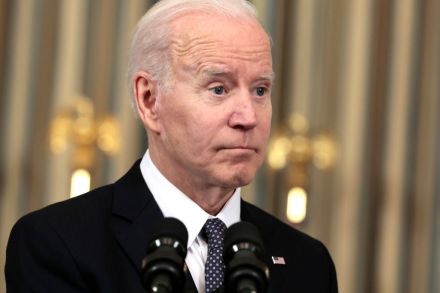
Every year, the president puts forth a budget. And every year, the media diligently reports on it as if it matters to what the government will do over the coming year. Don’t get me wrong: budgets are important. They provide a sense of their crafters’ priorities and a roadmap for achieving their goals. But budgets don’t hold the force of law, which means — in our government — they serve as non-binding blueprints and little else. This is especially true of presidential budgets. That’s because while the budgetary process starts with the president, where it goes from there is determined by Congress alone. During the Trump years, Congress didn’t even bother bringing the president’s budget to a vote.

budget

Rishi Sunak’s popularity test

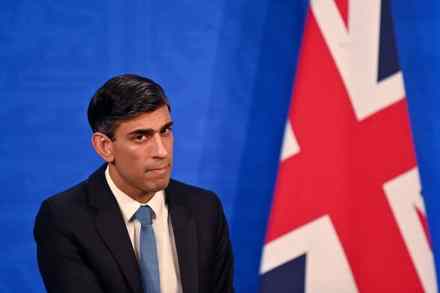
Rishi Sunak ended 2021 as the most popular politician in the country. A YouGov poll for the final quarter of the year found that 31 per cent of all adults had a positive opinion of the Chancellor compared to 28 per cent for Nicola Sturgeon and 26 per cent for Boris Johnson. However, ending 2022 in the same situation looks rather ambitious.  As the cost of living crisis worsens, Sunak is under pressure both from the public and his own party to step in and ease the burden on households in tomorrow's Spring Statement. A poll out today suggests he has plenty of work to do to convince voters he has the right plan.

Is Rishi Sunak any good at politics?

Is Rishi Sunak any good at politics? In recent days Labour sources have been putting it about that they no longer fear the prospect of the Chancellor stepping up to take over from Boris Johnson if he is forced out by partygate. According to one briefing to the left-wing New Statesman, Keir Starmer’s team has concluded that ‘Little Rishi’ is ‘crap at politics’ after observing his response to the cost-of-living crisis and now thinks that Liz Truss may prove a more formidable successor to Johnson in electoral terms at least.

Does Rishi Sunak really understand red wall voters?

Rishi Sunak thinks Boris Johnson goofed badly when he conspired to upend Commons standards procedures. And he agrees with his red wall colleagues that this appeared to place the government on the side of a privileged elite. That is certainly the standard interpretation of his comment this week that the government needed to do better – and indeed unattributable briefings by an ally say that he regarded the episode as a ‘mistake’ which should be acknowledged by someone of cabinet rank. But if red wall Tories are tempted to regard Sunak as the true keeper of their flame then I suggest they think again. Because while Johnson has indeed gaffed, the Chancellor has also recently announced a decision that may well imperil their re-election prospects.

Will the Tories cut taxes before the next election?

The Tory party has reached a fork in the road, I say in the Times today. One path involves sticking to the spending plans, hoping to cut taxes before the next election and getting rid of the new perception of them as tax raisers. The other drags them into ever more spending, led by big increases in public sector pay, and ends with them going to the country as a high-tax party. In his Budget speech and his address to Tory MPs, Rishi Sunak made clear that his preference was for the former approach, which should cut taxes before the country goes to the polls again. But sticking to even the spending limits set out this week will require tough choices that the Tories have not wanted to make in recent years.

Nicola Sturgeon is flailing in response to the Budget

The big tax and spend budget. More Gordon Brown than George Osborne. Sunak's spending spree. However you wish to describe it, one thing is clear: Rishi Sunak's budget marks a radical departure from previous Conservative chancellors. And while it might have ruffled the feathers of some Tories, it’s also causing problems for the SNP. In some ways the break from Tory convention is no surprise. Calls by the International Monetary Fund (IMF) in 2020 for rich countries to spend their way out of the pandemic – and then further calls this year to shell out to boost recovery – signalled a new economic orthodoxy that Sunak has tapped into. Austerity is passé. Fiscal activism is the new normal.

Portrait of the week: Queen stays home, Boris rubbishes recycling and pay freeze thaws

Home The Queen will not attend the COP26 meeting in Glasgow next week; she had resumed light duties after having spent a night in hospital for ‘preliminary medical checks’. The Queen would address COP26 by means of a recorded video. ‘The recycling thing is a red herring,’ Boris Johnson, the Prime Minister, told a press conference attended by schoolchildren. ‘You can only recycle plastic a couple of times, really. What you’ve got to do is stop the production of plastic.’ The protestors calling themselves Insulate Britain blocked main roads into London and approaches to the M25. Amazon Web Services was awarded a contract to provide a high-security cloud system for GCHQ, MI5 and MI6.

My night of nostalgia with Boris and co.

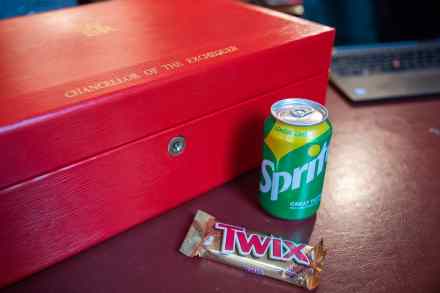
Rishi Sunak had a pre-game Twix and a Sprite to prepare for this week’s impressive Budget. I used to have a cup of very sugary tea. It was a tip from our joint mentor, William Hague. It coats the throat in preparation for speaking in a rowdy chamber. Even then my voice would be hoarse by the end of an hour’s Budget statement. It’s hard to convey just how noisy it is standing there with a couple of hundred adults screaming at you from a few feet away. But on Wednesday the House of Commons seemed quieter than it used to be on these big days. I’m not sure why. With taxes going up, spending rising and government intervening in industry, you’d think there would be lots for Labour MPs to shout about.

Rishi Sunak’s low tax pitch to MPs

Is Rishi Sunak a low tax chancellor? He certainly likes to tell anyone who will listen that he is. Yet his actions tend to suggest the opposite. The tax burden is currently on track to reach its highest level since the early 1950s, and while Sunak unveiled one big tax slash in the Budget in the universal credit taper rate cut, the main thrust of Sunak's announcements was spend, spend, spend. Tonight Sunak addressed Tory MPs at a meeting of the 1922 committee. After announcing £150 billion in extra public spending, Sunak sought to convince his party that, despite this, he was committed to lowering taxes.

Sunak backs the Union with cash, not love-bombs

Devolution has done so much to fracture the UK that, in Scotland, Rishi Sunak's Budget is an event of the second order. Scottish interest in Budget day is typically limited to whisky duty, support for North Sea industries and the Barnett formula: the additional spending Scotland gets when the Chancellor splurges on England. Today’s Budget was for all of Britain. Not just Scotland, but Wales and Northern Ireland were weaved throughout Rishi Sunak’s speech. Quite apart from the fiscal or economic merits of the policies announced, the Chancellor’s speech was good politics. Not long after Sunak was promoted to the Treasury, I was told Scotland was a weak spot for him and he was not particularly up-to-speed on the intricacies of Scottish politics.

Six things we learnt from the Budget

Another big fiscal event for Rishi Sunak today, as he delivered his Budget and the details of a three-year spending review. For the first time, Covid-19 wasn’t in the spotlight. Instead it was framed as a big-spending event, confirming plans briefed before the Budget — £7 billion in capital spending for the NHS, end of the public sector pay freeze — and announcing a series of new plans, including the return of increased foreign aid spending at 0.7 per cent of GDP by 2024-25. But break down the numbers and there are even more surprises in store. Here are the six things we learnt from today’s Budget: The tax take hits a record high Tax as a percentage of GDP is heading towards a staggering 70-year high, up from 33.5 per cent pre-pandemic.

PMQs: The return of Ed Miliband

Today’s pre-Budget Prime Minister’s Questions would probably have been unremarkable had it not been for a sudden change of cast. At the very last minute, it was announced that Sir Keir Starmer had tested positive for Covid and would be replaced in the chamber by a blast from his party’s past in the form of Ed Miliband.  Tory MPs were largely focused on ensuring that the session was as pointless as possible The former Labour leader joked that his return to this session was for one time only, before launching into a series of questions about the government’s preparation for the COP summit.

Responsible Rishi’s Budget balancing act

Rishi Sunak has released photos of his Budget prep, as he prepares to stand up in the House of Commons tomorrow to deliver not just the government’s latest fiscal decisions, but the results of its three-year spending review. (Photos include a shot of his pre-Budget Twix and Sprite snack, which Sunak revealed to Katy Balls on Times Radio over the weekend). As I say in the Telegraph today, this Budget is a difficult balancing act for the Chancellor. On the one hand, he has some big-spenders to please, not least the Prime Minister, who is adamant that the Conservative party’s days of austerity have come to an end.

Why Sunak’s wrong on teachers

Pupils lost around a third of their face-to-face teaching during the Covid lockdowns. Downing Street has promised an extra £3 billion of catch-up funding, on top of around £100 billion spent on education in a normal year. Fixing a lack of teaching should involve doing a bit more of it — but when asked if he would extend the school day, Rishi Sunak said longer hours wouldn’t provide ‘value for money’. It’s one of few areas where, in tomorrow’s Budget, the spending taps will be turned off. But why, as the Children’s Commissioner recently noted, are British state schools routinely closing their gates at 2.30 p.m.? The length of the school day is now shorter than it was 50 years ago.

Could the Speaker cancel the Budget?

Lindsay Hoyle is, to put it mildly, on the warpath. The Speaker is now giving almost daily statements in which he complains about the government's habit of making announcements to the media rather than in parliament. Last week he was furious that Health Secretary Sajid Javid had held a Downing Street press briefing on Covid instead of coming to the Commons. Yesterday he granted four urgent questions as punishment for the latest round of briefings. Today he was back fulminating again, telling the chamber that the government was breaking its own ministerial code by giving Budget announcements to the press first.

Will education be the big Budget loser?

Which departments will fare the worst from this week's Budget? It won't be the Department for Health and Social Care. Over the past few days, new funding announcements have appeared in the papers meaning the NHS will be handed another £5.9 billion. That's in addition to the £12 billion a year investment it will receive as a result of the health and social care levy. Meanwhile, Whitehall sources suggest that Michael Gove has had some luck in his push for more funds for the levelling up agenda. Where the mood music is less positive is education.