Spectator Parliamentarian of the Year 2018: the winners
From our UK edition
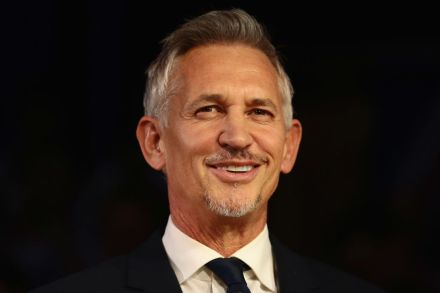
The Spectator’s 32nd Parliamentarian of the Year awards took place at the Rosewood Hotel in London this evening. The awards were presented by Liz Truss.
From our UK edition
The Spectator’s 32nd Parliamentarian of the Year awards took place at the Rosewood Hotel in London this evening. The awards were presented by Liz Truss.
From our UK edition
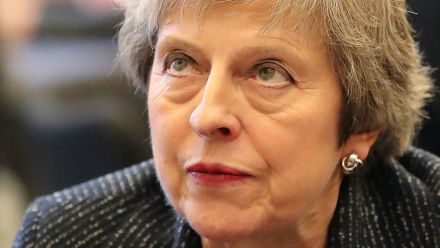
Theresa May, William Hague and others say that the EU will not want to trap Britain in the backstop because it is not in its interest. It will want to move to a free-trade agreement for its own benefit. If that is so, why is the backstop the thing above all others upon which the EU insists? One reason why Brexiteers have to oppose the backstop absolutely is that it is yet another manifestation of Britain’s delusion in every European negotiation over nearly 50 years, which is that we should grab ‘practical’ advantages and concede ‘windy’ principles. This sounds good, but it invariably means that we are trapped later. The principles acquire legal force.
From our UK edition
The British are like patients with an incurable illness. Thinking and worrying can do no good, but those who understand Britain’s sickness can think of nothing else. Rationally, we understand there is nothing we can do about Brexit until and unless the balance of forces shifts in Westminster. No one knows what will happen next. No one can say when the European question will be settled, and we will be free to to get on with our lives as best we can. All options have been discussed to the point of exhaustion and beyond. But like patients who cannot shut their illness from their minds, we can’t help ourselves. We talk in circles in arguments without end. Brexit was meant to bring back control, but has left us impotent and at the mercy of impostors promising miracle cures.
From our UK edition
We've all been focussing on the crisis that would ensue if – as expected – the PM loses the meaningful vote on her Brexit deal on 11 December. But just for a moment think about the implications if she wins, because they too would be momentous. To state the obvious, we'd be out of the EU on terms that are semi-blind – we wouldn't know our long-term destination. But we would be out. And she, the PM, would rein supreme. She would have crushed her opponents, who would have lost all hope of political advancement or favour. And having delivered Brexit against the odds, she could be pretty confident in staying PM for as long as she wanted, perhaps well beyond the next election – and the election itself would be off the cards till 2022.
From our UK edition
We're familiar with the warnings about the cost of Brexit. The 'People's Vote' campaign released an estimate yesterday suggesting that Theresa May's deal will leave the UK £100bn worse off a year. Tomorrow, the Treasury will unveil its forecasts of the economic impact of Brexit. But what about the price of staying put in the EU? Whatever those clamouring for a 'People's Vote' might claim, no Brexit does have a cost. Firstly, the price in terms of political capital will be significant. What does going back on the referendum result say to the 17.4million voters who voted Leave? What about the damage done to trust in our institutions and our politicians?
From our UK edition
‘What would happen if somebody ever came to power that you actually agreed with?’ It's not a question that troubles most people, but spare a thought for the left-wing satirist who is used to lacerating Tory, Labour and coalition governments with equal ferocity. Yet while I am sometimes asked this question, any party – in government or in opposition – has been so far from representing my own views that it has always remained largely hypothetical. Until now. How on earth can I attack Jeremy Corbyn when I find myself agreeing with most of what he says? After all, political cartooning is an offensive, attacking medium. Or it is nothing.
From our UK edition
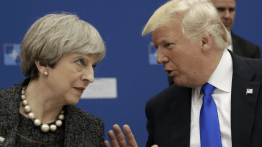
Donald Trump has always been consistent on Brexit. He admired the spirit of the vote, a freedom-loving people defying their elites, as his deplorables would go on to do. He likes Britain. He dislikes the EU, which he has always regarded as a sort of protection racket for German manufacturing and an institution that gets in the way of his golf course development. Ever since Trump’s inauguration, he has made it clear that America is ready to give Britain the ‘beautiful’ free trade deal that so excites Brexiteers. But he and his advisers have been consistently disappointed by May’s insistence that she must stick by E.U. terms and regulations at the expense of improving and deepening the UK-US relationship.
From our UK edition
The publication by the Treasury of its forecasts of the economic impact of Theresa May's Brexit deal, versus no-deal and staying in the EU, has been keenly awaited. But it turns out that what we will read, probably on Wednesday, will be almost irrelevant. Because what the Treasury has modelled is not the deal actually struck on Sunday by Theresa May, but her Chequers plan. And, as you will be keenly aware, the rest of the EU has rejected her Chequers combination of the UK staying in the single market for goods and the dual-tariff customs territory the Facilitated Customs Arrangement.
From our UK edition
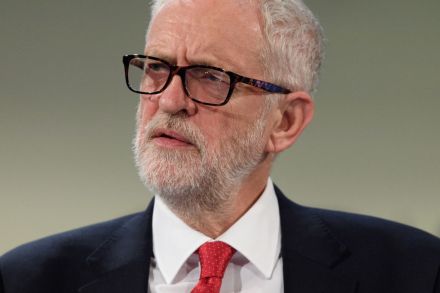
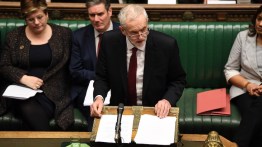
Jeremy Corbyn has been clear for a while that Labour will vote against Theresa May's Brexit deal in the Commons. But it's worth keeping an eye on the reaction in his party to the development of a second line in the Labour position, which is that the party has a better plan for Brexit. Today the Labour leader urged the Prime Minister to 'prepare a Plan B', telling the Commons that 'there is a sensible deal that could win the support of this House based on a comprehensive customs union and strong single market deal that protects rights at work and environmental safeguards'.
From our UK edition
It only took a few lines of Theresa May's statement to the House of Commons on her Brexit deal before MPs started making dissenting noises all around her. The Prime Minister started by listing the ways in which the deal 'takes back control' for the British people, telling MPs that this included control of Britain's borders, ending the jurisdiction of the European Court of Justice, an end to 'vast annual payments we send to Brussels', protecting jobs through a new Free Trade Area, protecting the country's security and maintaining 'the integrity of our United Kingdom, meeting our commitments in Northern Ireland and delivering for the whole UK family, including our Overseas Territories'.
From our UK edition
At yesterday’s Special European Council in Brussels, I reached a deal with the leaders of the other 27 EU Member States on a Withdrawal Agreement that will ensure our smooth and orderly departure on 29th March next year; and, tied to this Agreement, a Political Declaration on an ambitious future partnership that is in our national interest. Mr Speaker, this is the right deal for Britain because it delivers on the democratic decision of the British people. It takes back control of our borders. It ends the free movement of people in full once and for all, allowing the government to introduce a new skills-based immigration system. It takes back control of our laws.
From our UK edition
Despite – or perhaps because of – the fact that I’ve spent most of my adult life writing and talking about politics and politicians, there are still things about politics that I just cannot, on a fundamental level, understand. Top of the list is tribalism, the “my party right or wrong” stuff that reduces public policy to the level of football chants. (Yes, football is another thing I don’t get. Surprising, I know.) Apart from anything else, taking the view that the people and ideas of the other side are automatically bad is surely utterly self-defeating? Politics is about persuading the greatest number of people to agree and support you, whether at elections or during day-to-day governing.
From our UK edition
Imagine if David Cameron, at the height of the riots in August 2011, had abandoned London to embark on a speaking tour of foreign capitals to lecture the rest of the world on how European civilisation could help save the rest of the world from ‘chaos’. You now have an idea of what it must be like to French this week. Over the past week, protests against fuel taxes have erupted into violence across France, blocking autoroutes and leading to at least two deaths and 600 injuries. But where was the French president to be seen during all of this?
From our UK edition
Ever since ‘Brexit’ was first breathed, there have been comparisons with Henry VIII’s break with Rome. At first such comparisons seemed a bit far-fetched, for there are some big differences between the Catholic Church and the EU, and between Protestantism and zeal for Brexit. But now they seem uncannily apt. For it looks as if we are embarking on an almighty compromise, a monster muddle middle-way that will be decades in the making. It was about thirty years after Henry’s break that his daughter Elizabeth started stabilising things. Let’s hope we’re a bit quicker to realise that we must lay aside our purism and channel the Tudor spirit of compromise. Now, like then, tidy-minded ideologues on both sides scorn the very idea of a middle-muddle way.
From our UK edition
Theresa May is back in the Commons this afternoon updating MPs on her Brexit deal. She’s in the middle of a frenzy of campaigning that makes her efforts during the referendum itself look quite lacklustre (admittedly not hard, given how little effort the then Home Secretary put into that campaign), with phone-ins, newspaper interviews and a bid for a live TV debate on Brexit with Jeremy Corbyn. Tomorrow, May is also going to tour the UK to sell her deal to the public. The Prime Minister’s strategy is to talk over the heads of her warring party and straight to the public, in the hope that at least some of those MPs will heed the real opinions of their constituents and switch to voting for the deal in Parliament.
From our UK edition
Theresa May's deal has been approved by the EU27 but now the difficult part begins. No.10 must work out a way to get the EU withdrawal agreement through the Commons. Given that the number of Tory MPs who have said they won't support it is past the 80 mark (see the full list here), that looks no easy task. A vote is mooted for Tuesday 11th December. So, given that Plan A looks rather optimistic, what are the alternatives? No-one – not even those at No.10 – are entirely certain what would happen if the deal is voted down. However, here are the main scenarios to expect come the vote: MPs back May's deal on first vote At present, this seems an unlikely option. However, if No.
From our UK edition
Because Theresa May's Brexit deal has been so long in the coming – almost two and a half years – and has been so comprehensively trailed and leaked, yesterday's formal ratification of the terms of our departure from the EU and the shape of our possible future relationship with the EU feels like the mother of all anti-climaxes. But cynicism and lethargy are to be resisted: that ratification really matters. Because because - at last we have THE DEAL. Until yesterday, everything about Brexit was presumption, speculation, rumour and hypothesis. Finally we know what Brexit means to a Prime Minister who had no other job but to find out what it means.
From our UK edition
‘Away with the cant of “measures not men”! — the idle supposition that it is the harness and not the horses that draw the chariot along. No, Sir, if the comparison must be made, if the distinction must be taken, men are everything, measures comparatively nothing.’ George Canning said this in 1801 and recent events remind us that he was right. In the end the only way to change the policy is to change the person, as the individual determines the direction and is rarely willing to try a different route. As I have known this quotation for decades, it was naïve of me to expect the Prime Minister to change her policy. It is not how it works: the wrong policy means the wrong person.
From our UK edition
In this week’s Spectator, Martin Howe QC gives the legal verdict on Theresa May’s Brexit deal, and finds: ‘This is not a bad deal. It is an atrocious deal.’ His analysis was so widely circulated amongst MPs that No. 10 has written a response to it. For more on Theresa May’s bad deal, here’s Mr Steerpike’s list of the top 40 horrors lurking in it. Claim Once the Protocol is in force, the UK cannot leave it except by ‘joint’ decision of the UK and the EU. This gives the EU a right of veto over the UK’s exit. In agreeing to this clause, the government has caved in over seeking a right to leave. Response The Protocol is explicit in the legal text that it is intended to be a temporary arrangement.
From our UK edition
While it might have garnered less attention than the political drama around the withdrawal agreement, next week’s European Court of Justice decision on whether the UK can unilaterally revoke Article 50 – that is, cancel Brexit – could have serious ramifications. A bit of background on the case: in November 2017, a group of Scottish MPs, MEPs and MSPs – working with the anti-Brexit barrister Jolyon Maugham QC – asked the Scottish Advocate General to clarify whether the UK government had the right to revoke Article 50 if it wanted to.