Brexit

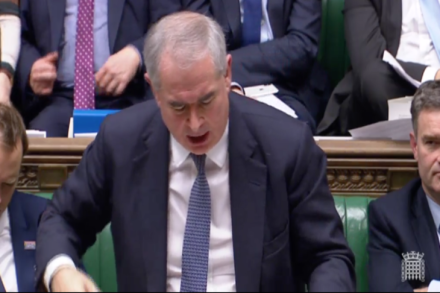
Watch: Geoffrey Cox heckled over Brexit backstop

From our UK edition

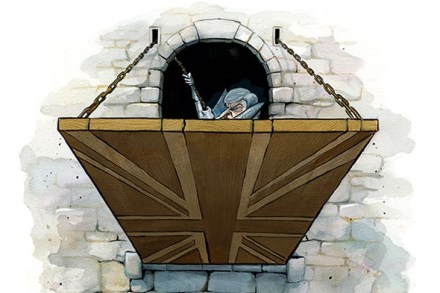
Theresa May is taking a break from defending her Brexit deal in Parliament – giving the chance to her Attorney General to have a go instead. But Geoffrey Cox's sales pitch to MPs on the Brexit backstop isn't going entirely to plan. Cox confirmed to Parliament that there is 'no unilateral right' for Britain – or the EU – to 'terminate' the arrangement. In response, a Tory MP yelled out: 'So it's a trap!'   Mr S thinks it is fair to say that, with only eight days until the big Parliamentary vote, MPs could do with a bit more persuading...

If Britain can’t keep the lights on this winter, will the EU be to blame?

From our UK edition

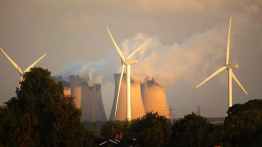
Britain’s ability to keep the lights on has just been thrown into doubt by the European Court of Justice. It has ruled that the backbone of the UK’s capacity market energy scheme, which pays power stations to generate electricity, is illegal state aid and must be suspended. To call this a body blow for energy security is a gross understatement; as you read these words Whitehall is desperately trying to reassure generators and very nervous investors. Payments to power stations through the capacity market have now been stopped until the Government can get permission from the European Commission to restart them, but this could take years.

The question May’s Brexit deal critics must ask themselves | 3 December 2018

From our UK edition

Brexit is an accident born of misunderstanding. One of the biggest miscalculations is about the EU and how it works. Troublingly, that misjudgement, embraced by both unwise Leavers and imprudent Remainers, could just lead Britain off a cliff, for the second time in three years. I attended my first EU summit in 2001 and stopped counting the number of Council meetings, ECOFINs and other EU gatherings when the figure passed 50 some time early in the financial crisis. I’ve seen a lot of British politicians go to Brussels (and elsewhere, in those innocent days before the Belgians captured all council meetings for their capital) and pursue the British national interest, with varying degrees of success.

Watch: Maybot’s awkward This Morning interview

From our UK edition

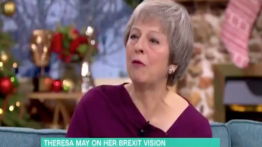
Theresa May has just over a week to go until her Brexit deal is voted on in the Commons, and while all the signs suggest she is facing a thumping defeat, the Maybot is still sticking to the script. In an interview with Phillip Schofield on This Morning, May was asked what will happen if she loses the vote. May did her best to dodge the question: PS: What happens to you if they vote you down? The next day, what will you be saying? TM: I'm, I'm, I'm very clear. I have got a duty as PM to deliver PS: But if you don't? TM: I've got a duty.. PS: But if you don't? ... My question was: what happens if you don't (get it through)? Will you resign? TM: I am focusing on getting that vote through....There is going to be a lot of debate.

What’s the point of having a Brexit debate between May and Corbyn?

From our UK edition

I can see that there is a moral case for a General Election, as demanded by Jeremy Corbyn. An election which Corbyn would win, by some margin, I suspect. The government is inept, hopelessly divided, derided and May will not get the majority she needs to push her Brexit deal through the Commons. There is a strong practical as well as moral case for an election then. I get all that. What I do not get is why this TV debate should be between May and Corbyn. If Corbyn had a clear line on Brexit then maybe. But he does not, he has been, on the issue, evasive to the point of obscurantism and even now I do not know what he wants to happen. In the Brexit debate he is a total irrelevancy.

Theresa May’s nine days to save her world

From our UK edition

Theresa May (and I) are just back from Argentina. And she is about to enter the most important week of her political life and the most important week in this country’s political and constitutional history for decades. It starts tomorrow with the publication of a summary of the legal advice on the PM’s Brexit plan - which will expose an irreconcilable contradiction at the heart of the so-called backstop to keep open the border on the island of Ireland. On the one hand, if the UK were to trigger the backstop at the end of 2020, which would effectively take us into the EU’s customs union, the UK would never have the unilateral right to leave it.

Why no deal planning should be stepped up

From our UK edition

No-go-day was meant to be yesterday, I say in The Sun. This was the moment when the Department for Exiting the EU wanted the principal purpose of government to become getting the country ready for leaving the EU regardless of whether there was a deal or not. Number 10 argued that a vaguer deadline of late November / early December was better. They thought that this would give more time to tell whether full on ‘no deal’ prep was necessary or not. But now, Number 10 is indicating that it wants to hold off until after the meaningful vote on the 11th of December. This is not a good idea, though. Those inside the machine estimate that it would take four months of intense preparations to get this country into a place where it could make no deal manageable.

Could Theresa May’s latest attack on Corbyn backfire?

From our UK edition

The Prime Minister might have been a bit too clever when attacking Corbyn’s and Labour’s opposition to her Brexit deal. Some four hours in to her 14 hour flight to the G20 leading nations’ summit in Argentina, she told journalists: “What they are doing is advocating rejecting the deal we negotiated with the European Union without having any proper alternative to it. “They say they don’t want ‘no-deal’ but by appearing to reject a temporary backstop they are effectively advocating no-deal, because without a backstop there is no deal”. So she is accusing Labour of ushering in the kind of economic no-deal calamity – a devastating recession that would see the income of the U.K.

Theresa May’s deal is not Canada Plus – it’s Remain Minus. Why pretend otherwise?

From our UK edition

While some may doubt Donald Trump’s claim to be a friend of Britain’s, his intervention in the Brexit debate this week has been timely and depressingly accurate. The deal that Theresa May has brought back from Brussels, and which she will put before the Commons on 11 December, is indeed a good deal for the European Union. Brussels retains control over the British economy but no longer has to deal with the British in its various voting procedures. Britain agrees not to become more competitive through regulatory reform, and its chances of striking trade deals are slim. So Trump was merely saying, in his usual offhand manner, what other world leaders have been thinking. His thoughts are echo-ed in Australia, which had been looking forward to doing a trade deal with the UK.

Watch: Geoffrey Cox’s minister of the year acceptance speech

From our UK edition

Geoffrey Cox's rousing warm-up act for Theresa May at Tory party conference elevated the Attorney General's public profile. In the weeks since, Cox's importance has continued to grow, as cabinet ministers – both remainers and leavers – have come to depend on his legal know-how to interpret the Brexit deal. And now, Cox has been named minister of the year at The Spectator's Parliamentarian of the year awards last night. Here's what he had to say: 'Well, I'm incredibly grateful, privileged and honoured to have been awarded this tremendous and distinguished award. I have to say that, after just four months in the cabinet, it comes as both a surprise and a pleasant shock....

Why Theresa May might end up embracing a second referendum

From our UK edition

There are few things in the Brexit debate that are not disputed. But there is one thing that pretty much everyone accepts: that Theresa May believes in her deal. She really does think it is the right answer to the referendum result. However, as I say in the magazine this week, her deal is unlikely to get through the Commons. But what can May do given that she wants her deal to pass? Well, there is one route that might work for her: a second referendum. If the Commons won’t back her deal, then maybe the country will. This would require a massive volte-face from May, and her exasperated reaction when asked about a so-called ‘People’s Vote’ shows she isn’t currently entertaining the idea.

The problem with a ‘no deal’ Brexit

From our UK edition

There have probably been worse branding campaigns in history. Cadbury’s apparent attempt to drop the word ‘Easter’ from its egg hunts was a clunker of cosmic proportions. The launch of New Coke has found its way into the textbooks as a masterclass in how to trash one of the greatest brands in the world, and Nivea's 'White Is Purity’ campaign for its skin creams last year had to be dropped very quickly after the inevitable backlash. The attempt to sell a ‘No Deal’ Brexit is not quite up there with those disasters. But it is getting close. In truth, there is nothing terribly wrong with leaving the European Union without an agreement, and it might well be better than the alternative we are being bullied into.

Remaining in the EU would come at a big price for Britain

From our UK edition

We're familiar with the warnings about the cost of Brexit. The 'People's Vote' campaign released an estimate yesterday suggesting that Theresa May's deal will leave the UK £100bn worse off a year. Tomorrow, the Treasury will unveil its forecasts of the economic impact of Brexit. But what about the price of staying put in the EU? Whatever those clamouring for a 'People's Vote' might claim, no Brexit does have a cost. Firstly, the price in terms of political capital will be significant. What does going back on the referendum result say to the 17.4million voters who voted Leave? What about the damage done to trust in our institutions and our politicians? Or to the idea that voters can change our country’s destiny by the power of their choices at the ballot box?

The next Italian crisis

From our UK edition

For those who believe in the European project, Brexit is a headache. Italy, on the other hand, is a bloody nightmare. Its new anti-elite populist coalition government of the alt-left Five Star Movement and the radical-right League is currently set on a collision course with the EU. This could easily start a chain reaction that destroys the single currency. The British media hardly mentioned it but on Saturday, once Jean-Claude Juncker, EU Commission president, had sent Theresa May on her way with a pat on the back, he sat down to ‘a working dinner’ with Giuseppe Conte, the Italian Prime Minister, to discuss Italy’s ‘unprecedented’ breach of EU rules on its budget.

The Corbyn effect

From our UK edition

What’s wrong with UK financial markets? The global economy is recovering, but British stocks and shares are not keeping pace. The pound has failed to recover from the slide it experienced in the wake of the EU referendum. This is frequently blamed on investors being spooked by Brexit, even more so by the possibility of a no deal. But has anyone actually asked the markets what is spooking them? Look closer and it becomes clear that while Brexit is a problem for some investors, most are much more worried about a far bigger risk, even if they rarely speak about it in public. It is the possibility of a Corbyn government. Since last year’s election, when the Labour leader came within a stone’s throw of No. 10, it has been impossible to write off the idea of a Corbyn victory.

Gary Lineker’s Brexit muddle

From our UK edition

When Gary Lineker isn’t talking about football there is another subject that he likes to bang on about: Brexit. Lineker has backed the 'People’s Vote' campaign and is calling for a second referendum. As the Chancellor Philip Hammond unveiled his Brexit forecasts this morning, Lineker was spurred into action on Twitter: The only problem? That is the message the Treasury was selling 2.5 years ago. Back in May 2016, the chancellor’s predecessor George Osborne warned that Brexit would tip Britain into a year-long recession and cause a ‘profound’ economic shock. We were also told by David Cameron that a vote to Leave would be the ‘self-destruct option’. Of course in the end that never happened.

The moment Theresa May sealed our Brexit fate | 28 November 2018

From our UK edition

Theresa May is in Scotland today which is one way of ascertaining the depth of the hole in which she finds herself. One day, prime ministerial visits to Scotland – or, indeed, to Northern Ireland or Wales – will cease to be considered newsworthy events in their own right. Until such time as they are not rarities, however, they are doomed to be seen as gestures. A whistle-stop tour of the United Kingdom’s northern and western extremities is not enough, no matter how much the Prime Minister might enjoy a day or two away from the Westminster snake-pit. This visit, like so many others, will be an occasion for saying at least some of the right things but it will not make any meaningful difference to anything that is actually meaningful.

Philip Hammond has exposed the problem with the Treasury’s Brexit forecast

From our UK edition

It is the decimal point which really gets me. If we have a ‘no deal’ Brexit, according to Treasury forecasters, the economy will be 7.6 per cent lower in 15 years’ time than it would be if we didn’t leave the EU. What, not 7.7 per cent? It is an age-old trick: express your guesswork with a decimal point or two on the end and hope that it sounds a bit more convincing, as if a bit more science has gone into it. But sorry, the Treasury should not be fooling anyone this time.