Brexit

Irish troubles

From our UK edition

How did we get into this Brexit mess? Why is it proving so difficult to leave the EU? Was it Theresa May’s botched 2017 election, which vaporised her Commons majority? Or perhaps her general incompetence and lack of vision? How about the fierce determination of Europhile civil servants to save stupid Leave voters from themselves, cooking up a half-in-half-out withdrawal guaranteed to split the Tories? Maybe it was the cynical ambivalence of HM’s Opposition, with Labour simultaneously backing both Brexit and a second referendum, having always intended to cause chaos and spark a general election by voting down the UK’s exit, contradicting its own manifesto?

Technology won’t solve the Irish border question. Here’s why

From our UK edition

Amongst some Brexiteers, there is an eternal faith in technology to solve the Irish border question. This is mistaken. Yet still the idea refuses to go away. Now Theresa May is using this belief to try and get wavering Tory MPs to back her Brexit deal with Brussels. Yesterday, the Prime Minister’s spokesman said the solution for the question of the Irish border 'could involve technological solutions'. He went on to say: 'I think there was discussion in cabinet about the fact that the withdrawal agreement recognises and keeps open the potential for alternative arrangements to avoid a hard border on the island of Ireland.' No 10 is implying that if the UK would put this idea on the table then the EU would be obliged to accept it and allow the UK to escape the backstop.

Where were the Brexit no deal warnings during the Scottish independence debate?

From our UK edition

Four years ago, 45 per cent of Scottish voters favoured leaving the UK. Many of the warnings about the negative impact of independence on the Scottish economy were justified. But they did not extinguish a yearning for independence – and the same could be said of the EU referendum, with the caveat that this time a majority voted to leave, and many of the warnings were unjustified. An ineradicable desire to get our country back triumphed over the Project Fear campaign conducted by the Treasury and the whole of the nomenklatura that sought to preserve position, power and privilege for itself and to suppress any notion that ordinary people, in Britain or in any other European country, could have a say in how they are governed.

Jeremy Corbyn is as deluded about Brexit as Jacob Rees-Mogg | 21 November 2018

From our UK edition

Now that the coup of the plastic spoons appears to have failed – Jacob Rees-Mogg and his accomplices could not even synchronise their pocket-watches – Theresa May finds herself back where she has been all along: strengthened by her weakness. This is a remarkable situation for any prime minister but not, for May, an unprecedented one.  It helps that her enemies are so utterly incompetent. The sallow men of the European Research Group are not only not a government in waiting but not a collection of kingmakers either. Just as Voltaire quipped that the Holy Roman Empire was in fact none of these things, so we may say something similar about the ERG.  But, in fairness to the Moggists, they are not the only group suffering from delusions of influence.

PMQs: May unveils her Brexit consolation prizes

From our UK edition

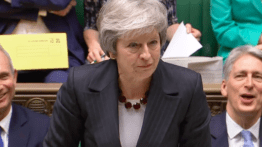
Amber Rudd, a washed-up ex-minister last week, is the de facto Brexit secretary today. She revealed her loyalties this morning when she told an interviewer that parliament wouldn’t approve a no-deal agreement. And with no deal off the table, Brussels can dictate terms. Congrats Amber. The Légion d'honneur is on its way. And a peerage too, in all probability, given that Nick Clegg was knighted for opposing Brexit. Remainer Rudd’s bombshell was raised by Jeremy Corbyn at the start of PMQs. He asked Mrs May to state whether no deal is still an option. ‘I have consistently made clear,’ began the PM, before continuing in deliberately cryptic terms.

Theresa May fails to calm her Brexit critics at PMQs

From our UK edition

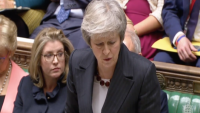
Jeremy Corbyn is not a forensic Commons performer. He is uncomfortable adjusting his questions to take into account Theresa May’s responses. This limits his ability to pin May down. Today, he asked a question on a customs and regulatory border in the Irish Sea. May emphasised that there wouldn’t be a customs border there. But Corbyn didn’t then pursue what kind of regulatory border there would be. The result was that May sustained no damage during their exchanges.  Once again, the lack of support in the chamber for May’s deal was striking. There were a couple of supportive questions from the Tory benches, but more hostile ones. The most difficult question of the session came from George Freeman, May’s former policy chief.

Did Amber Rudd’s Today interview actually help No. 10?

From our UK edition

In her first interview since returning to the cabinet, Amber Rudd has set the cat among the pigeons. Speaking on the Today programme this morning, the new Work and Pensions Secretary appeared to go off script as she talked about the prospect of a 'no deal' Brexit. The former Remain campaigner said that Parliament 'will stop No Deal' if the deal is voted down as there 'isn’t a majority in the House of Commons to allow that to take place'. 'I don't think we are looking at another referendum. I think what will happen is that people will take a careful look over the abyss and despite what people say the EU withdrawal agreement will get through.' On the surface at least, it doesn't appear to be a particularly helpful intervention.

How the ‘people’s vote’ campaign gained momentum

From our UK edition

A year ago, campaigners for a ‘people’s vote’ seemed an eccentric bunch of no hopers and bad losers. Mocked as ‘remoaners’, their arguments barely covered by the media, history had left them behind. As the leave campaigns’ central claim that we could have the benefits of EU membership while leaving the EU is revealed for the absurdity it always was, the ‘people’s vote’ has gathered mass support and moved from the fringes to the mainstream with heartening speed. One mark of the campaign’s success is that even its critics acknowledge that a ‘peoples vote’ is a viable solution to the constitutional, economic and diplomatic crisis that engulfs us.

Has Mark Carney just ended the campaign for a ‘People’s Vote’? | 20 November 2018

From our UK edition

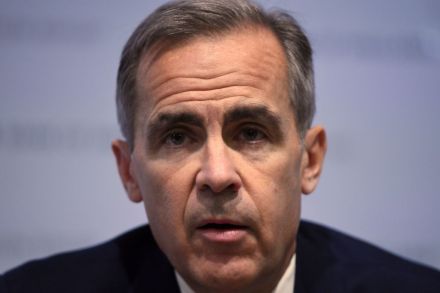
The headlines will inevitably write themselves. The Bank of England backs Theresa May. The Prime Minister's beleaguered and precarious deal is the best of all the options available and the economy may well get through the next few months largely unscathed. Following the testimony this morning from the Bank’s governor Mark Carney, most people will pick up on the support he has given to the Prime Minister and his reassurance that the economy will survive our departure. And yet there were two more significant points that emerged from his testimony. The Bank is finally willing to concede that leaving without a deal wouldn’t be so bad after all. And just at the moment when not leaving at all has become a real possibility, the Bank has given up on it.

Watch: Jacob Rees-Mogg rebukes reporter over Brexit ‘coup’

From our UK edition

The Brexit bunch's bid to oust Theresa May has fallen rather flat, at least for the time being. Having failed to muster enough letters to force a vote of no confidence in the Prime Minister, the European Research Group now appears to be desperately backtracking. Jacob Rees-Mogg, who enjoyed the limelight at an impromptu press conference outside Parliament last week when a vote appeared to be imminent, seemed somewhat more shy this morning when he was asked about the attempt to bring down the PM – rebuking a reporter for calling it a 'coup': 'Coup is entirely the wrong word. Indeed it is a rather silly word. This overegged language is rather damaging to political debate.

Brexit Britain needs 21st century borders

From our UK edition

Whatever form Brexit might take, the Government has been clear about its intentions to take the country global: the Prime Minister has promised that post-Brexit Britain will be an outward-looking country, trading and engaging with countries from across the world. But if Britain is to copy with the increase in trade and visitors (both of which are expected to double within the next thirty years), it will be necessary to revisit and revitalise the country’s border and customs infrastructure. The Home Office’s failure to meet its existing targets for clearing visitors (within 25 minutes for EEA passports, and 45 minutes for non-EEA visitors have been well-publicised) – how can the UK cope with higher traffic?

Theresa May’s deal would win a second referendum. Here’s why

From our UK edition

One important piece of information missing during these dramatic Brexit manoeuvres is what the voters actually want. Rory Stewart, one of the only ministers doing a decent job of selling the Prime Minister’s plan, speculated that ‘80 per cent of the British public support this deal’ and was promptly forced to apologise. Meanwhile opponents of the deal point to polls taken since the details were revealed suggesting that as few as 19 per cent of the public support it. So what is the truth? I think Theresa May’s deal is fundamentally much more in line with public opinion than polls suggest and that it will become more evidently so over time. It would win a two-part referendum hands-down. Here’s why.

No-confidence threat against May recedes – for a few days

From our UK edition

Is Theresa May about to face a vote of no confidence in her leadership? The Prime Minister is acting as though nothing has changed, to coin a phrase, focusing on selling her Brexit plan to business leaders at the CBI, rather than getting too bogged down with the internal problems with her party. But those trying to organise the move against her had been making noises all day that they may have the requisite number of letters calling for such a vote by this evening. This doesn’t look like it’s going to be the case. Indeed, today a number of Brexiteers including Owen Paterson and Iain Duncan Smith have been holding talks in Number 10 along with David Trimble about a proposed solution to the Brexit deal that might prevent a leadership contest.

May’s Brexit deal: 40 rebuttals to Downing Street’s 40 rebuttals

From our UK edition

Is a deal better than no deal? After Mr S attempted to answer that question over the weekend by publishing 40 horrors lurking in the small print of Theresa May’s Brexit deal, No. 10 got in touch with 40 rebuttals to Steerpike's 40 horrors. Still with us? Well, episode three of this series is finally here. Mr S thanks 10 Downing Street for conceding many of the 40 points on the Withdrawal Agreement, and for engaging in all of them. In the spirit of friendly discussion, here are all 40 of Steerpike's responses. ----------------------------------------------------------------------------------- First, a note on ambiguity: In its rebuttals, No10 accepts ambiguity over how the document might be interpreted - which, in this case, is crucial.

Why do we care what the CBI thinks about May’s Brexit deal?

From our UK edition

Big UK business is often guilty of short-termism and the CBI's response to Theresa May’s draft withdrawal proposal is no exception. Large companies are backing May’s appalling deal with the EU because they are preoccupied with ensuring that next year’s results are no worse than the guidance they have given markets. The opportunities which could arise from a proper Brexit, in which Britain is allowed to do its own trade deals, set its own regulations and lower taxes and other barriers in order to suck in overseas investment, are too far over their horizon for them to see. How often have you heard the words drip from well-fed FTSE 100 executives: 'what business needs most is stability'?

Sunday shows roundup: Theresa May’s Brexit warning

From our UK edition

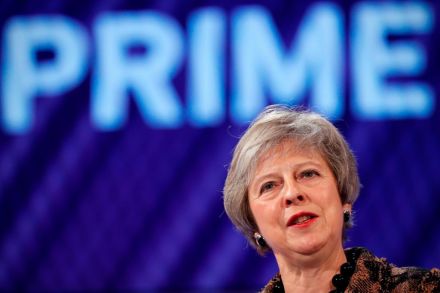
Theresa May - Brexit will be harder without me The Prime Minister joined Sophy Ridge this morning to discuss the result of the government's draft withdrawal agreement with the European Union, which was released on Wednesday. The controversial 585 page document has already seen several resignations, with other ministers thought to be considering their positions. There has also been considerable discontent on the Conservative backbenches, with the influential European Research Group now calling for a vote of no confidence in May's leadership. In response, May told Ridge that her critics needed to get their priorities straight: https://twitter.com/RidgeOnSunday/status/1064094963275841536?

Why Theresa May should say she’ll go once her Brexit deal is passed

From our UK edition

Right now, Theresa May’s Brexit deal isn’t passing the House of Commons. I argue in The Sun this morning, that Theresa May needs something to change the dynamic. What would do that? Well, if May said she would stand down once the withdrawal agreement was through, that would change things. It would separate off the question of how May has handled the Brexit negotiations so far, from the issue of what parliament should do now. If May pre-announced her departure, it would enable MPs to vote for the deal without that being an endorsement of her handling of Brexit or an invitation for her to go and negotiate the next stage of Brexit, the UK/EU trade deal. Interestingly, one Cabinet Minister tells me that May is now an impediment to this deal passing.