Brexit

The question May’s Brexit deal critics must ask themselves

From our UK edition

Brexit is an accident born of misunderstanding. One of the biggest miscalculations is about the EU and how it works. Troublingly, that misjudgement, embraced by both unwise Leavers and imprudent Remainers, could just lead Britain off a cliff, for the second time in three years. I attended my first EU summit in 2001 and stopped counting the number of Council meetings, ECOFINs and other EU gatherings when the figure passed 50 some time early in the financial crisis. I’ve seen a lot of British politicians go to Brussels (and elsewhere, in those innocent days before the Belgians captured all council meetings for their capital) and pursue the British national interest, with varying degrees of success.

What happens next?

From our UK edition

Parliament is in deadlock over Brexit. So what can we expect in the coming days and weeks after the vote? These are the scenarios currently being war-gamed. May’s deal passes A political shock: Theresa May squeaks over the line after convincing Brexiteers that it was her deal or no Brexit — and Remainers that it was her deal or a no-deal Brexit. The DUP then rains on May’s parade. Seething over the backstop, it declares that the confidence and supply agreement is over for good. This scenario could involve delaying the initial vote in the hope this gives MPs time to come around. It passes on a second vote Theresa May’s deal fails to pass first time round by 50 votes.

Brexit’s crunch point

From our UK edition

Unless Theresa May delays the vote, 11 December 2018 might be about to become one of the most important in recent British history; more important even than 23 June 2016. If MPs vote down Theresa May’s withdrawal agreement, as nearly all ministers expect them to, they will set Britain on course for either the softest possible Brexit or a second referendum. In the process, they may well split the Tory party. Theresa May’s strategy has been to play chicken with Parliament. Her team saw virtue in intransigence and calculated that at the last moment MPs would get out of her way. They thought that fear of no deal would bring former Remainers into the fold. Simultaneously, Leavers would reluctantly take this imperfect Brexit over the risk of no Brexit at all.

Taking the Michael | 6 December 2018

From our UK edition

One of the biggest stars of the 1970s was the professional lard-bucket Mick McManus, who plied his trade as an all-in wrestler. The sport was televised to millions. The parents of the playwright Michael McManus must have calculated that by giving their child the same name as ‘The Dulwich Destroyer’ they would subtly galvanise his intellectual ambitions. Their ploy paid off. The young Michael McManus, lumbered with the identity of a potato-shaped pugilist, seems to have toiled night and day to distinguish himself from his pot-bellied namesake. He succeeded in establishing his intellectual credentials by working as a political diarist, a ministerial adviser, and by writing well-received biographies of Jo Grimond and Ted Heath.

Rory Stewart is right: the shock of a no-deal Brexit would be fatal for the Tories

From our UK edition

As a white, straight male, it’s not often that I get to feel in a minority but at the Spectator Brexit debate - as a Leave voter in favour of Theresa May’s deal - it was apparent that I’m an endangered species on a par with the white rhino. But I also found that I have an eloquent champion: Rory Stewart, the prisons minister, who gave the best case that I have heard for the deal He was on stage with Dominic Raab, on the opposite end of the pragmatism spectrum. Raab, in effect, argued for a no-deal Brexit, while Stewart mounted a most robust defence of the May deal, vigorously taking on all-comers to modest effect.

PMQs: A lesson in calling the Prime Minister a liar

From our UK edition

Huge ructions at PMQs. Ian Blackford, of the SNP, said Mrs May had been ‘misleading the house inadvertently or otherwise’ over her EU agreement. Instant panic. Roars of outrage at the suggestion that the prime minister had lied. Mr Speaker snapped to his feet. The house paused while he delivered his ruling which centred on two adverbs. He revealed that when accusing the PM of fibbing it’s advisable to say that it was done ‘inadvertently’. But to add the phrase ‘or otherwise’ suggests that Mrs May tells lies as a matter of policy. Surely not! ‘There must be no imputation of dishonour,’ said Mr Bercow, clearly enjoying the semantic kerfuffle and his position at its centre. Mr Blackford tried again.

The betrayal of the Brexit bunch

From our UK edition

It is now standard on the right to say that the establishment is sabotaging Brexit. I could pick one of half a dozen writers for this magazine, who wallow in the language of victimhood as luxuriantly as any of the alleged snowflakes they so unselfconsciously denounce. The inevitable failure to transfer the impossible demands of the Brexit campaign into the politics of the possible is producing vicious stab-in-the-back myths. Nowhere more so than from the lips of the Conservative MP Maria Caulfield who declared yesterday: https://twitter.com/mariacaulfield/status/1070091419086450688?ref_src=twsrc%5Etfw Note how artfully she plays the innocent who came to Westminster with high ideals, like a modern Candide, only to see them crushed by the machinations of the ruling class.

Are we heading for a recession? If so, don’t just blame Brexit

From our UK edition

So will those Remainers seemingly hoping for a Brexit-related recession get what they want after all? This morning Purchasing Managers’ Index (PMI) for the service sector certainly points in that direction. The index, which is really just a questionnaire to businesses but which can give advance warning of swings in economic growth, fell to 50.4 in November, down from 52.2 in October and 54 in September. Anything above 50 denotes growth – so it doesn’t indicate we are yet in recession – but it suggests a steep plunge in activity and confidence which could well take us there. It would be foolish to deny any link with the Brexit crisis.

Full text: The Government’s Brexit legal advice

From our UK edition

The Government has published its Brexit legal advice, a day after it was found in contempt of Parliament for refusing to do so. Here's the full text: Legal Effect of the Protocol on Ireland/Northern Ireland Introduction This note sets out my advice on the question I have been asked as follows: What is the legal effect of the UK agreeing to the Protocol to the Withdrawal Agreement on Ireland and Northern Ireland in particular its effect in conjunction with Articles 5 and 184 of the main Withdrawal Agreement? I note that the Withdrawal Agreement, of which the Protocol on Ireland/Northern Ireland (Protocol) forms part, is yet to be finalised. My advice is based, therefore, on an evolving text, which I have had to consider rapidly in light of the fluid situation.

Is Parliament taking back control of Brexit? | 4 December 2018

From our UK edition

One of the promises of Brexit campaigners, famously, was that parliament will ‘take back control’ of laws that affect Britain. Since the referendum result, it has seemed rather more that the government is taking back control, rather than MPs, with the executive (quite naturally) resisting any opportunity for Parliament to have a say in, well, any part of the Brexit deal. This evening, though, MPs handed the government its third defeat of the day on an amendment from former attorney general Dominic Grieve which would give the Commons a say on what happens if (or more probably when) Theresa May’s deal is defeated next week. The plan, which passed 321 to 299 votes, would allow MPs to amend the government’s plan B.

Revealed: the full list of Tory rebels who voted against the Government

From our UK edition

The Government has been defeated three times in key votes in Parliament this afternoon. Its an ominous sign for Theresa May ahead of the vote on her Brexit plan a week today. Here is the full list of Tory MPs who went against the Government: Grieve amendment: This hands more power to MPs in the event that May's Brexit plan gets voted down, by effectively allowing them to have a say on what the PM's Plan B should be.

Nigel Farage quits Ukip

From our UK edition

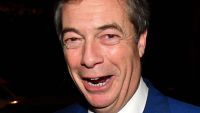
Nigel Farage has quit Ukip. The three-time leader of the party said he was walking away in protest at its courting of Tommy Robinson under Gerard Batten. Farage announced his departure in an article for the Telegraph. He said: 'With a heavy heart, and after all my years of devotion to the party, I am leaving Ukip today. There is a huge space for a Brexit party in British politics, but it won’t be filled by UKIP.

Watch: Cox reacts to being found in contempt

From our UK edition

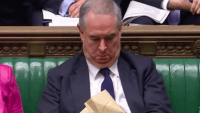
In an exceptional move, MPs have just voted to hold the government in contempt of Parliament for not releasing legal advice on the draft withdrawal agreement with the EU. While not being named specifically by the motion, it was the Attorney General, Geoffrey Cox, who was the figurehead for the contempt proceedings, and as you can imagine, he was not pleased to possibly be the first government legal advisor to be held in contempt in recent history. Mr S thinks his reaction speaks for itself: https://www.youtube.com/watch?v=qJ85qUBccd8&feature=youtu.be Earlier in the debate, the Attorney General already looked close to tears when he was defended by his colleague Nadine Dorries: https://www.youtube.com/watch?v=8Q84fD-sa60 It's safe to say that it's not been a good week for Cox.

Why King trumps Carney in the battle of the governors

From our UK edition

If they were former Manchester United players, Booker prize nominees, or members of Oasis, the acrimony and arguments might be fairly run of the mill. Among current and former Governors of the Bank of England it is, to put it mildly, a little unusual. And yet Mark Carney now finds himself under sustained attack from his immediate predecessor Mervyn King over how it should handle our departure from the European Union. And in that battle of governors there can surely only be one winner – and it isn’t the incumbent. In a piece for Bloomberg, King, who served with distinction at the Bank from 2003 to 2013, takes apart Theresa’s May’s exit deal in ferocious detail.

Mervyn King: May’s deal is a shameful betrayal of Brexit

From our UK edition

It's safe to say that Mervyn King,  former Bank of England governor, does not quite agree with Mark Carney on Brexit. In an incendiary article for Bloomberg, he says that the sight of Boris and Blair uniting against the deal shows  that "something has gone badly wrong". How wrong? Here's his argument. "The withdrawal agreement is less a carefully crafted diplomatic compromise and more the result of incompetence of a high order. I have friends who are passionate Remainers and others who are passionate Leavers. None of them believe this deal makes any sense. It is time to think again, and the first step is to reject a deal that is the worst of all worlds.

The Article 50 ruling is good news for Remainers – and hard Brexiteers

From our UK edition

How Remainers are feasting on the ruling (although not final judgement) from the European Court of Justice suggesting that Britain could unilaterally revoke Article 50 at any point up until 29 March next year and remain in the EU under existing terms. If the final judgement confirms the ruling it will destroy the argument that Michael Gove made at the weekend – that reversing our decision to stay in the EU would lead to vastly inferior terms, the loss of Britain’s rebate and so on. It will also heap huge pressure on Theresa May if she loses next week’s seemingly doomed vote on her withdrawal bill. While Downing Street has described the ECJ ruling as hypothetical, she will have to fend off a reinvigorated campaign for a second referendum.

Why I quit Ukip

From our UK edition

There has never been a more pressing need for a home for Brexit voters disillusioned by the spectacle of recent events. Yet Ukip, under a leader fixated by EDL founder Tommy Robinson, has marched to a place where very few Leave voters wish to go. When I left Ukip last week, what caused the biggest stir was the fact that it was not to sit as an independent but to join the SDP. Many political journalists did not know that the party still existed, let alone that it has been Eurosceptic for many years. But the party has been growing fast over the past few months as the more moderate elements of Ukip – along with some determined Labour and Tory leavers – have sought a centre-ground party that will campaign to honour the referendum verdict.