Brexit

The Brexit political declaration confirms we are heading to a blind Brexit

With the leak of a 26-page political declaration this morning – an enhanced version of last week’s briefer document – we now know the shape of the future EU-UK relationship which May and the EU negotiators want to achieve in the long run – if, and this could turn out to be a big if – the UK ever manages to escape from the purgatory of the backstop. It is not a bad document in itself. Neither does it bear much of a resemblance to Chequers. The big difference is that it envisages a future trade deal which encompasses services as well as goods – Chequers envisaged Britain pretty well

May’s deal: a legal verdict

The most important point about the draft Brexit withdrawal agreement is that, once it is ratified, the United Kingdom will have no legal route out of it unless the EU agrees to let us out and replace it with another agreement. This makes it unique among trade treaties (including the EU’s), which always contain clauses allowing each party to withdraw on notice. Politicians who claim that this is just a bad treaty — one we can get out of later — are being ignorant or disingenuous. Halfway through the 585-page document, we find Art. 185, which states a Northern Ireland Protocol ‘shall apply as from the end of the transition period’.

Haters gonna hate hate

If we are to ban states of mind, my vote would be for self-righteousness first, followed by sententiousness, with maybe imbecility as third choice. That would criminalise most of the people in the country I cannot abide, including all of the Lib Dems, Momentum and Justine Greening. Sadly, the state of mind which the government wishes to ban is that rather more useful quality, hate. You are not allowed to hate anything any more, except for hate itself. But at least in hating hate you can really let yourself go, even if it is usually a wholly imaginary hate that you are hating. You can spew out your bile suffused

The nation’s state

Did any of us, whatever our opinions, expect the level of blustering indignation that has emerged since the 2016 referendum? It seems to be reaching ever new heights — or depths — of invective and reciprocal disdain. On one side, ‘fantasists, crackpots, dunderheads… jabbering braggarts’ (as a Telegraph columnist described Leave MPs last week). On the other, a gaggle of ‘enemies of the people’, cowards and time-servers. Not so long ago, the sophisticated laughed that only a few eccentrics ‘banged on’ about Europe. Now we seem to have become a nation of head-bangers. As social media spreads extreme and insulting language far and wide, it is easy to think that

Irish troubles

How did we get into this Brexit mess? Why is it proving so difficult to leave the EU? Was it Theresa May’s botched 2017 election, which vaporised her Commons majority? Or perhaps her general incompetence and lack of vision? How about the fierce determination of Europhile civil servants to save stupid Leave voters from themselves, cooking up a half-in-half-out withdrawal guaranteed to split the Tories? Maybe it was the cynical ambivalence of HM’s Opposition, with Labour simultaneously backing both Brexit and a second referendum, having always intended to cause chaos and spark a general election by voting down the UK’s exit, contradicting its own manifesto? Then there’s the relentless big

Technology won’t solve the Irish border question. Here's why

Amongst some Brexiteers, there is an eternal faith in technology to solve the Irish border question. This is mistaken. Yet still the idea refuses to go away. Now Theresa May is using this belief to try and get wavering Tory MPs to back her Brexit deal with Brussels. Yesterday, the Prime Minister’s spokesman said the solution for the question of the Irish border ‘could involve technological solutions’. He went on to say: ‘I think there was discussion in cabinet about the fact that the withdrawal agreement recognises and keeps open the potential for alternative arrangements to avoid a hard border on the island of Ireland.’ No 10 is implying that

Where were the Brexit no deal warnings during the Scottish independence debate?

Four years ago, 45 per cent of Scottish voters favoured leaving the UK. Many of the warnings about the negative impact of independence on the Scottish economy were justified. But they did not extinguish a yearning for independence – and the same could be said of the EU referendum, with the caveat that this time a majority voted to leave, and many of the warnings were unjustified. An ineradicable desire to get our country back triumphed over the Project Fear campaign conducted by the Treasury and the whole of the nomenklatura that sought to preserve position, power and privilege for itself and to suppress any notion that ordinary people, in

Jeremy Corbyn is as deluded about Brexit as Jacob Rees-Mogg | 21 November 2018

Now that the coup of the plastic spoons appears to have failed – Jacob Rees-Mogg and his accomplices could not even synchronise their pocket-watches – Theresa May finds herself back where she has been all along: strengthened by her weakness. This is a remarkable situation for any prime minister but not, for May, an unprecedented one.  It helps that her enemies are so utterly incompetent. The sallow men of the European Research Group are not only not a government in waiting but not a collection of kingmakers either. Just as Voltaire quipped that the Holy Roman Empire was in fact none of these things, so we may say something similar

PMQs: May unveils her Brexit consolation prizes

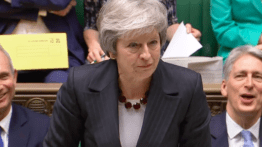
Amber Rudd, a washed-up ex-minister last week, is the de facto Brexit secretary today. She revealed her loyalties this morning when she told an interviewer that parliament wouldn’t approve a no-deal agreement. And with no deal off the table, Brussels can dictate terms. Congrats Amber. The Légion d’honneur is on its way. And a peerage too, in all probability, given that Nick Clegg was knighted for opposing Brexit. Remainer Rudd’s bombshell was raised by Jeremy Corbyn at the start of PMQs. He asked Mrs May to state whether no deal is still an option. ‘I have consistently made clear,’ began the PM, before continuing in deliberately cryptic terms. The alternatives

Theresa May fails to calm her Brexit critics at PMQs

Jeremy Corbyn is not a forensic Commons performer. He is uncomfortable adjusting his questions to take into account Theresa May’s responses. This limits his ability to pin May down. Today, he asked a question on a customs and regulatory border in the Irish Sea. May emphasised that there wouldn’t be a customs border there. But Corbyn didn’t then pursue what kind of regulatory border there would be. The result was that May sustained no damage during their exchanges.  Once again, the lack of support in the chamber for May’s deal was striking. There were a couple of supportive questions from the Tory benches, but more hostile ones. The most difficult

Did Amber Rudd's Today interview actually help No. 10?

In her first interview since returning to the cabinet, Amber Rudd has set the cat among the pigeons. Speaking on the Today programme this morning, the new Work and Pensions Secretary appeared to go off script as she talked about the prospect of a ‘no deal’ Brexit. The former Remain campaigner said that Parliament ‘will stop No Deal’ if the deal is voted down as there ‘isn’t a majority in the House of Commons to allow that to take place’. ‘I don’t think we are looking at another referendum. I think what will happen is that people will take a careful look over the abyss and despite what people say the

How the 'people's vote' campaign gained momentum

A year ago, campaigners for a ‘people’s vote’ seemed an eccentric bunch of no hopers and bad losers. Mocked as ‘remoaners’, their arguments barely covered by the media, history had left them behind. As the leave campaigns’ central claim that we could have the benefits of EU membership while leaving the EU is revealed for the absurdity it always was, the ‘people’s vote’ has gathered mass support and moved from the fringes to the mainstream with heartening speed. One mark of the campaign’s success is that even its critics acknowledge that a ‘peoples vote’ is a viable solution to the constitutional, economic and diplomatic crisis that engulfs us. A second is

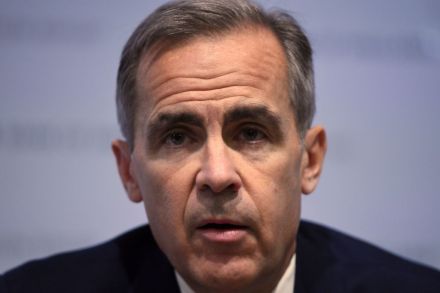
Has Mark Carney just ended the campaign for a 'People’s Vote'? | 20 November 2018

The headlines will inevitably write themselves. The Bank of England backs Theresa May. The Prime Minister’s beleaguered and precarious deal is the best of all the options available and the economy may well get through the next few months largely unscathed. Following the testimony this morning from the Bank’s governor Mark Carney, most people will pick up on the support he has given to the Prime Minister and his reassurance that the economy will survive our departure. And yet there were two more significant points that emerged from his testimony. The Bank is finally willing to concede that leaving without a deal wouldn’t be so bad after all. And just

Watch: Jacob Rees-Mogg rebukes reporter over Brexit 'coup'

The Brexit bunch’s bid to oust Theresa May has fallen rather flat, at least for the time being. Having failed to muster enough letters to force a vote of no confidence in the Prime Minister, the European Research Group now appears to be desperately backtracking. Jacob Rees-Mogg, who enjoyed the limelight at an impromptu press conference outside Parliament last week when a vote appeared to be imminent, seemed somewhat more shy this morning when he was asked about the attempt to bring down the PM – rebuking a reporter for calling it a ‘coup’: ‘Coup is entirely the wrong word. Indeed it is a rather silly word. This overegged language

Brexit Britain needs 21st century borders

Whatever form Brexit might take, the Government has been clear about its intentions to take the country global: the Prime Minister has promised that post-Brexit Britain will be an outward-looking country, trading and engaging with countries from across the world. But if Britain is to copy with the increase in trade and visitors (both of which are expected to double within the next thirty years), it will be necessary to revisit and revitalise the country’s border and customs infrastructure. The Home Office’s failure to meet its existing targets for clearing visitors (within 25 minutes for EEA passports, and 45 minutes for non-EEA visitors have been well-publicised) – how can the

Theresa May's deal would win a second referendum. Here's why

One important piece of information missing during these dramatic Brexit manoeuvres is what the voters actually want. Rory Stewart, one of the only ministers doing a decent job of selling the Prime Minister’s plan, speculated that ‘80 per cent of the British public support this deal’ and was promptly forced to apologise. Meanwhile opponents of the deal point to polls taken since the details were revealed suggesting that as few as 19 per cent of the public support it. So what is the truth? I think Theresa May’s deal is fundamentally much more in line with public opinion than polls suggest and that it will become more evidently so over time. It

Why Theresa May's Brexit deal is bad news for Europeans

Theresa May’s current Brexit deal will tie the UK more closely to Brussels than if it had stayed in the EU. The agreement, which is supposed to take back control and restore British sovereignty, will actually have the opposite effect. This is bad news for Britain – and bad news, too, for Europeans like myself who are desperate to see the EU reformed for the better. Jo Johnson was right to claim, when he resigned as a minister, that the choice now facing the UK is between ‘vassalage’ and ‘chaos’. On both sides of the debate, among Brexit supporters and those who want Britain to remain in the EU, the