Brexit

Text of Boris’s letter to EU: ‘an extension would be damaging to us all’

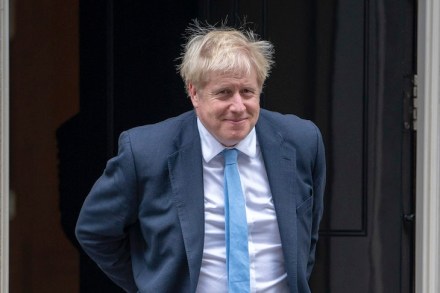
Boris Johnson has written a (signed) letter to the EU saying that a Brexit delay ‘would damage the interests of the UK and our EU partners’. To comply with the Benn Act, the Prime Minister has also sent an (unsigned) letter formally requesting a Brexit extension. Here is the full text of both letters: 10 DOWNING STREET LONDON SW1A 2AA THE PRIME MINISTER Dear Donald, It was good to see you again at the European Council this week where we agreed the historic new deal to permit the orderly withdrawal of the United Kingdom from the European Union on 31 October. I am deeply grateful to you, President Juncker and

Boris sends three letters to the EU – and says he does NOT want a Brexit extension

The Prime Minister will today send, but not sign, a letter requesting a Brexit delay till January 31 2020, and will simultaneously tell EU leaders that Parliament wants the delay, not him or his government. This will put him in all-out conflict with MPs, who have ordered him to ask EU leaders for a three-month Brexit delay, under the terms of the Benn Act they forced on him. On the advice of his Attorney General, Geoffrey Cox, Johnson believes he will be complying – in a narrow sense – with the terms of the Benn Act when his EU ambassador Sir Tim Barrow hands an unsigned photocopy of the pro forma

Twelve Brexit lessons from today’s drama in the Commons

Here are the important points about today’s emergency vote on Boris Johnson’s Brexit deal – which turned into a vote on whether the Prime Minister should write to the EU requesting a three-month Brexit delay. First, Johnson would have won if Northern Ireland’s ten DUP, his supposed partners in government, had not voted against him. Johnson has paid a price for agreeing a Brexit settlement for Northern Ireland which the DUP sees as betraying the union of Northern Ireland and Great Britain. Second, the narrowness of the defeat for Johnson implies that there is a route for him to secure Brexit by October 31 or shortly after that – because he needs just

Boris Johnson has 72 hours to win over a dozen MPs

Today was meant to be the day that parliament decided on Brexit. But this parliament will always choose to postpone that moment. By voting for the Letwin amendment by 322 to 306, the Commons chose to avoid stating whether it backs the new Brexit deal or not.  The next key moment will come on Monday when there will be a meaningful vote on the deal. Judging from the vote on the Letwin amendment, Boris Johnson has 306 solid votes both for his deal and a programme motion that would get the legislation through by the 31 October. So he needs to find 14 more votes between now and then. Oliver Letwin

The question for wavering MPs: do they really trust Boris Johnson?

Boris Johnson is still pursuing today’s vote as a decisive moment for the Brexit deal, rather than the start of yet another delay, with the Letwin amendment meaning the real meaningful vote could be moved to Tuesday. His opponents are speaking in a similar vein, framing the choice facing those MPs yet to make up their minds as being one concerning how trustworthy the Prime Minister is. Perhaps the most powerful argument against trusting Johnson came from DUP Westminster leader Nigel Dodds, who told the Chamber that: ‘It was once said that no British prime minister could ever agree to such terms and indeed those who sought the leadership of

With ‘glutinous emollience’, Boris Johnson tries to win the House round

Boris Johnson is in ‘glutinous emollience’ mode today. His opening statement in the debate was not combative but an attempt to cajole and persuade. He said that he would draw on the talents of the whole House in the next stage of the negotiations. In response to Philip Hammond, he accepted the Nandy / Snell amendments which would enable parliament to set the government’s approach to the next stage of the negotiations with the EU. Even when calling on Oliver Letwin not to move his amendment—which threatens to muddy the waters today as Katy explains—he stressed that he thought Letwin was motivated by good intentions. But if the Letwin amendment

Will the Brexit deal get a majority?

The numbers will be tight today. As I say in The Sun this morning, one minister believes that things are so close that there is a real chance that the Speaker John Bercow may end up having to break a tied vote. Though if the Letwin amendment passes, the vote this afternoon will lose some of its clarity. It is remarkable that Boris Johnson is so close to getting a majority for his deal despite having lost the support of the DUP. Cabinet Ministers are increasingly optimistic that the government might just pull this off. When Cabinet met yesterday afternoon, the Chief Whip Spencer ‘scrupulously avoided giving any numbers’, according

The world wants MPs to get Brexit done

Today is a historic moment for our country. After 85 days of hard graft, the Prime Minister has brought home a new Brexit deal – and I believe MPs should vote for it. Despite being told it was impossible, we have successfully re-opened the old Withdrawal Agreement and removed the Irish border backstop. In its place is a new agreement that maintains the open border all sides wanted while ensuring the United Kingdom takes back control of its money, borders, trade and laws. As MPs gather today – the first time the Commons has sat on a Saturday since the Falklands – they should know the world is watching. I

I’d vote for Boris Johnson’s Brexit deal in a heartbeat

As the only person ever to have been elected for Ukip in a General Election, if I was in the House of Commons today I would not just vote in favour of Boris Johnson’s deal. I would do so cheerfully in the knowledge that this is pretty much what I have spent much of my adult life campaigning for. Firstly, UK law will become supreme in the UK. No longer will we be under the jurisdiction of the EU courts.  Nor will we be bound by EU regulation. There’s none of Theresa May’s nonsense about a ‘common rule book’. We will be free to determine our own standards. Who knows,

Brexiteers are making a mistake backing Boris Johnson’s deal

There is an understandable desire among some Brexiteers to accept Boris Johnson’s deal. Everyone is battle weary. But it is precisely at this point that Brexiteers must, at the very least, be wary of what is presented to them – and vote down the deal. Why? First, the Withdrawal Agreement has been altered, but only in one substantive way, with respect to Northern Ireland. The backstop is gone and has been replaced with a protocol which theoretically brings NI into the UK’s new customs area but, in all practical aspects, leaves it within the EU’s customs union. The result is that NI would be subject to swathes of EU laws,

Boris has compromised, not conquered on Brexit

Reflecting on Boris Johnson’s Brexit deal, I have many questions. Why are people who rejected the possibility of Northern Ireland being subject to EU rules and regulation via a contingent backstop now embracing the certainty of that happening? How could anyone reasonably expect the DUP to sign up to something that really does make Northern Ireland a very, very different part of the Union? Something they were repeatedly promised would never be conceded. Why are none of the people who used to be furious about the ‘£39 billion’ (actually less now but never mind) objecting to paying it now? Why shouldn’t MPs have at least a superficial analysis of the

The DUP is caught on the horns of a Brexit dilemma

There is a magnificent paradox – the Taj Mahal of paradoxes, let’s hope NOT the RMS Titanic of paradoxes – in the opposition of Northern Ireland’s DUP to Boris Johnson’s Brexit. Johnson’s replacement to the backstop, by design, keeps the province much more closely aligned with the tax and business rules of the EU than would be true of Great Britain. It does so in order to keep the border between Northern Ireland and the Republic of Ireland free of friction and free of opportunities for smugglers and terrorists to return to their toxic ways of yore. For the DUP, this alignment introduces a fat new border between NI and

It’s time for every Brexiteer to back Boris Johnson’s deal

During my years campaigning for Brexit, I’ve bounced around quite a few different organisations in support of the great cause; starting by launching the Daily Express crusade to get Britain out back in 2010, then becoming part of the Ukip insurgency under Nigel Farage which led to that historic 2014 European elections win, before being the only Ukip MEP to back Vote Leave rather than its Faragist rival to be the designated Leave campaign in the 2016 referendum. At each turn, I’ve tried my best to put country before party, asking myself what would be the best thing for the attainment of Brexit rather than the most comfortable thing for

The real reason Nicola Sturgeon is campaigning against Brexit

Nicola Sturgeon, who claimed this week that ‘Scotland is rich enough, strong enough and big enough’ to take its place ‘among the proud, independent nations of the world’, is a slippery fish. She claims the case for Scottish independence will be strengthened by the UK’s departure from the European Union and yet she campaigned for Remain during the referendum and has done what she can to obstruct Brexit since. For instance, the 35 SNP MPs voted against Theresa May’s withdrawal bill three times. If they’d voted for it on the third occasion, it would have passed. Does Sturgeon feel obliged to oppose Brexit because she’s convinced it will eventually happen

The vindication of Boris Johnson’s Brexit strategy

The Brexit deal agreed with the EU is a spectacular vindication of the Prime Minister’s approach: to go back to Brussels with the genuine prospect that Britain would leave with no deal on 31 October. The EU started off by saying it would never reopen the withdrawal agreement, but with a no-deal Brexit back in prospect, compromise — and thus a deal — has been possible. And yes, parliament has said it would force the Prime Minister to ask for an extension of EU membership; but No. 10 said it would find a way to not do so. It seems that this was enough to focus minds in Brussels. Boris Johnson’s deal

Portrait of the week: Brexit uncertainty, Turkey in Syria and a Chinese threat

Home Brexit teetered from uncertainty to uncertainty. Parliament had been summoned to sit on Saturday 19 October to debate what Boris Johnson, the Prime Minister, had brought back from a European Union summit. He had held talks before the week began with Leo Varadkar, the Taoiseach of Ireland, at Thornton Manor in the Wirral, from which optimistic noises emerged. Margaret Atwood, 79, from Ottawa, and Bernardine Evaristo, 60, from Eltham, shared the Booker Prize. The Queen wore the George IV diadem at the State Opening of Parliament instead of the heavy Imperial State Crown. Among 26 Bills set out in the Queen’s Speech were seven relating to Brexit, one of

Boris Johnson’s biggest Brexit deal victory

In order to get anywhere in life, you have to compromise. Redrafting a deal foisted on you with no time and no majority has been Herculean. In doing so, the UK have made serious concessions so we can maintain good relationships with the EU. That must not get forgotten in the understandable (and shared) joy in getting a deal agreed in Brussels. Those who weakened our negotiating hand have a lot to answer for. What remains fundamental now is that all of us, whichever side we were once on, realise two things. That this dance has two stages and that the UK has made all its concessions in the first

Boris Johnson’s Brexit deal: eight key changes

The UK Government and the European Commission today published the text of a revised Protocol on Northern Ireland, coming just in time for the start of today’s European Council Summit. The Government also released a unilateral declaration concerning the operation of the ‘consent mechanism’ contained in the new Protocol on Ireland and Northern Ireland. The new deal is different in both concept and substance to Theresa May’s deal – and to the EU’s original proposal for a Northern Ireland-only backstop. In fact, in many ways the new arrangements for Northern Ireland are more of a “front-stop” than a “backstop” – rather than an insurance policy which both sides want to