Brexit

For the EU, it’s this deal or no deal

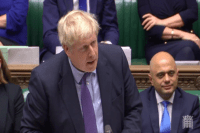
Having reached a deal with the EU, Boris Johnson’s task is now to find a majority in the House of Commons. This is complicated by the rejection of the deal by the DUP. There is also a serious question whether the Prime Minister can convince not only the MPs supporting his government but also the Conservative rebels and a sufficient number of the opposition. One of the issues is the Benn Act. Having the possibility to avoid a no-deal situation by another extension might tempt many MPs to vote against a deal that will contain a range of difficult provisions, as well as providing a tempting opportunity to defeat Johnson

The key changes in Boris Johnson’s Brexit deal

Boris Johnson has agreed a new Brexit deal with the EU. Here are the key differences between the old and new protocols for Ireland and Northern Ireland. Strikethrough = text removed; Red = new text – Green = moved to a different place ARTICLE 1 Objectives and relationship to subsequent agreement This Protocol is without prejudice to the provisions of the 1998 Agreement regarding the constitutional status of Northern Ireland and the principle of consent, which provides that any change in that status can only be made with the consent of a majority of its people. This Protocol respects the essential State functions and territorial integrity of the United Kingdom.

Jacob Rees-Mogg: ‘I am enormously environmentally friendly by driving old Bentleys’

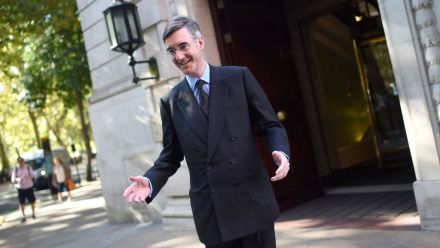
Jacob Rees-Mogg sits at a mahogany table in his office drinking black coffee from a Spode cup. Across from him sit three aides — laptops out and ears pricked. These days, the Moggster comes with an entourage, and their determination to be present sometimes surprises him. ‘I kept on saying to them on Sunday that they didn’t need to come to the thing in the evening but I think they’re worried about me saying the wrong thing!’ They’d have had good reason to worry. Since his election in 2010, Rees-Mogg has been one of the most quotably outspoken Tory MPs: now he is Leader of the House of Commons, his

It’s down to the wire – and Boris only has one chance to survive

Here is my ideal scenario. Having failed to push through his deal to leave the European Union in the House of Commons, Boris Johnson abides by the terms of the Benn Act and drafts a letter requesting an extension to the 31 October deadline. That extension would be eight minutes and 21 seconds, approximately the time it takes light to travel from the sun to earth — depending slightly, of course, on where we are in our orbit at the time. The Prime Minister could claim this would respect the letter of the Benn Act, if not, um, entirely the spirit. Having done this, Boris should then proceed to a

The shifting Tory dynamics behind the party’s Brexit deal dilemma

It is not currently looking hopeful that Boris Johnson’s Brexit deal will pass in the Commons. The Prime Minister will need to convince a good number of Labour MPs and independents in order to get over his lack of a majority and the DUP’s current refusal to support the government. There are also a number of internal Tory dynamics at play here. The European Research Group has not yet announced its official position on Boris Johnson’s Brexit deal, but already there is a strong chance it could diverge from the DUP. The Brexiteer group was split at the third vote on Theresa May’s deal, with dozens of its members voting

Watch: Jean-Claude Juncker loses his temper

It looks as though it is all getting a bit too much for Jean-Claude Juncker. The EU Commission president snapped at Channel 4 News’s Matt Frei for asking him a question. ‘I’m speaking,’ Juncker yelled when he was quizzed on ruling out another extension. Oh dear.

Five ways in which Boris Johnson’s Brexit deal is better than Theresa May’s

Boris Johnson managed to defy his critics today and reach a Brexit deal with the European Union. The new agreement updates the Northern Ireland protocol of Theresa May’s Withdrawal Agreement and the Political Declaration, which deals with the future relationship. But while the rest of the deal appears to be unchanged, Boris has succeeded in winning some key concessions from the EU. Here are five reasons why Boris’s deal is better than May’s: 1. The backstop is gone Firstly, the backstop that Theresa May negotiated with the EU has been replaced by a new Northern Ireland Protocol and the UK-wide Customs Union in the backstop has been removed completely. Northern

Watch: Nigel Farage’s withering verdict on Boris’s Brexit deal

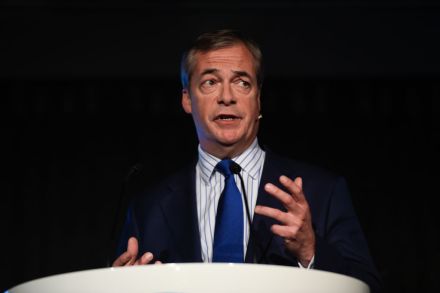
‘Well, it’s just not Brexit’. That’s Nigel Farage’s withering verdict on Boris Johnson’s revised deal with the EU. The Brexit party leader waited all of an hour before telling the BBC that the new agreement was not up to scratch: ‘It should be rejected. The best way out of this would simply (be) to have a clean break’. This doesn’t look good for Boris but Farage’s reaction is, of course, predictable. The real test now will be whether Brexit party voters stick with Farage or decide to give Boris Johnson the benefit of the doubt…

Six MPs who doubted Boris Johnson would do a Brexit deal

Boris Johnson has got a new Brexit deal. It’s true that the Prime Minister has some way to go if he is to get the agreement over the line, not least in trying to persuade the DUP to back it. But Mr S remembers a time not too long ago when plenty were claiming the PM wouldn’t – and didn’t even want to – get this far. Here are six MPs who claimed Boris Johnson was never serious about reaching a new agreement with the EU: Philip Hammond The former chancellor claimed last month that Boris Johnson was surrounded by ‘radicals’ who had no intention of doing a deal. On the

The EU might tell MPs: it’s this deal or no deal

Both the UK government and the EU are now saying that a Brexit deal has been done. There is both a revised withdrawal agreement and political declaration.  However, the DUP are not yet on board. This makes it very hard to see how this deal can pass the Commons. At Cabinet yesterday, Chief Whip Mark Spencer went through the numbers and his calculations suggested a majority of one. His assumption was that every Tory MP who still has the whip would back it, as would 15 of the 21 Tory rebels and the DUP. The government could also rely on the support of the nine Labour or independent MPs who

A Brexit deal will completely change the electoral landscape

Expect the unexpected has been the rule in British politics these last few years. But even so, few would have predicted the events of the past week. Last Tuesday evening the Brexit talks seemed dead. Even the most mild-mannered figures in Downing Street held out little hope of a deal this side of an election. That all began to shift, though, after Boris Johnson and Leo Varadkar met last Thursday. What changed was that they both realised that the other was serious about a deal. They stopped seeing each other’s proposals as a trap and began engaging with them. This doesn’t guarantee a deal, though. Boris Johnson and Leo Varadkar’s

Boris Johnson must still keep no deal firmly in his mind

The Irish backstop and the arrangements to replace it are now the focus of the eleventh-hour Brexit talks. Their importance is not because of Ireland, but because of the battle for the UK’s constitutional freedom to decide the laws that govern this country’s economy and trade. Will the UK’s economic system break free of EU law allowing both an independent trade policy and the UK’s laws to diverge from the EU’s? ‘That is the point of our exit,’ as Boris Johnson told Donald Tusk in August. Or will there be continued subjugation or an eventual UK return to the bloc? All depends on whether Boris Johnson’s government, unlike Theresa May’s,

Arlene Foster and Nigel Dodds hold the key to a Brexit deal

Arlene Foster and Nigel Dodds are currently the two most important politicians on the European continent. If the DUP is happy, there’ll be a Brexit deal between the UK and the EU. If it is not, it is hard to see how there can be—it is almost impossible to see how an agreement that they are opposed to can pass the Commons. At the moment, the DUP have not said they are happy. I understand that there was some movement from the Irish on consent this morning. But that softening hasn’t yet been enough to win around the DUP. They would like something that would enable them to say that

Watch: Mark Francois rebukes ‘stop Brexit’ protester

We’re still waiting to hear what Mark Francois – and the rest of the ERG – make of Boris Johnson’s Brexit deal. But while Westminster waits with bated breath, Francois has delivered a withering verdict on SW1’s noisiest inhabitant: the ‘stop Brexit’ protester. Francois was about to give his answer during an interview on the BBC only to be loudly interrupted with yells of ‘stop Brexit’ and ‘revoke Article 50’. The Tory MP’s response? ‘If we leave it will be delightful that this idiot will shut up’. Mr S isn’t so sure that will happen…

‘Remain or Leave?’ is no longer the key Brexit question

In an astonishing interview on the Today programme this morning, Liberal Democrat leader Jo Swinson tried to explain why she was tabling an amendment which would force a referendum on any deal the government presents to the House of Commons on the grounds that we should ‘let the people decide’. She then asserted that the country had changed its mind since the 2016 referendum and now wanted to remain. It had to be pointed out to her that her party has, in fact, just adopted a policy of reversing Article 50 without a referendum – so much for letting the people decide. The truth is that like so many Remain

What Extinction Rebellion and the People’s Vote campaign have in common

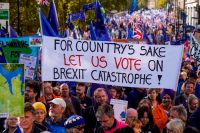
Extinction Rebellion (XR) has announced it will finish its ‘Autumn Uprising’ earlier than planned in order to make way for the People’s Vote march on Saturday. The two groups have been in informal discussions for some time aimed at avoiding getting in one another’s way, according to a report in the Times. Even if the Metropolitan Police’s draconian city-wide ban on XR may have made such a deal unnecessary, it reminds us how much the groups have in common. It’s not exactly a stretch to say these two predominantly bourgeois movements may have some crossover in support. Talking to the Times, People’s Vote comms chief Tom Baldwin said: ‘I don’t

The EU’s Brexit unicorns

The Brexit talks are at a critical stage as we approach this week’s European Council summit. The rumoured landing zone for a deal – essentially a version of the ‘Chequers’ proposals for customs, but applied to Northern Ireland only – is promising. But to get there, both sides will need to compromise – and that applies to the EU as much as it does to the UK. In the Brexit debate, both politicians and governments in the UK are routinely accused of putting forward ‘unrealistic’ or ‘non-negotiable’ proposals. The word ‘unicorn’ is thrown around and often, the criticism is fair. Simplistic demands from UK politicians to ‘simply take out the

Nicola Sturgeon’s Brexit bounce

There was a fairytale quality to Nicola Sturgeon’s speech to the SNP conference this afternoon. On the one hand, she demanded a second referendum on independence next year; on the other, almost no-one in Scottish politics really believes there will be a referendum next year. In tandem with this rallying call for national liberation – an emancipation made ever more urgent by the looming Brexit fiasco – there ran another line of argument: conference delegates, like the wider nationalist movement, must be careful and canny and patient. Which is another way of saying that, whatever the headlines suggest, it’s probably not happening. At least not yet. For the last few