Brexit

The small print of Boris’s Brexit deal makes for reassuring reading

From our UK edition

The new UK/EU Treaty is needlessly long and turgid in its prose: this document was not drafted by people who think the law should be understood by all. Close inspection of the small print reveals that none of the details undermine sovereignty. It has been restored and the UK has the power to control its own laws. To understand what’s happened, consider the last two big treaties. Under the Maastricht Treaty the EU’s ability to control UK law was extended on what came before but was confined to specific areas only. That was called 'spheres of competence'. The 2007 Lisbon Treaty vastly expanded the EU’s power and the idea of restricting EU writ to areas of its competence fell away.

Is the SNP’s Brexit strategy paying off?

From our UK edition

Ursula von der Leyen quoted TS Eliot’s poem ‘Little Gidding’ in her press conference today: ‘What we call the beginning is often the end. And to make an end, is to make a beginning.’ The free trade deal between the UK and the EU marks beginnings (new arrangements on commerce, fishing and security cooperation) and ends (the single market, free movement, Erasmus), but what we can’t yet be sure of is which category Scottish independence falls into. We might glean the answer from the 2,000-page agreement when the text is published but it is more likely that the question will remain open for some time.

Will Boris’s Brexit deal sail through the Commons?

From our UK edition

After Boris Johnson waxed lyrical about his Brexit deal in today's Downing Street press conference, it's now over to MPs to give their verdict. During the press conference announcing the terms of the deal agreed between the UK and EU, the Prime Minister confirmed that the government plans to put the deal to a vote on 30 December. MPs have already voiced concerns about the lack of time for proper scrutiny – and the text of the full deal (500 pages plus another 1,000 in annexes) is still to be published. But, despite this, the initial signs are promising for the government. Prior to finalising the deal this afternoon, the Prime Minister had conversations over the phone with several Brexiteer MPs to brief them on the outline of the deal.

France couldn’t care less about Boris’s Brexit deal

From our UK edition

The reaction of the French commentariat to the Brexit partnership agreement will be largely one of extreme irritation that the traditional Christmas Eve dinner was so crudely interrupted. Any initial response to the deal has been rather abbreviated. Nobody has read the fine print. The usual pundits are out of town. Brexit has never been a subject central to French political discourse and since Covid it has shrunk further as a preoccupation of the country. The news channels with their skeleton holiday crews have been unable to mount a full-blown orgy of live remotes from Europe’s capitals and have resorted to more marginal regional figures, focusing on the fishing ports. Conspicuously absent in these remotes is much passion. It doesn’t look like a cod war is imminent.

Boris’s Brexit gamble faces its next challenge

From our UK edition

This country will end the Brexit transition period with a zero tariff, zero quota deal with the EU. Four and a half years after the Brexit vote, the issue that has so convulsed British politics is settled. We are still awaiting the text of the deal. But from what both sides have said it is clear that this is a pretty full fat Brexit: Britain leaves the single market and the customs union and there’ll be no dynamic alignment with EU rules in the future. On the three key tests of money, borders and laws – it looks like the deal passes The two sides will be able to put tariffs on each other if they feel that they have raised their standards and the others refusal to follow suit puts them at a trading disadvantage.

The EU knew what it stood to lose and backed down

From our UK edition

From the very beginning, the whole question of British and European integration has turned fundamentally on the question of sovereignty, as Ursula von der Leyen accepted this afternoon. Those who favoured membership then and now dismiss sovereignty as a meaningless or outdated notion in a world of interconnection. The events of the last four years, and perhaps even more the last few days, should have made them think again. The question of fishing had the merit of making sovereignty concrete and understandable, which is why it became suddenly so crucial. You may decide to give or lend certain rights or powers to others, but who makes that decision? Who has the power to make the decision stick? In a nutshell, that is sovereignty, as fundamental today as ever.

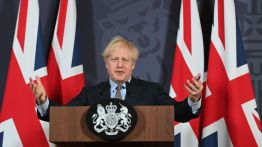
Full text: Boris Johnson’s Brexit deal speech

From our UK edition

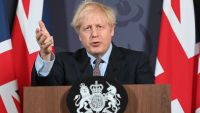
It is four and a half years since the British people voted to take back control of their money, their borders, their laws, and their waters and to leave the European Union. And earlier this year we fulfilled that promise and we left on Jan 31 with that oven-ready deal. Since that time we have been getting on with our agenda: enacting the points based immigration system that you voted for and that will come into force on Jan 1 – and doing free trade deals with 58 countries around the world and preparing the new relationship with the EU. And there have been plenty of people who have told us that the challenges of the Covid pandemic have made this work impossible and that we should extend the transition period and incur yet more delay.

Britain has won the biggest Brexit prize of all

From our UK edition

In the end, the fish were only of symbolic importance. Neither does it matter that much what happens to Scottish seed potatoes, no matter how much of a fuss Nicola Sturgeon kicks up. Farming, tariffs and quotas are of relatively little importance given that the exchange rate will simply adjust to compensate for any changes that are made. As the UK and the EU finally agree a trade deal, there was one victory that really mattered: regulatory divergence. And on that the UK appears to have secured a victory.

At last: we have a Brexit deal

From our UK edition

Boris Johnson and Ursula von der Leyen have both confirmed that we have a deal: one with zero tariffs, zero quotas. The details are not yet published, but several details are now being reported. What follows is a summary of those reports and rumours: we should soon have 2,000 pages of chapter and verse. The upshot: it’s Brexit. No single market, no free movement, no role for the European Court of Justice, no quotas, no tariffs. At least in goods: there won’t be much in the deal for the services sector (plus ça change) but more on co-operation over terrorism, security and preserving the cross-border energy market. From the looks of it, the UK has moved on fish in return for fewer EU ‘level playing field’ regulations.

Is there a Brexit deal?

From our UK edition

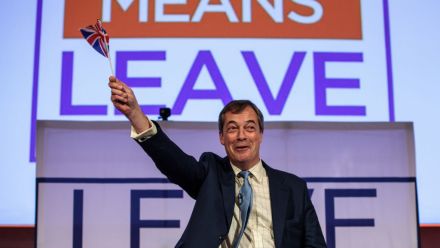
Tonight we are still waiting for confirmation that a Brexit deal has been done. But the noises coming out of both London and Brussels are optimistic — something would have to go wrong for there not to be a deal. However, it currently looks like there will be one more late night in Brussels before Brexit is done. The pace at which things have moved today has been surprising; I was not expecting a deal today last night. But there is now a broad expectation that an agreement will emerge tonight or tomorrow morning. The European Research Group of Tory MPs have announced that they are convening their panel of legal experts to pass judgement on the text and Nigel Farage has already accused the government of a ‘fisheries sell out’.

What will Farage’s sidekick do next? An interview with Richard Tice

From our UK edition

Richard Tice is tall and lean, has a hint of Imran Khan around the eyes, and the ladies on reception in the office building where we meet seem to like him. Were Jilly Cooper to write a political novel then he would be its hero rather than anti-hero. Tice was, after all, the clean-cut one in the ‘Bad Boys of Brexit’, a band whose line up was completed by Arron Banks, Andy Wigmore and Nigel Farage. Tice is the chairman of the Farage-led Brexit party, a title he is finding irksome this afternoon as he would much rather by now be chairman of Reform UK, the new identity he and Farage have applied to the Electoral Commission (El Com) for. They applied more than six weeks ago and have heard nothing back, even though El Com told them they could expect a decision by now.

Macron’s no-deal delusion

From our UK edition

The Brexit waiting continues. The negotiators are still talking but, according to one of those close to the negotiations on the UK side, things are ‘still pretty stuck.’ There is, as RTE's Tony Connelly reports, a deadline of Christmas Eve on the EU side. But it would now be a surprise if a deal came today. If these talks end in no-deal, then Johnson could not — politically — go back and accept the same or worse terms The UK offer on fish has not unblocked things as much as hoped. Michel Barnier has described it as ‘totally unacceptable’, which even accounting for diplomatic posturing is not encouraging. There is a sense that the EU side has not responded to the UK offer, which was considerable, in quite the way they might have.

Why Boris Johnson can’t solve the UK’s crisis

From our UK edition

The Brexit and Covid crises have merged into one. As of today, 21 December, France has blocked trucks from crossing the Channel as fears about a new strain of Covid — ‘the Kent virus’ to coin a phrase — sweep the continent. Perishable food was rotting, approach roads were jammed… it was as if we were living under a wartime blockade. By the time you read this, the French may have shifted from an outright ban to stringent health checks on exports and imports, but the pressure will still be on. In less than a fortnight, on 1 January, we will have the real Brexit. It will be either without a deal or with a thin deal.

No-deal Brexit planning has been a lifesaver

From our UK edition

The port of Dover has been closed down. The Eurotunnel isn’t carrying any freight for a couple of days. The lorries are already starting to back up in Kent, the supermarkets are working out where they can get fresh supplies from, and flights have been suspended, with the British likely to find they are turned away from most of our neighbouring countries. If you had blanked out all the other news you might think that after some terminal row about herring, Brexit had actually been brought forward by ten days, creating the kind of chaos that even the most swivel-eyed Remainer could scarcely have imagined possible. And yet, of course, it is the new strain of Covid-19 that means restrictions are being put in place. But, hey, one thing seems to have come good.

Boris now faces a terrible choice over Brexit

From our UK edition

Ten thousand lorries usually travel through the port of Dover in the run-up to Christmas. Now, Dover is completely shut. Over the weekend, this crucial supply chain into Britain has stopped. In the coming days, as Brits stock up ahead of Christmas, there is likely to be some pressure on UK supply chains. And as James Forsyth writes on Coffee House, the coming weeks will inevitably mean a crisis for Britain. As such, it begs the question: can Boris really go for a no-deal Brexit now? Can he go through with it at a time when political crises are piling one on top of each other?  Despite the potential risk, I'm still convinced he will. Why? Because the EU knows that Britain is under particularly acute pressure right now. It is fighting difficult battles on a number of fronts.

Covid and Brexit are about to collide

From our UK edition

We are back in a full-scale economic crisis. In London and the south east, the richest part of the UK and engine of the economy, normal commerce has been suspended by the imposition of Tier 4. And the decision of much of the EU and a growing number of rich countries to put the whole UK into quarantine is devastating for trade. What are the immediate priorities? Probably the most important one is basic: the creation of a facility to give rapid Covid-19 tests to all lorry drivers leaving the UK so that the transport of freight can be restarted as quickly as possible. Second, to end the cancerous uncertainty for businesses about how they will be buying from and selling to EU countries in just ten days time, after the transition to full Brexit ends.

Britain faces a crisis over the coming weeks

From our UK edition

This country faces a crisis over the next few weeks. Covid cases are rising rapidly in the UK — there were more than 35,000 new cases yesterday, the largest number recorded during the pandemic and almost double the number a week ago. It seems likely that this rapid rise is, in part, a result of the new variation of the virus which does seem to be more transmissible. It is hard not to think that more of the country will be put into Tier 4 restrictions at the next review. It’ll be surprising if England gets through January without another lockdown. Concern over this new variant of the virus has led to a growing number of countries banning arrivals from the UK. France has done that, including for lorries.

The case Brexiteers should make for Brexit

From our UK edition

Why are Brexiteers rubbish at making the economic case for Brexit? On a whole range of things from three pin plugs to driving on the left, the UK is so often the odd man out in Europe. So why shouldn’t Britain be better off making its own laws and regulations, instead of making do, as we have done for the last 50 years, with trying to fit our sprawling messy economic life into a one-size-fits-all framework cooked up in Brussels kitchens over too much midnight oil? We have heard a lot of talk recently about the Single Market being a British invention, a way of exporting the Thatcher revolution to our nearest neighbours. That much is true.