Brexit

Germany holds the key to a Brexit deal

From our UK edition

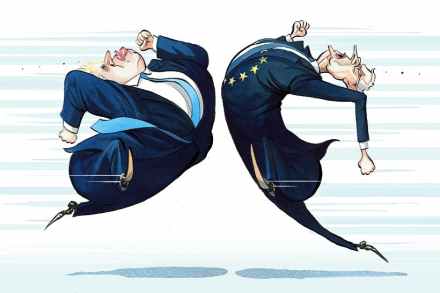
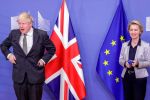
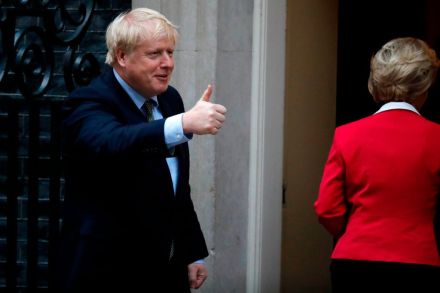
Boris Johnson failed to break the Brexit negotiations deadlock over dinner with European Commission president Ursula von der Leyen last night. But while the continuation of talks suggest that neither side favours no deal, something needs to give if a deal is to be reached. It's here that Germany holds the key. France appears to be the major obstacle to a deal, particularly over fisheries, but also over the level-playing field. France and the UK have similar-sized and structured economies; both are major military powers and maritime nations. Paris is more likely than Frankfurt to threaten London’s crown.  But Germany – the ever-pragmatic manufacturing titan of the EU – will be the final arbiter of any decision.

Does the EU understand what sovereignty really means?

From our UK edition

The UK never tried to have our constitution written in one big session. We made it up by responding to each crisis when it happened. Brexit is just the latest. The remaining sticking points on a deal are fish and something called the level playing field. Fish is very interesting, I assume, but it is politics, not law. So, as a lawyer who chooses not to speak on politics (some do), fish is none of my business. But the Level Playing Field (LPF) – which is a legal problem – is. It is the elephant in the room. And yet the EU's response to this issue is deeply unhelpful. Rightly or wrongly, the public voted for Brexit. Brexit is about sovereignty and sovereignty is a legal question.

Portrait of the week: Vaccine shots, Brexit stutters and a frosty reception for the royals

From our UK edition

Home The Pfizer/BioNTech coronavirus vaccine began, rather slowly, to be given to some old people in hospital and health workers. Margaret Keenan, 90, was the first outside clinical trials to receive it. At the beginning of the week, Sunday 6 December, total deaths (within 28 days of testing positive for the coronavirus) had stood at 61,014, including 2,771 in the past week; the number for the week before was 3,617. Rita Ora, the singer, a week after apologising for entertaining 30 people at a birthday party on the ‘spur of the moment’, remembered to apologise for not having gone into quarantine at the time, after returning from Egypt. England’s cricket tour of South Africa was abandoned after a South Africa player and two hotel staff tested positive for coronavirus.

The deal-or-no-deal debate is different this time

From our UK edition

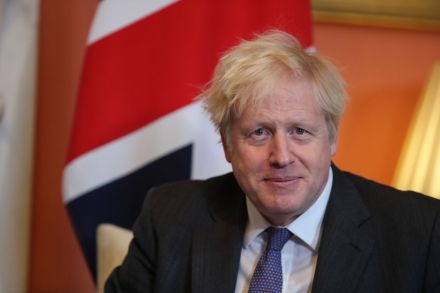
When a deadline is missed for Brexit negotiations, it is tempting to think there will be another chance to keep talks going. Last week, the UK and the EU agreed that things needed to be wrapped up by Sunday night or Monday afternoon at the latest. The thinking was that if a deal was not done by then, the return of the Internal Market Bill to the Commons would scupper negotiations. But Monday afternoon passed with no agreement. The two sides now admit that the only real deadline is the end of the transition period on 31 December. The talks are currently in a state of suspended animation. After nine months, the sticking points are the same three issues: the so-called level playing field, fish and governance. Boris Johnson and Ursula von der Leyen each think the other wants a deal.

PMQs: Starmer lacked a forensic touch

From our UK edition

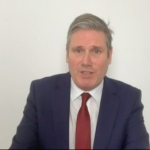
It really is crunch time. The international game of Texas Hold’em is reaching its climax. The lesser players have folded. Only two high-rollers remain at the table. Beads of sweat are appearing on their brows. Each is feeling for a lucky charm discreetly held in a side-pocket, and each is scouring the other's eyes for signs of fear or uncertainty. The turn of a card will determine the outcome. This is the position as Boris prepares for tonight’s summit feast with Ursula von der Leyen. At PMQs, he was confronted by Sir Keir Starmer who appeared via video-link from his Camden home. Labour’s spin-team missed a golden opportunity here.

We should not accept Brexit in name only

From our UK edition

Given the seemingly highly technical nature of the current negotiations, members of the public who have normal lives to lead might be forgiven for thinking that the same issues are still being debated after more than four years. They might be forgiven for thinking this as much of the media, including the BBC, are happy simply to parrot the official line coming from Brussels: that this is just about compromise, both sides making necessary adjustments, and the EU simply acting in a normal and rational way. Rational it may be. Normal it is not. The EU is being rational in ruthlessly pursuing its own interests. But it is entirely abnormal to try to impose on the UK restraints that are incompatible with political autonomy.

Starmer’s willingness to vote for a Brexit deal is wise

From our UK edition

Keir Starmer normally avoids the subject of Brexit. But with Boris Johnson flying to Brussels tonight for dinner with Commission president Ursula von der Leyen, he could not avoid it at PMQs. But Boris Johnson, who was in the chamber in contrast to Starmer who is self-isolating, attempted to turn the tables. Johnson asked whether Starmer would vote for a deal. This was a bit premature given that there is no certainty that there will be a deal. But Starmer’s answer was interesting. He said Labour’s vote would be based on the national interest, not the party interest.

Can Johnson’s dinner date break the Brexit deadlock?

From our UK edition

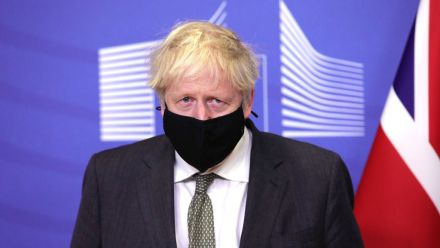
The mood music on Brexit talks may be rather gloomy but there are signs suggesting progress is still being made. As well as an agreement in principle on all the outstanding issues in the Northern Ireland protocol, a date has been set for Boris Johnson's meeting with Ursula von der Leyen. The Prime Minister will travel to Brussels on Wednesday for dinner with the European Commission president. Is this a crunch meeting? The strong suggestion from the UK side is no. Instead, it's being billed as a 'continuing process' of talks, and the idea of it leading to a firm decision on the shape of a deal – or a decision to go for no deal – is being played down. No.

Could Brexit talks drag on past Christmas?

From our UK edition

Brexit deadline after deadline has slid to the right. There is, however, one deadline that is set in law: that the transition period finishes at the end of this year. Comments from the UK government and the European Commission today suggest that this now is, really, the only deadline. The European Commission has said that ‘hopefully’ the talks will continue after the Boris Johnson-Ursula von der Leyen meeting in Brussels this week. This is to be expected given that the gaps are too big to be bridged in one meeting. The Commission’s spokesman also suggested that the talks could carry on even in the event of a no deal on 1 January – which rather underestimates how acrimonious things would become in these circumstances.

Blame Theresa May, not Remainers, for our Brexit crisis

From our UK edition

Are Remainers to blame for the looming hard Brexit? The theory goes that had Remainers compromised and accepted soft Brexit, none of what is about to unfold would ever happen. It’s true that the behaviour of some Remain campaigners in the aftermath of the referendum has hardly been exemplary. The whole Russian conspiracy thing was deeply alienating to anyone who might have listened to their case otherwise. These campaigners helped turned Brexit into a skirmish in the culture was, unconsciously saying that Brexiteers weren’t just wrong but a malign force in British politics. Some remain campaigners also sucked up to Corbyn in a fruitless and embarrassing manner. Yet hard Brexit isn’t their fault for a very simple reason: it is the fault of one person alone.

Deal or no-deal? The choice is Boris Johnson’s

From our UK edition

If you voted for Brexit, did you think it was a state of pure and perfect national independence, or did you think that given how connected the UK is to the EU – economically, diplomatically, in respect of security – it might be a bit of a fudge and compromise? Is Brexit an absolute state of putative grace – or a place on a spectrum, somewhere between Switzerland and Norway, which are semi-independent, and North Korea, which is wholly independent?

Can Boris’s dash to Brussels secure a Brexit deal?

From our UK edition

The upshot of Boris Johnson and Ursula von der Leyen’s conversation this evening is that the pair will meet in Brussels in the ‘coming days’ to see if they can resolve the remaining ‘significant differences’ on the level playing field, governance and fish. Presumably this meeting will take place before the European Council on Thursday. Johnson and von der Leyen are being left with a lot to resolve in their summit. This isn’t going to be simply about finding a compromise on fish but on sorting the three issues that have bedevilled the negotiations from the start.

If Boris agrees a Brexit deal, Labour should vote it down

From our UK edition

It now seems more likely than ever that the UK will leave with no deal at the end of the year. But let’s imagine for a moment that I’m wrong and the UK and the EU manage to overcome their substantial differences. It would then have to be voted on in Parliament – and Labour should vote it down. Why? Because the deal put before the Commons would not be between Brexit and Remain. That ship has long since sailed. It would instead be between the thin deal Boris Johnson will have agreed with the EU and the choice of leaving with no deal whatsoever. Whichever way Parliament votes, we leave the transitional arrangements on 1 January in full.

Inside the no-deal reasonable worst case scenario

From our UK edition

I've been passed the government's 'reasonable worst case scenario planning assumptions to support civil contingencies planning for the end of the transition period'. The 34-page document describes itself as a 'challenging manifestation of the risk in question' but 'not an extreme or absolute worst case scenario'. A government source confirmed the official sensitive document, which was written in September, still underpins contingency planning. It is 'not a forecast' but a 'reasonable' assessment of what could happen to us if, in the next day or so, talks collapse on a free trade agreement with the European Union and the negotiations can't be rescued.

The House of Lords must stop blocking Boris’s Brexit bill

From our UK edition

Boris Johnson's internal market bill is back in the House of Lords next week, but will peers let it through?  The bill gives the government an express power (a written one in a statute) to break an international treaty. The Lords do not like that the government might break a specific treaty. Where you stand on those are political, not legal questions — so not for a lawyer like me to answer. But what is for law, is to firstly recognise (whether peers like it or not) that the power to break a treaty, does exist. Think of it like a physical thing; it is in our constitution and we’ve lost track of exactly where it is. We let the EU use it for us. But we know it is there. It is in the EU’s constitution, via a court case.

Only France would try to blow up the Brexit talks

From our UK edition

That France was the country to throw a grenade threatening to blow up the UK-EU trade talks just as they were about to pass the finish line, does not come as a surprise to seasoned euro-watchers. No other EU member would so brazenly promote its own domestic self-interest at the cost to other EU members such as Germany and Ireland. To the British it has echoes of de Gaulle saying ‘non’, when vetoing the UK’s first attempts to join the Common Market. Many of the EU’s problems and (in my view) the ultimate reason Brexit happened, is down to a fundamental cause that is little remarked on in the UK.

Ursula von der Leyen’s tricky Brexit negotiation

From our UK edition

It was always going to be the case that a Brexit deal would require an intervention from Boris Johnson and the Commission President Ursula von der Leyen. But today’s conversation between the pair is going to have to do more work than either side would have liked. Rather than nudging a deal over the line, this phone call is going to have to give the talks a proper shove. Von der Leyen has the more difficult task today. Johnson is speaking on his own behalf, von der Leyen is speaking for 27 governments, including one – France – that is publicly threatening to veto any deal it doesn’t like. But if she sticks rigidly to the current EU position, the talks will fail and there’ll be no deal; an outcome that von der Leyen does not want.

Richard Tice, not Nigel Farage, should terrify the Tories

From our UK edition

The terms of the Covid debate have changed markedly since Nigel Farage decided to re-enter the political arena after Boris Johnson's second English lockdown. Even with multiple vaccines coming on stream, we can still not rule out a third lockdown — but we can be pretty darned sure there won’t be a fourth. It’s not the end of the beginning, but the beginning of the end. So Farage and his chief lieutenant Richard Tice can no longer depend on anti-lockdown fervour alone to give them a flying start, despite the rebellious mood of Tory MPs. Could they, therefore, decide that discretion is the better part of valour and call the whole thing off, especially if there is no Brexit deal and Britain ends up going for WTO rules as they have called for?

Both sides are to blame for killing soft Brexit

From our UK edition

Peter Mandelson's remainer credentials are impeccable. He is a former European Commissioner who helped run Britain Stronger In and then the People’s Vote (PV) campaign. He is as committed and eloquent a champion of EU membership as you’ll find. Which makes his Brexit intervention in the Guardian so important: All the new benefits from every global trade deal we could ever aspire to will not begin to equal the size of our present European trade. This is the price we will pay for the triumph of hardline Tory Brexiters over those with a stronger sense of national interest in their party.

It’s time for Boris to walk away from Brexit talks

From our UK edition

Lorries will be backed up across Kent. The shops will run short of essential goods. Travel plans will be disrupted, and factories will start to close as British goods are shut out of their main export markets. As the UK comes to the end of its transitional deal with the EU, and as talks on a trade agreement appear to have reached an impasse, there will be plenty of high-stakes brinkmanship, and pressure on the government to give some ground on fishing and regulation to avoid the potential chaos of no deal. And yet in truth, if Boris Johnson caves into the EU’s demands at the last moment, the voters will punish him — and they will be right to do so. Right now, it is anyone’s guess whether a trade deal can be done at the last moment between the EU and the UK.