Brexit

Britain is wise to prepare for a new Cod war

From our UK edition

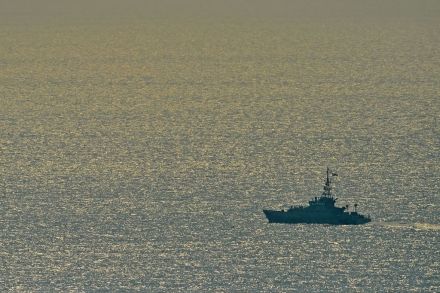
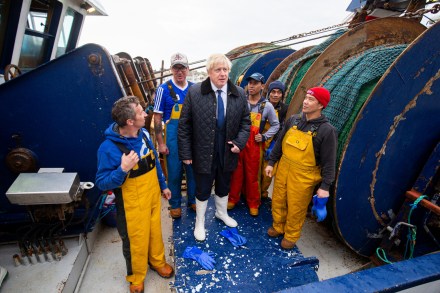
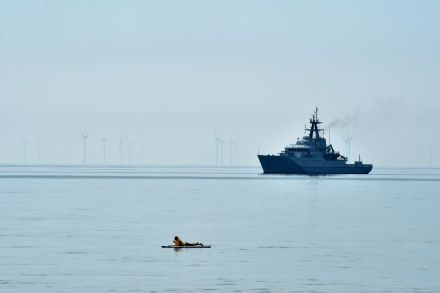
Is it 'irresponsible' for the Royal Navy to plan to protect the fisheries of the UK’s Exclusive Economic Zone (EEZ) when the Brexit transition period ends? The chairman of the House of Commons Defence Select Committee thinks so. The BBC made much of it. But Tobias Ellwood is wrong: it would be irresponsible not to talk now of a deterrent credible in the eyes of prospective trespassers. And who might they be? Given the importance which France attaches to our punishment on leaving the EU for reasons which have nothing to do with fish, but with much bigger psycho-dramatic issues that Robert Tombs and ‘Caroline Bell’ have recently explained, French eyes and minds should be the primary target.

Fishing could sink the Brexit negotiations

From our UK edition

Throughout the Brexit talks it has been declared that the deal wouldn’t fall over fish. But that is now looking increasingly likely. The two sides remain far apart on the subject and time is running short. Fishing is not the only issue, there are still some disagreements over the Commission’s desire to exempt itself and the European Investment Bank from the subsidy control provisions of the agreement when the UK would have no such carve out. But fish is the most problematic area.

No deal might be the best outcome for remainers

From our UK edition

Plenty of Labour figures who voted Remain are now urging the government to complete a trade agreement with the European Union before the end of the transition period. ‘There isn’t a choice between a fantasy deal and no deal,’ says Liam Byrne. ‘It’s this deal versus no deal, and we will not have a manufacturing industry left unless there is a deal.’ Although there is still a battle within the shadow cabinet on what to do should a UK-EU trade agreement come to parliament, the consensus seems to be that Keir Starmer would whip the party to vote for Johnson’s deal. This marks a big shift in Labour's Brexit strategy for two reasons – and might well come back to those Labour remainers cheering on Boris to do a deal.

Fishing is now the sole major obstacle to a Brexit deal

From our UK edition

Ursula von der Leyen and Boris Johnson spoke this evening to try and give the negotiations a shove. The statement that the Commission president has released after their call makes clear that fishing is now the biggest obstacle to a deal. She says ‘big differences remain to be bridged, particularly on fisheries. Bridging them will be very challenging’. The Number 10 statement is more downbeat. In a clear attempt to pile on pressure, it declares that ‘Time was very short and it now looked very likely that agreement would not be reached unless the EU position changed substantially.

BMW is discovering the cost of a no-deal Brexit

From our UK edition

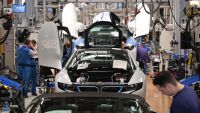
Factories will close. Prices will rise. Profits will suffer. Another day, another warning of disaster from one of the major car manufacturers about the catastrophic cost of a no-deal Brexit. But hold on. Before anyone’s eyes start to glaze over, there is a twist to this one. It is a German company that is starting to worry about the hit to its bottom line. And, in truth, it is hardly likely to be the last. Yesterday, BMW, which used to be the most formidable manufacturer of upmarket automobiles until Tesla came along, went public for the first time about the financial impact of Britain leaving the EU without a deal.

Wallace Arnold: Pity the hard-pressed Snuff Community

From our UK edition

Could it really be 40 years since one was elected a Fellow of the Royal Society of Literature? Borne up the stairs on the shoulders of John Julius Norwich and Sir Roy Strong, I was inducted by Lady Antonia Fraser and the late Paddy Leigh Fermor, resplendent in their ceremonial robes. Meanwhile, I myself was clad in the society’s prestigious tweed ‘posing pouch’, passed down from generation to generation, unscrubbed. The Society has long been a sanctuary of civilisation, allowing a wide range of authors, from James Lees-Milne to Debo Devonshire, to mix and mingle in a spirit of inky camaraderie. So imagine my horror upon hearing that the RSL plans to change its 200-year-old rule and let the ‘general public’ pick its Fellows!

Why Britain chose Brexit

From our UK edition

None of us will easily forget the emotional response to the Leave vote in 2016, the national and international lamentation and the angry reproaches and insults, heaped on the majority: they were ignorant losers, white, old, xenophobic and stupid, ‘gammon’ who would be better dead or disfranchised. But leave aside the arrogance and snobbery; more fundamental was the basic ignorance of Europe shown by these zealous Europhiles. They mistook Brexit for a British, or English, aberration. In fact, it was the manifestation of a pan-European disillusionment with the ‘European project’. Popular support for that project peaked 40 years ago, and has been in decline ever since. The French only just voted for the Maastricht Treaty even in 1992, the heyday of integration.

Watch: SNP MP suspended from the Commons

From our UK edition

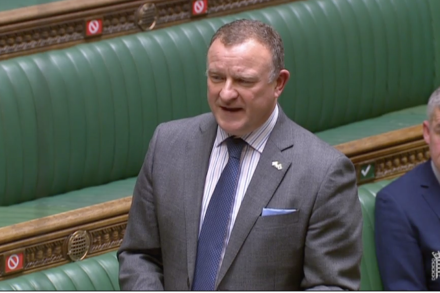
SNP tempers were running high this afternoon, as the Commons debated amendments to the Internal Market Bill, which deals with the UK’s goods and services after Brexit. The Scottish nationalists have described the Bill as a ‘full-frontal assault on devolution’ because it hands some EU powers back to London. That might explain the poor behaviour of one SNP MP this afternoon. Ahead of the amendments being voted on, the Nationalist politician Drew Hendry decided to make an impromptu intervention. Despite having finished a five-minute speech on the Bill moments before, Hendry clearly decided that his voice hadn’t yet been heard enough and used the opportunity to launch yet another diatribe at the government.

Is a Brexit deal imminent?

From our UK edition

Prime Minister's Questions may have proved a rather dreary affair this week but there was one reply that has become a source of intrigue in Westminster: Boris Johnson on Brexit. When the SNP's Westminster leader Ian Blackford asked the Prime Minister whether he would commit to releasing 'a detailed economic impact assessment of the cost to the UK of his extreme Tory Brexit plans', Johnson sounded more upbeat on the prospects of a deal.Where Johnson has previously taken any opportunity going to stress that no deal is the most likely outcome, he did not today.

Boris Johnson has allowed himself to be snookered by the EU

From our UK edition

The UK-EU trade negotiations have heated up again, albeit from a very cold state. Boris seems to have conceded ground on the 'evolution clause' to the European Union, making a path to an agreement on the level playing field issues at least plausible. The UK has accepted that divergence should come at some cost — although the details of how that cost should be managed appear to still be a live issue. With that comes the last hurdle: fishing. Boris Johnson has allowed himself to be snookered by the EU. More than anything else I could point to, leaving fishing to the very end demonstrates the folly of Johnson’s overall negotiating strategy.

Was the EU ever going to offer Britain a good deal?

From our UK edition

The announcement that Brexit negotiations are set to continue will no doubt alarm Brexiteers who fear compromise, sell-out and fudge. In fairness to Brussels however, they set out their stall early on and stuck to the script. The EU is unwilling – as they see it – to let Britain have its cake and eat it, by having large access to the EU’s market while not being a member or leaving the club and not ‘paying a price’. This might explain what could otherwise be seen as an unduly recalcitrant attitude. It also explains why any deal which the EU agrees to is likely to be on its terms. The level playing field has proved a major source of disagreement.

Emmanuel Macron’s great Brexit gamble

From our UK edition

There is an intriguing pattern in our relationship with European integration. A Frenchman vetoed our attempt to join. A Frenchman threatens to veto our attempt to leave – or at least to leave with an agreement. General de Gaulle said we were too remote from Europe to join. Emmanuel Macron says we are too close to Europe to leave. I think de Gaulle got it right. I hope Macron doesn’t turn out to be right too, so that we end up stuck half in and half out, neither ‘at the heart of Europe’ nor ‘global Britain’. How individuals and nations react to the project of European federalism is determined not just by their calculation of what’s in it for them (though this is clearly paramount for some) but also by their notions of history.

More Brexit talks are the worst possible outcome for the economy

From our UK edition

Currency speculators at some of the hedge funds in Mayfair may be feeling quietly pleased. Trade experts will be relieved that their lucrative consultancy gigs will keep on coming. Heck, even financial columnists can safely pontificate about the possible outcome for a while yet, while the FBPE mob on Twitter can carry on predicting the apocalypse every time Nissan adjusts its production schedules. There are a few people for whom today’s agreement between Boris Johnson and European Commission President Ursula von der Leyen to carry on discussing a trade deal will come as a relief. For the wider economy, however, it is little short of a disaster. It is hard to know exactly what there is still to discuss between Britain and the EU.

No deal won’t ‘get Brexit done’

From our UK edition

Brexit talks between the two sides are deadlocked. Boris Johnson's latest bid to 'divide and conquer' – pledging to visit Paris and Berlin to try and talk Macron and Merkel round – looks set to fail. The EU, it seems, has stayed united on Brexit, all the way to the end. We shouldn't be surprised.  Like it or not, this is what the country voted for in 2016. Unless something huge happened subsequently to prevent it, this is always the situation where we were likely to end up. Why? Because the EU was never going to back down on anything they perceived as a genuine threat to the single market. Brussels was also more relaxed about no deal once the Northern Ireland protocol had been agreed.

Enforcing new fisheries policy isn’t ‘gunboat diplomacy’

From our UK edition

No, the Channel isn’t going to erupt into naval warfare, and neither is the Prime Minister engaging in ‘gunboat diplomacy’ by deploying Royal Naval vessels to keep French fishing boats out of UK waters in the event of Brexit transitional arrangements ending on 31 December with no trade deal. Yet that seems to be the view of Tobias Ellwood the Conservative chairman of the Defence Select Committee, who protested to the Today programme this morning: ‘This isn't Elizabethan times anymore, this is global Britain - we need to be raising the bar much higher than this.’ Actually – although it may be news to Mr Ellwood, even in his role holding the government to account over defence matters – it is not really a new deployment at all.

How to solve Brexit’s ratchet clause problem

From our UK edition

At the moment, the biggest single obstacle in the Brexit talks is the so-called ‘ratchet clause’. This is what Boris Johnson is complaining about with his slightly torturous analogy that the EU wants to treat Britain like a twin with the right to punish the UK if it doesn’t get the same haircut or buy the same handbag. As I say in the Times this morning, the problem with this proposed ratchet clause is that the EU wants the right to unilaterally impose tariffs in the circumstances where it has tightened its regulations and the UK has not followed suit. There would be no obligation to show that the UK’s different standards were distorting trade. The EU would simply be able to act. But the UK would not be able to hit back.

If Boris doesn’t blink over Brexit, Starmer becomes unelectable

From our UK edition

If it's No Deal, then it will usher in a crisis that will highlight the leader’s negative baggage and remind everyone why he should never be trusted, probably dooming him to ignominious defeat at the next election. If that is your view of the post-transition political landscape then I heartily agree. But, like most of the punditry, I bet you’ve got the wrong leader in mind. Because the man who will actually be holed below the waterline is Keir Starmer, not Boris Johnson. Let me explain by going through what No Deal will mean for each leader. Certainly a No Deal end to the Brexit transition is likely to be accompanied by bumpy times during the ensuing adjustment, including queues at ports and even shortages of particular products.

Why Boris Johnson can’t sign the current Brexit deal

From our UK edition

The negotiations are still underway in Brussels. But both the UK and the EU are now talking far more openly about no deal. The EU published its contingencies plans earlier and Boris Johnson has just met with the Cabinet and released a clip saying he has told them to ‘get on and make those preparations’ for leaving without a trade deal. Johnson’s argument is that he can’t sign the deal that is currently on the table because of the EU’s demands on the level playing field and fish. He complained that ‘whatever new laws they brought in we would have to follow or else face punishment, sanctions, tariffs or whatever.’ This is the problem of the so-called ratchet clause.

Two reasons why a Brexit breakthrough might be difficult

From our UK edition

The failure to achieve a breakthrough at the Boris Johnson/ Ursula von der Leyen dinner last night has left no deal looking more likely. But those who think there’ll be a deal in the end often point to the fact that things looked even bleaker last autumn, yet a deal was done in the end. There are, though (as I say in the magazine this week) two reasons why now is not like last October. The first is that back then only Ireland was directly affected by the issues under discussion. This meant that if the Irish were happy, the rest of the EU would be too. Now, most of the EU’s 27 member states have interests at stake. Von der Leyen is acutely aware that she is speaking on behalf of 27 countries given France’s public threat to veto any deal it doesn’t like.