Brexit

Stuart Rose on his blunder-ridden Remain campaign: ‘businessmen should stick to business’

From our UK edition

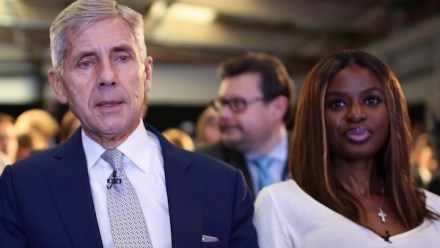
During the EU referendum campaign, Stuart Rose built a reputation for saying the wrong thing at the wrong time. In fact, his blunders became so regular that the chair of Britain Stronger in Europe had all but disappeared from public as polling day neared -- with Mr S even issuing several appeals into the retail supremo's whereabouts. Now with Britain on its way out of the EU, Rose has surfaced and given an interview to City AM about the difficulties he encountered. He says that while he doesn't regret getting involved, his 'first, second and third instinct was to turn it down' and that he thinks -- if being honest -- 'businessmen should stick to business and politicians to politics'.

Can we trust the people? I’m no longer sure

From our UK edition

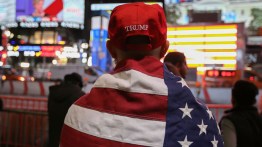
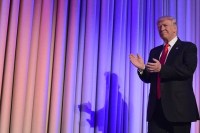
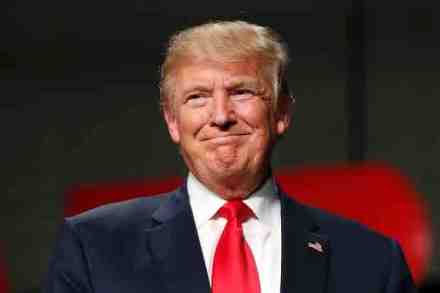
The election of Donald Trump as president of the United States may have signalled the death of the closest thing we have to a religion in politics. On both sides of the Atlantic, democracy risks being knocked from the high altar as an unmitigated and unquestioned good. The man’s obviously a fool and a nasty fool too. The contest should have been a walkover for Hillary Clinton. But it wasn’t. What happened? Can we be sure any longer that democracy works? Is it really the reliable bulwark against political madness that we always supposed? Without hesitation I plead guilty to the obvious charge: Trump supporters could level it at me, enthusiasts for Brexit do.

In defence of post-truth politics

From our UK edition

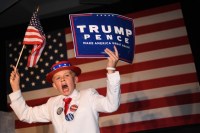
Donald Trump’s shock US election victory has provoked a transatlantic howl of disbelief from a cosmopolitan elite aghast that American voters have had the temerity to reject its one true liberal world-view. Hillary Clinton’s loss is seen less as the rightful humiliation of a discredited machine politician and more as proof that the masses have, once again, rejected ‘the facts’ of the situation. To this elite, installing the Donald in the White House represents the apocalyptic dawn of a ‘post-factual era’. After all, Hillary Clinton’s chief weapon against Trump was an army of fact-checkers.

Let’s shut out this angry, unrepresentative mob

From our UK edition

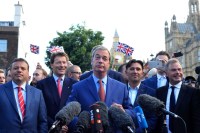
If you’re aiming to refute the suggestion that you can’t comprehend the difference between mob rule and the rule of law, then I suspect it’s probably a bad idea to raise a mob and lead it marching on a law court. Just my little hunch. Yet here come Nigel Farage and his piggybank Arron (Piggy) Banks with a plan to do just that. When the Supreme Court meets next month, the chaps behind Leave.EU aim to lead a march of 100,000 people to Parliament Square, to remind the chaps in wigs what Britain jolly well voted for. As if that had anything to do with anything at all. So far, criticism of the High Court judgment — which the Supreme Court will affirm or overrule — has come in three distinct varieties. We have had the valid, the dim and the frankly sinister.

A very special relationship

From our UK edition

You learn startling things about the long entanglement of the British with Spain on every page of Simon Courtauld’s absorbing and enjoyable new book, which is not a travelogue but a collection of historical vignettes arranged geographically. Did you know, for instance, that the first Spanish football team was founded by two Scottish doctors working for Rio Tinto in Huelva, and that in 1907 a team of seminarians from the English College in Valladolid defeated one representing Real Madrid? Or that the first visit by a reigning British monarch to Spain occurred when Queen Victoria went to have lunch with Queen Maria Cristina at the Aiete Palace in San Sebastián, travelling by train from Biarritz and returning the same afternoon?

Can we trust the people? After Trump, I’m no longer sure

From our UK edition

This piece is from the new issue of The Spectator, out tomorrow. https://twitter.com/spectator/status/796349211113619456 The election of Donald Trump as president of the United States may have signalled the death of the closest thing we have to a religion in politics. On both sides of the Atlantic, democracy risks being knocked from the high altar as an unmitigated and unquestioned good. The man’s obviously a fool and a nasty fool too. The contest should have been a walkover for Hillary Clinton. But it wasn’t. What happened? Can we be sure any longer that democracy works? Is it really the reliable bulwark against political madness that we always supposed?

Cheer up! Donald Trump’s victory isn’t all doom and gloom

From our UK edition

Well, it's just like Brexit, isn’t it? The appalled tone of the BBC six o’clock news, my daughter’s refusal – she’s nine – even to get out of bed, my nice colleagues declaring that they cried, simply cried, at the result. It was everyone’s opening gambit: Can you believe it? Yes, personally, I could. After the last election, after Brexit, I wasn’t surprised that the pollsters called it wrong and I’m looking forward to hearing them wriggle out of this one, like they tried to last time.

Theresa May congratulates Donald Trump on his victory

From our UK edition

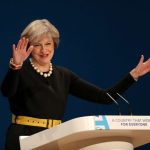
The Prime Minister has issued a statement congratulating Donald Trump on his election as the next President of the United States. In this, Theresa May says she looks forward to working with Trump to 'ensure the security and prosperity of our nations in the years ahead'. 'Britain and the United States have an enduring and special relationship based on the values of freedom, democracy and enterprise,' says May. 'We are, and will remain, strong and close partners on trade, security and defence.' While it is customary for the Prime Minister to congratulate a new president, her comments are a marked change to the language David Cameron used towards Trump when he was in 10 Downing Street.

Why do the polls make anyone confident that Donald Trump will lose?

From our UK edition

Today’s reports about the confident noises coming from Hillary Clinton’s camp made me think about the reports I picked up about how confident David Cameron was about the EU referendum on voting day. We later found out, his pollster Andrew Cooper had research from his firm, Populus, predicting a ten-point victory. The MPs I spoke to, who had been out campaigning in the field, seemed to agree: after all this fuss, Brexit would all blow over. By lunchtime on polling day, the bookmakers put the odds of Leave at 15pc; they would later sink to 7pc. The noises that I picked up – that noises pretty much everyone in my trade were picking up – hummed the same tune. Just like today. Who, out there, is predicting that Donald Trump will win?

The unfair attacks on Liz Truss prove that Parliament has too many lawyers

From our UK edition

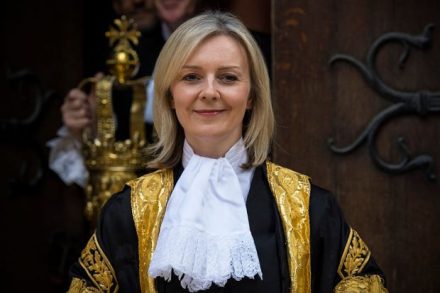
If there were any doubt that there are too many lawyers in Parliament it has been removed by the meeting, on Monday evening, between backbench Conservative MPs and the justice secretary Liz Truss. The subject was Truss’s alleged failure to defend the judiciary from criticism of last week’s High Court judgement on the enactment of Article 50. One MP was reported as saying: 'Her job is to defend the judiciary from attack.' No it isn’t. Liz Truss has special duties as Lord Chancellor – but she is the government's justice secretary, not CEO of a judges' trade association. Her duty as Lord Chancellor is to uphold the continued independence (from the government) of the judiciary - not to protect it from public criticism.

David Davis defends Article 50 appeal in Commons debate

From our UK edition

David Davis tried to reassure Tory MPs that last week's court ruling — and the forthcoming supreme court appeal — would not delay the government invoking Article 50, in a Commons statement this afternoon. The Brexit secretary re-stated Theresa May’s words that the government values the independence of the judiciary and the freedom of the press. He insisted that, despite the appeal, May still plans to trigger Article 50 by the end of March. The subsequent debate, however, made clear just how much division there is on the issue -- as Davis accused those MPs demanding control over Brexit of wanting to 'wreck the negotiation'.

Labour struggles to work out its position on triggering Article 50

From our UK edition

What is Labour's position on triggering Article 50? Four days on from the High Court's ruling that Parliament must vote on whether the UK can start the process of leaving the EU and confusion reigns. First, Corbyn suggested Labour could oppose Theresa May's attempts to trigger Article 50. He said the party would block Article 50 if key demands were not met. Given that these demands included access to the single market, it seemed unlikely the government would be able to meet them -- and instead an early election could be on the cards. However, Tom Watson -- Labour's deputy leader -- then appeared on the radio where he contradicted Corbyn.

What the papers say: The Brexit backlash continues

From our UK edition

The row over last week’s High Court ruling on Article 50 rumbles on this morning. Theresa May has given her backing to the judiciary, with the PM saying she 'values the independence of our judiciary’. Yet some of this morning’s newspaper editorials are in much less forgiving mood. The Daily Telegraph points out the distinction between the rule of law and the rule of judges and says that Lord Thomas, the Lord Chief Justice, Sir Terence Etherton, the Master of the Rolls and Lord Justice Sales quite simply got it wrong last week. The paper says the government is right to appeal the decision, pointing out that it’s not uncommon for the Supreme Court to overturn rulings made by other courts.

Brexit means Brexit. But what does post-Brexit mean?

From our UK edition

Staring at a brown envelope, my husband said: ‘I’ll deal with that post-breakfast,’ and then laughed as though he had made a joke. In his mind it was a play on words, the unspoken words being post-Brexit. It is true that no one is safe from that phrase these days. As a compound adjective, it’s not so bad: post-Brexit prosperity. As an adverb, it sounds awkward to me: prices rising post-Brexit. The word Brexit itself was established as more than a passing vogue only after the referendum, I think.

The unhinged backlash to the High Court’s Brexit ruling

From our UK edition

As a general rule, any day the government loses in court is a good day. So yesterday was an especially fine day. A delicious one, too, obviously, in as much as the fist-clenched, foot-stamping, whining of so many Brexiteers was so overblown and ludicrous it toppled into hilarity. People who shouted for months about the urgent need to restore parliamentary sovereignty now reacted in horror to the restoration of parliamentary sovereignty. 'That's not what we meant', they spluttered. We meant governmental supremacy only when it suits us. Well, tough. A certain amount of squealing was only to be expected since, if Nigel Farage has taught us anything, it is that the Brexit-minded really don't like it up 'em. But, still.

Europe’s press isn’t happy at the Brexit ruling either

From our UK edition

Britain's newspapers aren't happy at yesterday's High Court ruling that the government cannot trigger Article 50 without the say-so of Parliament. And the news isn't going down well in Europe either. There are fears that a Brexit hold-up could have ramifications on the continent. In the days after the referendum, European leaders were quick to call for a speedy Brexit. Now there are worries that a delay in the British courts could make that impossible - spelling trouble for a European Union which, for the large part, wants to get Brexit over and done with.

Spain’s political deadlock finally ends

From our UK edition

After nearly a year of bickering and stalling, Spanish politicians have finally formed their country’s new government. Mariano Rajoy, leader of the conservative Popular Party (PP), returns for a second term as prime minister. This time, Rajoy heads up a coalition made up of the PP, centrist newcomer Ciudadanos (‘Citizens’) and the centre-right Canary Islands Coalition. This is good news for Spain and shows that, at last, pragmatism has trumped ideology. It has ensured that a dreaded third election, which had been looming in December, won't now be needed. Rajoy’s administration won’t have it easy though. The coalition is deeply unpopular with many Spaniards and will face formidable opposition in congress.

What the papers say: The Brexit blockers’ ‘betrayal of democracy’

From our UK edition

The High Court’s ruling that Parliament should have the final say on pulling the Article 50 trigger has not gone down well in today’s papers. ‘Enemies of the people’ screams the front page of the Daily Mail alongside a picture of the judges who made yesterday’s decision. If its headline didn’t make its view clear enough, there's little room for interpretation in its editorial: the court’s decision was ‘an outrageous betrayal of democracy’, the paper says. The Mail suggests the ruling isn’t a one-off but forms part of a pattern where the courts have consistently sided with the Europe ‘against the interests of the British people’. But, the paper says, this latest stunt is the most dangerous yet.

Real life | 3 November 2016

From our UK edition

For three months after I move to the country, I am told, I am going to be in the most almighty panic. I will ask myself repeatedly what on earth I have done. I will have sleepless nights worrying that I should never have left London. I will wake in a sweat in the early hours gripped by the idea that I cannot possibly survive now I am not ten minutes’ walk from the Northcote Road. And then, magically, one day, about three months in, I will wake up in my country cottage and look out of my bedroom window at the sea of green and say, ‘This is the best decision I have ever made.’ I’m really glad a few friends who have done this move have talked me through it, because I panic at the best of times.