Brexit

What the papers say: Castro, Carney and Brexit

From our UK edition

The Daily Mail calls those who ‘heaped adulation’ on Fidel Castro over the weekend - including the likes of Jeremy Corbyn and John McDonnell - ‘useful idiots’. The paper says after Castro’s death on Saturday, the Cuban leader's supporters are ignoring the 'poverty he inflicted on his people' as well as his torturing of political opponents and the fact that he ‘failed his people abysmally’. So why, the Mail asks, do those like the Labour leader have such a different view of the former Cuban leader? The paper suggests in its editorial that there is a simple answer: ‘Messrs Corbyn, McDonnell and Co have never grown up since their student days’. Meanwhile, the Mail also takes a pop at Mark Carney.

Boris is fed up with being the butt of the government’s jokes

From our UK edition

In the autumn statement, Philip Hammond chose to mock Boris’ failed leadership bid. This wasn’t the first time that one of the Foreign Secretary Cabinet’s colleagues had had a laugh at his expense. At our parliamentarian of the year awards, Theresa May joked that Boris would be put down when he was no longer useful. But Boris and his circle are getting rather fed up with him being the butt of the joke, as I say in The Sun today. Those close to Boris feel that these gibes undercut him on the world stage. 'If they want the UK to be taken seriously, they need to back him not mock him’ one close ally of his tells me.

Letters | 24 November 2016

From our UK edition

Prisons and the public Sir: Your leading article on the sorry state of our prisons (19 November) was very welcome. However, you refer to the ‘public demand’ for sending offenders to prison. I have to query this. I cannot think of any occasion when the public has been consulted on prisons or sentencing policy or on the exceptionally high cost of incarceration. We currently have an unthinking and punitive culture, generated by tabloid newspapers and politicians competing to show how tough they are. It is hardly surprising that the coalition government’s search for savings targeted prison staff and community supervision, with results that can be seen today.

The Spectator’s Notes | 24 November 2016

From our UK edition

It is not self-evidently ridiculous that Nigel Farage should be the next British ambassador to the United States. The wishes of the president-elect should not automatically be discounted. John F. Kennedy’s wish that his friend David Ormsby-Gore (Lord Harlech) should be ambassador was granted. It is also not true that the post must be filled by a professional, or that the Prime Minister should not appoint a political rival to the post. Churchill gave the job to his main rival, Lord Halifax, from 1940. Certainly Mr Farage is not the conventional idea of a diplomat, but then Mr Trump is not the conventional idea of a president. Although its own leadership emerged from the same global convulsions, our government is slow to grab the advantages offered by this new world.

Meat and greet

From our UK edition

Zelman Meats — catchphrase ‘great meat’ — is sustenance for a hard Brexit — a harder Brexit, if you will. It is a snorting meat shack in north Soho; it is also, comfortingly for the reader, mid-market. It is from the owners of Beast, who display their meat in cases, as trophies — and Burger and Lobster, where you get burgers and lobsters for £20 a head. It is thrillingly monomaniacal and simplistic: what do you get at Zelman Meats? Meat, that’s all, comrade. It could theoretically be a butcher’s shop; no, it could be a cow sitting on a bonfire wondering what went wrong. Don’t come here if you don’t like meat because they have nothing for you. Go somewhere else.

Britain’s winning hand

From our UK edition

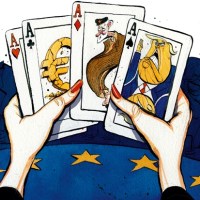
On the morning after the European Union referendum, Britain looked like a country in crisis. The Prime Minister had resigned, Scotland’s first minister was talking about a second independence referendum and the FTSE was in free fall. In several EU capitals, there was an assumption that, when the Brexit talks began, Britain would be the new Greece: a country that could ill afford to reject any deal offered by the EU, no matter how humiliating. In the days following the vote, Mark Rutte, the Dutch prime minister, declared that Britain had just ‘collapsed — politically, economically, monetarily and constitutionally’. Five months on, Britain is in a stronger position than Rutte and co. would have believed possible.

Soothing mood music from Hammond and May disguises challenges ahead

From our UK edition

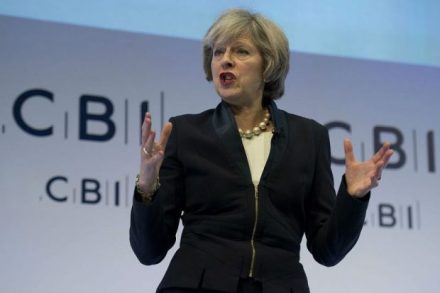
Theresa May likes to give a kitten-heeled kicking to conference audiences, even when they are police officers or her own party delegates. But at the CBI gathering at Grosvenor House in London on Monday, she was out to make friends with soothing (if essentially hollow) remarks about Brexit, and promises of the lowest corporate tax rates in the G20 and an extra £2 billion a year for research and development to help the UK stay close to the forefront of technology and bioscience. Assembled fat cats may still have been irritated by her commitment to binding annual shareholder votes on executive pay, but at least she backed away from putting workers’ representatives on boards, a threat that contributed to the anti-business tone of her Tory leadership campaign in July.

The devil they know

From our UK edition

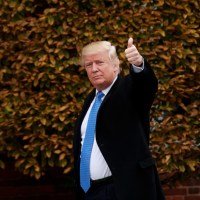
You will, by now, be familiar with the argument: that Donald Trump’s triumph in the American presidential election represents a kind of social and political apocalypse. That his victory came at the hands of fundamentally irrational, bigoted, disgusting extreme right-wingers beyond the pale of civilised values. It is axiomatic that there can’t be any good reason behind voting for him, so it is assumed that 60 million Americans were duped by ‘fake news’ which must now be suppressed altogether. In fact, the real ‘fake news’ was pumped out relentlessly by publications such as the New York Times, CNN, the Guardian and many other similar left-wing outlets which descended into hysterical denunciation of the voters’ choice.

The government’s latest growth forecast isn’t worth the paper it’s written on

From our UK edition

Facebook and Barack Obama have said they both want to tackle ‘fake news’ on the internet. The battle should start with government economic forecasts. Does anyone really believe the figures for economic growth up to 2020 made by the Office for Budgetary Responsibility (OBR) and pumped out by Philip Hammond in his Autumn Statement? Growth for next year, claims the OBR, will be 1.4 per cent, down from 2.2 per cent. In 2018 it will be 1.7 per cent, followed by 2.1 per cent in 2019 and 2020 and two per cent in 2021. How very precise. And how utterly improbable. What is the point in making these forecasts when they have proved so wide of the mark in the past? A year ago, the OBR forecast growth in 2016 at 2.4 per cent.

Brexit-bashers like Blair and Branson are the real enemies of the people

From our UK edition

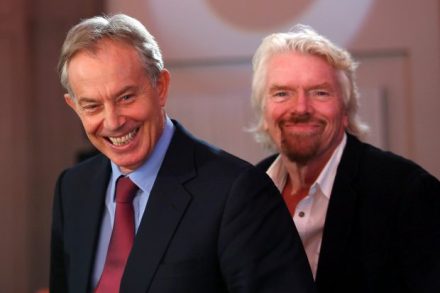
Here’s a tip for judges, businessmen, peers, politicians and former PMs who don’t like being called ‘enemies of the people’: stop behaving like enemies of the people. This week it is reported that Tony Blair is polishing his toothy grin to make a comeback into British politics, potentially as thwarter, or just tamer, of the ‘catastrophe’ of Brexit.

What the papers say: Theresa May’s ‘betrayal’ of workers

From our UK edition

Theresa May’s decision to row back on her pledge to put workers on company boards receives a mixed reception in the papers today. The Sun and the FT are among those to say it’s good that the PM has opted to change her mind. But the Guardian isn’t happy: calling the PM’s u-turn a ‘betrayal’. Here’s what the newspaper editorials are saying this morning: The Sun heaps praise on Theresa May for her change in thinking about making companies have representatives of workers on their boards - a move it describes as ‘hasty and aggressive’. It says the PM is right to back down from an idea that would have been a ‘godsend only to the unions’.

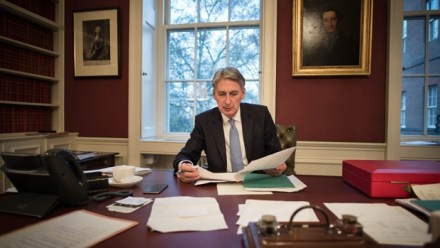
Will Philip Hammond be arrested after the Autumn Statement?

From our UK edition

So, austerity is to end. Or that is what the briefings for Wednesday’s Autumn Statement seem to indicate: Philip Hammond will loosen the purse strings, relax his fiscal targets and give the economy a big public spending-induced buzz – if indeed buzz is quite the right word for what happens when governments spend money. There is just one problem with what Hammond appears to be proposing. No, not that it almost certainly won’t be enough to please Ed Balls, Yanis Varoufakis, the unions, the Guardian and everyone else on the left who accused George Osborne of trashing the economy by making ‘cuts’ – or, more accurately, by refusing to grow public spending in line with what they think it ought to grow by.

Subscribe to The Spectator’s Evening Blend email

From our UK edition

You already know that Coffee House serves up the best analysis, comment and insight into the day’s political events. Why wait for tomorrow’s papers when the best writing is already up online? But our emails – Lunchtime Espresso and Evening Blend – mean you don’t even have to wait until you can log on to Coffee House. Sent to your inbox twice a day, we give you the top stories, top analysis – as well as a diary of tomorrow’s debates, and the vital statistics of the day. To sign up, for free, enter your email address in the box below.

Insulting people who think differently from you isn’t the way to engage people

From our UK edition

There were two items on BBC radio this morning which rather summed up the Corporation thinking about the State of the World. One was a brief but telling discussion on the Broadcasting House programme as to whether our political discussion now is getting to the point where we can’t actually air differences at all;  that, after Brexit and the Trump election, we are so utterly divided ideologically that common ground is impossible to find. It was an interesting conversation between Catherine Mayer, the co-founder of the Women’s Equality Party, and Iain Martin, who, while a Brexiteer, is also opposed to Trump.

Tory Brexiteers pressure May to quit EU single market and customs union

From our UK edition

Normally, the Saturday before an autumn statement would be dominated by speculation about what is in it. But, as I say in The Sun today, both Number 10 and the Treasury are emphasising that while there’ll be important things on productivity, infrastructure and fiscal rules in Wednesday’s statement, there’ll be no rabbits out of hats. Partly, this is because of  Philip Hammond’s personality: he’s not a political showman. But it is also because he’s not got much room for manoeuvre.  As he has emphasised to Cabinet colleagues, the growth forecasts might not be dramatically lower than they were in March, but cumulatively they have a big effect—limiting what the government can spend.

Brexit, Trump and the pious rage of the liberal clergy

From our UK edition

Here are some statistics you're unlikely to hear on Thought for the Day. Churchgoers in America backed Trump by 56 to 42 per cent – while six out of ten British Christians backed Brexit. Now, clearly these aren't identical constituencies: I didn't spot much enthusiasm for the US president-elect among Christian Leave voters. But we can spot one shared trend. Churchgoers on both sides of the Atlantic ignored the earnest but quietly hysterical entreaties of liberal church leaders to spurn Leave and Trump. (You might say: American evangelicals don't have left-leaning bishops – but American Catholics most certainly do, and they still voted for Donald Trump by 52 to 45 per cent.) What a nightmare for liberal clergy!

Money digest: ‘Marmite gate’ and Germany’s tougher stance on Brexit

From our UK edition

One and a half million households, many of them poor families or pensioners, are not on the correct energy tariff for their consumption says the Daily Mail’s This Is Money. The big six power giants – British Gas, EDF, Eon, Npower, Scottish Power and SSE – are overcharging by a net amount of £440 million per year, the paper says. Frank Field MP, who chairs the Commons Work and Pensions Select Committee, has written to the Prime Minister to draw attention to the issue. He said that ‘as a next move in protecting the vulnerable human underbelly of British society, the Prime Minister should take the first available opportunity to oblige energy companies to place all of their customers on the cheapest available tariff.

This is the era of Donald Trump – and of Theresa May

From our UK edition

Bob Dylan called it pretty much right. When he sang 'your old road is rapidly ageing' he was calling time on an old order that went on to die in 1968. The events of that year ushered in a liberal order, revolutionising social norms, which lasted until Thatcher and Reagan in 1980. The conservative era then returned, sorting out the mess left by the previous era and ending the Cold War: this was the time of battle-hardened leaders, with a battle to fight (and win). Then came the Blair and Bill Clinton era, modified slightly by David Cameron – defined by a ‘third way’ unwillingness to move too far to the left or right. And now, once again, the times they are a-changing.

What the papers say: ‘Bone headed’ Labour and why it’s right to reform the Lords

From our UK edition

Labour’s confused stance on immigration riles the tabloids in today’s papers - with the party’s position described as ‘bone headed’ in the Daily Express. Meanwhile, prison reform is on the agenda elsewhere, as the Guardian says Liz Truss should release the thousands of prisoners still locked up despite serving more than their minimum sentences. But whatever is done to sort out the mess of Britain’s prisons, it’s no time to make them more comfortable for inmates, says the Daily Mail. Here are what the papers are saying this morning: The Sun hits out at Labour in its editorial this morning, saying the party’s policy on immigration shows what a mess the opposition are in.