Brexit

Letters | 17 November 2016

From our UK edition

Wisdom of crowds Sir: According to Matthew Parris (‘Can we trust the people?’ 12 November), I have become part of the mob. Nevertheless, I have never really thought of myself in that way. Although it may be reasonable to criticise the antics of Farage or Trump, surely it is wrong to characterise all those who voted for their causes as a mob? My motives in voting for Brexit were simple and reasonable. Many of my generation — who lived as children through the 1940s when our parents went to war to preserve our sovereignty, our justice system and control of our borders — voted to leave the EU because they saw these three vital powers slipping away into the hands of an unelected bunch of bureaucrats.

What the papers say: Boris’s ‘indiscreet’ way with words and Project Fear comes unstuck

From our UK edition

In the run-up to the referendum, the Treasury warned that unemployment would rise by half-a-million. Today, this prophecy comes in for criticism in the papers following yesterday’s news that the number of Brits out of work had tumbled to an 11-year low. It’s not only Project Fear which gets a hard time in the editorials though. The moaning ‘anti-Brexit mob’ are also criticised - while the Guardian savages Boris Johnson for making a ‘fool of himself’. The Sun launches an attack on the moaning ‘anti-Brexit mob’ in its leader this morning, saying that it seems that the better the economic outlook since the referendum ‘the louder the caterwauling’ from those unhappy with the result.

London Notebook | 17 November 2016

From our UK edition

The new government seems to be struggling with the logistical intricacies of removing Britain from the European Union. I can only assume they have never tried to put together a theatre awards. The Evening Standard Theatre Awards take a year to arrange, but it can sometimes feel like the whole thing is done in a week, which passes in a blur of seating plans, speeches, menus and other thespian miscellany. It is theatre within theatre. If the Prime Minister is reading this, I am available to consult on how to manage conflicting egos in a high-pressured environment. Between Maggie Smith, Eileen Atkins, Kristin Scott-Thomas, Joan Collins and Shirley Bassey, a full range of damehood is on display.

The new normal

From our UK edition

-What was your favourite response from the liberals to Donald Trump’s victory in the US presidential election? Actress Emma Watson handing out copies of a Maya Angelou book to bewildered commuters in New York? Cher announcing that she wasn’t simply leaving the USA, ‘but Planet Earth too’ — a move some of us assumed she had made at least 40 years ago? The hysterical protestors who set fire to their own shoes because they thought the said shoes were pro-Trump? The hyperbolic hatred spewed out towards those who voted for the Donald, or Matthew Parris suggesting that maybe this democracy caper has gone too far, or the teachers telling tearful children that we’re all going to die?

The economic consequences of Philip Hammond

From our UK edition

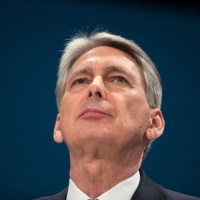
What are now called ‘fiscal events’—the Budget and the Autumn Statement—have become the biggest dates in the Westminster calendar. The Chancellor lights up the landscape with political pyrotechnics. There are attempts to bribe prospective voters through tax and spending changes, a litany of pork-barrel projects designed to help individual MPs, and fiendishly complicated schemes no one expects. But with the Treasury under new management, this will all change on Wednesday. Philip Hammond is the least political Chancellor Britain has had for quite some time. The two longest-serving incumbents of recent times, George Osborne and Gordon Brown, doubled up as electoral strategists whose fiscal policies were informed, above all, by political aims.

My husband’s ‘gay affair’ with Gove

From our UK edition

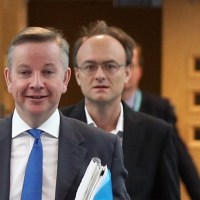
A few weeks ago I discovered that while he should have been focused on the fight of his life during the referendum campaign, David Cameron was instead obsessing over whether or not his justice secretary, Michael Gove, had had an affair with my husband, Dom Cummings, campaign director of Vote Leave. The story was in the Mail on Sunday, who eked it out across two consecutive issues. On week one it kept Dom and Michael’s names under wraps (for ethical reasons, it said) but revealed the source of the thrilling bit of gossip to be an aide of Cameron’s called Gavin Williamson (now Chief Whip). Williamson had, said the MoS, dashed into No. 10 ‘in the heat of the bitter EU campaign’ to deliver news of the fling to the PM.

Google’s commitment is good news for Britain. But it doesn’t have much to do with Brexit

From our UK edition

Google’s decision to employ an extra 3,000 people in London is undoubtedly great news for Britain. But it's nonsense to try and tangle the company's plans as being all - or, indeed, anything - about Brexit. Of course, it was only a matter of time before Google’s announcement was glimpsed through the Brexit prism. Everything is these days. Some have said the new jobs promised by Google and the firm's £1bn investment is ‘despite’ the outcome of the referendum. In their coverage of the announcement, Bloomberg said tech firms had been left wondering ‘whether they’ll still be able to hire workers from overseas…after the country leaves the bloc’.

Oxford Dictionaries is playing politics by picking ‘post-truth’ as its ‘word of the year’

From our UK edition

The BBC was recently exposed for buying more copies of the Guardian than of any other paper. I imagine they must get through quote a pile of Guardians at Oxford Dictionaries, too. How else could they have come up with the idea of making ‘post-truth’ their word of the year? The trouble with the concept of ‘post-truth’ is that it is itself untrue. It implies that there was a golden age of scientific reason which has now passed. There wasn’t. People have always been prone to superstition, prejudice and to making emotional judgements. They still are, but if anything, scientific evidence is treated with far more reverence than it ever has been.

What the papers say: Britain’s ‘dangerous’ prisons and Brexit ‘indecision’

From our UK edition

The decision by prison staff to walkout yesterday before returning to their posts following a court ruling leads many of the newspaper editorials today. There is some sympathy for the difficult job being done by jail staff - but the papers say that officers leaving their posts isn’t the answer. Elsewhere, yesterday’s Brexit memo which suggested the government’s plan for leaving the EU is in a shambles is also a talking point in the newspapers. Here’s what the papers are saying today: The Sun says the action taken yesterday by prison staff to walkout was ‘shameful’.

Government on manoeuvres over Article 50 vote

From our UK edition

Yesterday the BBC's Norman Smith reported that the government have prepared a short three line bill to begin the process of leaving the EU. This is to be used in the event that they lose the Article 50 appeal and the Supreme Court insist on a Parliamentary Bill before Article 50 is triggered. I understand that the government have also been mooting the idea of holding a snap vote on an Article 50 motion ahead of the court case. Last week, the whips' office sounded out figures in both their own party and opposition parties over how they would vote if they ran a snap vote on Article 50 -- potentially as a ten minute rule.

Am I the victim of a homophobic SNP hate crime?

From our UK edition

My editor has received a letter of complaint. The SNP MP Tasmina Ahmed-Sheikh writes: Dear Fraser, I read Douglas Murray’s blog on Friday “Where’s the proof that Donald Trump is homophobic?” with great interest. It’s fantastic to see the Spectator embracing the zeitgeist and embracing “post-truth” politics in its own right by now ignoring facts when publishing comment. I’m particularly happy to directly answer Douglas Murray’s questions, when he asked: “Where does this endlessly repeated claim that Donald Trump is so anti-gay as to make grown men cry actually originate? What is the source of the claim? Or the evidence?

Falling inflation marks another nail in the coffin for Project Fear

From our UK edition

So, another post-Brexit horror story fails to materialise. When the stock market failed to crash and the economy failed to slump, the continuing Remain campaign hit on another fear: inflation. When the CPI rose in September to one per cent, it was predicted to be merely the beginning of a trend which would see prices surge as a result of the fall in the pound. Instead, the CPI fell back slightly last month to 0.9 per cent. It may well rise again in the coming months, but it is already clear that it is going to be hard to maintain the narrative of a Brexit-inspired inflationary spiral. At 0.9 per cent, CPI remains below the nadir it reached in the midst of the 2008/09 crisis – a time when many economists were warning of the spectre of deflation.

What the papers say: May’s ‘flawed’ plan and the ‘short-sighted’ rejection of Farage

From our UK edition

Theresa May used her first big speech on foreign policy last night to spell out the need for globalisation to change. She adopted a softer approach than she did in her conference speech, when she went on the warpath against the liberal elite, says James Forsyth. Yet she remained clear: this year's political upheaval shows something needs to give. It's hard to fault that thinking, but while many would agree with the Prime Minister, does May have the answers for what this change should look like? No, says the Guardian, which slates Theresa May for having no answers to the key questions left following Donald Trump’s election victory. The paper says the Prime Minister gave an ‘interesting’ speech at last night’s Lord Mayor’s Banquet.

Theresa May now has some Trumps in her Brexit negotiating hand

From our UK edition

Britain’s position heading into its Brexit talks is far stronger than it was a week ago, I argue in The Sun today. Why, because Donald Trump has changed the dynamics of global politics. Brexit’s critics used to claim that this country would be isolated after it left the EU. But it is hard to make that case when the president-elect of the most powerful country in the world is in favour of it. Indeed, the next US President is more enthusiastic about it than the British Prime Minister. He was for it before June 23rd. Theresa May now has a chance to create a strong relationship with Trump before other European leaders even start trying.

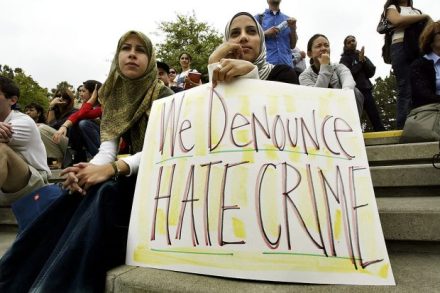
Why doesn’t the Guardian’s fevered hate crime coverage mention Christian victims?

From our UK edition

One searches in vain on the Guardian website for the name Nissar Hussain. This is odd because the newspaper seems to have spent the past few months engaged in a campaign against hate. Virtually every day there is a column or leader grimly claiming that the vote for Brexit has unleashed a spate of hate. Its archives brim with news stories trying to infer a causal link between Brexit and a reported rise in hate crime – even to the point of absurdity. Last month, the paper carried a story claiming that there had been a 147 per cent rise in homophobic attacks since Brexit.

Letters | 10 November 2016

From our UK edition

A downbeat Brexiteer Sir: Alexander Chancellor (Long Life, 22 October) wondered why Brexiteers were not more upbeat about their victory. I suspect many, like me, were worried about Remainers trying anything they can to overturn the vote. The news that the judges have ruled that Brexit cannot be triggered without a parliamentary vote shows how sadly right we are to be downbeat. Marion Gurr Pury End, Northants Shakespeare’s ‘nothing’ Sir: Charles Moore comments upon the difficulty of selecting just one word to sum up Shakespeare’s poetry. Like Cordelia, I would suggest ‘nothing’.

America’s retreat

From our UK edition

Donald Trump predicted that his election would be ‘Brexit times ten’ — which, as far as the stockmarket reaction was concerned, had some merit. The dollar plunged, and the Dow Jones along with it. Once again, the pollsters have been confounded. Once again, political analysts have been left asking whether they know their country at all. And once again we can see the same group of voters at the forefront: the older, poorer ones who are concerned about demographic change and angry about being ignored for too long. In Britain, and now in America, they are the new revolutionary class. This is where the analogies with Brexit end. Vote Leave, the campaign for Britain to leave the European Union, was led by people who were liberal, globally minded and optimistic.

Portrait of the week | 10 November 2016

From our UK edition

Home Theresa May, the Prime Minister, said she still expected to start talks on leaving the EU as planned by the end of March, despite a High Court judgment that Parliament must decide on the invoking of Article 50 of the Lisbon Treaty that would set Brexit in train. Opinion was divided over whether the High Court had required an Act of Parliament or a vote on a resolution. The government appealed to the Supreme Court, which is to hear the case from 5 December. The judgment set off a confused game of hunt the issue. One issue was whether the press is allowed to be rude about judges. The Daily Mail’s headline had been ‘Enemies of the people’ and the Daily Telegraph’s ‘The judges versus the people’.

Mob law

From our UK edition

Frenzied outrage from Leavers and comical paeans of praise from Remainers greeted the High Court’s decision to instruct government that Parliament had to agree to the triggering of the clause that will initiate the UK’s exit from the European Union. In 406 BC, the Athenians demonstrated just how dangerous such hysterical reactions could be. The Athenians had defeated the Spartans in a sea battle off Arginousai, with the loss of 25 ships. Against all usual practice, their sailors had been left to drown, either because a storm had made it impossible to pick them up, or those in charge were at fault. The eight generals were dismissed, and six of them returned to Athens.