Claire Fox

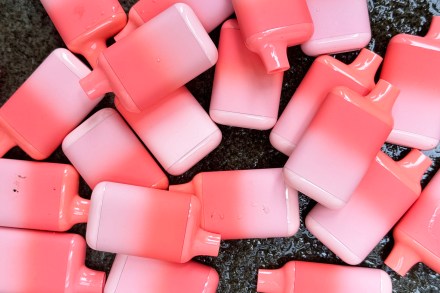
Disposable vapes are fantastic. Naturally, they’re demonised

From our UK edition

Forty a day for forty years – that’s a hell of a lot of cigarettes – but je ne regret rien. I loved smoking. But note the past tense because, eventually, for all the clichéd health reasons you can imagine, I had to give up. Despite always knowing it was a matter of life or death, I dreaded packing it in. Smoking has been so much part of my persona for decades; I just couldn’t imagine life without puffing away. All the usual smoking cessation options didn’t work, from gum to patches, Alan Carr to NHS counselling. Until eventually, on the recommendation of no less than two NHS doctors, I tried disposable vapes. Miracle upon miracle, they worked. And I am now a happy chain vaper. At last, I thought, I would stop being demonised for my bad habit.

Will Starmer crack down on social media?

From our UK edition

17 min listen

Courts have started giving out severe sentences to those involved in the riots today, but there is a continued clamouring for Keir Starmer to do more. The next step seems to be cracking down on discussions online, where social media platforms such as X and Telegram could be inflaming the riots. Could the government give in to this pressure, and what do we, as a society, lose if so? Cindy Yu talks to Katy Balls and non-affiliated peer Claire Fox. Produced by Cindy Yu.

War on words: is Scotland ready for its new hate crime law?

From our UK edition

51 min listen

On the podcast: Scotland’s new hate crime law; the man who could be France’s next PM; and why do directors meddle with Shakespeare?  First up: Scotland is smothering free speech. Scotland is getting a new, modern blasphemy code in the form of the Hate Crime and Public Order (Scotland) Act, which takes effect from 1 April. The offence of ‘stirring up racial hatred’ will be extended to disability, religion, sexual orientation, age, transgender identity and variations in sex characteristics. The new law gives few assurances for protecting freedom of speech writes Lucy Hunter Blackburn, former senior Scottish civil servant. Lucy joins the podcast, alongside Baroness Claire Fox, unaffiliated peer and founder of the Academy of Ideas think tank.

Keeping the peace: the politics of policing protest

From our UK edition

41 min listen

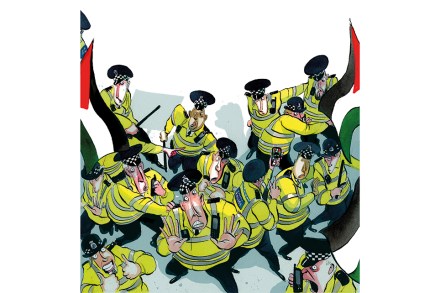
On the podcast: In his cover piece for The Spectator Ian Acheson discusses the potential disruption to Armistice Day proceedings in London this weekend. He says that Metropolitan Police Chief Mark Rowley is right to let the pro-Palestine protests go ahead, if his officers can assertively enforce the law. He joins the podcast alongside Baroness Claire Fox to discuss the problems of policing protest.  Next: are smartphones making us care less about humanity?  This is the question that Mary Wakefield grapples with in her column in The Spectator. She says it’s no wonder that Gen Z lack empathy when they spend most of their lives on social media. She is joined by Gaia Bernstein, author of Unwired: Gaining Control over Addictive Technologies.

Should it be illegal to ‘influence’ a woman seeking an abortion?

From our UK edition

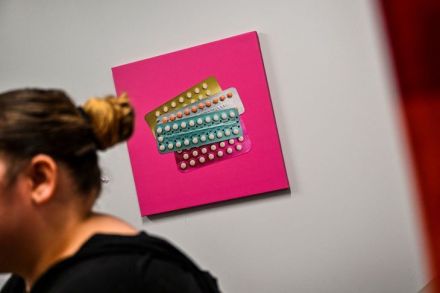
Law-making is a funny old business. My move from commentator to legislator has brought with it some poacher-turned-gamekeeper quandaries. While all laws emanate from political choices, unlike my usual stomping ground of activist speeches or polemical articles, there is a danger that legal mis-speaking might end up criminalising people. I feel the need to ask a series of questions every time a Bill arrives at the House of Lords. Creating new laws increasingly seems to be a substitute for political leadership, so a key question must be: is this Bill really necessary? Is it proportionate? In an unelected part of parliament, is it anti-democratic over-reach to oppose illiberal legislation?

War of the Windsors

From our UK edition

46 min listen

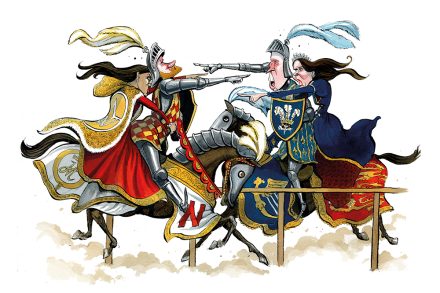
This week: For his cover piece in The Spectator Freddy Gray asks who will win in the battle between the Waleses and the Sussexes. He is joined by historian Amanda Foreman to discuss the fallout Harry and Meghan's new Netflix documentary (01:00). Also this week: Should the House of Lords be reformed or even abolished? This is the question James Heale considers in the magazine. He is joined by Baroness Fox of Buckley to unpack Gordon Brown's recommendation to do away with the second chamber of Parliament (13:14).  And finally: In the books section of The Spectator Chloë Ashby reviews Con/Artist, the memoir of notorious art forger Tony Tetro. She is joined by Tony and investigative journalist Giampiero Ambrossi, who co-authored to book (31:53).

We must protect freedom to protest, even for those we despise

From our UK edition

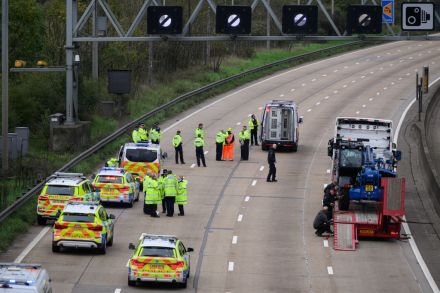
One of the trickiest challenges of being in politics is defending the rights of those we disagree with vehemently. That dilemma has never been truer than in deciding how to approach the Public Order Bill, now making its way through the House of Lords. How can I defend the right to protest when I have little sympathy for those protestors targeted by the Bill? Take Just Stop Oil. These catastrophising eco-warriors – whose nihilistic stunts are aimed at causing maximum chaos to the public – are a real menace. Their disdain for democratic change is evident in how little they care about hindering ordinary working people going about their daily lives. Alienating the public is the only thing they have achieved with their stunts.

Kill the bill: why Boris’s crime law isn’t fit for purpose

From our UK edition

Boris Johnson is rightly facing the wrath of Tory MPs over the proposed introduction of vaccine passports, but another piece of legislation put forward by the government should also trouble us. Critics of Boris Johnson’s Police, Crime, Sentencing and Courts Bill, often focus on its scale. They have a point. The Bill is simply enormous: made up of 13 parts, 179 clauses and hundreds of pages, parliamentarians of all stripes have treated it as a Christmas tree, hanging on it an endless array of special interest amendments. But size isn’t the Bill’s biggest problem. Even if heavily amended, this act – which is going through parliament today and is set to become law next year – threatens to criminalise ordinary Brits.

Boris’s miners joke reveals his contempt for the working class

From our UK edition

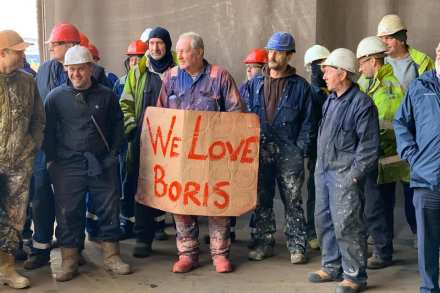
In March this year, 35 years to the month since the end of the miners' strike, environmentalists were caught dressing up as miners. Their media stunt was intended to protest against a proposed expansion to the Bradley coal mine in County Durham. Martin Raine, a real miner working at the site, was quoted saying: ‘It is our jobs at stake here and instead of allowing us a voice the BBC showed fake miners with fake cardboard helmets and interviewed a student bussed in by Extinction Rebellion who got the basic facts wrong.’ Miners (and former miners) are no more likely to join eco-protests against mining jobs than Thatcherites are to sign up to Extinction Rebellion.

A ‘Zoom parliament’ is bad for democracy

From our UK edition

Is the new normal here to stay? For the sake of our parliamentary democracy, let's hope not.  There is little doubt that holding the Government to account has been made harder by the imposition of restrictions during the pandemic. During the Covid crisis, politicians have been too keen to treat parliament as a normal workplace; the truth is that it isn't and never will be.  If ever there was a good excuse for an 'us versus them' rule exemption, surely it would have been to honour the public by ensuring scrutiny and pushback against the Government removing people’s liberties so easily. Instead, parliamentary proceedings have taken the hybrid form of in-person and Zoom proceedings. This is an unhappy compromise for which we are all worse off.

Can GB News live up to the hype?

From our UK edition

British TV viewers have never had so many channels to watch, yet they've also never had so little choice. The Brexit referendum exposed this lack of political diversity all too clearly. As a panellist on Radio 4’s The Moral Maze for 20 years, I suppose I was something of a BBC luvvie. No doubt I was still seen as a bit of a maverick by some, but I was accepted on the media scene. However, when I casually mentioned back in 2016 that I was going to vote Leave, things changed.  'But you’re an intelligent, well-educated person, Claire', said one senior producer. From that moment on, in studios and green rooms, I was greeted with a familiar sneer. From my position of privilege, it was hardly a problem.

How a serious issue with racism was reduced to a tick-boxing exercise

From our UK edition

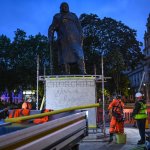
Who needs statue topplers when the state will do it for you? Some bright spark in authority has decided the way to defend the statues on Parliament Square is to board them up. Mayor of London Sadiq Khan has taken his lead from protesters and started a national trend, with councils setting up posses of the unelected to assess whose statues might survive the great 2020 cull. Meanwhile, the BBC, so terrified of bad PR, has pre-emptively removed from its i-player an iconic episode of Fawlty Towers, written as a satire on Little Englander mentality. Own goals all round. What started out as a genuine, furious, international reaction to the brutal killing of George Floyd seems to be turning into an institutional nervous breakdown.

Is toppling a statue an act of performance art?

From our UK edition

14 min listen

Has the statue of Churchill been improved by being enclosed in a protective casing? Was Colston's toppling one of the greatest acts of performance art? Or is this all a sad indictment of the state of British politics? Fraser Nelson talks to The Spectator's arts editor Igor Toronyi-Lalic and Coffee House contributor and writer Claire Fox.

My fears about the ‘new normal’

From our UK edition

Perhaps there’s light at the end of the long lockdown tunnel. The roadmap at least allows hope that life might get back to normal. For me, normal means freedom to live life as we choose, from cramming into packed planes to go on holiday to crowding into pubs for birthday parties. However, even saying that can lead to gasps of incredulity. Normal? No way! Too risky. It has become fashionable to now aspire to the ‘new normal’. That ‘new normal’ very often accepts, with a resigned fatalism, that a range of everyday, ‘normal’ freedoms will need to be curtailed.

Staying at home doesn’t make us heroes

From our UK edition

I don’t particularly like the constant war analogies used about fighting coronavirus. However, when someone like Matt Hancock conjures up the Blitz spirit, urging us to pull together ‘in one gigantic national effort’, I think of that cliched question: 'What did you do in the war, Daddy?' Forget the sexism, what will our answer be to future generations? The fact is that millions of us will have to reply: ‘I did nothing, I stayed at home.’ That raises a real dilemma of lockdown society: are we being socialised into concluding that passivity is a positive virtue?  In the 1915 war recruitment poster 'Daddy, what did YOU do in the Great War?

This is no time for ‘gotcha!’ journalism

From our UK edition

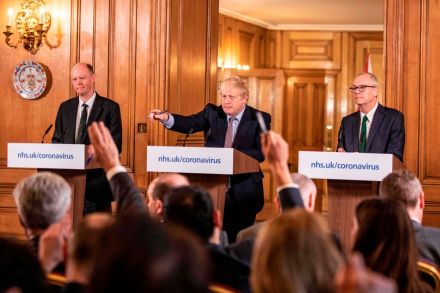
The lockdown has ensured that many millions now gather round the TV and watch the daily press conference from No.10. We hang on every word from politicians and medical/scientific experts, trying to read the runes of our fate for the next hours, days, months. These people are leading the country’s response to Covid-19. A third group in the room (be that virtually), whose leadership should be indispensable, are the press, charged with asking penetrating, crucial questions on our behalf. This should be when the nation feels the latest strategy is being held to account and scrutinised, when more light is shone on controversial decisions that affect our livelihoods and liberty, even life and death.

Here comes Bloomberg

From our UK edition

39 min listen

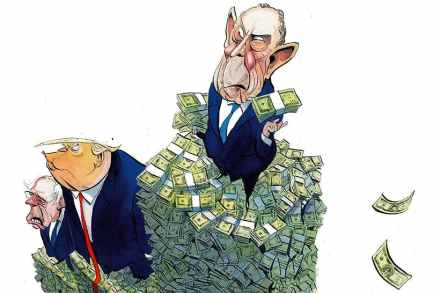
This week, has Mike Bloomberg blown his presidential hopes with a disastrous TV debate (00:50)? Plus, has the BBC really gone downhill (12:05)? And last, Toby Young reveals all about his first stand up comedy gig (26:30).

Don’t expect the EU to learn any lessons from Brexit

From our UK edition

I have enjoyed my first fortnight back as a civilian after my temporary stint as an MEP. Along with other Brexit party representatives, we had one job, and we did it. I am rather proud of my modest contribution to bringing democracy home. Looking back at my experience as an MEP, there are lessons worth noting. I had assumed that a gathering of 700 or so MEPs from all around Europe, would, at the very least, provide a fascinating exchange of views from an international perspective. But the parliament operates through artificially federalised political groupings; behind closed doors the leaders of each grouping carve up who gets to speak, for how long (typically 60 seconds), and in stage-managed terms.

Jess Phillips is wrong to tell men to ‘pass the mic’

From our UK edition

When Labour leadership challenger Jess Phillips urged men to 'pass the mic' to a woman on the top job, telling Sky’s Sophy Ridge it would 'look bad' if Labour failed to elect a woman, she more or less admitted not being up to the job. Surely the weakest argument any leadership candidate could use is demanding a step-up based on their sex? In effect, Phillips is trying to knock out the leading candidate, Keir Starmer, because he’s a man. We heard a similar argument on Question Time last week. When Laurence Fox was asked who he preferred as the Labour leader, he replied 'Keir Starmer – he just looks like he can take Boris on quite well.

My clash with Alastair Campbell convinced me it’s time to hug a remainer

From our UK edition

I confess I had butterflies doing the first BBC Politics Live of 2020. It felt like the first day back at school. Beyond Twitter spats and Christmas family banter, the festive period had been politics-free. Would I be rusty, especially as one of the other panelists was the formidable Alastair Campbell? As a former People’s Vote heavyweight, Campbell is something of an arch nemesis who has a reputation for taking no prisoners. But regardless, one of my new year resolutions is to not dwell on past enmities. I am keen to build some unity, in order to make Brexit as productive as possible.