Brexit

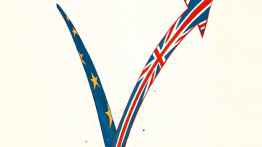
Playing chicken

Besides being important in themselves, the trade talks between Britain and the United States which began this week are symbolic of the opportunities that should become available as we leave the European Union. For years we have dealt with the US, our biggest single customer, under burdensome tariffs and other regulation — but we had no choice. The EU handled trade policy and it never succeeded in completing a trade deal with any of its major trade partners. Britain, by contrast, has always been more global than Europe in its outlook. The vote for Brexit was, among other things, a vote to raise our sights to more distant horizons. At

Bad news for the Tories: Corbyn has learned to love the centre

When Tony Blair was selling out the Labour Party by introducing a minimum wage, paid holiday leave and free nursery education, the hard left reckoned it had his measure. Semi-Trots and leftover Bennites, since decamped to one of the many exciting acronyms British Leninism has to offer, filled monochrome magazines and academish journals with tracts denouncing Blair as a Tory, a Thatcherite and both a neoliberal and a neocon. The charge sheet was echoed with righteous indignation by proud purists on the backbenches and in the columns of the Guardian and the Independent. New Labour was so far to the right it was indistinguishable from the Conservatives. What was the

The Spectator Podcast: Macron’s vanity fair

On this week’s episode we discuss whether Macron is losing his gloss, ask if the Brexit talks are heading in the right direction, and recommend how to get the best out of the Edinburgh festival. First, it’s been just over two months since Emmanuel Macron became President of France, and already cracks are starting to show. Swept into the Elysee Palace by a sea of young voters rejecting Marine Le Pen and the National Front, those same voters are beginning to turn on the centrist former banker who they reluctantly championed. So says Gavin Mortimer in this week’s magazine, where he laments the new President’s vanity, and he joins the podcast from Paris along

Free traders need to get their act together

The row over chlorine-washed chicken should be a wake-up call to British free traders. It is a sign of the opposition that any new trade deals will face. The producer interests keen to oppose the extra competition that free trade brings are organised and ready to go. But the consumers who’d benefit from greater choice and lower prices have no organised, political voice at present. There is a danger that trade deal after trade deal is derailed or limited by the kind of scare tactics we have seen in recent days; having not had a trade policy for 40-odd years, there are few people in this country versed in how

If Brexit is dying, what about democracy?

Never meet your enemies — you might like them, and that ruins stuff. I had dinner with the former Archbishop of Canterbury, Rowan Williams, about a year ago. During his time in office, Rowan came out with what I considered to be some of the most cringing, effete, left-liberal, self-abnegating rot I have ever heard. But then, at this dinner, I met the most kindly, charming, humble and witty human being. If a man could be said to actually radiate goodness, that was Rowan. I left the dinner utterly dismayed. Never meet your enemies. So it is with Matthew Parris. I bump into Matthew every so often and am always

‘I like making things’

Sir James Dyson would make a good therapist for anxious Brexiteers. Everything about him is comfortingly precise — his manner and way of speaking, his owlish round glasses and blow-dried white hair. He exudes a Zen-like calm. What he has to say is reassuring, too. He is as sunnily optimistic about leaving the EU as he was before the referendum last year. ‘I am very confident,’ he says, ‘in our ability to negotiate trade deals outside Europe — with Japan, Australia, China, America and so on — because it’s very easy. It’s just us negotiating with them. It’s very, very straightforward and you don’t have to satisfy 27 other people.’

Why must I have a view on everything?

At a party earlier this summer, I was chatting to a man who asked me how I voted in last year’s EU referendum. I don’t see why anybody asks that question more than a year on, and I don’t see why anyone should be expected to answer. There is no faster way to sour a perfectly fine evening. Whatever you say, you risk causing offence, so why bother? I told the man I preferred not to say, and that I still don’t really know what I think about Brexit. He appeared put out by my reluctance — as if I was the one being rude. Before long he made his

Cheating German car-makers are good news for Brexiteers

It came as no great surprise to learn that the EU competition authorities are crawling all over the three major -German car-makers, Volkswagen, BMW and Daimler, to investigate collusion via ‘secret technology working groups’ dating back to the 1990s. The most damaging allegation — reported by Der Speigel — is that the three groups colluded over the use of AdBlue, an additive that neutralises -diesel emissions, by agreeing to use small but inadequate AdBlue tanks in their cars when larger, more expensive ones might have done the job properly. (BMW denied that story, but the other two groups declined to comment.) This follows the 2015 emissions -scandal in which half

It’s a score draw on the economy for Brexiteers and Remainers

Yesterday was a golden day for the Despite Brexiteers – those who try to frame every piece of good economic news as if it is somehow a great surprise and shouldn’t really have happened. BMW announced that it is to build the electric version of the Mini in Britain, Amazon announced it was doubling the size of its research team in Britain, while according to the CBI, output from factories is growing at its fastest rate in 20 years. Today, though, comes news which is firmly on the other side of the fence: the ONS’s first estimate for economic growth has come in at 0.3 per cent. This is a

How Brexit will change Germany

In the summer of 1990, the editor of The Spectator, Dominic Lawson, went to interview Nicholas Ridley, Margaret Thatcher’s Secretary of State for Industry, and asked him about the drive towards European Monetary Union. ‘This is all a German racket designed to take over the whole of Europe,’ said Ridley. ‘I’m not against giving up sovereignty in principle, but not to this lot. You might as well give it up to Adolf Hitler, frankly.’ The consequences of these comments were seismic. Thatcher demanded Ridley’s resignation, she resigned herself a few months later, and for a quarter of a century thereafter successive Prime Ministers did their utmost to distance themselves from

I’m a Leaver who would be happy for a second referendum

To everyone’s huge surprise, Jeremy Corbyn has come out as being quite a hard-line Eurosceptic, despite his tireless campaigning last year during the referendum. He has also further cemented his party’s newfound respect for immigration restriction, attacking the importing of cheap labour from abroad. Whether any of this makes any impact on his legion of supporters, who seem to project their own vision of what he should be onto reality, I don’t know; the Labour coalition already seems so incoherent but then I’ve given up trying to understand how politics work; it’s like there’s been a writer’s strike up in heaven and nothing makes sense anymore. I suspect Corbynmania mainly comes

Cabinet agreement on Brexit doesn’t equal Tory harmony

What’s the most significant thing that Liam Fox has said today, as he begins talks with the US on a post-Brexit trade deal? Is it that he thinks the British media has an ‘obsession’ with chlorine-washed chicken (Ross takes a non-obsessive look at this here) or that he has admitted that it might be ‘optimistic’ to expect a trade deal between the UK and the EU by March 2019? It is true that the International Trade Secretary has often been the most optimistic about how hard Brexit will be (unkind people might suggest that this is because he hasn’t actually had to do much of the nitty gritty stuff since

The IMF still hasn’t understood the economics of Brexit

Output is under pressure. Prices are starting to rise, living standards are getting squeezed, and every day brings fresh stories of one bank or another leasing office space in Frankfurt or Dublin. As the International Monetary Fund downgrades its growth forecast for the UK, whole edging up its predictions for our continental neighbours, Remainers can hardly believe their luck. Finally, all those predictions of disaster are coming true. Indeed, some are starting to describe Britain as the ‘sick man of Europe’ – a particularly potent phrase, since it was precisely to escape that label that we joined the EU in the first place more than four decades ago. The trouble

Can Theresa May make it to the end of the Brexit talks?

If the last few months should have taught us political commentators anything, it is to be wary of making predictions. So, this is more of a report on what people are thinking than a prediction. But, as I write in The Sun this morning, there is an increasing confidence among May loyalists that she can make it to the end of the Brexit talks. One of the things that gives those charged with maintaining party discipline hope that May can do this is that whenever a leadership contender is seen to be plotting, it hurts their standing with Tory MPs. The old Tory adage that he who wields the dagger,

Letters | 20 July 2017

Yes to Boris Sir: Get Boris (15 July)! Get Boris to be prime minister, in fact. He is the only possible candidate for the Conservatives who has the flair, the experience, the ideas and the sense of humour to rescue the party and the country from its current malaise. That he has opposition there is no doubt — but then so did Winston Churchill when he was recalled by Lloyd George in 1917 to be minister of munitions, and again in 1940 when he became prime minister. To sideline him at this time would be foolish in the extreme and a further example of the party’s ineptitude. George Burne Woldingham, Surrey

The Spectator’s notes | 20 July 2017

We went to the first night of the Proms last week. Thinking it was all over, we left the auditorium just before Igor Levit came back on for a delayed encore in which he played Beethoven’s Ode to Joy (transcribed by Liszt) as an anti-Brexit gesture. We loved Levit’s earlier rendering of a Beethoven piano concerto, but were spared his political views, so it was a perfect evening. Two nights later, Daniel Barenboim took advantage of the Proms conductor’s podium to make an unscheduled speech in which he deplored ‘isolation tendencies’. All good Brexiteers deplore isolation tendencies, which is one of the reasons we don’t like a European Union with

Let May govern

It used to be said that loyalty was the Conservatives’ secret weapon. While other parties might descend into internecine warfare, the Tories would always, when circumstances demanded, show just enough respect for their leader. The words ‘loyalty’ and ‘Conservative’, -however, lost their natural affinity during the Major years. Since then, to borrow a phrase from the left, the leadership of the party has descended into a state of permanent revolution. After the failure of her general election campaign, Theresa May seems to have become a tortured prisoner of her cabinet. Talks of leaks are exaggerated. It’s quite true that our political editor, James Forsyth, was able to disclose a row

The Tories need a ‘what’ as much as a ‘who’

Theresa May has made it to the summer. In the aftermath of the election, Downing Street’s immediate aim was to get the Prime Minister to the parliamentary recess. On Thursday they succeeded. They think that the next six weeks will give the government a much-needed chance to regroup and catch its breath. Like a cricket team playing for the close, they hope conditions will be more favourable when proceedings resume. But is there any reason to think that things will be different in September? The summer break can do many things but it can’t conjure up another 20 Tory MPs or put time on the Brexit clock. Tory optimists claim