Brexit

The EU’s petulance is turning its Galileo satellite into a white elephant

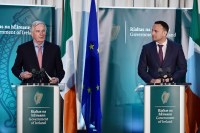
Moves by the EU to try to stop British armed forces from accessing the Galileo satellite system, and to prevent British companies from bidding for work on it, are, as one senior UK official told the FT, ‘outrageous’. Britain has contributed 12 per cent of the costs. The EU’s argument that to allow British involvement would be a security risk are perverse, given that China, Israel, Ukraine and Morocco are participating in the project. Does anyone really think that relations between post-Brexit Britain and EU will sink so low that European governments will consider us more of a security risk than China? Galileo isn’t principally a military system at all. It is

Why no deal preparations must continue

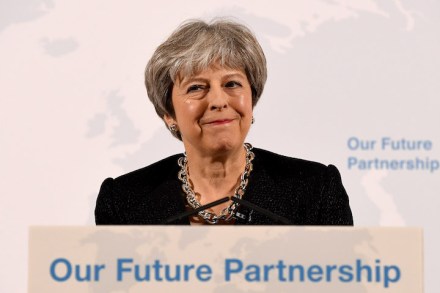
Theresa May has had by far her most successful EU Council this week. The terms of the transition deal were signed off and, in a genuine diplomatic achievement, she got the EU to collectively recognise that no one other than Russia could have been responsible for the Salisbury attack. But as I say in The Sun today, that doesn’t mean the government should ease off on ‘no deal’ planning. There is a sense in Whitehall that with the negotiations progressing well, there’s not much point in rocking the boat by preparing for a no deal scenario or spending money on things that might not ultimately be needed. One of those

Cambridge Analytica row moves to Brexit

The Cambridge Analytica row looks set to move from the US presidential election to the EU referendum. After Christopher Wylie blew the whistle in the Observer and claimed that Cambridge Analytica used questionable Facebook data to win the US election, the paper looks set to re-focus its investigation on the Brexit campaign. In an 8,000 word blog post, Dom Cummings – the Vote Leave strategist – says that the Observer and Channel 4 investigation has moved onto Brexit. Cummings says that the author behind the investigation – Carole Cadwalladr – has sent Vote Leave figures a list of questions concerning allegations from Wylie along with a number of new whistleblowers.

Brexit’s progress is defying the doom-mongers’ predictions

That EU leaders have agreed to move to the next stage of Brexit talks and rubber stamp the transition period is no great surprise. It took just a matter of minutes this morning for them to wave through guidelines on the negotiations for a future trade deal between Britain and the EU. But while the announcement was something of a foregone conclusion, today’s news is still significant for a simple reason: Brexit talks are progressing in a way some of the doom-mongers said would never happen. Of course, Britain – and the EU, for that matter – isn’t there yet. And a year on from the triggering of Article 50,

The Spectator’s Notes | 22 March 2018

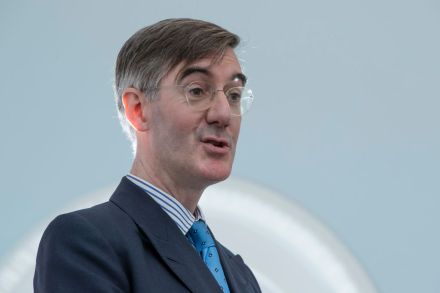
For almost as long as I can remember, Eurosceptic Tory MPs have been defined by the media as ‘head-bangers’. As a result, few notice that they scarcely bang their heads at all these days. The European Research Group (ERG), now led by Jacob Rees-Mogg, is surprisingly united, and makes most of its arguments blande suaviterque. The noise of craniums bashing themselves against Pugin panelling is much louder on the other side — Anna Soubry in the Commons, Andrew Adonis in the Lords. The Eurosceptic head-bangers are being particularly cautious about this week’s transition deal. Although they dislike most of it, they broadly accept the whips’ arguments that if the party can agree

Losing control

If Brexit was going to be as easy as some of its advocates had believed, we would not have had weeks such as this one. It’s hard to interpret the recent agreement over the transition period as anything other than a capitulation to EU demands. Theresa May has quietly scrubbed out her ‘red line’ on the rights of EU citizens and the jurisdiction of the European Court of Justice. Nationals of other EU countries will be free to move to Britain, seek work here and have their rights protected by the court until 31 December 2020. Moreover, she has agreed to UK waters being open to EU trawlers until that

How both Brexit camps are messing up on passports

The blue passport has become one of those symbols of Brexit, mocked by Remainers and taken really very seriously by Brexiteers. So it’s fitting that the row about is production tells us so much about the way the two camps operate. The current manufacturer of the Burgundy passport is De La Rue, a British supplier, and today that company complained to the BBC that Franco-Dutch firm Germalto had won the contract for the blue passport. Cue nervous responses from ministers such as Matt Hancock about the passport, and plenty of hyperbole from both Brexiteers and Remainers about the news. Those who didn’t want Britain to leave the European Union are

British passports being made abroad isn’t a ‘national humiliation’

The new British passport being made abroad is a perfect symbol for Brexit Britain. For after we leave the European Union, we should be an open, free trading nation. If a French firm is offering to make our passports to the requisite standard for a lower price than any British company, then the contract should go to that firm. Let’s leave the Colbertism to the French. Rather than being all defensive about this contract going to a foreign firm, the government should be pointing out that this approach will save the taxpayer money.

We were never going to take back control of our fishing waters

My decision to vote Remain was driven in part by an exercise in which I tried to identify anyone close to me in Yorkshire — family, neighbour, business owner, farmer — who was worse off as a result of UK membership of the EU. The only people uncontestably in that category, I concluded, were the east-coast fishermen whose livelihoods have been eroded by 45 years of punitive quotas and unfair competition. So I felt for them on Monday, when their interests were traded away yet again as part of the Brexit ‘transition’. Instead of being released from the Common Fisheries Policy in March 2019, as Environment Secretary Michael Gove proclaimed

Let’s hear more of the moral case for Brexit

How many times over the past few months have some remain supporters tried to tell us that tariffs on imported goods are a very big deal indeed? Were trade between Britain and the EU to revert to World Trade Organisation (WTO) rules, they assert, the UK economy would be reduced to ruins. Food prices would soar, leaving millions scrabbling around in bins. British firms will never export anything ever again. This morning comes a slightly different tack. Actually, it seems that tariffs don’t really matter all that much at all. Removing them, according to reports broadcast loudly at various points during the Today programme this morning, will hardly affect consumer

What the papers say: The verdict on the Brexit transition deal

It wouldn’t be Brexit if everyone was happy, so it is no surprise that not everyone is pleased with the latest developments in negotiations. Britain’s Brexit transition deal has been called a betrayal, while Jacob Rees-Mogg said the government had given away too much in a ‘very unsatisfactory’ agreement. But the Sun says it won’t join in those criticising the deal. After all, the paper points out, ‘no one gets everything they want from a negotiation’. Of course, it is right to ‘sympathise’ with Scottish fisherman who will be disappointed that the EU will, for now, continue to set fishing quotas. Yet it is clear that ‘the agreement could not

Brexiteers smell something fishy in the transition agreement

The Brexit transition draft agreement is in – and it’s not all smooth sailing for the UK government. In a press conference, Brexit negotiators Michel Barnier and David Davis heralded the proposed terms for the implementation period as a ‘decisive step’ towards achieving an orderly Brexit. However, it’s clear that the government will have to rein in some disorderly MPs before it’s signed off by the EU27 on Friday. As proposed, the transition period will end New Year’s Eve 2020, three months earlier than expected. In terms of the pros for the UK side, the government will be able to negotiate and sign trade deals during the transition period and there is no longer a

Is the UK uninvestable?

It is always a pleasure to spend time in the company of Messrs Neil, Nelson and Forsyth. True to form, an evening of lively dialogue, in a packed auditorium at the Royal Institute of British Architects, discussing the implications of the chancellor’s spring statement last week, did not disappoint. Prior to the event I have to admit to being a tad gloomy. This had less to do with the cold I was nursing, and more to do with a call I received recently from a broker friend of mine. He told me that one of his clients, running a multi-billion dollar global equity fund out of New York, had just

The Spectator’s Notes | 15 March 2018

Gimson’s Prime Ministers, out this week, is a crisp and stylish account of every one of them. I happened to be reading Andrew Gimson’s admiring essay on George Canning (PM for 119 days in 1827) just after Jeremy Corbyn’s parliamentary remarks about the Salisbury poisoning. The way Mr Corbyn talked, one got the impression that it was Britain which had caused Mr and Miss Skripal to be poisoned. Canning had a gift for light verse. He satirised the sort of Englishman who adored the French Revolution: ‘A steady patriot of the world alone,/ The friend of every country but his own.’ That Phrygian cap fits Mr Corbyn perfectly. It is

Steve Bannon: Brexit is down to Nigel Farage

During the EU referendum, there was a fierce rivalry not just between Leave and Remain but between the two groups campaigning for Brexit. It’s safe to say there was little love lost between Vote Leave – fronted by Boris Johnson and Michael Gove – and Leave.EU which relied heavily on Nigel Farage. So, which side swung the vote? According to Steve Bannon – President Trump’s former adviser – it was all down to Farage. In an interview with Spectator USA, Bannon says that Brexit was down to two things: the website Breitbart London and… Nigel Farage. ‘Brexit would not have happened if Breitbart London had not started,’ he claims, referring

May is finally embracing Osborne’s agenda

Here are the two words that matter most in today’s Spring Statement: “balanced approach”. Those words appear five times in the official text of Phillip Hammond’s speech, and I suspect we’ll hear them again through the course of this year and beyond. Here they are in context: “We will continue to deliver a balanced approach. Balancing debt reduction against the need for investment in Britain’s future. Support to hard-working families through lower taxes. And our commitment to our public services.” In terms of macroeconomics, this is a possible signal that in the Budget in the autumn, Hammond will finally yield to arguments that have been made in No 10 and elsewhere

Minutes of an EU coup: How Martin Selmayr made his move

Martin Selmayr’s power grab, elevating him to the post of Secretary-General and putting him in charge of 33,000 staff, was a brilliantly-executed Brussels coup. As Jean Quatremer reveals in The Spectator, the double promotion of Juncker’s chief of staff was over in nine minutes flat, and was described by one of those present as an ‘impeccably prepared and audacious power-grab’. So how did he do it? And how can such skullduggery be covered up? On Friday, the European Commission slipped out the minutes for the meeting on February 21st at which Selmayr earned his promotion. Early in the meeting, we learn that the job of Deputy Secretary General was vacant: But then

Unilever’s decision on their future will be highly symbolic

This is an extract from Martin Vander Weyer’s ‘Any other business’ column, in this week’s Spectator.  Unilever, the consumer goods conglomerate formed in 1929 by the merger of Margarine Unie of Rotterdam with Lever Brothers of Port Sunlight, is a model of cross-Channel collaboration that pre-dates the European Union we’re about to leave. So the decision due this month as to whether the group will no longer maintain dual head offices — which means closing London but keeping Rotterdam — will be highly symbolic. If the move not only goes ahead but also entails doing away with dual fiscal entities and dual stockmarket listings, Unilever will henceforth be a wholly

Vince Cable, not Brexit voters, is the one stuck in the past

Everyone, understandably, is focusing on the white ‘nostalgia’ bit of Vince Cable’s speech to the Lib Dem conference. His slur against older Brexit voters, whom he thinks voted against the EU because they want to go back to a world where ‘passports were blue, faces were white and the map was coloured imperial pink’, has caused a stink, and rightly so. But there was something else in the speech too that ought to send shivers down the spine of all of us who believe in democracy. Something which captured better than anything else in recent months just how fragile the ideal of democracy is in this era of political-class hysteria