Boxing

Boxing not so clever

For Horace Hopper, the half-breed protagonist of Willy Vlautin’s bleak new novel, essential truths come slowly, and usually too late to do him any good. Abandoned by his Native American mother and Irish American father, he has exiled himself from the only people who love him, an elderly couple on a sheep ranch in deepest Nevada. His one idea for becoming ‘somebody’ is to transform himself into a world-champion lightweight boxer with a wholly fabricated Mexican identity. ‘Mexican boxers are the toughest... true warriors who never quit,’ he believes. Only well into the novel does it dawn on him that his self-inflicted loneliness is ‘a sort of disease’, not a manly test of character that will redeem his young life.

High life | 26 October 2017

I hate to say this, but the quality of life in the Bagel has crashed in a Harvey Weinstein-like way. The city has always had a sort of rollercoaster feel, its ups and downs driven by Wall Street and budget cuts, but its present state is the worst I’ve experienced by far. When I first came to New York, it was the true centre of the world. It was after the war and Europe was in ruins. What glamour there was in the world resided in the city. People dressed to the nines, women wore hats and gloves, and manners were far more important than money.

The straight dope

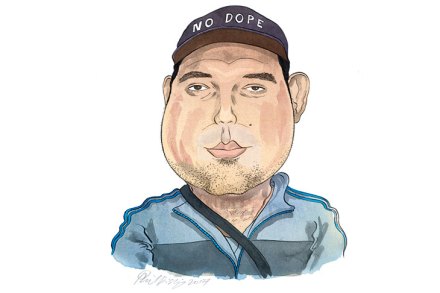
It’s not easy to get hold of Ángel Hernández, the legendary Mexican chemist who for a decade provided illicit performance-enhancing drugs to numerous athletes, including, he claims, all eight 100 metres finalists at the Beijing Olympics. It took me just over a year of trying. The FBI also struggled. The story goes that when they eventually caught up with him in 2005 he had been holed up in a hotel room in Texas, living under an assumed name for two years. Presented with numerous incriminating wire-tapped telephone conversations and bank statements as part of the investigation that eventually sent three-time Olympic gold medallist Marion Jones to prison, Hernández became a state witness in return for avoiding chokey.

Don’t waste your money on Mayweather-McGregor

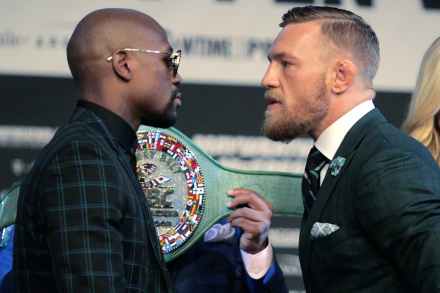
This weekend boxing will be the centre of attention as Floyd ‘Money’ Mayweather steps into the ring for the 50th time to take on debutant pro-boxer and UFC fighter Conor McGregor. It is a bizarre match-up that has been made purely with dollar signs in mind – millions of them. Much of that money will be made in these final days before the two men step into the ring in Las Vegas. The TV companies will do a roaring trade as people rush to book the fight on pay-per-view and bookies will hardly be able to keep the smiles from their faces as the cash rolls in for McGregor, from those who either have blind faith in their Irish hero, are attracted by the big odds or have fallen for the ludicrous hype and believe he stands a chance.

The age of Joshua

Every so often comes a moment that can set the history of sport on a different trajectory. I believe we will witness such a moment on Saturday when Anthony Joshua, of Golders Green no less, fights the veteran Wladimir Klitschko for the Heavy-weight Champ-ionship of the World. At Wembley Stadium, not a Las Vegas car park. This is a battle of the ages and for the ages, and it is right here in London. For those of us who were glued to barely audible radios at 3am to hear epic US fights or flogged around seedy London cinemas for a live transmission, the romance, the magic and the brutal beauty seems to have gone out of the heavyweight game. The story of Muhammad Ali, and the brilliant film of his Rumble in the Jungle, When We Were Kings, now feels like a romantic confection.

Fighting chance

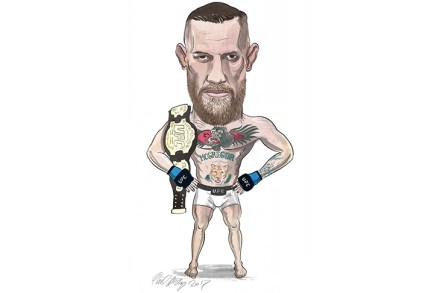
Middle age is OK by me. National Trust membership, a Waitrose loyalty card, lying on the sofa drinking red wine and yelling at the telly — since I turned 40, this stuff all just feels right. But by a mile, the best consolation of middle age I’ve found is the cagefighter Conor McGregor and living vicariously through his kicks, punches and verbal smackdowns. How dull my previous enthusiasms for cricket, tennis and football now seem by comparison with the heroic derring-do of this 28-year-old killing machine, a former plumber from Crumlin in Dublin.

The truth about the fox hunting ban

During my years at the League Against Cruel Sports, the one single message we impressed upon people at every opportunity was that a ban on hunting with dogs was popular, simple and inexpensive. And animals, of course, would be saved from a cruel death. This belief was encouraged by a Tony Benn quote, which refers to everyone suddenly being on the winning side after any social change: ‘The change happens and you can't find anyone that doesn't claim to have been fighting for it with you.’ It was echoed shortly after I had left the LACS (having become disillusioned with the campaign and doubtful that any genuine animal welfare benefit would be gained by a ban on the use of scenting hounds).

Are hunt saboteurs simply out to harass people?

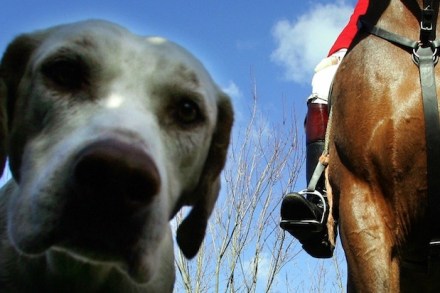
Boxing Day is the one day of the year when people really come out en masse to support their local hunts. Over a quarter of a million people are expected to show their support wherever the meet may be – in town centres, country pubs or the local stately home. It won’t just be hunt supporters going out, though. Twelve years after the Hunting Act, hunt saboteurs will be out in force as well. This is despite the fact that in the past two years, no registered hunts have been prosecuted under the Act. Surely, many people would argue, this means that hunts are sticking to the law, making hunt saboteurs redundant? But this doesn’t seem to be the case.

Banning shops from opening on Boxing Day is a terrible idea

Britain was once a nation of shopkeepers. But one wonders for how much longer. As if the combination of Amazon, councils’ parking charges and above-inflation business rate rises wasn’t bad enough, we now have a petition. Of course, we do. The petitions wants all large shops to be shut on Boxing Day, as they are on Christmas Day. It argues that the people who work in shops toil very hard in the run up to Christmas. This is true. It then argues, 'retail workers [should] be given some decent family time to relax and enjoy the festivities like everyone else'. Why? Why should the government legislate to ensure we can all relax?

Barometer | 6 October 2016

Tenement Scots John Cleese referred to the editor of this magazine as a ‘tenement Scot’. Do more Scots live in tenements? — The term tenement became associated in Scotland with 14-storey blocks built in Edinburgh in the 18th and 19th centuries. One collapsed in 1861, killing 35 residents and leading to an Improvement Act which largely did away with the old blocks. — Today, 38% of homes in Scotland are flats or maisonettes, markedly higher than the 21% in England and Wales. But only 14,900 (0.6%) are ‘buildings in multiple occupancy’, with shared facilities like the original tenements. More than a landslide Hungarians voted by 98% to 2% to reject the EU’s plan to resettle a share of refugees in the country.

Kids’ stuff | 6 October 2016

When a new TV channel calls its flagship food show Fuck, That’s Delicious, we might surmise that the Reithian ideals are not foremost in its corporate philosophy. You probably haven’t heard of Viceland. You certainly haven’t watched it. It seeped on to the airwaves with little fanfare and few viewers. Viceland is the new 24-hour TV channel of Vice Media, the Canadian-American outfit that describes itself as the ‘world’s preeminent youth media company and content creation studio’. Vice began in 1994 as a magazine but now encompasses a news division, a record label, a film studio and myriad digital ventures.

The horrors of French colonialism

We can all share the anguish in the downfall of a simple soul — for movie-goers Brando’s despairing ‘I coulda’ been a contender!’ in On the Waterfront still resonates — but I have a problem with heroic thickos: Othello, so easily duped; purblind Lear… So I’m ambivalent about the leading character in the new novel by the French-Algerian writer Yasmina Khadra — his wife’s name, adopted by Mohammed Moulessehoul to evade the military censors when he was an officer in the Algerian army. The award-winning author of more than 20 novels, most notably The Swallows of Kabul, he now lives in France but retains the pseudonym.

A gentleman among players

I once played in something called the Writers’ World Cup. A lot of people in publishing (novelists, journalists, editors, agents) like to think that if their lives hadn’t been poisoned by books, they might have really made something of themselves — as ballplayers, among other things. This is probably one of the more pleasant delusions. The star of the tournament was a stocky bull-chested essayist who, rumour had it, used to play in some Hungarian minor league. Nobody could take the ball off him. Afterwards the writers got together in some theatre that the organisers had hired and talked for several hours in turns about the meaning of football. I guess this is what we were good at. George Plimpton spent a large part of his writing career putting this delusion to the test.

Barometer | 9 June 2016

Boxing brains Muhammad Ali died aged 74, after more than 30 years with Parkinson’s Disease. How many boxers suffer brain damage? — A 1969 study by A.H. Roberts examined 250 retired boxers and found 17% had lesions of the nervous system. Many had started out in the 1930s, when a professional boxing career could involve over 300 bouts; it’s fewer than 20 now. — However, brain examinations are now much more sensitive. A 2012 study by the University of Gothenburg of 30 Swedish boxers found that 80% had protein changes indicating brain damage. Hideously white? A BBC memo revealed it was seeking an ‘ethnically diverse’ presenter with a ‘northern accent’.

The brain-damage game

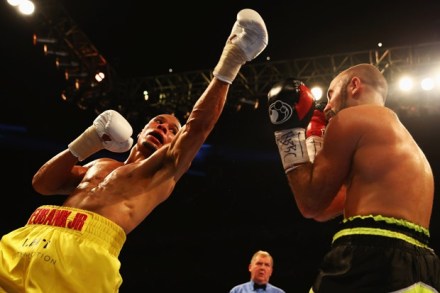
In the course of a queasy hour in Harley Street 30 years ago I learned a great deal about the brain — what Woody Allen called ‘my second favourite organ’ — and altered the course of my life in sports writing. Dr Peter Harvey concluded: ‘Boxing is a contest in which the winner seems often to be the one who produces more brain damage on his opponent than he himself sustains.’ Last weekend, after a boxing match for the British middleweight title, Nick Blackwell was in an induced coma with bleeding to the brain. Things would have been a good deal worse if his opponent, Chris Eubank Jnr, had not been told by his corner to stop hitting Blackwell in the head and confine himself to body shots.

Portrait of the week | 31 March 2016

Home The Indian company Tata decided to sell its entire steel business in Britain, putting more than 15,000 jobs in jeopardy. The buy-to-let business was squashed by the Prudential Regulation Authority imposing more stringent borrowing criteria in parallel with an increase in stamp duty from this month. The Bank of England’s Financial Policy Committee said that ‘the most significant’ domestic risks to financial stability were connected to the referendum on EU membership. The French utility company EDF agreed to take on part of its Chinese partner’s financial risks from cost overruns in building the Hinkley Point nuclear power station. BHS, the department store chain, attempted to secure its future in the face of a £571 million pension deficit.

Losing the plot | 31 December 2015

On the face of it, ITV’s Peter & Wendy sounded like a perfect family offering for Boxing Day: an adaptation of J.M. Barrie’s novel, with a framing story about how much Peter Pan can still mean to children today. In fact, though, the programme suffered from one serious flaw for any Boxing Day entertainment — if you were slightly drunk, slightly hungover or both, it was almost impossible to understand. Then again, I suspect that even the most weirdly sober of viewers might have struggled with a drama that never seemed to know the difference between the intriguingly suggestive and the utterly baffling. The opening sequence played to one of its undoubted strengths, with an introductory cameo from Stanley Tucci’s Captain Hook.

Lover and fighter

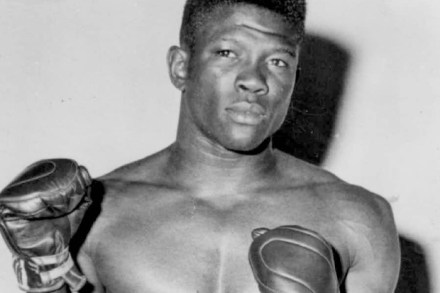
I don’t like boxing. If I ever get into a boxing ring, I’ll be in the corner with the governor of California, Edmund ‘Pat’ Brown, who in 1963 called for ‘the abolition of this barbaric spectacle’ because another man had just been beaten to death in the ring. That man was Davey Moore, who had defended boxing before it killed him on the grounds that no one stopped the Indianapolis 500 when racing drivers get killed. But another dead man is the focus of this book: our hero is the captivating, frustrating, brutal Emile Griffith, who we meet at the age of 22, ‘happy and beautiful’, and who one year later battered to death the Cuban fighter Benny Paret, the first man whose death was shown live on television (the second was Lee Harvey Oswald).

Anyone for ice tennis?

Scholarship for its own sake has rather gone out of fashion, although I’m sure Spectator readers would be the last people to worry about that. But what of scholarship for barely any sake at all? A book like this, the result of enormously diligent library ferreting, doesn’t have any pressing reason to exist, but I am glad it does. Its pointlessness is its pleasure. Edward Brooke-Hitching has subtitled his work ‘The Most Dangerous & Bizarre Sports in History’, but what actually characterises these 90 pastimes is that no one plays them any more, usually for good reasons. Some of them were simply too cruel.

A reliable obesity survey? Fat chance

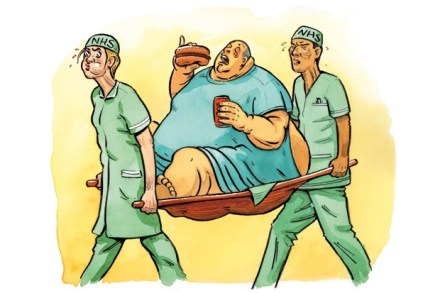
More excellent news for Team UK. Apparently we are now the second fattest people in Europe - and are rapidly catching up on the humongous, goulash-obsessed Hungarians, who currently hold the coveted number one spot. However – the news gets better. The survey was undertaken before Christmas Day: the morbidly obese Magyars tend to eat low-cal fish for their seasonal dinner, whereas we consume vast amounts of turkey, potatoes roasted in goose fat, steamed puddings, brandy butter, orange or mint flavoured Matchmakers and Terry’s Chocolate Orange (counts as one of your five a day, I think). So we may well have caught up already.