Boxing

Forgive us our Christmases as we forgive those who Christmas against us

After lunch on Christmas Day my father always stood at the sink in his apron and yellow Marigolds and did the washing-up. Rolling up his shirtsleeves the gentleman’s way, as he claimed it was, with two turns maximum to just below the elbow, he couldn’t wait to get started. I can see him now, paper hat, suds up his arms. However, the underlying and perhaps most pressing reason for his doing the washing-up all afternoon was that he was a furtive drinker. When my father courted my mother, he led her to believe that he was a non-smoking, teetotalling Christian believer, when in truth he was the exact opposite of those three ideals; and though a long one, their marriage essentially foundered on the rocks of those discrepancies.

When boxing ruled the world

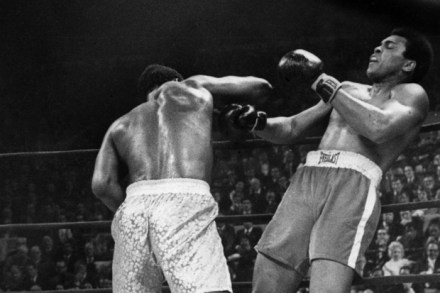
The early 1970s was a good time for heavyweight boxing. Indeed, it was probably the last truly great age for the sport. Flamboyant fighters contested brutal matches in exotic locations, from the Philippines to the Caribbean. The world watched open-mouthed. The marketing slogans attached to some of those fights remain instantly recognisable: who has not heard of the Rumble in the Jungle or the Thrilla in Manila? During these years boxing, and particularly American heavyweight boxing, was the most prominent and glamorous sport on the planet. Boxing in the early Seventies was also culturally important in a way that it is not any more. The sport was briefly about more than money and pain. It spoke to the politics of war, race, religion and international diplomacy.

Charles Saatchi’s letter to Taki – I’m a cage fighter. Still want to insult me?

We're putting the new Spectator to press this morning, and we have an interesting reader's letter from Charles Saatchi. It's addressed to Taki, as opposed to the editor, and takes issue with his disobliging references last week. He has this to say: 'Dear Ms Taki [sic], Although the Spectator is a lovely read, I always skip your column, I'm afraid. I am simply not interested in your social life.  I know that you delight in telling readers that your friends of Prussian nobility find you hilariously entertaining company at their swanky Europoncy parties. But it was very hapless of you to spring to Nigella's defence last week, as she always found you toe-curlingly vile, and would have been aghast at having you as her valiant supporter.

Deserter, wifebeater, great poet: the shame and glory of Vernon Scannell

Vernon Scannell was a thief, a liar, a deserter, a bigamist, a fraud, an alcoholic, a woman-beater and a coward. Plenty of material for a biography, then, especially given that he was also a novelist, a critic, a memoirist, a boxer, a teacher, a broadcaster, a loyal friend, a passionate lover and ‘a fun grandfather’. Most of all, he was a poet. Walking Wounded was the title of a Scannell poem and collection published in 1965, and James Andrew Taylor is right to use it as the title for this biography. Beaten viciously by a thug of a father, uncomforted by an unloving mother, by the time he was 19 he was himself a father (of a son he never met) and a soldier, and soon to be a deserter, wounded chronically in mind if not in body.