Boris johnson

Boris and the Brexiteers are talking nonsense about Britain’s trade policies

Meet Boris Johnson, Britain’s new chief trade negotiator. I admit it is an effort to imagine Boris in that parish, haggling with dry regulators over technical barriers to trade like phytosanitary rules and mutual recognition of standards in nuclear engineering. Yet Boris has great aspirations for Britain’s future trade deals, and his gusto is certainly needed if the UK is to replace its current market integration with Europe. Yet relish for the Brexit cause hides neither his confounding story about Britain’s future in trade policy nor his obvious ignorance of the matter. Unfortunately, his fellow Brexiteers do little to suppress the suspicion that, on post-Brexit trade policy, they really have no idea what they are talking about.

The Spectator podcast: Eugenics, Tory wars and poetry

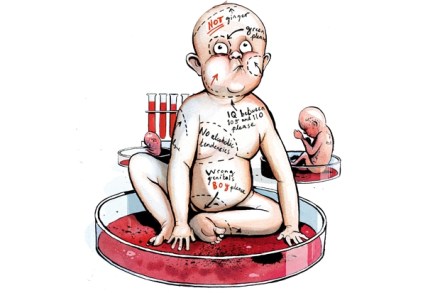
We're delighted to have Berry Bros sponsor our flagship podcast. For some years now their 'Good Ordinary Claret' has been The Spectator's house red, served to all our guests (who are always impressed).  It's just £9 a bottle. Lara Prendergast presents this week's podcast. She speaks to Fraser Nelson about the return of eugenics - which, according to his cover article, is back with a vengeance. He's alarmed - but Toby Young isn't. He says eugenics should be on the NHS so the poor can have more intelligent babies. Next, James Forsyth discusses the latest in the Tory wars over Brexit.

Can anyone stop Boris?

Most MPs greet the parliamentary recess with a sense of relief. But Conservatives are welcoming this Easter break like the bell at the end of a boxing match. They are exhausted, tempers must be cooled and they now have a fortnight to think about how best to stop their split over the EU referendum becoming something more permanent and debilitating. Some in the party have long hated their own colleagues more than anyone else ,and they have taken full advantage of the excuse the referendum offers for verbal violence. As one Cabinet minister admits: ‘The extreme 10 per cent on either side of the Tory party absolutely loathe each other.’ At times it has seemed like a bar room brawl in which decade-old scores are settled.

Why I feel compelled to defend Boris

I got Boris Johnson into trouble once, without meaning to. The two of us had been driven hither and thither across Uganda by Unicef in the back of an expensive Mercedes 4x4 to gaze at the fatuous projects they had delivered for the benighted natives. We had been chosen for the trip because we were perceived, rightly, to be unconvinced by the efficacy of some western foreign aid programmes and even less convinced — in my case, at least — by the UN. Our chaperones were two humourless Scandinavian women who ferried us both from one remote village to the next: ‘Look, here we have built a women’s drop-in centre,’ one of them would remark proudly of a breezeblock edifice in some pitiful settle-ment which primarily needed a road, a school, some industry etc.

Are Boris’s admirers prepared to have their hearts broken?

When I was 18, I had my first tutorial on Anglo-Saxon history. I cannot remember the details but the don talked of the king of Mercia, or some such, marrying his daughter to the son of the king of Northumbria, or somewhere or other, because of the political advantages the union would bring the two crowns. The teenage Cohen listened appalled. 'You mean,' I cried, 'they didn’t love each other?' In a voice so acid, it might have burnt through the hull of a battleship, the don hissed: 'I do not subscribe to the Mills & Boon school of British history.' After that encounter, I stopped subscribing too. Views of the veracity of the man it appears will be our next prime minister fall into two camps.

In defence of Boris Johnson

It is good that Matthew Parris has taken on Boris. The Mayor has had too easy a press in many quarters. There is a good reason for this: he is one of us. There is a bit of the Bullingdon in Fleet Street: we are often too disinclined to attack our own. Matthew Parris acknowledges this, and the vitriolic nature of his Times column on Saturday is an attempt to redress the balance. But for me, my objection is not that Matthew has gone over the top in his attack on Boris – it is that his line of attack is fundamentally wrong. The same is true of Nick Cohen’s blast yesterday on the same subject. Let’s brush over Matthew’s complaint that a man who once supported Clause 28 has no right to boast on an LGBT ‘out and proud’ video.

Would Brexit mean Boris as PM? If so, should we worry?

This time last year, Matthew Parris was about the only commentator predicting that the Tories would win a majority. In his Times column today, he says he is now beginning to think that Britain will vote ‘out’ – and he looks at the consequences. Specifically, Cameron’s likely resignation and a summer Tory leadership campaign with Boris Johnson as the favourite. It all might feel a bit premature, but Matthew Parris is one of the most prescient writers in Britain (as Spectator readers know). If Britain does vote out and Cameron quits, then Boris would be the favourite (see graph, below). And then, gloves would come off.

Jo Johnson on the debate dividing the nation: ‘it’s brother against brother’

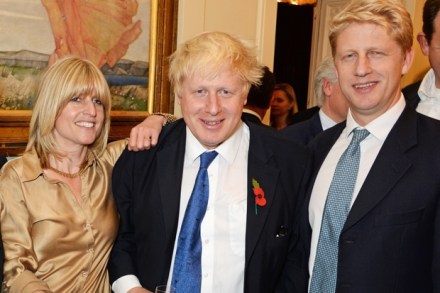
While Boris Johnson is firmly behind the Out campaign in the EU referendum, his father Stanley, sister Rachel and brother Jo are all backing Remain. So, has the difference in opinion led to any family conflict? Last night at a French embassy Jo -- the minister for science and universities --  appeared at first to hint at such problems. He gave a speech, which he began in French, on the great row now gripping the nation and tearing families apart: ‘Everybody must declare their position. Families are divided; brother against brother... I speak of course of the crucial debate for the French language; whether or not to abandon the circumflex.

Osborne suffers from being the Microsoft to Cameron’s Apple

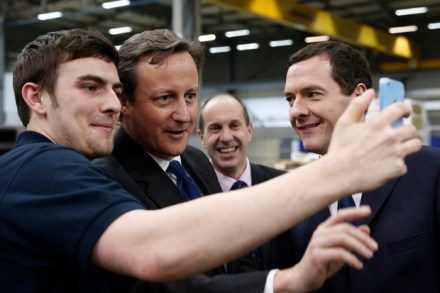
George Osborne’s battle to become Conservative leader may well be tougher than the battle he faces from the Labour opposition. The Chancellor delivers his eighth Budget tomorrow with only 31 percent of Britons believing he has done a good job as Chancellor. The backdrop for his set-piece speech is perhaps more troubling: only 26 percent say their personal finances are better off than last year and 31 percent think the economy has improved. And yet, despite this, Osborne and Cameron have a 15 point lead over Labour’s team on economic trust. While Osborne has received many plaudits for moving to the political centre ground after May last year, he has seen only small benefit so far.

Boris vs Barack in the EU referendum campaign

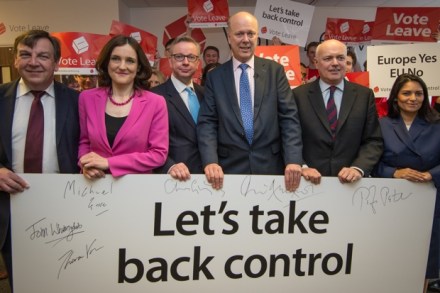
As the EU referendum campaign wears on, the rules of engagement from both sides are becoming clearer - or at least the rules that both sides would like to use for engagement. The Inners are in favour, unsurprisingly, of throwing everything they can at the campaign to keep Britain in the EU. The Outers are annoyed that the Inners are doing this, though their surprise often seems exaggerated: they cannot really be shocked that a government would try to do everything to stop a change that it thinks is a bad thing for the country. Today Boris Johnson sets out one of the rules of engagement that Brexit campaigners would like to see, which is no foreign governments being dragged into this.

Boris, Miss World and Bublé at Lord Ashcroft’s 70th birthday party

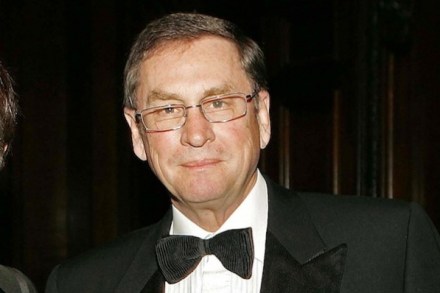
Lord Ashcroft is celebrating his 70th birthday at the Grosvenor House Hotel and Mr S is honoured to be one of the guests. William Hague, Theresa May, Boris Johnson, Iain Duncan Smith, Penny Mordant and even Tom Watson are amongst the guests at perhaps the most lavish birthday party anyone will host in London this year. His 50th and 60th had people talking about them years afterwards, so no one expects his 70th to disappoint. There are actors hired to be paper boys, brandishing fake newspapers with headlines about the noble lord suing anyone who suggests he has turned 70. Ashcroft doesn't seem to mind self-mockery either. Blofeld, the cat-stroking Bond villain that he is often compared to, has been invited.

Osborne can still see off Boris

[audioplayer src="http://rss.acast.com/viewfrom22/thedeportationgame/media.mp3" title="James Forsyth and Fraser Nelson discuss whether George Osborne could still become Tory leader" startat=917] Listen [/audioplayer]When George Osborne last stood up to deliver a budget, he had reached his post-election apotheosis. His economic (and political) strategy had been amply vindicated by the election result. He was, for the first time, regarded as David Cameron’s most likely successor. By the time the Chancellor sat down that status had been confirmed: his announcement of a National Living Wage had shown he was serious about the Tories’ claim to be the new workers’ party.

Eurosceptics are finally having to emerge from their safe space

I accept it may take an effort to imagine Charles Moore dressed in a recyclable hemp skirt and organic cotton kimono, his body adorned with the bangles, tattoos and piercings of a genderqueer National Union of Students diversity officer. But you should try. No, really, you should. Students are not the only ones who lock themselves in safe spaces and no-platform all who disturb their doltish peace with argument. The poor dears of the Eurosceptic right are every bit as precious. Writing in the Daily Telegraph, Moore, of this parish, found the courage to overcome the subaltern status a hierarchical society has imposed on him, and bring us a survivor's testimony on behalf of himself and all his friends.

In campaign seizes on Boris Johnson’s Brexit jobs comments

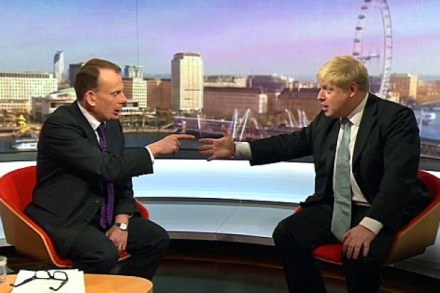
Boris Johnson’s admission to Andrew Marr that Brexit ‘might’ cost people their jobs has quite inevitably been seized upon by the ‘In’ campaign as a sign that a vote to leave would put people’s livelihoods at risk. The Mayor of London came on the show to make the positive case for Britain leaving the European Union. It was his first big challenge as one of the key figures in the Out campaign, and as James argued yesterday, he needs to match David Cameron’s efficacy in putting his side’s case across. He did give an entertaining interview in which he scrapped with Andrew Marr over who had ‘sovereignty’ over the programme, and he did offer some good examples and illustrations of why he wanted to leave. https://soundcloud.

Andrew Marr accused of EU bias over Boris Johnson interview

This week Nigel Farage revealed that he had been left 'worried' about Boris Johnson's ability to campaign for Brexit after his 'slightly shambolic' North London press conference. While the Ukip leader insists he has since come round to Johnson's involvement, Mr S wonders what he will make of the Mayor of London's turn on The Andrew Marr show. Johnson appeared on the BBC show to put forward the case for leaving the EU. However, what followed was a tense exchange between Johnson and Marr as each tried to set the interview agenda. With Boris keen to speak about the single market and sovereignty, he clashed with Marr when the presenter attempted to change topic: AM: Let's move on to tipper trucks just for a second.

Can Boris do as effective a job for Out as Cameron is doing for In?

Pro-Brexit Tory Cabinet Minister would, I suspect, not be complaining about the government’s referendum campaign tactics if they didn’t fear that they were effective. Whatever you think about how he has done it, David Cameron has driven the risks of leaving the EU up the agenda this week. He has pushed the Out campaign onto the back foot. This is what makes Boris Johnson’s appearance on Marr tomorrow morning so important, I argue in my Sun column this week. Out need Boris to drive their agenda as successfully as Cameron is pushing IN’s. The interview is a big moment for Boris too.

Boris tries to drag David Cameron back to talking about his EU deal

Boris Johnson’s attack on David Cameron’s EU deal as achieving ‘no real change’ is part of the very high-profile campaign that the senior Tories campaigning for Brexit are waging. They have covered the media over the past week with interviews, quotes and rebuttals to every claim that the Prime Minister and his allies have offered. What is interesting about Boris’ comments is that he is trying to take the debate back to the question of whether Cameron actually got anything in the renegotiation. The Prime Minister has rather pointedly moved on from talking about that, focusing now on the dangers posed by a ‘leap into the dark’, which requires a debate about Britain’s overall membership, rather than the changes he has secured.

Letters | 3 March 2016

What might have been Sir: Harry Mount points out that Boris Johnson is two years older than David Cameron (Diary, 27 February). Both, however, began their careers in the same year. On 15 June 1988 I interviewed David Cameron for a post in the Conservative Research Department; on 26 July it was Boris’s turn (‘Johnston’ in my diary). The former was signed up to cover trade and industry issues (memorably forgetting the trade figures when Mrs Thatcher asked him for them). Boris was invited to follow in the footsteps of father Stanley, who had been the department’s first environment expert in the Heath era. But journalism lured him away. Would they have forged a lifetime’s close and harmonious friendship if Boris had reached a different decision?

Portrait of the week | 3 March 2016

Home An official analysis by the Cabinet Office said that if Britain left the EU it would lead to a ‘decade of uncertainty’. Opponents of Britain remaining in the EU called the report a ‘dodgy dossier’. George Osborne, the Chancellor of the Exchequer, said that the economy would suffer a ‘profound economic shock’ if Britain left, echoing a communiqué of the G20 which referred to ‘the shock of a potential UK exit’. Boris Johnson revised his suggestion that a vote to leave could bring about a better deal from Brussels; ‘Out is out,’ he told the Times. Sir Jeremy Heywood, the Cabinet Secretary, declared that ministers opposing government policy on the referendum should not be shown government papers on the matter.

The Spectator podcast: Donald Trump’s angry America

In this week's issue, Freddy Gray discusses Donald Trump's success on Super Tuesday. America has been the world's most benevolent superpower, Freddy says, but now its turning nasty. What does Trump's rise say about America? On the podcast, Freddy tells Isabel Hardman: 'It actually says something quite troubling about America. I think the rise of Trump suggests that America's can-do spirit and very positive outlook on the world is changing. I don't think it's isolationism so much as more a kind of nastiness, that Trump reflects. It's a result of the disappointment in Obama. Trump is a sort of bitter, anti-Obama.