Boris johnson

Boris set to unveil ‘ten point plan’ for a green industrial revolution

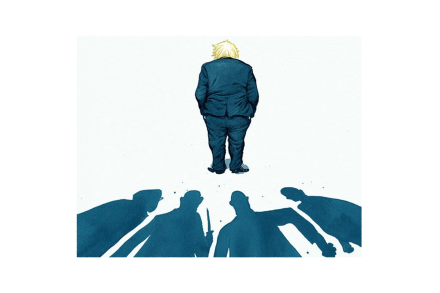
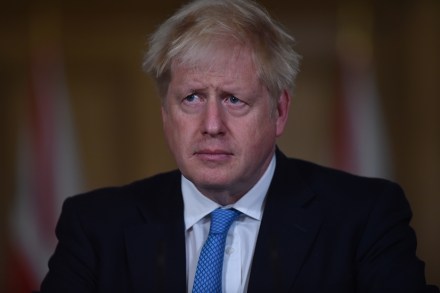
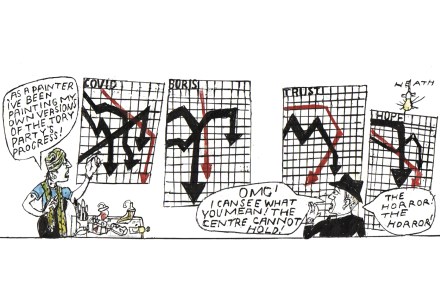
Boris Johnson wants to use this week to relaunch his leadership after a torrid few days in his top team. Downing Street says tonight that the Prime Minister will ‘will make a series of critical announcements over the next couple of weeks that will be a clear signal of his ongoing ambitions for the United Kingdom’. When plans to underline how serious the Prime Minister is about the future are announced like this, you know things are fraught. Things will presumably be no less fraught when Johnson, who is now self-isolating after coming into contact with a fellow MP who has since tested positive for Covid, holds a meeting with the Northern Research Group of Tory MPs tomorrow.

Does Boris have a supporters’ club left in parliament?

Boris Johnson needs to use the departure of Dominic Cummings and Lee Cain to repair relations with his parliamentary party. That is very clear, and the problems have been brewing for months. What is less clear is how much of a group of naturally loyal MPs, who have the same political instincts as the Prime Minister, remains. Johnson is a strange combination of charismatic communicator and loner. Many who have known and worked alongside him for years say they still don't see themselves as his close friends and find it hard to identify a cogent social group around the Prime Minister. His lieutenants had to work hard to build a parliamentary base from which to launch his eventual successful leadership bid last year.

Cummings set to leave No. 10 by Christmas

Dominic Cummings will leave Downing Street at the end of this year, the BBC’s political editor Laura Kuenssberg is reporting. Cummings is one of those rare individuals who has bent the arc of history. He has been crucial, if not indispensable, to several key moments in this country’s recent past. His work at Business for Sterling is one of the things that put Tony Blair off attempting to take the UK into the Euro. Even more importantly, it is hard to believe that Leave would have won the 2016 referendum without the brilliant, heterodox campaign that Cummings devised. Cummings has long been more interested in how government works The victory in that Brexit referendum might have come to very little if Cummings had not returned to the fray in 2019.

Boris won’t be forgiven if his No. 10 chaos makes him cave on Brexit

Mayhem has once again engulfed 10 Downing Street with the dramatic resignation of Lee Cain, Boris Johnson's communications chief. He was with the Prime Minister on the Vote Leave campaign — as had Dominic Cummings, Oliver Lewis and others who have formed a band of brothers in No. 10. Cain's departure put a question mark over the future of the others, which comes at an odd time because the Brexit they all campaigned for is weeks away from a conclusion. There are huge issues facing the government: a second lockdown, due to end on 2 December. The procurement and rollout of a potential vaccine. But another deadline, just weeks away, is Brexit. This is the mission Johnson was elected to accomplish, this is the drama that has defined British politics for the past five years.

Will the government be left suffering from ‘long Covid’?

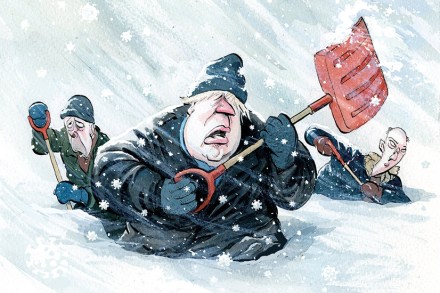
The first full week of the new national lockdown had the potential to be very difficult for Boris Johnson. Although just 34 Tory MPs voted against this England-wide measure, many more are unhappy about it. They have, as Tory MPs now do when they come across things they dislike, set up a group with a three-letter abbreviation: in this case, the CRG (Covid Recovery Group), which will oppose further lockdowns. Adding to the discontent among backbenchers, No. 10 had just U-turned on extending free school meals into the holidays. Tory MPs were left wondering why — as with exam result appeals — they had bothered taking so much flak from the media and the public if the government was going to give way in the end.

Drinking to the glories of Burns and follies of Boris

At least in London, midwinter spring has not been entirely vanquished, and the trees are still a couple of strong winds away from losing their autumn glory. This will give the government some undeserved help. People can sit outside, and the view from windows is not too depressing. Before long, though, those indoors are likely be cursing the PM and his close associates: ‘sic a parcel of rogues in a nation’. Burns and the onset of seasonal bleakness makes one think of the dark. In earlier times in Scotland, Hallowe’en was a characteristic festivity: an attempt to embrace the oncoming winter. Its theme was ghouls and witchcraft. Children, dressed as witches or warlocks, would go from house to house making sepulchral noises.

What will Boris make of a Biden win?

President Donald Trump sees himself as a great friend to the UK: he backed Brexit, likes Boris, and has personal ties to Britain as well. He’s proud of his Scottish heritage, and long before he was running the nation, he was running golf courses in his mother’s home country. But it’s not obvious the UK government always appreciates the President’s expressions of support. The Johnson team made nothing of Trump’s endorsement for the Tory candidate during the 2019 general election. The government is notably squeamish whenever the President lavishes his praises.

Alas, ‘alas’ is losing its irony

Boris Johnson looked unhappy, as well he might, standing at his indoor lectern last Saturday to announce the new lockdown: ‘In this country, alas, as across much of Europe, the virus is spreading.’ He said alas a couple more times during the conference. Normally such a word belongs to the sprinkling of slightly absurd phrases that garnish his speech like particularly curly parsley. But, Ichabod, the fun has departed. Alas, there is less and less irony in saying alas. The Prime Minister is doubtless aware of the classical origin of alas in lassitudo, Latin for weariness. Lassitude came into English in the 16th century. Francis Bacon, the Jacobean Lord Chancellor, not the masochistic painter, wrote: ‘Lassitude is remedied by bathing or anointing with oil and warm water.

Whatever the science of this lockdown, the execution has been a disgrace

The benefit of having a lockdown announced some days in advance is the ability to savour what is about to be lost. People have been able to visit friends and family, not knowing when it will be legal to meet again. Parishioners have attended church to say their farewells, as have small groups of friends and family. Small shops stayed open until midnight on Wednesday to serve customers, restaurants were booked up. Yes, we face the return of Covid-19. But was also face a government that seems in a flap, unable to decide what to do. Boris Johnson has said that this latest lockdown will last only four weeks, and there is no doubt that he means it.

This lockdown comes at a high political cost

Keir Starmer has his first attack line of the next general election campaign. He will say that England’s second lockdown was longer than it needed to be because the Prime Minister didn’t act when he had the chance. If Boris Johnson had listened to the scientists, Labour will say, we’d have had a two week ‘circuit-breaker’ and controlled the virus. As things stand, a man who set his face against lockdown was then forced to adopt one — making it longer, more painful and costing far more jobs. A couple of weeks ago, there was a clear dividing line: Labour wanted national measures; the Tories wanted regional ones. So Starmer can now claim to have won the argument. This has depressed Tory MPs.

Boris’s ‘Captain Hindsight’ attack backfires

Boris Johnson may be able to explain his U-turn on imposing a second national lockdown on England in policy terms, arguing as he did last night that he favoured trying to keep as many businesses operating as possible while taking other steps to drive down the rate of infection. But it is far harder to justify politically because of the way he conducted himself while resisting the idea of the lockdown. The Prime Minister appears to have regarded the difference between his local approach and the 'circuit-breaker' favoured by Sir Keir Starmer as a campaigning opportunity.

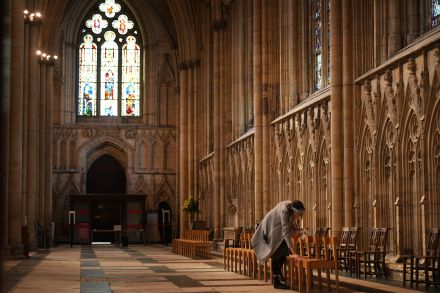
Why has Boris closed the churches?

This morning, my son, who’s 17, was turned away from our local church. The designated spaces for people attending mass were full. He tried to book online at the church down the road - they were full too (and last week they turned my daughter away). It was too late to make an online booking for the lunchtime mass at the London Oratory, but the reservations system for the tea-time mass was still open, so he’s booked that, on a system that hilariously resembles the booking system for a commercial theatre, except that it concludes, which they don’t, with God Bless You.

The long winter – why Covid restrictions could last until April

Not much makes sense during a pandemic but in recent weeks the Covid puzzle has become a deeper mystery. When local lockdowns failed, the solution was to try even more of them. Manchester was put into Tier 3 restrictions when its Covid cases were falling; now there’s talk of a Tier 4. Confirmed infections are nowhere near the 50,000 a day that Boris Johnson’s scientific advisers warned about last month - but the panic now seems far greater. The fear, of course, comes from what officials think will happen next. We’re told that the Prime Minister fears a second wave larger than the first, but we’re not really told why. Decisions are made to tighten restrictions on the basis of figures, scenarios and documents that are not shared with the public.

Boris Johnson is fighting on too many fronts

When Boris ran to become leader of the Conservative party – and again when he campaigned in December’s general election – he was pitched by his supporters as a unifier. Boris was going to get Brexit done and then lead the country into a new era – the spats of the previous half a decade consigned to history’s dustbin. Unfortunately for Boris and indeed everyone else in Britain, that’s not the way things have worked out. Right from the start, Johnson’s premiership has been marked by conflict. Only a few weeks in, he removed the whip from a host of Tory MPs, including the former Chancellor of the Exchequer Philip Hammond. Although many of these MPs eventually got the whip back, the tenor of the times was set.

Boris Johnson needs to face down his own people

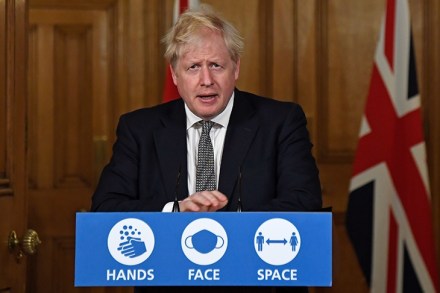
To beat the virus, the government is asking us to keep to simple hands-face-space guidelines. When these are not followed, the virus spreads, but it is still (apparently) the government’s fault, i.e. the people can do no wrong. That was the case too in Athens’s direct democracy, where anyone whose proposal was ratified by the people’s assembly, but then turned out badly, could still be prosecuted for ‘misleading the people’. Even Pericles. In 431 bc war broke out between Athens, a sea-based power, and Sparta, a land-based one. Since Athens’s walls embraced its harbour Piraeus, Pericles proposed withdrawing the whole population inside the walls, and using their marine dominance to supply Athens and attack Sparta and its allies by sea.

Portrait of the week: new alerts, birthday honours and fires on Kilimanjaro

Home ‘The weeks and months ahead will continue to be difficult and will test the mettle of this country,’ Boris Johnson, the Prime Minister, said in the Commons. In a complicated new system meant to be a simplification, English regions were put into one of three tiers of alert level: 1, medium; 2, high; or 3, very high, according to the proportion of coronavirus cases there. In tier 3, further local restrictions could be added. Liverpool was selected for tier 3, in which betting shops and libraries would close and pubs too, unless they sold main meals. Sir Keir Starmer, the leader of the opposition, called for a two- or three-week circuit-breaker national lockdown, with closure of pubs and restaurants, but not of schools.

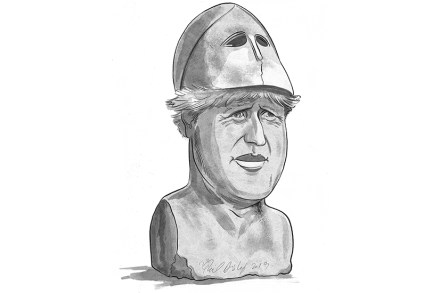
Boris’s hero Pericles didn’t need a spokeswoman

A spokeswoman has been appointed ‘to communicate with the nation on behalf of the Prime Minister’. He apparently needs ‘a protective ring of steel’ and Tories feel that she will be the answer. So getting someone else to say what the PM thinks solves all problems? Really? It is inconceivable that Boris Johnson’s hero Pericles would have sent someone else to speak and answer questions on his behalf before Athens’s democratic citizen assembly. (The spokesman would have been given the world’s shortest shrift — ‘a confession before execution’ — anyway.) The reason why Pericles would never have dreamed of such idiocy was that his success as a statesman depended entirely upon his personal ability to persuade.

Chris Whitty: tier three alone will not be enough

Chris Whitty made clear at tonight’s press conference with the Prime Minister and the Chancellor that he doesn’t think that the tier three restrictions are enough to get on top of the virus in the worst hit places. He was explicit that local councils will need to go even further in terms of closures in some places. Later in the press conference he said that the government ‘knew full lockdown works’ but it was also aware of the societal and economic harm it does, and the government rightly wants to keep schools open. Taken together, the answers strongly implied that Whitty thinks that in Covid hotspots everything apart from schools should be under consideration for being closed. https://www.youtube.com/watch?

Now the Tories must make it their mission to repair the country

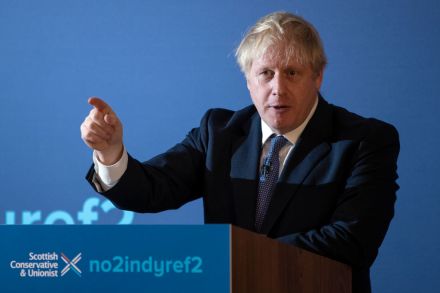
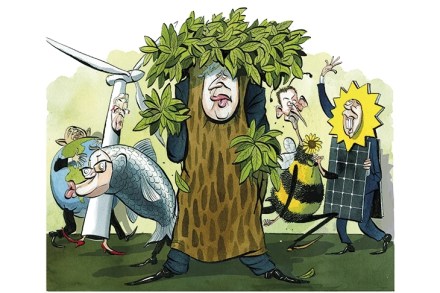
The centrepiece of Boris Johnson’s speech to Tory party conference this year was his Damascene conversion to the merits of wind farms. Some people used to sneer and say wind power wouldn’t pull the skin off a rice pudding, he said — referring, of course, to himself, writing in 2013. Now, his post-Covid plan for Britain is wind farms powering every home by the end of the decade. But the Prime Minister was right first time. When he was dismissing wind power, it was eye-wateringly expensive and was forecast to stay that way for the foreseeable future. No one envisaged, then, how global competition and technology would force prices down.

Portrait of the week: Boris’s wind power pledge, Trump catches Covid and James Bond kills Cineworld

Home Coronavirus was on the increase. At the beginning of the week, Sunday 4 October, total deaths (within 28 days of testing positive for the coronavirus) stood at 42,317, of whom 346 had died in the past week, compared with 212 the week before. Between 25 September and 2 October, 15,841 cases of coronavirus were omitted from official figures, through some blunder with a spreadsheet. As a consequence, on 30 September the official daily tally of 7,109 positive test results should have been 3,049 higher, and so on. Those who tested positive were told but the tracing of their contacts was delayed. Because fewer of those being admitted to hospital were put on ventilators, no use had been made of 30,000 ventilators for which the government had paid £569 million.