Books

Reading is the ultimate life hack

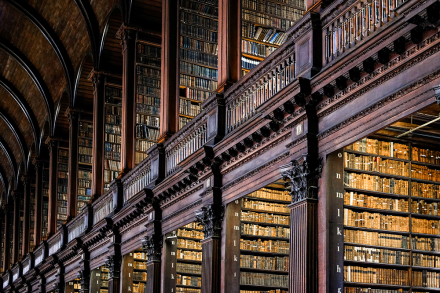
The London Underground used to be a happy place for authors. We would get into a carriage and see rows of people, studiously ignoring their neighbours – unless their neighbour was a dog – and reading a newspaper or an actual, physical book. The same went for the New York subway and, to a lesser extent, all train networks. Today you get into a carriage and everyone is staring into the same phone screens that they stare into most of the rest of the day. Books give us some ability to see through, as well as put into perspective, the troubles of our time I try not to be judgmental about this, since I always try to see the best in people, however disgusting they might look.

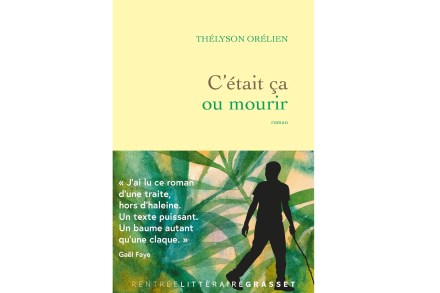
Did AI write the French book of the year?

Many decades ago (or so it seems, it was actually January 2023, but things move fast in AI-world) I wrote a Spectator piece claiming that The End of Writing was coming, thanks to AI. In return for this favor, I got large amounts of angry and derisory scorn, mainly from writerly types, who banged on about the uniqueness of human creation, but also from techy people, who pointed out that as a mere hack I could not possibly know anything about AI, and anyway AI was just a glorified next-word-predictor. The French, being French, have responded with wise philosophy, or cowardly evasion, depending on your taste Now, I'm not the sort of cheap, mean-minded person who says “I told you so,” so I'll just say “I told you so.

The new Sense and Sensibility is not a patch on the old one

From our UK edition

Georgia Oakley’s Sense and Sensibility, which advertises itself as ‘a fresh take for a fresh generation’, has its work cut out. Not only is the Jane Austen novel beloved but there’s also the shadow of Emma Thompson’s sublimely deft 1995 version directed by Ang Lee (with its unforgettably magnificent ugly-cry scene). This one has no such grip on the book, and is considerably drearier and less affecting, but it’s not bad  bad. It’s not Carrie Cracknell’s Persuasion, after which we decided she should never be allowed near Austen again. On this occasion the ‘old take for the old generation’ cannot be surpassed – although well done, fresh generation, for having a go. Top marks. One doesn’t wish to be discouraging.

When will the art world acknowledge this master?

From our UK edition

Watercolours can be fatal for your standing in the art world. ‘As soon as you say you paint in watercolour,’ says Gerard Stamp, ‘you can see people popping you into a pigeonhole – ah, you’re a Sunday painter doing vases of flowers.’ There are many flaws in the aesthetics of the ‘art world’, but this one is unusually absurd. Stamp’s paintings are some of the most beautiful of our time. ‘I presented one to Queen Elizabeth II when she opened Norwich Cathedral Hostry on behalf of all who love the Cathedral. I had an exhibition there… and showed her round together with the Duke of Edinburgh, who took me aside, pointed to a large charcoal drawing and said: “How the bloody hell did you do that?” I’m told the painting is still hanging in Sandringham.

‘I think the best revenge is indifference’: Salman Rushdie interviewed

‘I probably got a one or two seconds look at him before he delivered the first blow,’ recalls Sir Salman Rushdie. For the next 27 seconds, on 12 August 2022, the man whom Rushdie will refer to only as A. (‘for asinine’, he explains) tried to kill the writer on the stage of the Chautauqua Institution in upstate New York. A. slashed through the tendons of Rushdie’s right hand, cut his thigh, stomach and chest, incised a gaping wound in his neck and finally stabbed him in the right eye.

The Hobbit is not a great book

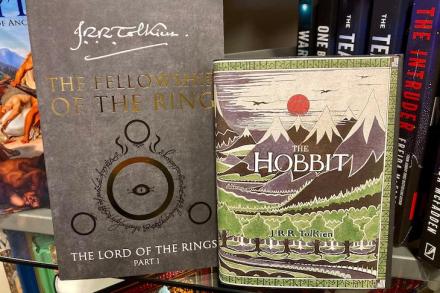
It was 1937, an age away, when JRR Tolkien's book The Hobbit was first released. There are people alive who remember that year, but not many. The Hobbit was published by George Allen & Unwin after Stanley Unwin commissioned a review of the typescript (standard fee, one shilling) from his ten-year-old son, Rayner. When he reviewed The Hobbit, CS Lewis said it was a children’s book “only in the sense that the first of many readings can be undertaken in the nursery.” “Bilbo Baggins was a hobbit,” it read, complete with a ten-year-old’s errors, “who lived in his hobbit-hole and never went for adventures, at last Gandalf the wizard and his dwarves perswaded him to go. He had a very exiting time fighting goblins...

Late Fame is exquisite

From our UK edition

Late Fame stars Willem Dafoe as a postal worker whose single book of poetry – published nearly 50 years earlier – is rediscovered by a coterie of young fans who declare him ‘a genius’. It’s a tragicomedy – a satire on literary self-regard – that also manages to be exquisitely tender, delicate and a deeply layered character study. Dafoe is wonderful and, for once, is centre stage, playing a regular guy rather than some supporting-character weirdo. You can read everything on Dafoe’s face – a face that seems to have more bones than is needed in a face. It’s a face that renders the script hardly necessary.

The truth about modelling for a great artist

From our UK edition

Artists’ models seldom get a chance to tell their side of the story. Yet one model, Anthony Rudolf, believes they deserve to be ‘remembered for their work and their devotion’. His dazzling new book, Office Hours in the Studio of Paula Rego, celebrates one of the most remarkable artists of our time from this unique perspective. Rudolf is a poet, literary translator and the founder of the Menard Press. He and Rego were partners for the last 26 years of her life (though she preferred the less business-like French terms compagnon and compagne). About three months in, he ‘realised you could never get near Paula during office hours, which she worked strictly. I tentatively asked if I could become a model and she flung her arms around me, saying “I never dared ask you!

The man who – inadvertently – invented the 1970s

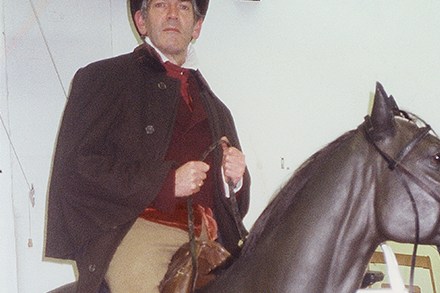
Style, self-evidently among those who pursue an interest in such affairs, is, according to the Comte de Buffon, the man himself – the essence, the heart, the bowel, the bovril. While, among the much greater majority who pursue an ignorance in such affairs, it is an assumed gamut of off-the-peg tics, props, accent – style is something bolted on to a being’s chassis and core in the hope that it will hold. We can be certain which of these two nugatory classifications better suits the late Christopher Gibbs who in the course of his long, more or less antiquarian life encountered Everyone, absolutely Everyone. ‘Everyone’ in this instance unhelpfully signifies little beside the people, per se, whom Gibbs met, smiled at, sold to, bought from, bought for, advised and charmed.

Who will we be without our ability to read?

In Arthur C. Clarke’s 1953 science-fiction novel Childhood’s End, a race of benevolent aliens arrives to take control of Earth and its peoples. They have been sent here, it transpires, to oversee the transformation of the human race from Homo Sapiens – individual, unique, quarrelsome – into a hive mind. The change happens in a single generation to everyone under the age of ten – and parents no longer know what their children are. “All the hopes and dreams of your race are ended now,” the alien supervisor says. “You have given birth to your successors, and it is your tragedy that you will never understand them – will never even be able to communicate with their minds... you will not think them human and you will be right.

read

We have a true book-loving Queen – and she is a marvel

From our UK edition

Shepherd Market, W1, has many ghosts, some of whom are literary. In the shadow of Patrick Leigh Fermor’s former digs – the scene of ‘wild and continuous’ parties in the summer of 1933 – Heywood Hill has just celebrated 90 years of bookselling. In today’s Republic of Letters, we have a true book-loving Queen and she is a marvel. To mark Heywood Hill’s anniversary Her Majesty graciously toured our tiny shop. She talked about her love of all kinds of books (The Cazalet Chronicles in particular) and gamely joined Jerry Vinalon and Jay Lomot, our splendid professional book-packers, in helping them gift-wrap parcels. She signed a postcard which one lucky book subscriber should find in their next package. Not every customer is so fortunate.

Reading isn’t dead

From our UK edition

Do you remember the first time? Picking them out, not knowing what to expect, but compelled by an attraction you couldn’t quite define; fumbling awkwardly, not entirely sure how to get into it but finding your way; discovering a pleasure you’d never yet known, and were desperate to find again. I am, of course, discussing reading for pleasure – a habit that all of us, one hopes, have long since gotten into. There must have been a point at which Young Billy went from his parents trying to force him to read books about trains and tractors to him doing so of his own volition. Or perhaps the transition is smooth, unthinking.

How the office has come to haunt us

Should we hop on a call? Let’s touch base. Let’s take this offline. Let’s circle back to your last slide deck. Let’s get those action items actioned by close of play. We need stakeholder buy-in. We need deliverables. We need to make sure you’re aligned with company culture. We’re concerned you’re not leveraging your core competencies. After careful consideration, management has made the difficult decision to terminate your contract. We’re committed to helping you with this transition. Corporate jargon is zombified language. These euphemisms and elisions are the soulless husks of words, meant to blunt the sharp edges of human emotion (sorry – ‘maintain professionalism’). And they often leave you feeling a sneaking sense of dread.

Why is a chatbot deciding what books our children read?

From our UK edition

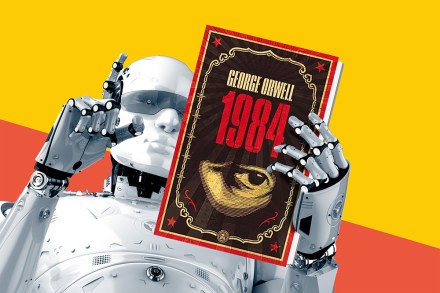
A school in Greater Manchester has stripped 193 books from its library because they are ‘inappropriate’, liable to upset pupils and thus a safeguarding risk. Among the dangerously destabilising material: Michelle Obama’s memoir and George Orwell’s Nineteen Eighty-Four. Who was entrusted with identifying these literary IEDs? An over-zealous head? A prurient librarian? A demented child psychologist? Nope. A humble AI bot. While writing my latest novel, The Hawk Is Dead, much of which is set in Buckingham Palace, I asked ChatGPT to produce a simple floor plan. Not a tough assignment – much less taxing than diagnosing nearly 200 books as existential threats to adolescent wellbeing. It got the Palace’s orientation wrong. For more than 200 years, the East Wing has faced the Mall.

The blessing and burden of belief to David Lodge

From our UK edition

When most readers think of the late novelist David Lodge, it is his peerlessly funny and incisive campus novels, such as Changing Places and Small World, that immediately come to mind. While his satires on progressive academia are indeed some of his finest achievements, this is down to Lodge’s Catholicism, which was not merely a religious faith but a central guiding principle of his writing – if you were being pretentious, you might say ‘a calling’ – and his life. He may have called himself ‘an agnostic Catholic’, and from a religious perspective, this may have been true, but it remained a vital part of his literary career.

Will books soon become extinct?

I am glad that BBC Radio 4 is producing a series called How Reading Made Us, presented by the subtle, super-literate Times of London columnist James Marriott. I must declare an interest. Roughly 98 percent of my earnings over 45 years have depended on the fact that plenty of people like reading. Now we are thinking harder, however, about the fact that form affects substance. The idea of an encyclopedia, for example, as developed (from classical roots) in the 18th century, was that all needful knowledge on a particular subject could be assembled and consulted in a book or series of books. With AI, there is little need for this form. The form of a book, which often seemed so compendious, can now seem cumbersome. Fiction, too, is affected by form.

books

Bring back the book launch

From our UK edition

Last week, I had the pleasure of heading to the Freud Museum in Hampstead for the launch of Zoe Strimpel’s much-discussed new book Good Slut. Not only was the venue one of the most splendid I’ve been to for a party of this kind, but the guest list – which included The Spectator’s esteemed editor – was suitably glittering for a Thursday evening in early March. Everyone was on top form, much jollity was had, and by the time the author gave a suitably witty speech from the top of the staircase that Sigmund Freud once ascended and descended, a fabulous time had been had by all.  Would that this was the norm for all book launches.

Gavin Newsom, the everyman elitist

Young Man in a Hurry is California Governor Gavin Newsom’s attempt to explain himself to a divided country that may soon find him vying for its presidency. He alternates between candor and wile in answering the book’s central question: who is Gavin Newsom? In these pages he constructs a striking hero’s journey, illuminating an insular world of inherited wealth, hereditary political power and ideological contradiction that few Americans will have been exposed to. But he also casts himself as a struggling underdog, a folksy type whose patrician image belies a life of perseverance and a unique set of emotional and psychological deprivations.

Who doesn’t want a better life?

Every couple of years a columnist-cum-novelist will inevitably stoop to shameless self-promotion. In my defence, at least the novel released this month is germane to the political moment. Lest its simple title, A Better Life, come across as lame, I asked the designers of my British and American hardback covers to use imagery that conveys the book’s focal subject matter: immigration. See, proponents of unfettered mass migration have eternally assured us that most illegal immigrants – or as the Biden administration instructed federal law enforcement to call them, ‘newcomers’ – are merely seeking ‘a better life’. This explanation is routinely trotted out as an irrefutable justification for a potentially near-infinite imposition of foreigners on western polities.

The demise of London’s junk shops

From our UK edition

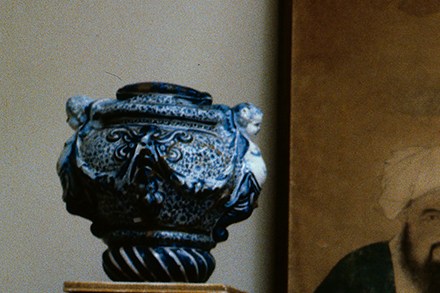
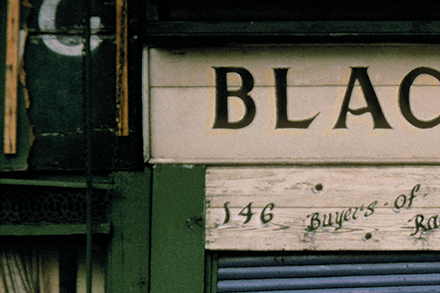
‘The place through which he made his way at leisure was one of those receptacles for old and curious things which seem to crouch in odd corners of this town and to hide their musty treasures from the public eye in jealousy and distrust.’ In Dickens’s The Old Curiosity Shop, Nell Trent’s grandfather loses his precious shop to the malicious money-lender Quilp. London’s junk shops have, it seems, always been under some form of threat. But the forces against them today appear unstoppable. The junk shop is increasingly the sole preserve of the city’s ‘odd corners’ – pushed out by hiked rents, the charity-shop boom with its variety of cost dispensations, and the popularity of eBay and Vinted.