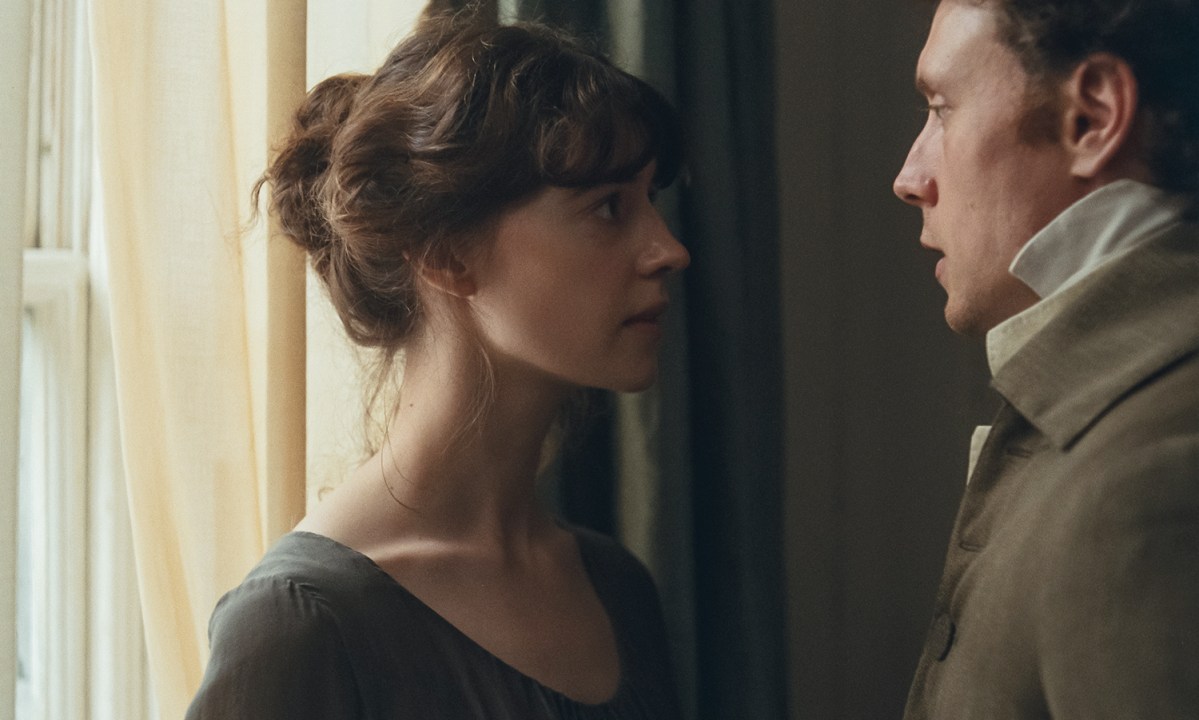
Georgia Oakley’s Sense and Sensibility, which advertises itself as ‘a fresh take for a fresh generation’, has its work cut out. Not only is the Jane Austen novel beloved but there’s also the shadow of Emma Thompson’s sublimely deft 1995 version directed by Ang Lee (with its unforgettably magnificent ugly-cry scene). This one has no such grip on the book, and is considerably drearier and less affecting, but it’s not bad bad. It’s not Carrie Cracknell’s Persuasion, after which we decided she should never be allowed near Austen again. On this occasion the ‘old take for the old generation’ cannot be surpassed – although well done, fresh generation, for having a go. Top marks. One doesn’t wish to be discouraging.
Daisy Edgar-Jones and Esmé Creed-Miles play Elinor and Marianne Dashwood, the sisters who must endure heartbreak to discover the middle ground between sense (Elinor) and sensibility (Marianne). It opens as the novel opens with the sisters, and their mother (Caitriona Balfe), and younger sibling Margaret (Bohdi Rae Breathnach), being ejected from their estate after their father’s death. It’s been inherited by their older half-brother John (Tom Brooke) who is talked down from giving them any income by his dreadful wife Fanny (Stacy Martin).
This is peak Austen comedy. Even if you never read the novel in full just read the first chapter – it’s so brilliantly witty and funny. The fact that this screenplay (by Diana Reid) scoots past it in a desultory, non-humorous way does not imply a deep understanding of either the characters or Austen’s intent. Fanny should be a satirical figure, deployed to mock avarice and cold snobbery, but here she’s about as nuanced as your average Marvel baddie.
The Dashwood women move to a modest cottage under the care of the warm-hearted, unstoppably garrulous Mrs Jennings – played with unstoppable scene-chewing by Fiona Shaw – where they will engage with the three main suitors. John Willoughby, our rogue, is played by Frank Dillane, whose slightly creepy performance I actually preferred to Greg Wise’s charmlessly handsome one in the 1995 film. George MacKay, as Edward Ferrars, understands what’s required, as did Hugh Grant. While Captain Brandon is played by Herbert Nordrum, which will please anybody who never bought Alan Rickman in the role as they had always imagined Brandon as a big, bearded Norwegian fella who couldn’t disguise his accent.
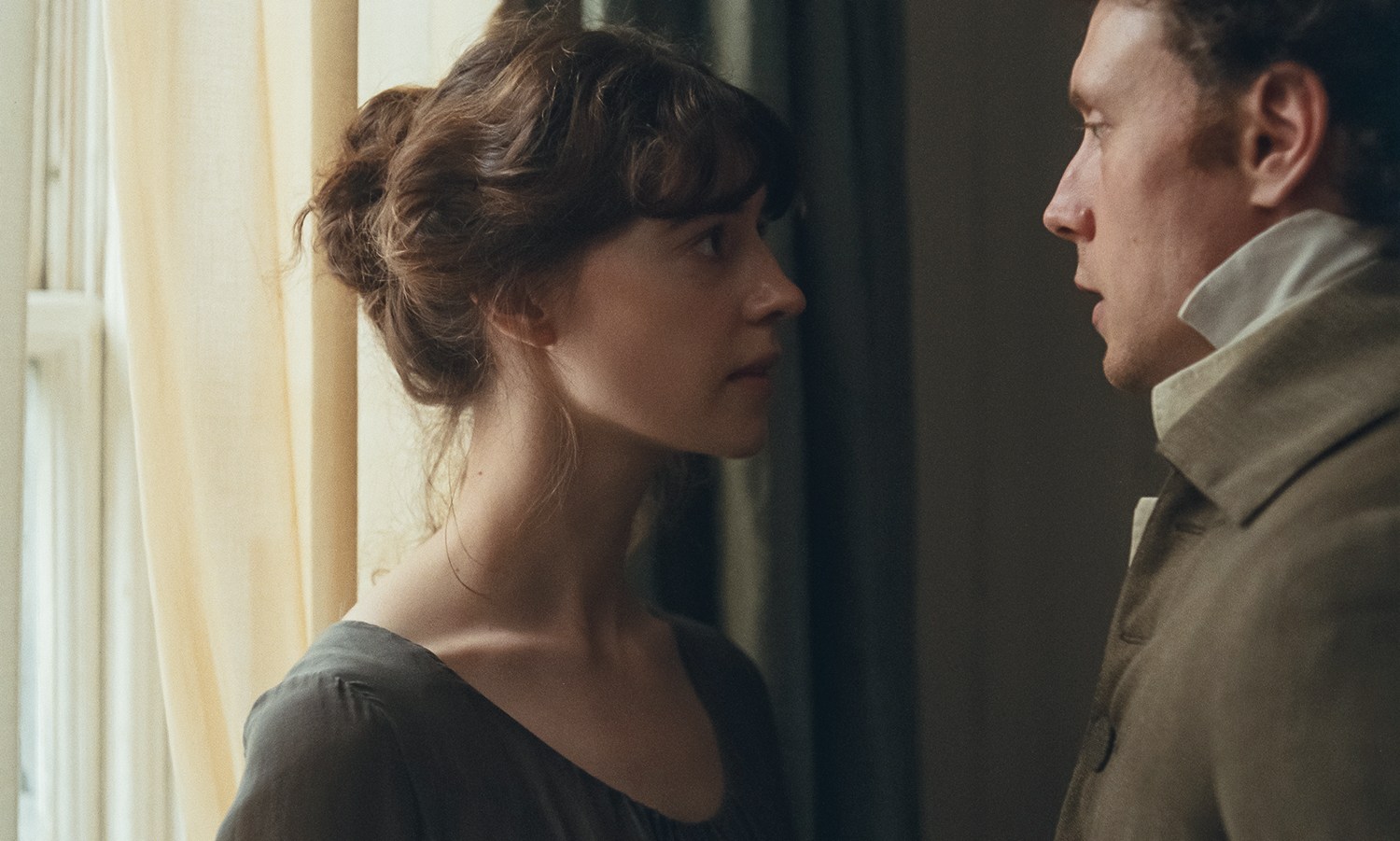
It’s not your regular colourful period drama, packed with gorgeous gowns. This has a naturalistic, dirt-under-the-fingernails, desaturated look with only the one pop of colour. (A red sash at a ball.) It gives it an earthy realism – free-spirited Marianne, with her unbrushed hair, often appears almost feral – but also drains it of any joy or vividness. Additionally, it plays fast and loose with the social customs of the time. Women appear with their hair down in public, for example, which would have been wholly unacceptable, and while one doesn’t wish to get hung up on such detail, it does feel like a betrayal of the period. Context, in these instances, can be as much part of the story as the story itself.
The story here is essentially a sororal one, which awards Elinor and Marianne equal screen time, while Thompson’s version pared it back to focus on Marianne, whose restraint and quiet despair become the dramatic force. I rewatched it recently, which was probably a mistake, but even though I knew when Edward would truck up (finally) and that the ‘ugly cry’ was coming, I was still on the edge of my seat. The performances in this version are all decent (Creed-Miles is especially winning) but it lacks that maturity, making these sisters feel lightweight, girlish and forgettable. Beware the ‘fresh take’, in other words, and should Emerald Fennell ever drop by, hide your Brontë novels. We don’t want to be going down that route again.






Comments