Book review

Venerable father of English history

From our UK edition

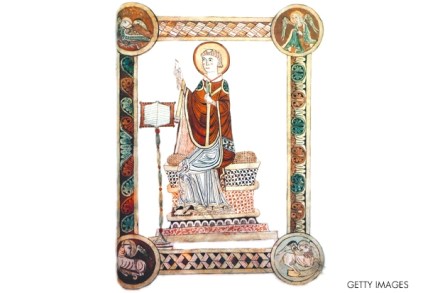
It might seem to some a bold move to base a book on any kind of journey at all when its hero entered the monastery at Wearmouth, Northumbria at the age of seven and, as far as we know, never left. Not that Bede was entirely parochial, distributing what was then an exotic luxury, pepper, amongst his peers on his deathbed. But his was essentially a virtual and vicarious world, reliant on a network of informants and an unrivalled library largely collected by its founder, Benedict Biscop, here memorably described as ‘the “millionaire” monk’, even if the more than 200 books we know Bede knew will seem small beer to most of us with bigger bookshelves.

Polymath or psychopath?

From our UK edition

They don’t make Englishmen like the aptly named John Freeman any more. When he died last Christmas just shy of his centenary, the obituaries — once they had expressed astonishment that this titan from the age of Attlee and empire had still been around —paid tribute to a polymath whose achievements could fill nine more ordinary lives. Freeman was a pioneer of television, virtually inventing the TV celebrity interview. He was a leading politician — the last surviving member of the 1945 Labour government; a diplomat — at one time our man in Washington and High Commissioner in India; a much decorated war hero; and — not least — a renowned swordsman between the sheets, boasting four wives and innumerable girlfriends.

The lives of the artists — and other mysteries

From our UK edition

Benjamin Wood’s first novel, The Bellwether Revivals, was published in 2012, picked up good reviews, was shortlisted for the Costa First Novel Award and the Commonwealth Book Prize and has become a bestseller in France — a promising start to a literary career, in other words. Wood’s new novel The Ecliptic is both an attempt to consolidate the success of his debut and also a meditation, among other things, on how to sustain such a career over decades while producing original and important art. On an island off the coast of Istanbul lies Portmantle, a remote community for painters, writers and musicians.

The lonely struggle of Jude the obscure

From our UK edition

Just over a century after Virginia Woolf declared that ‘on or about December 1910 human character changed’, the American novelist Hanya Yanagihara has announced a new shift in consciousness. Jude, the lead character in A Little Life, is known to his friends as the Postman, ‘post-sexual, post-racial, post-identity, post-past’. The obscurity of his origins (left at birth in a rubbish bin) and a childhood of horrific abuse mean he is determined to draw a veil over his past, making him the most mysterious of the four male New York friends at the heart of Yanagihara’s story. However, his condition is only an extreme — and negative — version of the ambiguity that characterises all the people around him, among whom identity is continually in flux.

Wholly German art

From our UK edition

Christian Thielemann (born in 1959) is a self-consciously old-fashioned figure who makes rather a virtue out of his limitations. As a conductor, he stands out in a profession increasingly given to the eclectic, and to performances of music outside the western canon. The practitioners of art music have almost all surrendered to the requirement to reach out, to experiment with the new and the non-European, and to mesh their endeavours with conscious gestures of social improvement. Thielemann could hardly be more out of sympathy with the prevailing mood. He is noisily devoted to musical excellence at all costs, and to long apprenticeships rather than flashes of stardom.

Angry, funny, timely

From our UK edition

It’s not Paul Murray’s settings or themes — decadent aristocrats, clerical sex abuse, the financial crisis — that mark him out as original, it’s his handling: the wild plotting, the witty dialogue and the eccentricity of his characters. The follow-up to his widely admired second novel Skippy Dies swaps the adolescent funk of a Catholic boys’ boarding school for the testosterone whiff of a fictional investment bank in Dublin. The Bank of Torabundo rode out the demise of the Celtic Tiger thanks to its cautious and effective CEO, but he has now been replaced by a flamboyant financial genius whose last bank collapsed in tatters.

Lost horizon

From our UK edition

Sikkim was a Himalayan kingdom a third of the size of Wales squeezed between China, India, Nepal and Bhutan. I was there once in April, when the sky was cornflower blue. When Britain withdrew from India the last ‘Chogyal’, or king, battled for his country’s independence, but Mrs Ghandi won the war, and Sikkim is an Indian state now. It’s a sad story, as Andrew Duff’s subtitle suggests, but one representative of 20th-century geopolitics. This dense book — Duff’s first — places Chogyal Thondup Namgyal at the centre of the story and focuses exclusively on the period from the 1950s to the 1970s.

Children’s summer reading

From our UK edition

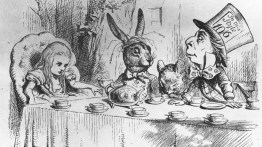
It’s the 150th anniversary of Alice in Wonderland — cue an explosion of editions of the book, a new biography of Lewis Carroll, make-and-do books, jigsaw puzzles and general Alice overload. In a way, it’s all dandy. Alice is part of our collective consciousness, even though for modern children it’s chiefly through the medium of assorted films. The Lewis Carroll industry hasn’t, however, even tried to rehabilitate his two later Sylvie and Bruno works, now unreadable thanks to the late-Victorian fashion for babytalk. Trouble is, the cult of Wonderland has rather blinded us to the fact that Alice unexpurgated is actually quite hard for contemporary children.

Fancy dress parade

From our UK edition

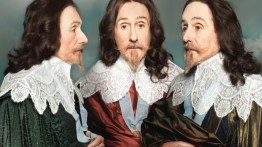
For his 75th birthday, Sir Roy Strong gave himself a personal trainer. For his 80th, he has commissioned a book of portraits of himself by the photographer John Swannell. The fruits of all that training — much of it undertaken on a racing tricycle around the lanes of Herefordshire — can be seen in the six-pack he sports in one of the luscious, technically excellent images. Oh, hold on a mo, it’s the costume of a Roman Emperor, Photoshopped to turn Roy into classical sculpture for his latest garden temple! This magnificently potty book takes us through 30 versions of Roy done after celebrated portraits, or in the manner of various schools. He is swoon-worthy as a Victorian Sir Galahad, masterful as Isambard Kingdom Brunel and bloody terrifying as Rasputin.

LA runs riot

From our UK edition

Ryan Gattis’s novel All Involved is set in South Central Los Angeles in 1992, during the riots that began after four white police officers were acquitted of beating the black taxi-driver Rodney King. The inadvertent coup that the book’s publishers have scored by bringing it out in the wake of the Baltimore and Ferguson riots only underlines how far we haven’t come since then: some lines from this buzzing thriller might still be quotes from yesterday’s news stories, such as the impassioned complaint of one character against the police: ‘If you’re brown or black, you’re worth nothing. Killing you is like taking out the trash. That’s how they think.

Is no one having fun?

From our UK edition

Who’d be young? Not 25-year-old Tamsin, if her behaviour is anything to go by. A classical pianist who’s never quite going to hit the heights, she devotes herself to playing for the residents of an old people’s home. She’s also acquired a boyfriend, Callum, a teacher several years her senior, for whom, when Christmas comes round, she buys an electric vegetable slicer that he’s had his eye on. The couple holiday in a run-down B&B in Ilfracombe. They are not exactly living la vida loca. But Tamsin is also suffering from a kind of arrested development — still occupying her childhood bedroom in Holland Park, where she keeps a watchful eye over her mother, Roz, since Tamsin’s father, a celebrated conductor, quit the family home for another woman.

The soul takes flight

From our UK edition

Last month, at Edinburgh School of Art, I was interested to come across a student who’d chosen Marlowe’s Dr Faustus as her end-of-year degree project. In the wonderful stage costume she’d designed for its central figure were three gloriously embroidered butterflies fluttering around his hat. Bats, yes, moths, maybe, but what exactly was the significance of butterflies to a man bound for subterranean hell? The answer is in Rainbow Dust, Peter Marren’s superbly distilled statement on our national obsession with butterflies. It turns out that western civilisation has projected a stream of ideas and meanings on to these creatures that have made them fertile artistic territory for centuries.

Caves of ice

From our UK edition

Summertime, and the living is... variable. Depends who you ask. People come to mind, of course: one in hospital, waiting for an MRI scan; another just come out of hospital having had two little frosted ova thawed out and implanted, so with a bit of luck she’ll have a baby at last. One old chap, 90-ish, with several basal cell carcinomas on his pate from his young days as an army officer in the Palestine sun, is going for a painless zap with a cryoprobe: lesions gone and a free pathology section into the bargain. And over at Cern the Large Hadron Collider has sent a new pentaquark lately to the firmament. The mind, generally, lags. It needs a book to provoke it into fresh life, into noticing old things anew.

Nimble-witted wanderer

From our UK edition

It was a certain unforgettable ex-girlfriend, Harry Mount confesses — named only as ‘S’ in his dedication — who came up with the idea for this new book, which he has therefore written to honour her, or in the hope of winning her back, or possibly, in some obscure way, to annoy her. Whichever it is, S must surely share some blame for its misleading subtitle. You can’t follow in the ‘footsteps’ of mythology’s greatest sailor. As Homer repeatedly says in the Odyssey, ‘No one travels on foot to Ithaca.’ OK, this is pedantic, but the author doesn’t really follow in Odysseus’s wake either. If that’s the book you want, try Tim Severin, or, better, Beaty Rubens and Oliver Taplin.

Poison and parsnip wine

From our UK edition

First, a quote from the novel under review. The context: it is a flashback scene of the behaviour of a character at a birthday celebration for her aged mother. She is confessing her bulimia to a crowded room: ‘I make myself sick! I vomit! I vomit! I vomit! I lock myself in the lavatory while you’re all stuffing your faces and I put my fingers down my throat! I vomit! I vomit! I vomit!’ she had cried aloud, as she waved her long, prehensile hands in the air. We shall skate over the use of the word ‘prehensile’ to describe hands, which are all, unless deformed, prehensile anyway, and concentrate on the character’s speech. Somewhat histrionic, would you say? A little bit unlikely?

The end of secrecy

From our UK edition

Gordon Corera, best known as the security correspondent for BBC News, somehow finds time to write authoritative, well-researched and readable books on intelligence. Here he explores the evolution of computers from what used to be called signals intelligence to their transforming role in today’s intelligence world. The result is an informative, balanced and revealing survey of the field in which, I suspect, most experts will find something new. He starts with an event that took place 101 years ago next month, when the British dredger Alert set off from Dover in the early hours to cut the German undersea telegraph cables.

Sometimes it’s good to worry

From our UK edition

At last, a snappy pop philosophy book which offers to sort out absolutely none of your personal issues. If anything, it will make them worse. ‘There are,’ Francis O’Gorman admits, ‘serious problems for me with the ethics of writing on worry.’ Since words are the very stuff of worry, O’Gorman (himself a worrier) suspects that reading is unlikely to provide a cure. Sufferers would do better to contemplate the sublime balance of Brancusi’s ‘Bird in Space’ (‘a glimpse of a world without fretfulness’) or listen to Bach’s contrapuntal fugues, in which ‘Everything, whatever happens, fits.’ But O’Gorman is not really here to dole out advice: A while ago, I described this book as I was writing it to a friend.