Book review

These I have loved

From our UK edition

In the preface to his great collection of essays The Dyer’s Hand, W.H. Auden claimed: ‘I prefer a critic’s notebooks to his treatises.’ Auden’s criticism is like that: a passage of insights instead of a single sustained argument, and the same is true of Samuel Johnson, whose works are a pleasure to read for the feeling of the pressure of a great mind at play. Clive James belongs in this company. His new book Latest Readings is a kind of reading diary: a collection of short essays, each prompted by one book or a handful he happens to be reading. They are not in any logical order or sequence, but are given unity by two things: one biographical, the other stylistic.

Music for the masses

From our UK edition

As pop music drifts away from many people’s lives, so its literature grows ever more serious and weighty, as though aware that this is an art form approaching the end of its time. Having had the pleasure of opening the first volume of Mark Lewisohn’s planned three-volume history of the Beatles and then fallen into a deep sleep attempting to read it, I feel only a sense of impending doom when presented with yet another vast tome of unimpeachable scholarship into the ephemeral. Peter Doggett, a long-serving toiler at the pop coalface, has produced a whopper here, a near-700-page history of pop’s 125 years, with the accent on the popular. What music did people like? Why did they like it? What did it bring to their lives?

The writing on the wall | 20 August 2015

From our UK edition

‘Every day’, writes the foreign correspondent Wendell Steavenson in this account of the 2011 Egyptian revolution, ‘see-sawed between joy and death.’ She covered the 18-day cataclysm and stayed on in Cairo for another 18 months to report its aftermath, filing for the New Yorker among other outlets. The title refers of course to Tahrir Square, the heart of the conflict, a place ‘shaped like a giant teardrop with a traffic circle in the centre’. Steavenson’s previous books include The Weight of a Mustard Seed, a portrait of a Ba’athist general in Saddam’s Iraq; she also reported on the fall of the Soviet Union.

Hurricane Lolita

From our UK edition

Speak, Memory, Vladimir Nabokov’s nostalgic memoir, reflects on his life from the age of three to 41, taking us from early-20th-century Russia, soon to be engulfed by revolution, to Europe at the start of the second world war. He planned a sequel to it, based on his American years, but Speak On, Memory was never written, partly because much of that experience had found an outlet in his novels. As Robert Roper argues in his literary biography, it was America that made Nabokov the master we now admire. Nabokov in America, a detailed account of the 20 years the writer spent there, revisits some of the less widely known facts and draws a number of fresh analogies.

Common sense, moral vision — and the magic touch

From our UK edition

An Intelligent Person’s Guide to Education is Tony Little’s valedictory meditation on his profession, published on his retirement as headmaster of Eton. In a series of loosely connected essays, erudite and eccentric, he contemplates issues of fundamental concern to us all. What are schools for? How should teachers be educated? How do good schools work? The book is rather oddly larded with insights from The Schoolmaster (1902) by A.C. Benson (brother of E.F. and Robert Hugh) who was, like Little, an Old Etonian who went back to teach at the school. Benson’s commentary on his own teaching experience is used as a touchstone, generally reinforcing Little’s civilising, rational approach to education. These essays reveal Little’s vigorous moral vision.

Monster of misrule

From our UK edition

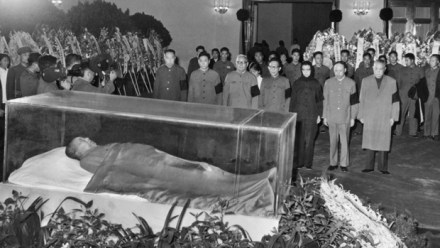
Mao Zedong, once the Helmsman, Great Teacher and Red Red Sun in Our Hearts, and still the Chairman, died in 1976. Even today his giant portrait gazes down over Tiananmen Square, where in 1989 his successors massacred hundreds of students and workers. After so many years and books and articles, can anything new be said about him? Although Andrew Walder, a Stanford sociologist and leading China scholar, writes that his comprehensive and deadly analysis is primarily for non-specialists, he has made me think. President Xi Jinping, who will make a state visit to London in October, speaks highly of Mao. Such praise, concludes Walder, requires ‘highly selective historical memory and a great deal of forgetting’.

Lust for life | 20 August 2015

From our UK edition

We all know about Samuel Pepys witnessing the Great Fire in his Diaries, but how many have read the definitive Latham and Matthews nine-volume edition, published between 1970 and 1983, complete with Pepys’s coded sections and his inconsistent and archaic spellings? Certainly the only person in the world to have read it aloud in its unexpurgated entirety is Leighton Pugh, on this three-volume 116-hour Naxos recording released between January and May this year. Produced by Nicolas Soames and with prefaces to each volume written and read by David Timson, it is a superb feat. Pugh had recorded 30 full-length audiobooks in the two years before this gargantuan challenge, an experience which helped him cope with the 40 gruelling recording days with their 10 a.m. – 5 p.m. routine.

In the sky with diamonds

From our UK edition

Physicists have a nerve. I know one (I’ll call him Mark) who berates every religious person he meets, yet honestly thinks there exist parallel universes, exactly like our own, in which we all have two noses. He refuses to give any credit to Old Testament creation myths and of course sneers at the idea of transubstantiation. But, without any sense of shame, he insists in the same breath that humans are made from the fallout of exploded stars; that it is theoretically possible for a person to decompose on one side of a black hole and recompose on the other, and that there are diamonds in the sky the size of the moon.

Rio’s rococo genius

From our UK edition

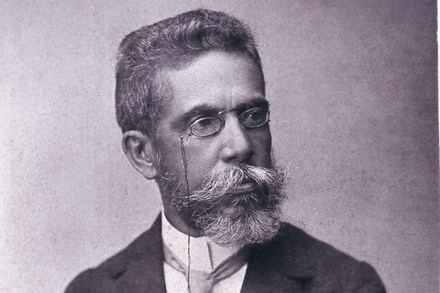
The surname is pronounced ‘M’shahdo j’Asseece’. There are also two Christian names — Joaquim Maria — which are usually dispensed with. K. David Jackson, professor of Portuguese at Yale, confines himself to ‘Machado’ and has invented an adjective ‘Machadean’. Stefan Zweig, who committed suicide in the very Machadean town of Petropolis, called him ‘the Dickens of Brazil’ which is not true — he has not Dickens’s range or sustained ebullience.

Idolising Ida

From our UK edition

Jonathan Galassi is an American publisher, poet and translator. In his debut novel Muse, his passion for the ‘good old days’ of the publishing industry is palpable: a time when books were books, with glued or even sewn bindings, cloth or paper covers, with beautiful or not-so-beautiful jackets and a musty, dusty, wonderful smell … their contents, the magic words, their poetry and prose, were liquor, perfume, sex, and glory to their devotees. The halcyon days of print publishing were not, in fact, so very long ago, with the first e-reader going on sale only in 2004 and Amazon’s Kindle in 2007; it is astonishing that the digital revolution has taken only a decade to change the publishing landscape dramatically enough to inspire a novel so thick with nostalgia.

Polymath or psychopath?

From our UK edition

They don’t make Englishmen like the aptly named John Freeman any more. When he died last Christmas just shy of his centenary, the obituaries — once they had expressed astonishment that this titan from the age of Attlee and empire had still been around —paid tribute to a polymath whose achievements could fill nine more ordinary lives. Freeman was a pioneer of television, virtually inventing the TV celebrity interview. He was a leading politician — the last surviving member of the 1945 Labour government; a diplomat — at one time our man in Washington and High Commissioner in India; a much decorated war hero; and — not least — a renowned swordsman between the sheets, boasting four wives and innumerable girlfriends.

The lives of the artists — and other mysteries

From our UK edition

Benjamin Wood’s first novel, The Bellwether Revivals, was published in 2012, picked up good reviews, was shortlisted for the Costa First Novel Award and the Commonwealth Book Prize and has become a bestseller in France — a promising start to a literary career, in other words. Wood’s new novel The Ecliptic is both an attempt to consolidate the success of his debut and also a meditation, among other things, on how to sustain such a career over decades while producing original and important art. On an island off the coast of Istanbul lies Portmantle, a remote community for painters, writers and musicians.

The lonely struggle of Jude the obscure

From our UK edition

Just over a century after Virginia Woolf declared that ‘on or about December 1910 human character changed’, the American novelist Hanya Yanagihara has announced a new shift in consciousness. Jude, the lead character in A Little Life, is known to his friends as the Postman, ‘post-sexual, post-racial, post-identity, post-past’. The obscurity of his origins (left at birth in a rubbish bin) and a childhood of horrific abuse mean he is determined to draw a veil over his past, making him the most mysterious of the four male New York friends at the heart of Yanagihara’s story. However, his condition is only an extreme — and negative — version of the ambiguity that characterises all the people around him, among whom identity is continually in flux.

Wholly German art

From our UK edition

Christian Thielemann (born in 1959) is a self-consciously old-fashioned figure who makes rather a virtue out of his limitations. As a conductor, he stands out in a profession increasingly given to the eclectic, and to performances of music outside the western canon. The practitioners of art music have almost all surrendered to the requirement to reach out, to experiment with the new and the non-European, and to mesh their endeavours with conscious gestures of social improvement. Thielemann could hardly be more out of sympathy with the prevailing mood. He is noisily devoted to musical excellence at all costs, and to long apprenticeships rather than flashes of stardom.

Angry, funny, timely

From our UK edition

It’s not Paul Murray’s settings or themes — decadent aristocrats, clerical sex abuse, the financial crisis — that mark him out as original, it’s his handling: the wild plotting, the witty dialogue and the eccentricity of his characters. The follow-up to his widely admired second novel Skippy Dies swaps the adolescent funk of a Catholic boys’ boarding school for the testosterone whiff of a fictional investment bank in Dublin. The Bank of Torabundo rode out the demise of the Celtic Tiger thanks to its cautious and effective CEO, but he has now been replaced by a flamboyant financial genius whose last bank collapsed in tatters.

Lost horizon

From our UK edition

Sikkim was a Himalayan kingdom a third of the size of Wales squeezed between China, India, Nepal and Bhutan. I was there once in April, when the sky was cornflower blue. When Britain withdrew from India the last ‘Chogyal’, or king, battled for his country’s independence, but Mrs Ghandi won the war, and Sikkim is an Indian state now. It’s a sad story, as Andrew Duff’s subtitle suggests, but one representative of 20th-century geopolitics. This dense book — Duff’s first — places Chogyal Thondup Namgyal at the centre of the story and focuses exclusively on the period from the 1950s to the 1970s.

Children’s summer reading

From our UK edition

It’s the 150th anniversary of Alice in Wonderland — cue an explosion of editions of the book, a new biography of Lewis Carroll, make-and-do books, jigsaw puzzles and general Alice overload. In a way, it’s all dandy. Alice is part of our collective consciousness, even though for modern children it’s chiefly through the medium of assorted films. The Lewis Carroll industry hasn’t, however, even tried to rehabilitate his two later Sylvie and Bruno works, now unreadable thanks to the late-Victorian fashion for babytalk. Trouble is, the cult of Wonderland has rather blinded us to the fact that Alice unexpurgated is actually quite hard for contemporary children.

Fancy dress parade

From our UK edition

For his 75th birthday, Sir Roy Strong gave himself a personal trainer. For his 80th, he has commissioned a book of portraits of himself by the photographer John Swannell. The fruits of all that training — much of it undertaken on a racing tricycle around the lanes of Herefordshire — can be seen in the six-pack he sports in one of the luscious, technically excellent images. Oh, hold on a mo, it’s the costume of a Roman Emperor, Photoshopped to turn Roy into classical sculpture for his latest garden temple! This magnificently potty book takes us through 30 versions of Roy done after celebrated portraits, or in the manner of various schools. He is swoon-worthy as a Victorian Sir Galahad, masterful as Isambard Kingdom Brunel and bloody terrifying as Rasputin.