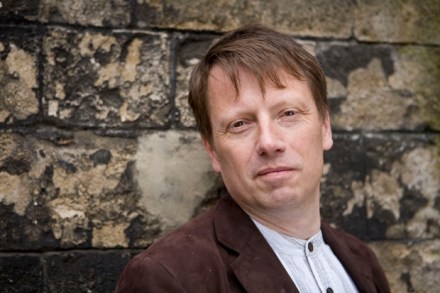
Matilda Bathurst

There’s nothing transgressive about opera using sex to sell tickets

From our UK edition

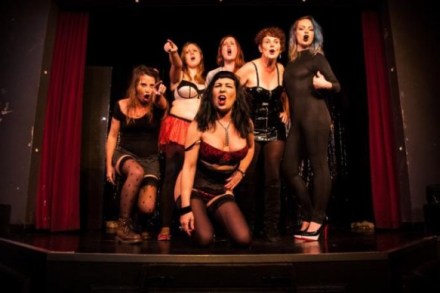
Fluffy bunnies. Human-size, pink and white fluffy bunnies. Twerking. The image has never left me, ever since an ill-fated date to see Purcell's The Fairy Queen at Glyndebourne in 2012. Over salmon during the damp interval, my date confirmed that he liked the bunnies, I didn't. Having established myself as a purist and a prude, we parted ways. Since the onslaught of arts cuts, opera-goers have had to harden themselves to scenes of sex and violence – the oldest trick in the book to ramp-up ticket sales. The bunnies hopped on to the stage in the same year that ENO unveiled their notorious Don Giovanni condom ad; two years before, the company had spiced up Mozart's opera with a scene of suggested gang rape.

A selection of short stories

From our UK edition

How many debut collections does it take to stand up to one of the most accomplished short-story writers of the past half-century? In this case, it’s three against one. Under the Rose is Julia O’Faolain’s first short-story collection in over 20 years, bringing together stories published between 1968 and 2006. Danielle McLaughlin follows in her wake, picking up the pieces of post-crash Ireland in her debut Dinosaurs on Other Planets. Greg Jackson is the latest virtuoso on the US literary scene, writing stylistically self-conscious stories with titles like ‘Wagner in the Desert’ and ‘Metanarrative Breakdown’. As a practising psychiatrist in New York City, Arlene Heyman has no shortage of material.

Short and surreal

From our UK edition

‘I just wanted the damn story to ask the right questions,’ sighs a disaffected journalist in Jack Livings’s debut collection of short stories, The Dog. Two other new short story collections, Lucky Alan by Jonathan Lethem and Jellyfish by Janice Galloway, are less interested in asking the right questions than in the opportunities for missing the point. Livings draws upon his experience as a student in Beijing to create a compelling vision of China from the Cultural Revolution to the present day. Though inclined to excessive lyricism (a thief is ‘waste-water wrung from the sponge of the world’), Livings has a keen eye for detail and a knack for dialogue.

The secret life of the short story

From our UK edition

The short story likes to play the underdog. Famously unfavoured by publishers, it has none of the commercial clout of the novel. Denying itself the luxury of length, it is a martyr to the cause of shortness. When the short story writer Alice Munro was awarded the 2013 Nobel prize for literature, she seemed to personify the supposed modesty of her craft. With the blessing of the Swedish Academy, the short story had finally gained the status of a standalone art form: no longer, to quote Munro, ‘just something you played around with until you got a novel’. All this modesty seems at odds with the idea of an ‘epiphany’ — a device associated with the stories of Joyce, and the hallmark of two new collections by D.J. Taylor and Salley Vickers.

What was Allen Ginsberg doing in Wales? LSD

From our UK edition

‘Valleys breathe, heaven and earth move together,/ daisies push inches of yellow air, vegetables tremble,/ grass shimmers green...’ The characteristic undulations of the voice of the Beat poet Allen Ginsberg greet the visitor on entering Wales Visitation: Poetry, Romanticism and Myth in Art at the National Museum Cardiff. Bearded and mellifluous, projected to mythic proportions across a vast expanse of wall, Ginsberg is seen reading his poem ‘Wales Visitation’ on American television in 1968, telling less of visits than of visions. What was the Blakeian, Buddhist, drug-sampling poet doing in Wales? LSD.

Fairytales of racism

From our UK edition

A preview of Helen Oyeyemi’s Boy, Snow, Bird appeared in Granta’s Best of Young British Novelists issue in April last year, the decennial list identifying 20 writers under 40 as the names to watch. The previous four novels of the Nigerian-born Oyeyemi (who was first published at the age of 18) revolve around deeply psychological retellings of folk tales, laced with questions of race, gender and, above all, youth. Her protagonists tend to be ‘seers’, characters somehow displaced from their environment and thereby privileged to construct their own story — the lot of the lonely novelist.

Ann Patchett’s new book will win you over, in spite of yourself

From our UK edition

Ann Patchett’s novels revel in the tightly constructed ecosystems imagined for their characters: an opera singer besieged among diplomats in the Orange Prize-winning Bel Canto; State of Wonder’s pharmacologist in the Amazon; a fugitive wife hiding in a home for unwed mothers in The Patron Saint of Liars. In this new collection of personal essays collated from publications including the New York Times, Vogue and Granta, Patchett maps out her own life, her own constructed universe. From a post-divorce stint at TGI Friday’s and an early writing career in women’s magazines (a world where some of the greatest writers cut their teeth, not least Jorge Luis Borges), we move towards bestseller lists and the recent opening of her own independent bookshop.

Braque in full flight

From our UK edition

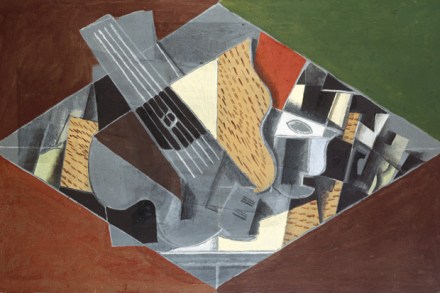
Towards the end of his life, Georges Braque described his vision in the following terms: ‘No object can be tied down to any one sort of reality; a stone may be part of a wall, a piece of sculpture, a lethal weapon, a pebble on a beach… Everything is subject to metamorphoses.’ Since then, set ideas of Braque’s oeuvre have crusted over like dry impasto: Braque the cubist, Braque the inventor of the papier-collé, Braque whose blue birds soar on the ceiling of the Louvre. The Grand Palais now hosts the first retrospective of the artist’s work to be held in Paris for 40 years, setting those metamorphoses back in flux. A retrospective demands a narrative of progression.

Dreaming in the Renaissance

From our UK edition

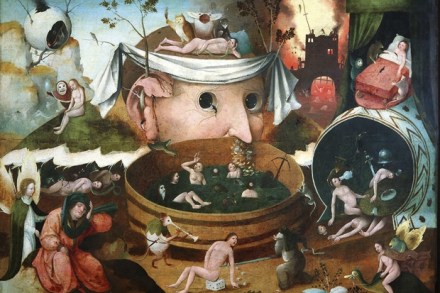
The exhibition The Renaissance and Dream at the Musée du Luxembourg in Paris (until 26 January 2014) explores how artists have wrestled with the furthest limits of the imagination, in forms ranging from the muscular elegance of Michelangelo to the luminous naivety of Lorenzo Lotto. In tackling a subject as inexhaustibly popular as dreams, the exhibition has avoided being either nebulous or anachronistic. Freudian psychoanalysis is mentioned only once in passing, and the paintings are allowed to speak for themselves. What’s more, these artists were not depicting their own dreams. They were plundering from history, myth and religion in a quest for vision unimpeded by time, place or conventional imagery.

Notes on…The house museums of Paris

From our UK edition

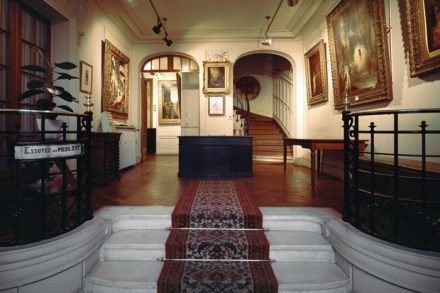
It doesn’t matter how many times they expand the Louvre or the Musée d’Orsay, Paris’s past is so colossally rich that it could never be squeezed into its great public buildings. The city has instead developed its own breed of ‘house museum’ — ready-made monuments to its distinguished inhabitants. It’s not just regular tourist stops like the Maison de Victor Hugo, either. In Montparnasse, the studios of artists Ossip Zadkine and Antoine Bourdelle display sublime sculpted figures in shaded gardens, and across the Seine from the Eiffel Tower you will find Balzac’s former village home, cramped among the Belle Époque curves and 1970s luxury towers of the 16ème.

Trading places | 25 April 2013

From our UK edition

The Philippines: An Archipelago of Exchange at the Quai Branly Museum in Paris (until 24 July) brings together an impressive range of objects that demonstrate the fluidity of ideas and forms dispersed through exploration, trade and the blood of battle. The exhibition focuses on the fertile interactions between Filipino tribes and naval traders preceding the 16th-century Spanish colonisation. Housed under the canopy of Jean Nouvel’s extraordinary building, the display treads a fine line between fetishisation and objective examination. On entering, you are surrounded by semi-circles of carved wooden rice gods, expanding outwards like shockwaves; you leave through a dark chamber lined with funerary objects.