Book review

The Teutonic King Arthur

From our UK edition

Hitler, ever seeking to emulate strong German hero types (especially if their Christian name was Frederick), unsurprisingly named his great invasion of Russia ‘Operation Barbarossa’. It is in this context that the name — meaning ‘Redbeard’ — is best known today. Apart from that, a rather clunky eponymous Italian film from 2011 and a presence in the underground heavy metal music scene, awareness of the medieval German emperor outside of Germany and Italy is very limited. This owes much to the fact that John Freed’s biography is the first in English for half a century. A 700-page doorstopper, this impressive, learned book certainly makes amends for this previously serious oversight. Frederick was the most powerful figure in 12th-century Europe.

A gentleman among players

From our UK edition

I once played in something called the Writers’ World Cup. A lot of people in publishing (novelists, journalists, editors, agents) like to think that if their lives hadn’t been poisoned by books, they might have really made something of themselves — as ballplayers, among other things. This is probably one of the more pleasant delusions. The star of the tournament was a stocky bull-chested essayist who, rumour had it, used to play in some Hungarian minor league. Nobody could take the ball off him. Afterwards the writers got together in some theatre that the organisers had hired and talked for several hours in turns about the meaning of football. I guess this is what we were good at. George Plimpton spent a large part of his writing career putting this delusion to the test.

Nothing new under the sun

From our UK edition

Rupert Sheldrake had it coming. In A New Science of Life (1981), he argued that animals and plants have inherited a collective memory from their predecessors, thanks to ‘morphic resonance’. This also explained why animals had telepathic powers. ‘You see, I told you so,’ I said to my wife when reading about this in Steven Poole’s exciting new book, and exchanged a secret glance with our dog. Mothers, one might add, also seem to have such psychic powers and know exactly when their teenage sons are sneaking home late at night. But Sheldrake is not your average ‘new ager’ or dog lover. He is a cell biologist.

The gospel truth

From our UK edition

More brides in Britain go down the aisle to Gloria Gaynor’s ‘I Will Survive’ than to any other tune, Simon Loveday notes. He cannot resist adding that ‘it seems doubtful that they have fully taken in the words of the rest of the song’. That must be true. ‘I’m not that chainedup little person still in love with you,’ yells the defiant narrator in Gloria’s song. ‘You’re not welcome anymore.’ If anything, ‘I Will Survive’ belongs, it seems to me, to a genre of assertive anthems, like ‘My Way’ and ‘Invictus’, that appeal to people who are the imaginary heroes of their own Desert Island Discs and examine their lives as little as the lyrics that make them feel better.

Smashing stuff

From our UK edition

‘Joe lay in bed in his mother’s house. He thought about committing suicide. Such thinking was like a metronome for him. Always present, always ticking.’ Life is always cheap in noir fiction — but it takes it that step further when the protagonist’s homicidal impulses extend to himself. The hero of this fast-moving, agreeably violent and perfectly pared-down novella is Joe, a former FBI agent and marine who has reduced what remains of his life to a sliver of deadly purpose. After a gruesome incident in his past, ‘his limit for trauma, a very high limit, had been reached’ and he went completely off his onion.

Paean to the Starman

From our UK edition

On 11 January 2016 Paul Morley was awoken by an urgent voicemail from the Today Programme. Could he talk about the life and — news just in — the death of David Bowie? (The researcher apologised if this was how he’d heard.) Resistant to gnashing his teeth for a few minutes of radio rent-a-commentary, Morley uncharacteristically ignored this and sundry other requests. Instead he wrote these 500 pages in ten weeks. The same time, he says, that Bowie needed to cut albums at his cocaine-powered peak. The Age of Bowie is not strictly a biography, with such things as dates and sources and supporting quotations.

Maryland’s mean streets

From our UK edition

Quick tip, should you ever find yourself alone in the interview room at the police headquarters of Prince George’s County, Maryland: don’t go to sleep. The officers will see you through the peephole and assume you’re guilty. Anyone innocent finding themselves in that windowless, 8ft by 8ft room paces around, bounces on their toes and sobs. Only the guilty snooze there. It’s known as the ‘felony nap’. Del Quentin Wilber learned a lot as he tailed the PG homicide squad during February 2013. His account of the experience is a non-fiction version of faction, the genre in which novelists incorporate real people into their stories. Coming at it from the opposite end of the spectrum, Wilber presents his facts as if in a novel.

Rich in legend and song

From our UK edition

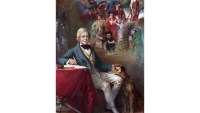
There is an immediate problem for anyone producing a guide to places in Scotland with literary connections: as Walter Scott wrote in Marmion, ‘Nor hill, nor brook we paced along/ But had its legend or its song.’ Many years ago when the Scottish Borders was marketing itself as the ‘Land of Creativity’ I assembled a database of references which stretched to well over 1,000 entries — for example, the village of Yetholm crops up in a strange extended simile in Malcolm Lowry’s posthumous October Ferry to Gabriola. Then there is Scotland’s propensity for memorialising its own writers. The Scott Monument is only the most obvious example.

A five-ring fiasco

From our UK edition

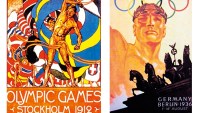
The ambitions of the founding father of the modern Olympic Games, the Frenchman Baron Pierre de Coubertin — that they should be ‘the free trade of the future’ and provide ‘the cause of peace’ with a ‘new and mighty stay’ — were at once wildly optimistic and strangely prescient. Considering that they were first conceived of as a festival of sporting excellence in a spirit of internationalism, the Olympics have had an enduring habit of stirring up displays of humanity at its worst. To anyone who believes that the excesses of the Games over the past 50 years or so have betrayed a purer original legacy, these two books by Jules Boykoff and David Goldblatt provide bracing correctives.

Riding high

From our UK edition

How’s this for a heartwarming set-up­­? Forty-something recovering alcoholic and aspiring artist Ginger copes with the disappointment of being unable to have children of her own by signing up to an organisation that sends underprivileged inner-city kids to the homes of middle-class couples in the countryside. When she is introduced to 11-year-old Dominican girl Velvet, the two bond over horses, with Ginger offering the girl a freedom denied to her by her domineering mother. It sounds perfect for book clubs, soon to be a life-affirming movie, and of little literary interest. But The Mare has much more merit than the synopsis suggests.

In the steppes of the Golden Horde

From our UK edition

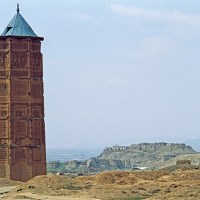
When I first visited the complex of Buddhist cave grottoes, dating from the fifth to the 14th century, at Bezekilk in Xinjiang province, China, I was struck by the destruction wreaked on them by Muslims whose religion proscribes figurative images of human beings. Eyes had been gouged out and figures lacerated with knives. When and by whom had the vandalism of these exquisite and colourful portraits been done? I later learnt that the Buddhist Uyghurs of the Kingdom of Qocho and Turfan, in which Bezekilk was situated, were converted to Islam by conquest during a holy war at the hands of the Muslim Chagatai Khizr Khwaja. Not easy information to assimilate. The activities of Genghis Khan and the Mongol hordes are widely known but not always in detail.

Death in Greenwich

From our UK edition

With the current political saga running in our heads, trumping all other stories, it has been hard to concentrate on the bedside book over the last few weeks. When, in this true Victorian murder mystery, I came to the sentence, ‘Ebeneezer Pook, however, had no intention of succumbing to the crowd’s pressure’, all I could see in my head was Jeremy Corbyn emerging from his house, ducking under the prickly rosebush and refusing to stand down. And when I came to this complicated passage: Mrs Thomas’s story buttressed the account that William Sparshott had given and would dovetail with the account Olivia Cavell was about to give.

Stiffen the sinews

From our UK edition

It’s not unreasonable to expect that the anatomy syllabus for a medical degree should include breasts. Last year I performed full-body dissection as part of my training to become a doctor. After timid first incisions to the arm, we students were entrusted with opening the chest cavity. Two obstacles blocked the way. I looked in the course manual for directions about how to cut — through? around? underneath? But there was no mention of these pleasure-giving, milk-yielding, cancer-visited organs. One justification for the vast expense of cadaveric dissection is to develop a clinical understanding of the body in its supposed entirety.

The great sulker

From our UK edition

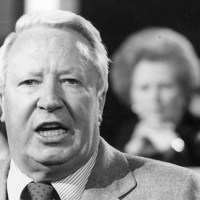
Ted ‘Grocer’ Heath, as he will always be for me, was chosen by his fellow MPs to be their leader in 1965 as the Tory answer to Harold Wilson. After two Old Etonian patricians, Macmillan and Douglas-Home, the Grocer was a grammar-school boy, a meritocrat who would spearhead a new-look, classless Conservative party. He was a clever, hard-working man, totally devoted to his political career. Unfortunately, with his wooden stance and curious ‘neow-neow’ voice, he lacked charisma, a failing he would never have admitted, as Michael Gove did recently. I remember Heath presenting the awards at the annual What the Papers Say lunch in 1968 and you could see journalists furtively looking at their watches after only a few minutes of his speech.

Russia’s dumping ground

From our UK edition

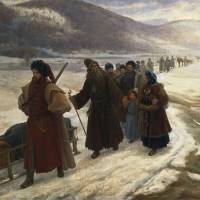
Almost as soon as Siberia was first colonised by Cossack conquistadors in the 17th century, it became a place of banishment and punishment. As early as the 1690s the Russian state began to use Siberia as a dumping ground for its criminals, as though its vastness could quarantine evil. Katorga — from the Greek word for galley — was the judicial term for a penal sentence where inmates performed hard labour in the service of the state. The sentence was commonly imposed in place of death from the reign of Peter the Great onwards. And in many ways Siberia truly was a House of the Dead — as Daniel Beer, who borrows the title of Fyodor Dostoevsky’s prison novel for his masterful new study, recounts in horrific and gripping detail.

A choice of crime novels | 30 June 2016

From our UK edition

Pascal Garnier’s novella Too Close to the Edge (Gallic, £7.99, translated by Emily Boyce) deals with the boredom of middle age and how passion and violence can take on the guise of salvation. Éliette has moved to the French countryside following her husband’s death. She seeks an ‘atom of madness to stop herself sliding into reason’, and finds it in the form of Étienne, a man who helps her when her car breaks down. She invites him into her lonely home, and her life. When her neighbour’s son is killed in a road accident, it becomes obvious that her new lover is linked to this tragedy in some way, and yet Éliette reacts strangely: she welcomes the criminal behaviour, and in fact becomes criminalised herself.

The road to catastrophe

From our UK edition

France’s problems today should lessen the condescension of posterity towards Louis XVI. Presidents of the Republic have proved just as incapable as the King of reforming privileged corporations — stemming the flight of skills and capital — and winning popular confidence. Louis XVI’s failure to manage France after 1789 is easier to understand after reading John Hardman’s complex , well-researched, gripping 500-page biography . Louis XVI’s greatest problem was the French national debt. It had reached four billion livres — accumulated over many wars — and there was an annual deficit of 100 million livres. As a result, Hardman points out, in the 1780s, whereas the British government could borrow at 3.

The food of love | 30 June 2016

From our UK edition

‘You are the most adorable man and artist, intelligent, gifted, simple, loving and noble… I am really very, very lucky to be alive with you around....’ The relationship between the tenor Peter Pears and the composer Benjamin Britten is part of our cultural and national furniture. A partnership spanning nearly 40 years drove each artist to the peak of his creative and expressive powers, producing works like Peter Grimes, Winter Words and the War Requiem, as well as their definitive recordings. But music is only half of the Britten-Pears story. Before his death in 1976, Britten asked his friend and publisher Donald Mitchell to ‘tell the truth about Peter and me’.