Book review

Why the revolution went off the rails

From our UK edition

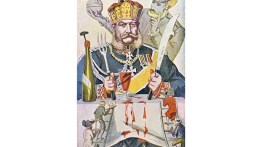
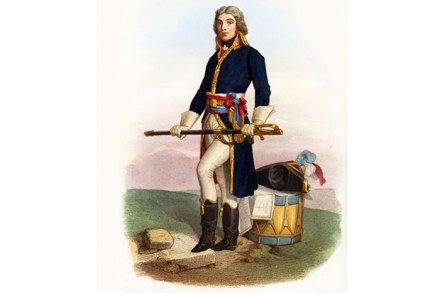
Assignats are the bane of every student of the French revolution without an economics background. They were the bonds issued by the National Assembly from 1789, underwritten by the sale of newly nationalised church property, and all I ever really grasped about them was that they contributed to rampant inflation. In fact, as Ian Davidson shows in his new account of the revolution, their issue and ‘reckless mismanagement’ were as essential to the revolution’s initial success as to its ultimate failure. They may even have been ‘the single most important factor that caused the revolution to go off the rails’. At last someone has not just explained assignats but made them interesting.

A masterpiece of mesmerising beauty

From our UK edition

In the beginning was Fellini’s La Dolce Vita, pleached and Proustian, released in February 1960. This was followed soon after, at Cannes in May 1960, by Antonioni’s L’Avventura, which invented slow cinema by taking a Hitchcock premise through a maze with no end. In June the following year, Last Year in Marienbad was released, in which Alain Resnais and Alain Robbe-Grillet entered the very cauldron where time and experience are formed out of stillness and silence. And Fellini’s 8½, appearing in February 1963, deployed all this and decided at the last (he had two endings) to return us to easy affability, albeit in a circus ring (the alternative, unused ending took his actors into death on an eerie Marienbad train).

Murky subjects, misty settings

From our UK edition

A short-story renaissance has been promised since 2013. That year Alice Munro won the Nobel, Lydia Davis won the Booker International, and George Saunders’s bestselling collection The Tenth of December won the Folio Prize. The rise of the form was declared, but it is mainly now that we’re reaping the harvest. Established novelists such as Philip Hensher, Mark Haddon and Lucy Caldwell have recently published collections. But perhaps we’d get a better sense of where the form is at present by looking to those who’ve recently announced themselves in it. Twenty-five-year-old Daisy Johnson’s excellent debut is set in the precarious and artificial landscape of the East Anglian fens: marshland that has, against its will, been drained and made hospitable to humans.

Grubby, funny shaggy dog story

From our UK edition

The Mexican author Juan Pablo Villa-lobos’s first short novel, Down the Rabbit Hole (Fiesta en la madriguera), was published in English in 2011. It was narrated by the young son of a drug baron living in a luxurious, if heavily guarded palace, whose everyday familiarity with hitmen, prostitutes and assorted methods of disposing of unwanted corpses was both hilarious and unsettling. The novella was the first work of translated fiction to be shortlisted for the (now sadly defunct) Guardian First Book Award and was described admiringly by the writer Ali Smith as ‘funny, convincing, appalling’. Villalobos’s new novel, his third, has again been translated by Rosalind Harvey, whose work on Down the Rabbit Hole was nominated for the PEN translation prize.

Revolution was in the air

From our UK edition

The Penguin History of Europe reaches its seventh volume (out of nine) with Richard J. Evans’s thorough and wide-ranging work on the 99 years from 1815 to 1914. It comes between two formidable books by formidable scholars: his fellow Cambridge historian Tim Blanning took the story from the close of the Thirty Years’ War to Waterloo, and the Hitler authority Ian Kershaw covered 1914 to 1949. Each of those volumes is much as one would expect of the author: Blanning’s shows his background as a polymath, and his expertise in the histories of more than one major European power; Kershaw’s puts the rise of the Third Reich and its consequences at the centre of his. But Evans developed under the influence of E.H.

One scorching summer long ago

From our UK edition

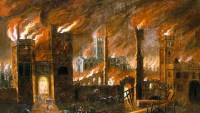
It was the brightest of futures; it was the End of Days. Three hundred and fifty years before Brexit, England experienced a series of epochal events which forced subjects to rethink their relationships with each other, their political leaders and their European neighbours. In the space of a tumultuous 12 months England endured the devastation of plague, the most humiliating of naval defeats at the hands of the Dutch, and the catastrophe of a Great Fire which transformed its capital city forever.

In the gutter, insulting the stars

From our UK edition

John McEntee — ‘the Chancer from Cavan’, as he bills himself — has enjoyed a long career as a gossip columnist on various national newspapers. Gossip is thirsty work, and in the anecdotes that comprise the bulk of his memoirs he is almost invariably ‘well-refreshed’. That can also be dangerous. He recalls, for example, attempting to introduce himself to Eve Pollard, who was then editor of the Sunday Mirror, in the bar of the Grand Hotel at the 1989 Labour party conference in Brighton. Pollard was talking at the time to Bruce Anderson, who told him, ‘Fuck off, potato head.’ McEntee responded by whipping off Anderson’s spectacles, and Anderson took a blind swing at him, which landed on Pollard’s bosom.

The bitchy world of ballet

From our UK edition

Memoirs of old men, baldly, tend to be tricky. Sir Peter Wright, one of the founding pillars of the British ballet establishment, is now 90, and a charmingly chatty man; but I’ve personally never found him reluctant to get to the point when asked. As inaugural director of Birmingham Royal Ballet, director of Sadler’s Wells Ballet and associate director of the Royal Ballet, he has spent more than half a century inside the amazing British ballet story. I had high expectations of these copious memoirs. So it’s a great pity that his amanuensis, Paul Arrowsmith, has essentially switched on the tape recorder and let memories pour, failing to check or marshal the mass of detail into narrative significance and a coherent reading experience.

The don’ts of ‘parenting’

From our UK edition

In the American way, the child psychologist Alison Gopnik’s new book has an attractive sound-bitey title dragging a flat-footed subtitle in its wake: ‘What the New Science of Child Development Tells Us about the Relationship Between Parents and Children’.  And what this new(ish) science tells us is that we parents — or at least, our American counterparts — are doing it all wrong. Gopnik’s ‘carpenter’ is the parent who has a preconceived idea of how the child should turn out. A door is made according to a set of rules; if they are followed, it will be fit for purpose. The carpenter parent will raise the child ‘by the book’, ignoring individuality and denying opportunity for experimentation.

Gin and boiled cabbage with George Orwell

From our UK edition

The Orwellian past is a foreign country; smells are different there. Pipe smoke and carbolic, side notes of horse dung and camphor — and that most inescapable odour, the ‘melancholy smell of boiled cabbage and dishwater’ seeping under a parishioner’s front door in A Clergyman’s Daughter. In Nineteen Eighty-Four, too, the hallway of Victory Mansions ‘smelt of boiled cabbage’. That was the quotidian stench of my childhood; long gone now, both the cabbage and the childhood. When Professor John Sutherland began re-reading Orwell after losing his sense of smell three years ago, the old familiar writings seemed ‘interestingly different’, their olfactory obsessions suddenly more conspicuous.

Thoroughly modern Melanie

From our UK edition

This exhilaratingly lowbrow first novel concentrates on money and lust or, to put it more bluntly, sex and the City. Its young heroine or chief victim — or is she actually the villain? — has already joined an investment bank and had her first one-night stand a few minutes before this savage saga begins. Melanie is in her early twenties: a beautiful, sexy, grumpy, materialistic, high-octane whizz-kid who hated Christmas Day even as a child. As we soon learn, she’s far keener on sex than romance and makes no secret of her addiction to alcohol. But that’s only half the picture.

Tomorrow’s world | 1 September 2016

From our UK edition

It may be difficult to believe when you think of Donald Trump, but the age of super-humans is almost upon us. Some people are confident that over the next century genetic engineering, electronic implants, new drugs and the medical defeat of ageing will give rise to a race of beings with capabilities far beyond our own. And what will they do with them? What will clichéd fears about ‘playing God’ mean to our descendants who, by comparison with us, will effectively be gods? Such questions exercise the historian authors of these two books.

Crying Wolfe

From our UK edition

He might be 85 but Tom Wolfe is going strong with a new book and a dustjacket photo that still sees him working the suit and hat look. And although the new book may be small, it’s got big ambitions: first, to take down an establishment icon, and, second, to reveal the secret behind humanity’s progress. The establishment icon first. He is that infamous scoundrel, Charles Darwin — ‘Charlie’, as Wolfe often calls him, and not in a friendly way.

Gale-force lyricism

From our UK edition

Centuries before their footballers learned giant-slaying ways, Icelanders knew how to startle the world with tall stories. In the moonscape that birthed Sagas and Eddas, little grew but epic tales. When this novel’s protagonist, the troubled poet-turned-publisher Ari, announces in an interview that he has given up authorship, his aunt Elin sends him a heartbroken letter. To see ‘one of our own’ write books, she writes, ‘made us feel almost as if everything had meaning’. Especially for a restless kid from the black lava fields of Keflavik, ‘this peculiar town situated behind the world’, where nothing happens and ‘it’s just work, just fish, the Yanks and the wind’.

Chinese whispers

From our UK edition

Peter Ho Davies’s second novel, The Fortunes, is a beautifully crafted study, in four parts, of the history of the Chinese in America. Though it deals, of necessity, with racism in all its insidious forms, it does so with humanity, humour, self-deprecation and a hefty dose of irony. Each section — ‘Gold’, ‘Silver’, ‘Jade’ and ‘Pearl’ — covers a separate period in Chinese-American history. ‘Gold’ follows Ling, a half-white upwardly mobile immigrant, who arrives before the Civil War, starting as a laundryman and progressing to become the valet of one of the four big barons of the Central Pacific Railroad.

A view to a kill

From our UK edition

A certain sort of male novelist will always aspire to be Joseph Conrad. The seedy cosmopolitanism of his fiction and its worldly, morally compromised protagonists — those European merchant seamen negotiating far-flung colonies — are an attractive counterpoint to the unmanly business of staying indoors to write a book. Toby Vieira’s entertaining, globe-hopping debut tale of diamond smugglers wears its debt to the great man on its sleeve notes. These tout Vieira’s ‘passion’ for Conrad’s work, while his title recalls Charles Marlow, the narrator of Heart of Darkness, sent down an unnamed African river to retrieve the rogue ivory trader Mr Kurtz.

To zyxst and back again

From our UK edition

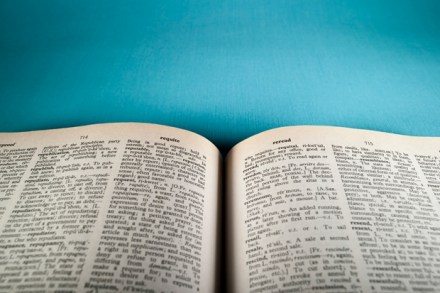
What the Great Eastern was to Brunel, the New English Dictionary was to James Murray (1837–1915) — an unequalled task that was his life, and eventually his death. What was later known as the Oxford English Dictionary should be a ‘sweep-net over the whole surface of English literature’, said Richard Chenevix Trench, one of its instigators in the 1850s, to be prepared ‘by reading all books’. This stupendous aim would have guaranteed its failure had not that hard piece of Roxburghshire granite James Murray set up in his iron Scriptorium at 78 Banbury Road, Oxford, working, working, working, 90 hours a week for years, sifting with a mind full of languages through millions of quotations written on slips of paper in pen and ink by volunteers.

The age of accusation

From our UK edition

Mark Lawson’s latest novel, set in Britain in the recent past, presents us with a nation in the grip of ‘moral fever’. Here, the ‘giving offence to anyone at all over anything’ is considered ‘a capital crime’; the ‘post-Savile sexual witch hunt’ has trained people to ‘reinterpret heartbreak as violation’; and retribution comes not just in the form of established legal proceedings, but also of the ‘modern madness of amateur arraignment’. Lawson wants to show how pernicious this culture can be. To do so, he presents us with two characters, both academics, who are out of step with it.

Ways out of recovery

From our UK edition

Perhaps because so many of them are former drunks and junkies, ‘addiction experts’ are touchy people. Often they don’t like each other — hardly surprising, since they are fighting each other for such a lucrative business. You can make bigger bucks out of selling ‘recovery’ than by peddling drugs. That’s not to imply moral equivalence, but the two do have one thing in common: plenty of repeat customers. In any media report of a celebrity’s battle with substance abuse, the words that you’re most likely to read before ‘rehab’ are ‘in and out of’. Ah, say the addiction gurus, but that’s because they’re suffering from a disease. This is one area in which the rivals speak with one voice.