Book review

Ce n’est pas la guerre

From our UK edition

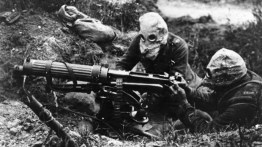
On 1 July 1916, along a frontage of 18 miles, 100,000 British infantrymen — considerably more than the entire strength of the British army today — climbed out of the trenches to begin the great offensive that would become known as the Battle of the Somme. By nightfall there were 60,000 casualties, 20,000 dead or dying. No appreciable gains had been made, and there was no prospect of the breakthrough for which the commander-in-chief, General Sir Douglas Haig, had assembled three cavalry divisions, some 30,000 horses. No one very senior would be sacked; the scapegoats were regimental officers not judged to have pressed their attacks with sufficient determination in the face of machine guns and uncut barbed wire. It was inconceivable that the offensive be called off.

Escape into pop

From our UK edition

‘How can you come into this room and ask me “What is the purpose of life?”,’ wails Massive Attack’s laconic DJ Mushroom after a typically searching interrogation by the veteran music journalist Sylvia Patterson. In this powerful, enjoyable memoir she fares better with Spike Milligan (‘I wake up every morning and think, “Thank God, another day” ’) and gleans further nuggets of wisdom from the likes of Bono, Diana Ross and David Attenborough. Patterson, primarily an interviewer rather than a critic, isn’t interested in the mechanics of music-making or the record industry but in the fundamental question of why people do what they do. In her hands, music journalism becomes a philosophical investigation, with jokes. Always jokes.

Of microbes and men

From our UK edition

Which disease are you most scared of catching: Ebola or influenza? Before I read this medical memoir, I would have said Ebola. Now, I’d say flu. As Dr Ali S. Khan points out, Ebola is fairly hard to catch; flu is fairly easy. And unlike wimpy man flu, proper flu can be a killer. You’ve heard of the Spanish flu, which killed 675,000 Americans a century ago. But did you know that influenza still kills up to 50,000 Americans every year? Most pandemics are more like flu than Ebola: they don’t sound that spooky until they get out of hand. Yet instead, we worry about killer bugs which we stand much less chance of catching. When I was a teenager, I was terrified of contracting HIV, though the risk I faced was minuscule.

Preacher and prosecutor

From our UK edition

Craig Raine is a pugnacious figure in the fractious world of contemporary poetry. When his poem ‘Gatwick’ appeared in the LRB (2015), social media had one of its habitual spasms. Here was a piece which indulged the male gaze and celebrated lustful yearning — an older man for a younger woman. Hardly new ground one might have thought; but to be fair it’s actually rather more subtle than that, and Faber’s former poetry editor responded to the howls of protest by saying: ‘Of course the stupid are always with us.’ In fact Raine rather likes a scrap and My Grandmother’s Glass Eye, in which poets and critics are mauled routinely for their inability to read poems correctly, reminds us that the poet’s father was a boxer.

What did you do in the last war, Maman?

From our UK edition

‘La France,’ as everyone knows, is female. Perhaps this is due to gendered assumptions about the beauty, cuisine and couture of the French capital, the symbolic revolutionary Marianne, or the patriarchal nature of language. Between 1940 and 1945, however, Paris was more literally female. Most of the capital’s men were serving with the Allied effort overseas, were POWs or forced workers in Germany. The women of Paris had stayed behind to keep the city running, put food on the table and care for their children, parents and in-laws. For some when France fell, Paris felt emasculated in another sense. Suddenly Parisian women found themselves having to decide how they were going to live alongside their almost entirely male Nazi conquerors and occupiers.

Two little boys, one little toy

From our UK edition

Rose Tremain sets the true story of Police Captain Paul Grüninger, commander of the Swiss border force in Canton Saint Gallen, at the core of this powerful novel. Grüninger helped hundreds — some sources say thousands — of Austrian Jews fleeing the Nazis in 1938–1939 to enter Switzerland illegally. After a long trial he was dismissed in disgrace, deprived of his pension and forced to pay court fees. His family was destitute and treated as traitors. He died in 1972, penniless and forgotten. Tremain’s fictional Grüninger, Erich Perle, marries a simple peasant girl, who suffers a miscarriage and cannot forgive her husband for ruining her life for the Jews. He dies before the end of the war.

The child is father of the man

From our UK edition

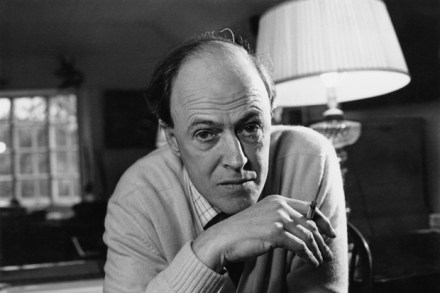
Are writers born or made? The answer, by the end of Love from Boy — a selection of Roald Dahl’s letters to his mother drawn from the 40 years of correspondence they kept up, lovingly edited and deftly commented upon by his biographer Donald Sturrock — is surely that they are both. Even as a 12-year-old, regaling her with tales of derring-do at Repton, the economy and vivid turn of phrase are evident that would characterise both his grand guignol short stories for adults and the children’s books for which he eventually became both loved and lauded. Out ice-skating, ‘I had eight chaps pulling me with a long rope at a terrific lick and I sat down in the middle of it. My bottom is all blue now.

The great depression

From our UK edition

If it was not yet ‘The Age of Anxiety’ in 1947, when Auden published his long poem of the same name, now it most certainly is, given the manifold global uncertainties that keep any sane person awake with worry. Nearly 20 per cent of adult Americans have been diagnosed with a general anxiety disorder, while the pharmaceutical industry has produced a legion of drugs that promise to combat the effects of such conditions. In Adam Haslett’s beautiful new novel, Imagine Me Gone, mental illness rips through one New England family over the course of four decades. Told in alternating first-person chapters by the parents and their three children, it is a captivating portrait of the ways depression and anxiety mark both the afflicted and everyone who loves them.

The artist as lover

From our UK edition

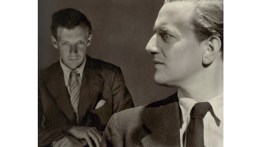
Roland Penrose (1900–84) was a Surrealist painter and object-maker, a collector and art world grandee, a writer and organiser of exhibitions, co-founder of the Institute of Contemporary Arts (ICA) and biographer of Picasso. He amply illustrates Goethe’s dictum that we are rich at the price of our contradictions. Born a wealthy Quaker, Penrose rebelled and became an artist. He was deeply involved with the revolutionary practice of Surrealism but was also an establishment figure: a substantial landowner who accepted a knighthood for services to the arts. His private life was equally divided. His first marriage, to the poet Valentine Boue, was never consummated. His second and more famous wife was the photographer Lee Miller.

The mystery of the waggle-dance

From our UK edition

The Dancing Bees is a romantic title, evoking fantasy and fairy tale rather than scientific rigour, but actually this book is a story of fearsome determination. It is a biography of Karl von Frisch, who discovered the language of the honeybee, but Tania Munz’s account is much more besides, as it reveals the scientist’s struggle for survival under the Nazi regime. Although I kept bees for many years, I had no idea of the work which won Von Frisch a Nobel prize in 1973. I was first introduced to the waggle-dance, this marvel of the animal kingdom, in a laboratory at the University of Sussex. Francis Ratnieks, professor of apiculture, sat me in front of one of his observation hives where you could watch the colony of bees at work through a glass panel.

The blank on the map

From our UK edition

‘Is Geoff Dyer someone on your radar?’ inquired the courtly literary editor, inviting me to review this book. What a question! Envy is the writer’s sin, as everyone knows, and to a nonagenarian writer of my kind the very conception of Geoff Dyer, aged 57 and perhaps the most brilliantly original practitioner of his generation, figures green and large on any screen. Has he not won countless awards around the world? Has his work not been published, his publicists say, in more than 20 languages? More than 20? More than 20! And White Sands, an elegant parade of his talents, tells me why. It is not quite like any other book, and frankly says so.

A merry guide

From our UK edition

If you have legs, or a bicycle, or indeed both, you are going to love this book. Chaps, no matter how old or how fat or otherwise incapacitated you are, if you haven’t already received it for Father’s Day the chances are it’s coming your way this Christmas. Ladies: if you are a fell-runner, a hill-walker or a budding Victoria Pendleton, pop this into your backpack or saddlebag with your energy bars and your old Ordnance Survey. Graham Robb — yes, that Graham Robb, the biographer and historian of all persons and all things French, and also the author of an excellent history of homosexuality, Strangers: Homosexual Love in the 19th Century (2003) — has written a book about British and Irish cols and passes. But wait: British and Irish whats?

Misadventures in Libya

From our UK edition

If photographs of ‘the deal in the desert’ made you queasy — you remember, Tony Blair and Muammar Gaddafi shaking hands for the cameras in 2004 — imagine how you would have felt if you were in exile in London and your father under torture in Gaddafi’s cells at the time. Now Blair is not looking forward to the Chilcot report, Gaddafi is dead and Hisham Matar, who was the helpless onlooker, has published The Return, a memoir about his father and about Libya which will attract many readers and prizes. It may also help focus our ideas about whom we protect, whom we betray, and how we deal with the devil. Gaddafi’s death might not have been a source of sorrow to Blair (and co).

The pursuit of happiness | 16 June 2016

From our UK edition

There is a wonderful portrait of Kenelm Digby by Van Dyke. He is dressed in black. His hand is on his heart. Behind him is a vast, wilting sunflower. The sunflower is a symbol of constancy — it follows the sun. When his wife Venetia died in 1633, when Kenelm was 29, he went into a profound mourning that lasted for the rest of his life — another 30 years. The sun had gone out of his life. From the moment he discovered her dead body, seemingly asleep in her bed, his behaviour was, to say the least, a little odd. He took plaster casts of her hands, feet and face. He had Van Dyke paint a portrait of her in death. He commissioned a phalanx of poets, led by Ben Jonson (who was summoned to the deathbed so that he would be inspired by the sight), to write poems in her praise.

Manhattan transfer

From our UK edition

Good historical fiction takes more than research. Henry James once said that writers needed to shed everything that made them modern to feel their way into a completely alien world view — a near impossibility. But this ideal historical novel, bristling with ancient prejudice, would be rather heavy going for a general readership, and successful ones often come populated by dismaying modern stand-ins. Noted non-fiction writer Francis Spufford’s debut novel Golden Hill — an update of 18th-century adventure romps by the likes of Henry Fielding — is successful because it makes us feel entertained and uneasy with the past. In 1746, Englishman Richard Smith arrives at the office of a New York merchant with a bill for £1,000.

The folly of youth

From our UK edition

Let’s start with arithmetic. Edmund White’s 11th novel is a book about age and ageing. The young man of the title is a French model called Guy. Like Dorian Gray, Guy never seems to grow old. By the middle of the novel he is nearly 40, but he can still convince people — crucially, a desirable 19-year-old called Kevin — that he’s 25. The other characters constantly comment on Guy’s age. Guy himself obsesses over it and goes to great lengths to hide the truth, pretending not to recognise cultural references from earlier decades. Subterfuge so successful, apparently, that not even Edmund White knows how old his hero is.

Woolton’s war

From our UK edition

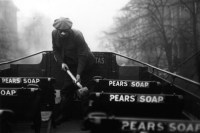
In wartime the housekeeping is a nightmare. While fighting Napoleon in Spain the Duke of Wellington sent an infuriated letter to the government in Whitehall. He complained that they had asked him to account for a petty cash deficit of one shilling and ninepence, and a ‘hideous confusion as to the number of jars of raspberry jam issued to one cavalry regiment during a sandstorm…’. The Duke, more concerned with training soldiers to fight, would not have got on too well with Lord Woolton, the British government’s Minister of Food in the second world war, whose office had the most onerous catering job in history.